



This guide is part of our complete Aurora Real Estate Guide → [Aurora Real Estate Guide]
How to Price Your Aurora Home Correctly
Aurora sellers operate in a Denver metro suburb where median prices range from $480,000 to $520,000, with homes averaging 30-45 days on market amid balanced inventory. Correct pricing aligns with local buyer psychology—commuters prioritizing I-225 access and families eyeing Cherry Creek schools—while accounting for ownership costs like elevated winter utilities and county taxes. This guide details the process, emphasizing data-driven decisions that minimize time on market and maximize net proceeds.
Step 1: Gather Recent Comparable Sales Data
Pricing begins with comps—properties sold within the last 90-120 days that mirror your home’s features, location, and condition. In Aurora, this uncovers subtle shifts like 1-3% softening in eastern ZIPs versus stability in central areas.
Select True Comparables
Focus on sales within 0.5 miles, same school district, and similar square footage (Aurora’s dominant 2,000-2,500 sq ft ranchers and two-stories). Adjust for differences: add $20,000-$40,000 for updated kitchens, subtract for dated exteriors needing snow-load reinforcements.
County variances matter—Arapahoe comps carry 0.55-0.65% tax rates, Adams slightly higher. Use MLS tools or public records to verify; ignore expired listings, as they signal overpricing in a market where 25-30% of homes see reductions.
Calculate Adjusted Price Range
Average three strong comps, applying 1-2% upward for superior lots (e.g., backing greenbelts) or downward for busy roads near E-470. Aurora’s 2025 trends show median sales dipping 1-2% year-over-year, so anchor low in softening pockets like 80014.
This step prevents the “chasing the market” error, where overpriced homes sit 60+ days, deterring serious buyers amid rising holding costs like $250-350 monthly Xcel heating.
Step 2: Evaluate Your Home’s Condition and Updates
Buyers in Aurora scrutinize maintenance history due to Colorado’s freeze-thaw cycles stressing foundations and roofs. Objective assessment reveals pricing adjustments of 3-10%.
Conduct a Pre-Listing Inspection
Hire an inspector ($400-600) to flag issues like basement seepage in clay soils or inefficient HVAC driving winter bills. Minor fixes—sealing cracks, updating seals—yield 1:3 ROI; neglect invites 5-10% discounts.
Document upgrades: new roofs add $15,000-$25,000 value, energy-efficient windows $10,000, countering 10-15% insurance premiums tied to weather exposure.
Stage for Maximum Appeal
Declutter and neutralize; professional staging boosts offers 5-7% in photo-driven searches. Highlight practical features like fenced yards for families (55% of buyers) and garages for snow storage.
Condition pricing matters because Aurora’s older stock (1970s-1990s) trades on perceived longevity—buyers discount $5,000-$15,000 per visible neglect.
Step 3: Analyze Current Market Conditions
Aurora’s dynamics—2.5-3.5 months supply, 16-25% above-list sales—favor precise pricing over aspirational lists.
Review Inventory and Days on Market
Track active listings: under 3 months supply signals competition, dictating list-at-comps; over 4 months allows 2-5% premium in Cherry Creek zones. Recent data shows pending sales up 6-7% year-over-year but closings lagging, extending negotiation windows.
Seasonality influences: list pre-winter (September-November) when buyers seek move-in-ready amid 60-inch snowfalls; delay spring if inventory swells.
Factor Buyer Behavior and Rates
Local commuters (to Buckley or Anschutz) favor quick closes; 6.5-7% rates cap budgets, pressuring prices 2-4% below peaks. Out-of-state relocators (20-30%) bid aggressively on turnkeys, but locals negotiate harder on costs.
Step 4: Account for Ownership Costs in Net Pricing
Sellers net 85-92% after commissions (5-6%), taxes, and concessions—pricing must cover these.
Project Selling Expenses
This breakdown shows why list 2-3% above target net—e.g., $515,000 list for $500,000 net. High utilities/insurance (10-12% of PITI) make buyers cost-conscious, amplifying discount demands.
Step 5: Set the List Price Strategically
Integrate data into a defensible price, balancing speed and proceeds.
Choose Pricing Tactics
- True Price: Comps median ±2% for 15-30 day sales in balanced Aurora.
- Underpricing: 5-7% below comps for bidding wars (risky in 30+ DOM norm).
- Psychological Pricing: $499,900 signals value without $500K threshold hit.
Test via agent CMA; adjust weekly if showings lag (under 10/week signals high).
Step 6: Monitor, Adjust, and Negotiate
Post-listing feedback drives refinements in Aurora’s transparent market.
Weekly Price Reviews
If no offers in 14 days, reduce 2-5%—stagnation adds $1,000+ monthly costs (mortgage, utils). Track metrics: 20-30% above-list sales indicate room up; 97-98% sale-to-list average suggests tight pricing.
Handle Offers Effectively
Counter lowballs with comps; accept 2-3% concessions for inspections. Multiple offers rare outside premiums—leverage data for firm nets.
Aurora Pricing Pitfalls to Avoid
Overpricing by 5-10% extends DOM to 60+, eroding equity via dual payments and deferred maintenance. Underpricing forfeits $20,000-$40,000 in hot micro-markets. Ignore seasonality: winter lists face thin buyer pools valuing plowed drives.
Commute appeal sustains values—properties near light rail hold 1-2% firmer. Housing stock longevity counters metro dips (Colorado down 2-4% YoY), rewarding priced-right sellers.
Correct pricing in Aurora hinges on comps, condition, and costs—deliberate sellers capture equity while buyers perceive value. This approach turns market balance into advantage.
Ready for a customized CMA, pricing strategy, or market timing analysis for your Aurora home? Reach out today to discuss your sale and maximize proceeds.


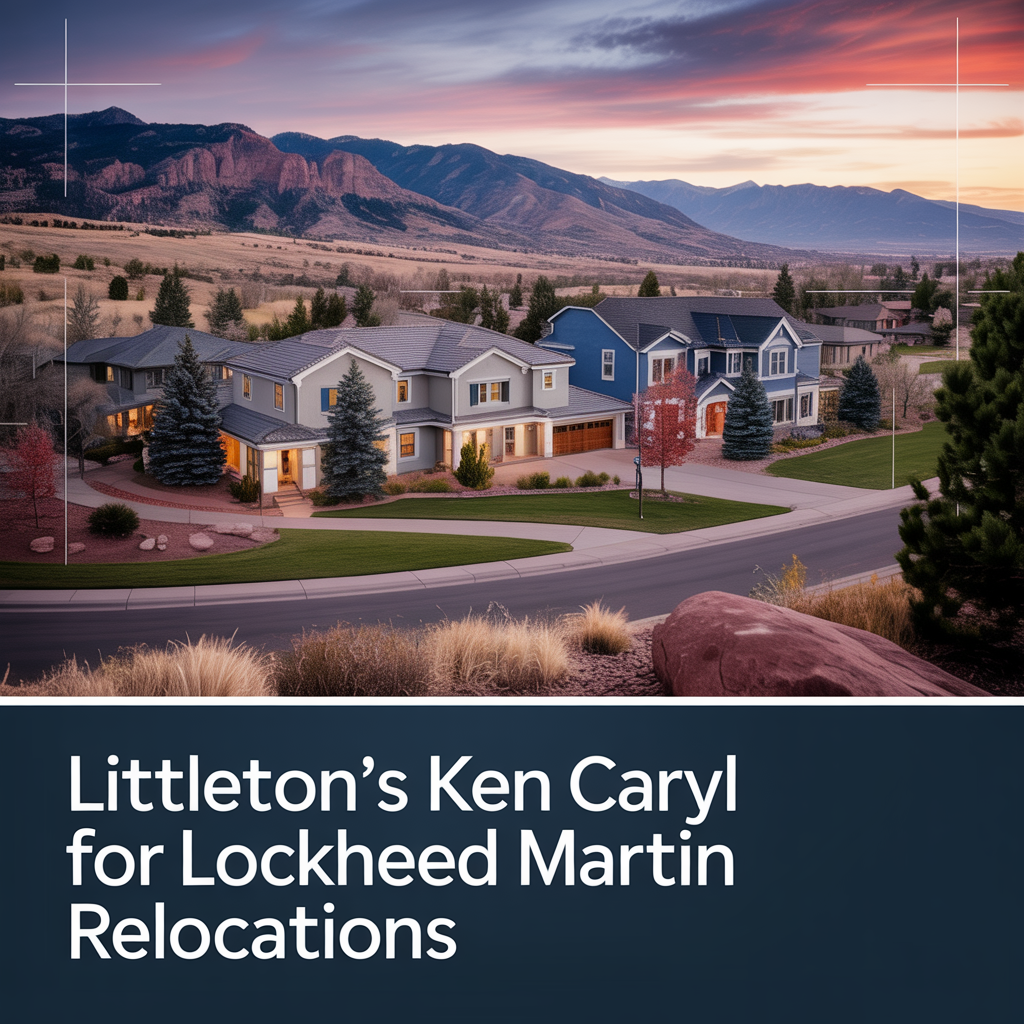
Littleton’s Ken Caryl for Lockheed Relocations
This is part of Lockheed Martin Relocation → [Lockheed Martin Relocation Hub] & the larger Denver Relocation Hub → [Denver Relocation Hub] Written by: Chad Cabalka Ken Caryl is one of the best-kept “family first” relocation options for Lockheed Martin employees who want foothills scenery, strong neighborhood appeal, and a real suburban lifestyle that still feels connected…


Centennial & Parker for Lockheed Relocations
This is part of Lockheed Martin Relocation → [Lockheed Martin Relocation Hub] & the larger Denver Relocation Hub → [Denver Relocation Hub] Written by: Chad Cabalka Centennial and Parker are two of the smartest suburban choices for Lockheed Martin employees relocating with families because they give you a strong balance of commute flexibility, good neighborhood variety, and…

Highlands Ranch for Family-Friendly Lockheed Relocations
This is part of Lockheed Martin Relocation → [Lockheed Martin Relocation Hub] & the larger Denver Relocation Hub → [Denver Relocation Hub] Written by: Chad Cabalka Highlands Ranch is one of the strongest choices for Lockheed Martin employees relocating with families because it delivers exactly what most parents want after a big move: stable neighborhoods, strong community…