


Aurora Lifestyle Guide — How Life in Aurora Actually Works
The Aurora Lifestyle Guide is a practical, real-world resource designed to help residents, buyers, and long-term planners understand what daily life in Aurora, Colorado actually looks like — across neighborhoods, routines, schools, amenities, movement patterns, and long-term livability.
This hub focuses on how people live in Aurora, not how they relocate to it.
Aurora is often described with simple labels — “close to the airport,” “diverse communities,” “military-friendly,” or “affordable Denver access” — but those descriptions flatten a city that functions very differently depending on where you live, how you commute, and how much of life stays local.
Two households less than ten minutes apart can experience completely different versions of Aurora — shaped by school boundaries, proximity to military bases, commercial hubs, trail access, commute direction, and whether daily life orbits the Anschutz Medical Campus, Buckley Space Force Base, or DIA.
This hub exists to replace assumptions with clarity.
Compare Aurora to Other Denver-Metro Real Estate Guides
If you’re researching the Aurora housing market, it can help to compare how other Denver-area real estate markets behave. These guides break down pricing trends, neighborhood differences, inventory patterns, and long-term value dynamics across the Denver metro.
Daily Rhythm – Functional Living – Long-Term Fit
Rather than promotional narratives or surface-level overviews, this hub examines the lived experience of Aurora — how neighborhoods function Monday through Friday, how weekends are actually spent, how seasons shape routines, and how lifestyle choices intersect with housing, schools, commuting, recreation, and social life.
This is not a tourism guide.
It is an on-the-ground look at how Aurora actually operates day to day.
Explore This Guide
Last updated: March 11th, 2026
Why Life in Aurora Feels Different by Neighborhood

Aurora is not a single lifestyle environment — and treating it as one often leads to mismatched expectations.
Lifestyle variation in Aurora is driven by proximity to Buckley Space Force Base and major employment hubs like Anschutz Medical Campus, school district boundaries (Cherry Creek, Aurora Public Schools, and choice patterns), commercial density versus residential pockets, trail integration along Cherry Creek, commute direction toward Denver, DIA, or south suburbs, R-Line light rail access versus car-first living, lot sizes in older neighborhoods versus newer master-planned communities, and event traffic near Southlands or Lowry.
In Aurora, price and finishes reveal very little about how daily life will feel.
Lifestyle differences show up in subtler ways — school-hour congestion near Cherry Creek schools, airport noise gradients, evening quiet in family areas versus busier commercial zones, weekend foot traffic at Southlands Town Center, and how often residents leave Aurora at all.
This hub is built to surface those realities clearly.
School Districts & Family-Driven Lifestyles in Aurora
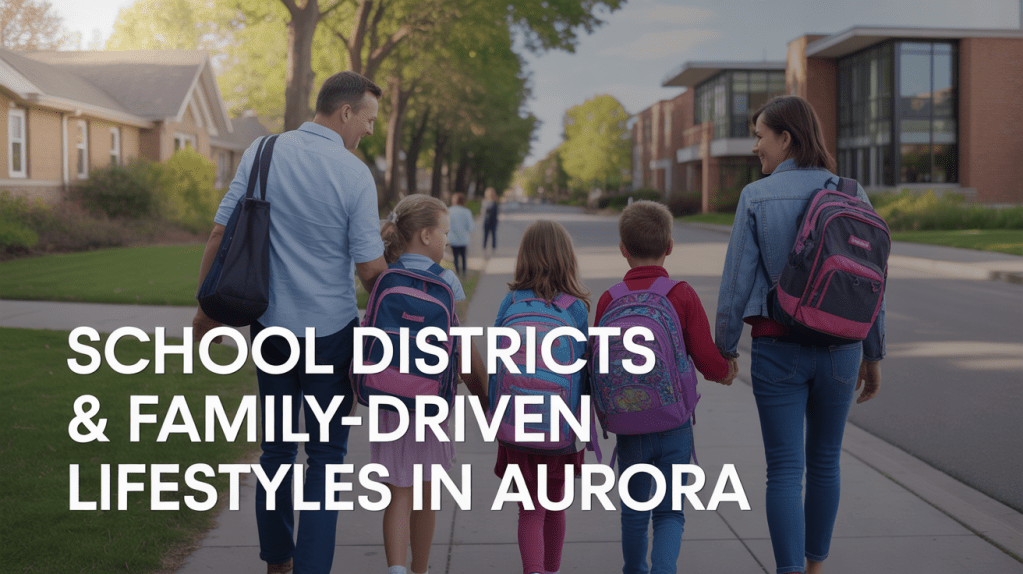
In Aurora, schools influence daily life far beyond academics.
School structure affects morning and afternoon traffic flow around major campuses, bus routes and drop-off congestion near Cherry Creek high performers, after-school sports logistics tying into military family schedules, weekend calendars and social overlap in diverse communities, and long-term neighborhood stability driven by district reputations.
Deep Dives:
Cherry Creek Schools Serving Aurora Neighborhoods
Aurora Public Schools & Choice Enrollment Patterns
How School Boundaries Influence Home Search Behavior in Aurora
How School Calendars Shape Daily Routines in Aurora
Public vs Private School Considerations in Aurora
This section focuses less on rankings and more on how school systems affect lifestyle — predictability, commute time, family scheduling, and community involvement.
Even households without children often feel the ripple effects of school-driven activity patterns in Aurora.
Anschutz & Local Amenities, Community Culture
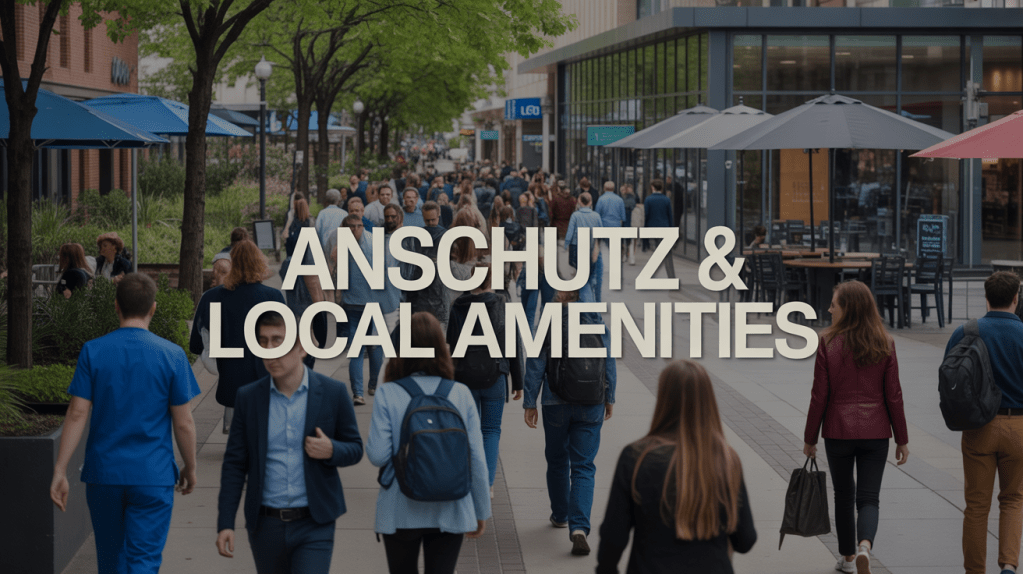
Aurora’s social life is concentrated around key hubs like the Anschutz Medical Campus and Southlands rather than fully dispersed, acting as cultural anchors amid the city’s expansive layout. Unlike more compact suburbs where dining clusters in one walkable core, much of Aurora’s shared energy flows through employment-driven areas and planned retail centers, influencing how residents approach evenings, weekends, and casual interactions.
Where you live in relation to Anschutz or Southlands strongly shapes daily habits — those nearby treat medical campus cafeterias, nearby eateries, and retail as routine extensions, with familiar faces from work or school blending into neighborhood life. Residents farther out, especially in quieter residential areas like Mission Viejo or Havana Heights, plan dining as intentional outings, often combining it with errands or family time.
Community culture in Aurora emphasizes diversity and practicality — restaurants range from international spots reflecting the city’s multicultural fabric to familiar chains and breweries that serve as steady gathering points.
Deep Dives:
Best Restaurants Near Anschutz & Cherry Creek State Park
Casual Local Favorites Aurora Residents Actually Frequent
Date-Night Spots in Aurora
Coffee Shops & Morning Routine Culture Near Medical Campus
Breweries & Low-Key Hangouts Around Southlands
Aurora’s culture prioritizes diversity and convenience — more choices reflecting global influences, with strong repeat visits building familiarity.
Parks, Trails & Plains-Oriented Living
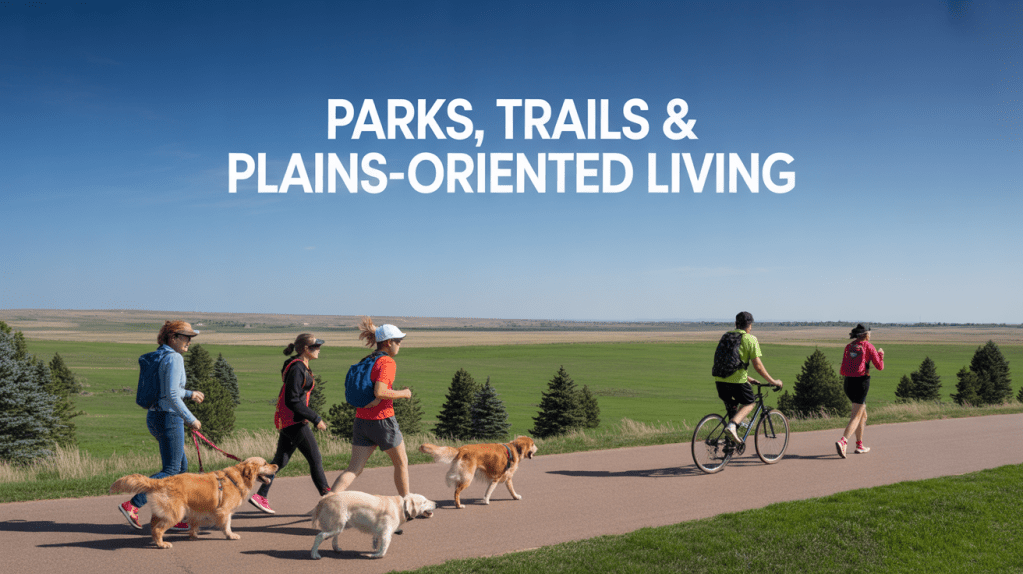
Outdoor access in Aurora integrates urban trails and expansive plains parks into routines, with Cherry Creek Trail and connections to Rocky Mountain Arsenal providing functional green space rather than just weekend escapes. The city’s trail system distinguishes between commuter paths along Cherry Creek for daily jogs or bikes and larger regional parks like Aurora Reservoir for water activities and picnics.
Areas near Cherry Creek or the Arsenal see trails as part of weekly patterns — morning walks to work or school, evening family strolls — while south and east neighborhoods lean on neighborhood parks and reservoirs for structured outings. Plains-adjacent living adds variety: north areas near Buckley offer quick Arsenal access with wildlife views, but more wind exposure; central zones provide flatter, stroller-friendly paths with urban edge.
In Aurora, proximity alone doesn’t define outdoor lifestyle.
Usability, frequency, and convenience matter more than scenic drama — neighborhoods thrive where residents use spaces daily, like quick Reservoir laps or Creek Trail commutes.
Deep Dives:
Cherry Creek Trail & Daily Use
Aurora Reservoir & Plains Open Space Living
Neighborhood Parks vs Regional Arsenal Access
How Plains Proximity Changes Daily Lifestyle in Aurora
In Aurora, usability matters more than proximity — a trail fitting your routine trumps distance.
Commutes, Traffic & East-Metro Movement Patterns
In Aurora, the commute mixes strong DIA and Anschutz access with regional highways like I-70 and E-470, creating predictable patterns despite scale.
Average one-way commutes hover around 25-30 minutes, influenced by peaks on I-225, Parker Road, and Colfax, with families timing school runs around medical campus shifts or Buckley traffic.
Movement feels like east-metro spokes: many head to DIA or Anschutz, others to Denver or south via E-470, with bidirectional flows to Centennial or Parker.
R-Line aids central corridors, but cars dominate for school, military bases, and errands. Weekends spike toward DIA flights or Reservoir recreation, with Broncos traffic on I-225. For movers, map weekday commutes plus weekend trips — sports, airport runs, mountain escapes — to gauge fit in Aurora’s expansive flow.
Deep Dives:
DIA vs Anschutz Commutes
I-70 vs E-470 Realities
School-Hour Congestion Near Cherry Creek
Remote-Work Fit by Aurora Neighborhood
Why Some “Short” Commutes Feel Long in Aurora
Aurora rewards east-metro positioning — similar homes yield different daily ease.
R-Line Light Rail, I-70 & Regional Access
Access in Aurora emphasizes regional connectivity via R-Line, I-70, I-225, and E-470, supporting multi-car households with DIA and Anschutz proximity. R-Line stations from Iliff to Central Park offer rail for Nine Mile or downtown trips, supplementing but not replacing cars for bases, schools, or Reservoir. Advantages lie in choices: rail for predictable shifts, highways for flexibility to DIA (20-30 min), mountains via E-470, or Denver core.
Aurora positions as east-metro hub — convenient to jobs/hospitals, buffered from core congestion, ideal for stable family transport.
Deep Dives:
When R-Line Works for Daily Aurora Life
Park-and-Ride vs Walkable Station Lifestyles
DIA Access Realities from Aurora
Centennial, Parker & Mountain Patterns
Function trumps map proximity.
Community Events, Entertainment & Nightlife

Entertainment centers on diversity and family scale — Anschutz events, Southlands movies, Lowry festivals over late-night scenes. Residents hit Southlands for concerts, Reservoir for summer series, or cultural spots reflecting Aurora’s global makeup.
Nights out mean family films, trivia at local pubs, or ethnic festivals — calmer, neighborhood-tied vibe.
Deep Dives:
Southlands & Seasonal Events
Farmers Markets & Cultural Gatherings
Live Music & Outdoor Series
Family Evening Options
Why Aurora Feels Vibrant Yet Balanced
Aurora doses energy thoughtfully.
Seasonal Living in Aurora
Seasonal shifts ground Aurora life: winter indoor at rec centers or home amid snow/DIA delays; spring/summer activate Reservoir, Cherry Creek trails, Southlands events for outdoor rhythm.
This indoor-to-outdoor pivot fosters settlement.
Deep Dives:
Snow Exposure by Aurora Zone
Winter Sun & Street Patterns
Spring/Summer Event Density
Trail Usage Year-Round
Seasonality’s Routine Impact
Seasons shape Aurora more than expected.
Experience, Authority & How This Hub Is Built
Built by a Denver-metro real estate professional working Aurora daily — from firsthand experience, resident feedback, neighborhood observation.
Living resource with updates.
Who This Hub Is For
Long-time residents reassessing; buyers prioritizing function; families balancing schools/space; pros aligning commutes; long-term evaluators.
Lifestyle intelligence, not sales.
Frequently Asked Questions About Living in Aurora

Does Aurora feel more suburban or urban-adjacent in daily life?
Aurora strikes a unique balance between expansive suburban neighborhoods and urban-adjacent energy near hubs like the Anschutz Medical Campus and DIA, creating noticeably different experiences based on your location. Northside areas near Buckley Space Force Base have a structured, family-suburban rhythm with quick employer access and military community ties, while central zones around Cherry Creek State Park offer denser retail, trails, and a busier commercial pulse. South of Iliff, life shifts to classic plains suburbia—wider lots, quieter streets, and straightforward highway connections—letting residents pick their preferred pace without the city feeling locked into one style.
How much do school boundaries really shape neighborhood life in Aurora?
School boundaries in Aurora influence far more than test scores—they define daily traffic patterns, family social networks, and neighborhood character through years of consistent household clustering. Cherry Creek district lines draw premium demand, leading to congested drop-off zones on roads like Parker Road and tighter-knit parent groups at games and events, while Aurora Public Schools foster diverse, inclusive vibes in walkable pockets around local elementaries. Over time, these dynamics stabilize blocks as like-minded families stay, boosting community events and home resale strength in subtle but powerful ways that newcomers often overlook.
Can the R-Line light rail meaningfully reduce car dependence for Aurora families?
The R-Line offers practical relief for central Aurora residents commuting to downtown Denver or Nine Mile, particularly those who can walk or bike to stations like Iliff or Fitzsimons, turning rush hour into a reliable seated ride. Shift workers at Anschutz or steady downtown professionals sometimes downsize to one car, but most households keep vehicles handy for school shuttles, Buckley base runs, or spontaneous Reservoir trips where rail schedules fall short. Its strength is in expanding options—predictable public transit alongside car flexibility—making station proximity a smart lifestyle choice rather than a full escape from driving.
Does activity around Southlands Town Center feel disruptive for nearby homes?
Southlands Town Center injects lively energy into its core with markets, movies, and seasonal concerts that nearby residents often embrace as convenient weekend perks, just blocks from home. Homes directly adjacent pick up some evening hum—parking crunch on event nights or distant music—but fade quickly even a few streets over, where the buzz translates to walkable dining without constant intrusion. Most families view it as a net positive trade-off, gaining retail and social access that keeps daily life local while preserving quiet mornings and workdays.
How do seasons change the feel of living in Aurora?
Aurora’s seasons transform routines dramatically, shifting winter into an indoor, car-reliant mode with rec centers, home projects, and DIA delay watches, while spring through fall unleashes outdoor energy on Cherry Creek trails, Reservoir swims, and Southlands patios. This predictable pivot—from cozy, contained days to active, community-filled warm months—builds a rooted sense of place that long-timers credit for their staying power. Families adapt effortlessly, timing yard work for spring or biking commutes for summer, making the yearly cycle a quiet anchor rather than a disruption.
Talk With an Aurora Lifestyle Expert
Living in Aurora means navigating its unique blend of expansive neighborhoods, employment hubs like Anschutz and Buckley, and east-metro rhythms that feel different block by block—details that show up clearest in a focused conversation tailored to your priorities. Whether you’re a long-time resident weighing a move within the city, a buyer mapping school boundaries against your commute, or someone testing if Aurora’s seasonal shifts and community pulse match your family’s long-term vision, I’ve spent decades guiding people through exactly these realities right here in the Denver metro area.
Reach out directly when you’re ready—I’ll walk you through how specific neighborhoods function day-to-day, from Southlands weekend flow to Cherry Creek trail routines, based on what I’ve seen work for families just like yours over the years. No sales talk, no generic lists, just straightforward insight into whether Aurora fits your life and how to make it work best. Drop me a note or call, and we’ll sort through your questions at your pace—I’ve helped hundreds settle confidently here, and I’d welcome the chance to do the same for you.