


This hub is part of the larger Homeownership 101 Guide → [Homeownership 101]
A Practical Guide to Understanding, Maintaining, and Protecting the Systems That Keep a Home Functioning
Mechanical Systems • Preventive Maintenance • Failure Risk • Ownership Costs • Long-Term Wear
Overview
The Home Maintenance & Systems Guide is a practical, reality-based resource for homeowners who want to understand how a house actually operates over time—not just how it looks at closing.
Most homeowners are handed keys, warranties, and a stack of paperwork—but very little guidance on how the systems inside their home age, fail, and interact. Maintenance is rarely explained as a long-term strategy. Instead, it’s treated as a reaction to problems after they surface.
Homes are systems. Plumbing, electrical, HVAC, roofing, drainage, and structural components all age at different rates, fail in predictable ways, and create compounding costs when ignored. Many of the most expensive homeowner mistakes come not from bad purchases—but from deferred decisions.
This guide focuses on how residential systems behave over years of ownership, what tends to fail first, how climate and construction era matter, and how small maintenance choices quietly shape long-term cost, comfort, and resale flexibility.
Use this resource as a maintenance framework, not a checklist.
Explore This Guide
Last updated: January 2026
How Home Systems Actually Age Over Time

Most homes do not fail suddenly—they decline gradually. Mechanical systems wear unevenly based on usage, installation quality, environment, and maintenance history.
Some components fail predictably (water heaters, furnaces). Others fail quietly (drainage, ventilation, electrical connections). The costliest repairs often stem from systems that weren’t visible or prioritized.
Homes perform best when maintenance decisions are made early—before symptoms appear.
In practice, system longevity is driven less by brand names and more by:
- Installation quality
- Load stress and usage patterns
- Environmental exposure
- Maintenance intervals
Ignoring how systems age doesn’t save money—it delays cost.
Common Home Maintenance MISTAKES New Owners Make
Most homeowners don’t neglect maintenance intentionally—they misunderstand risk timing.
The most damaging mistakes rarely cause immediate failure. Instead, they shorten system life quietly and reduce future flexibility.
Common issues include:
- Treating maintenance as optional rather than cumulative
- Ignoring “non-urgent” system warnings
- Over-fixing cosmetic items while neglecting core systems
- Assuming new homes are maintenance-free
- Delaying minor repairs until replacement is required
Related deep dives:
- The Most Common Home Maintenance Mistakes Right After Closing
- Why Ignoring Small Issues Gets Expensive Fast
- Deferred Maintenance vs. Emergency Repairs
- How New Homes Still Fail Without Maintenance
- When DIY Fixes Create Bigger Problems
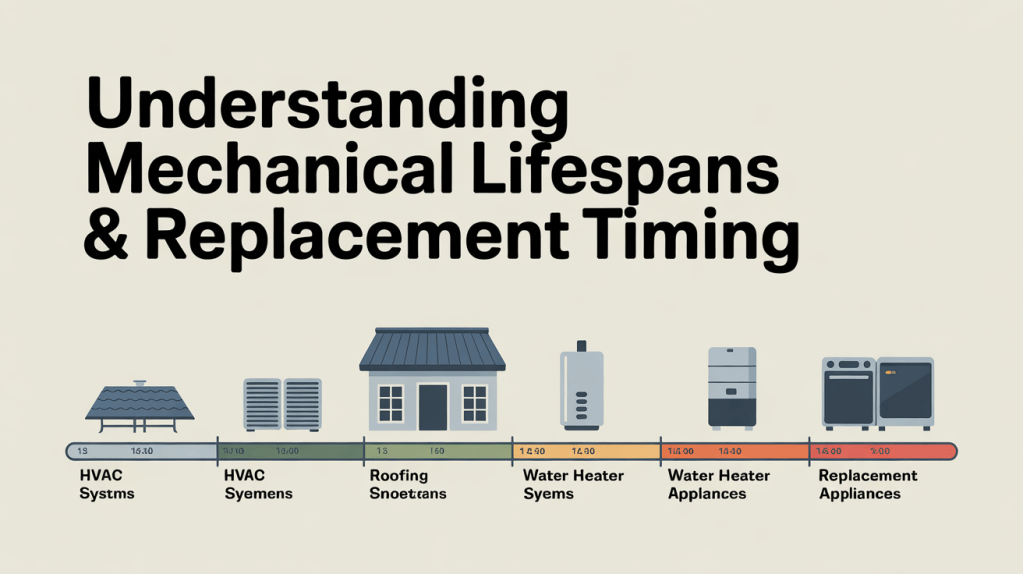
Understanding Mechanical Lifespans & Replacement Timing
Every major home system has an expected service life—but real-world timing varies widely.
Understanding replacement windows, not just failure points, allows homeowners to plan financially and avoid emergency decisions.
Typical systems with predictable life cycles include:
- HVAC equipment
- Water heaters
- Roofing materials
- Major appliances
- Sump pumps and drainage systems
The goal isn’t perfection—it’s timing.
Related deep dives:
- How Long Major Home Systems Actually Last
- Planning for System Replacement Without Financial Shock
- Why Early Replacement Sometimes Saves Money
- Maintenance vs. End-of-Life Tradeoffs
- How System Age Impacts Resale Negotiations
Preventive Maintenance That Actually Saves Money
Not all maintenance is equal. Some tasks meaningfully extend system life—others simply create activity.
High-impact maintenance focuses on:
- Load reduction
- Moisture control
- Airflow and ventilation
- Early leak detection
- System calibration
Preventive maintenance is most effective when it reduces stress—not when it just reacts to symptoms.
Related deep dives:
- Preventive Maintenance That Delivers Real ROI
- Annual Tasks That Protect Major Systems
- What Maintenance Schedules Miss
- How Seasonal Care Reduces Failure Risk
- When Maintenance Becomes Overkill
Climate, Wear, & System Stress Factors
Homes are shaped by environment. Temperature swings, moisture, sun exposure, soil movement, and weather events all accelerate wear differently.
Local conditions influence:
- Roof degradation
- Foundation movement
- HVAC workload
- Drainage performance
- Exterior material lifespan
Ignoring environmental stress leads to premature failure—even in newer homes.
Related deep dives:
- How Climate Accelerates System Wear
- Moisture Management Inside and Outside the Home
- Why Drainage Issues Are Often Invisible
- Sun, Wind, and Temperature Effects on Materials
- Designing Maintenance Around Local Conditions
When Small Issues Turn Into Major Repairs
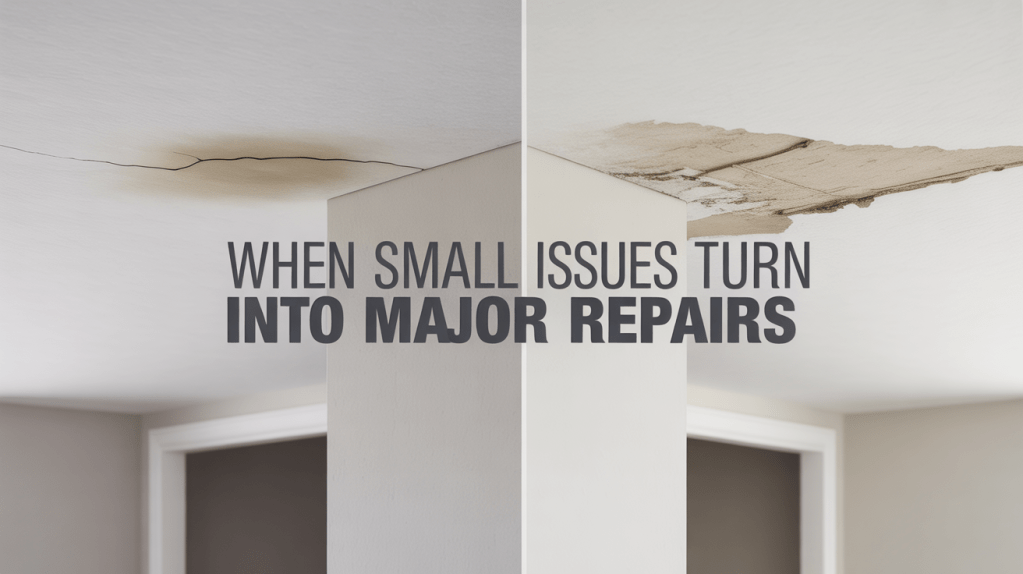
Most expensive home repairs begin as small, solvable problems.
Leaks spread. Electrical resistance increases. Mechanical strain compounds. The issue isn’t visibility—it’s delay.
The cost curve is rarely linear.
Related deep dives:
- How Minor Issues Escalate Quietly
- Warning Signs Homeowners Commonly Miss
- The True Cost of “Waiting a Little Longer”
- When Monitoring Beats Immediate Repair
- Catching Problems Before They Multiply
Maintenance vs. Deferred Cost Tradeoffs
Every homeowner defers something. The key is choosing what—and understanding the tradeoff.
Some deferrals are low-risk. Others compound quickly and limit options later.
Smart ownership balances:
- Short-term cash flow
- System health
- Future flexibility
- Emergency risk
Related deep dives:
- What You Can Safely Defer—and What You Can’t
- How Deferred Maintenance Impacts Resale
- Choosing Between Repair, Replace, or Monitor
- Financial Planning for Ongoing Ownership
- Maintenance as a Long-Term Cost Strategy
What Maintenance Can—and Cannot—Prevent
Home maintenance can:
- Extend system life
- Reduce emergency repairs
- Improve comfort and efficiency
- Protect resale value
It cannot:
- Eliminate aging
- Override poor installation
- Prevent all failures
- Remove the need for reserves
Maintenance manages risk—it doesn’t eliminate it.
Closing Perspective
Homeownership isn’t just about living in a space—it’s about managing a physical asset over time.
Homes reward owners who understand how systems behave, plan ahead for replacement cycles, and address issues before urgency forces bad decisions. Maintenance isn’t about perfection—it’s about control.
This guide exists to help homeowners think system-first, cost-aware, and long-term—so ownership feels predictable instead of reactive.
This resource is maintained by Chad Cabalka, lead broker of Mile High Home Group, drawing on years of experience advising homeowners through inspections, aging housing stock, repair negotiations, and long-term ownership realities across the Denver metro.