


Castle Rock Lifestyle Guide — How Life in Castle Rock Actually Works
The Castle Rock Lifestyle Guide is a practical, real-world resource designed to help residents, buyers, and long-term planners understand what daily life in Castle Rock, Colorado actually looks like — across neighborhoods, routines, schools, amenities, movement patterns, and long-term livability. This hub focuses on how people live in Castle Rock, not how they relocate to it.
Castle Rock is often reduced to quick phrases — “between Denver and Colorado Springs,” “historic downtown,” “outlet mall,” or “family-friendly suburb” — but those labels flatten a town that functions very differently depending on which side of I‑25 you live on, whether your life orbits downtown, the outlets, or local schools, and how often you leave town versus staying hyper-local. Two households less than ten minutes apart can experience completely different versions of Castle Rock — shaped by school boundaries, proximity to downtown or The Promenade, trailhead access, commute direction, and whether daily life centers on Denver Tech Center, the Air Force Academy corridor, or fully remote work.
This hub exists to replace assumptions with clarity.
Compare Castle Rock to Other Denver-Metro Lifestyle Guides
If you’re exploring Castle Rock, it often helps to compare how other Denver-area communities function day to day. These guides break down lifestyle differences across the metro — including commute patterns, neighborhood character, recreation access, and long-term livability.
Daily Rhythm – Functional Living – Long-Term Fit
Rather than promotional narratives or surface-level overviews, this hub examines the lived experience of Castle Rock — how neighborhoods function Monday through Friday, how weekends are actually spent, how seasons shape routines, and how lifestyle choices intersect with housing, schools, commuting, recreation, and social life. This is not a tourism guide. It is an on-the-ground look at how Castle Rock actually operates day to day.
Explore This Guide
Last updated: January 2026
Why Life in Castle Rock Feels Different by Neighborhood
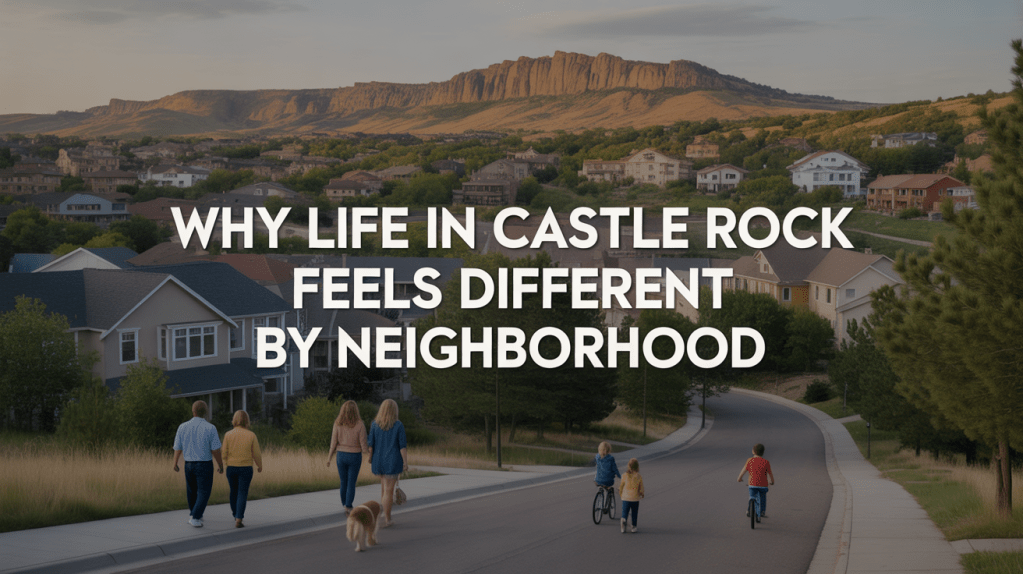
Castle Rock is not a single lifestyle environment — and treating it as one often leads to mismatched expectations. The town stretches from older, tree-lined neighborhoods near the historic core to newer master-planned communities wrapping farther east and south along ridges and open space. Daily life feels different in The Meadows than it does in Founders Village, Crystal Valley, or a custom home on the outskirts.
Lifestyle variation in Castle Rock is driven by school feeder patterns within Douglas County School District, proximity to historic downtown versus the outlet mall and Promenade, topography and ridge exposure, distance from I‑25 interchanges, access to regional trails and open space, HOA structure and amenity packages in master-planned communities, and how often households commute north to DTC/Denver or south toward Colorado Springs. In Castle Rock, price and finishes only tell part of the story of how your days will feel.
Instead, lifestyle differences show up in subtler ways — school-hour congestion around Douglas County High School and neighborhood elementaries, evening foot traffic in downtown versus quieter cul-de-sacs on the hills, weekend pressure near outlet and Promenade exits, and how often residents leave town for work or entertainment versus keeping their lives anchored locally. This hub is built to surface those realities clearly.
School Districts & Family-Driven Lifestyles in Castle Rock

In Castle Rock, schools influence daily life far beyond academics. The town sits within Douglas County School District, but different neighborhoods feed into different elementary, middle, and high schools, and those patterns shape traffic flows, social circles, and long-term neighborhood stability.
School structure affects morning and afternoon traffic near neighborhood schools in The Meadows, Founders, and Castlewood Ranch, pickup lines and bus routes winding through hilly streets, after-school sports and activities that often cluster at Douglas County High School or other district facilities, weekend calendars filled with tournaments and school events, and long-term neighborhood identity as families stay anchored to specific feeder patterns. Even families choosing charter, magnet, or private options still move through these patterns and share the same roads and community rhythms.
Deep Dives:
Castle Rock Feeder Patterns & Neighborhood Identity
Douglas County Schools & How They Shape Daily Logistics
How School Zones Influence Home Search Behavior in Castle Rock
School Calendars, Snow Days & Routine Shifts in Castle Rock
Public vs Private School Considerations in Castle Rock
This section focuses less on rankings and more on how school systems affect lifestyle — predictability, commute time, family scheduling, and community involvement. Even households without children feel the ripple effects of school-driven traffic, event schedules, and community use of fields and gyms across Castle Rock.
Downtown, Outlets & Everyday Amenities
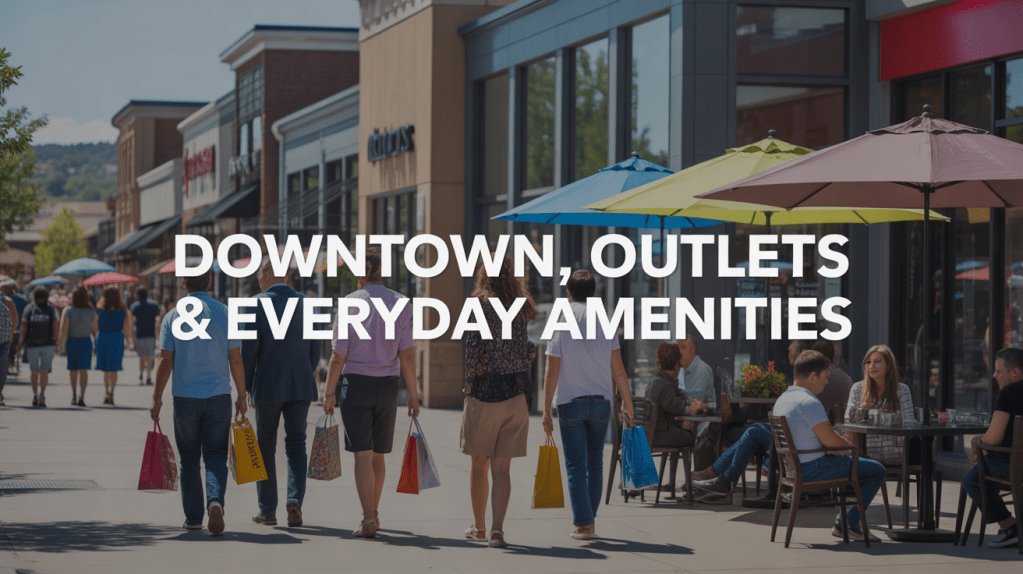
Castle Rock’s social and commercial life clusters around a few distinct hubs rather than spreading evenly across town. Historic downtown, with its Main Street restaurants, shops, and the iconic Castle Rock butte above, serves as the town’s cultural anchor. The outlets and The Promenade, just off I‑25, form a second major node focused on retail and national chains. Smaller neighborhood centers in The Meadows and Founders Village round out day-to-day convenience.
Where you live in relation to these hubs strongly shapes daily habits. Residents close to downtown may treat coffee shops, breweries, and weekday events in Festival Park as extensions of their living room, walking or taking short drives for errands and dinners. Those near the outlets or Promenade often build quick shopping runs and casual meals into their routine, tying national retailers and big-box stores into their weekly rhythm. Households farther out in Crystal Valley or more rural pockets typically batch trips, combining grocery runs, dining, and errands into fewer, more intentional drives.
Community culture in Castle Rock leans family-centric and locally rooted. Independent restaurants and small businesses downtown foster a “regulars” feel, while larger chains at the Promenade offer predictability and easy parking for families. Evenings are more about familiar faces, youth sports debriefs over dinner, and low-key gatherings than late-night scenes.
Deep Dives:
Best Local Restaurants & Cafés in Downtown Castle Rock
Everyday Errands: How Residents Actually Use the Outlets & Promenade
Date-Night Spots in Castle Rock
Morning Routine Culture: Coffee, Drop-Offs & Gym Stops
Neighborhood Centers in The Meadows, Founders & Beyond
Castle Rock’s culture prioritizes familiarity and routine — enough variety to keep things interesting, but steady enough that favorites become part of the weekly rhythm.
Parks, Trails & Ridge-Oriented Living
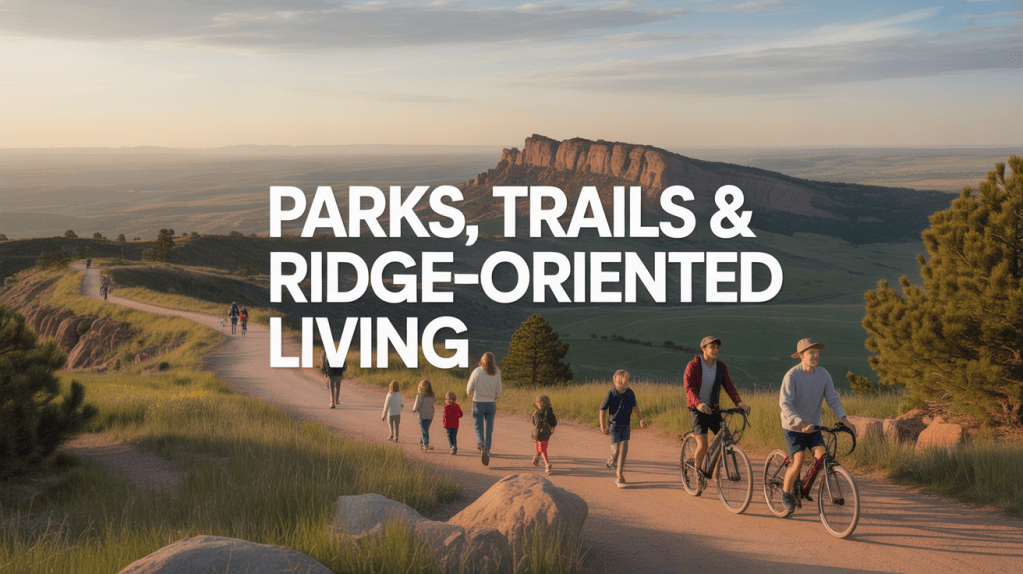
Outdoor access is central to how Castle Rock lives day to day. The town wraps around ridges, open space, and the famous rock formation, with a network of trails and parks weaving through neighborhoods. Rather than being just weekend destinations, these spaces often become part of daily routines.
Trail corridors like the East Plum Creek Trail, Ridgeline Open Space paths, and local neighborhood loops give residents multiple ways to move without using a car. In The Meadows and surrounding areas, it’s common to see morning walkers, runners, and dog owners on ridgeline and greenbelt trails before work. In Founders Village, Castlewood Ranch, and eastern neighborhoods, open space and local parks serve as regular outlets for kids’ play, casual sports, and evening walks.
Ridge-oriented living adds its own twist. Homes higher up often enjoy big views and more wind exposure, with trails connecting directly to open space and rock formations. Lower-lying areas closer to Plum Creek feel more tucked in, with easier bike access and slightly less exposure to the elements. In Castle Rock, the question isn’t just whether you’re near a park, but whether the terrain and connections fit your actual daily patterns.
Deep Dives:
Ridgeline Open Space & Everyday Use
East Plum Creek Trail & In-Town Connectivity
Neighborhood Parks vs Regional Open Space in Castle Rock
How Elevation & Exposure Change Daily Outdoor Habits
In Castle Rock, usability matters more than postcard views — the trails and parks you use three times a week matter more than the dramatic backdrop you only see from the highway.
Commutes, Traffic & I‑25 Corridor Patterns
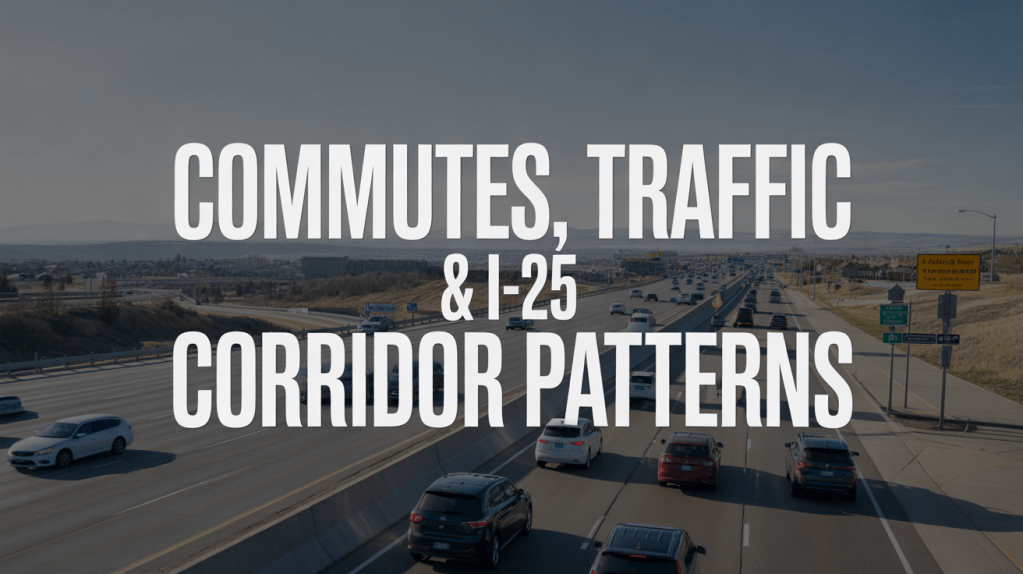
In Castle Rock, commuting is shaped by the I‑25 spine and how far you sit from key interchanges. Many residents head north toward the Denver Tech Center, Lone Tree, or downtown Denver; others drive south toward Colorado Springs or military installations; and a growing number work from home and move mostly within town.
Average commutes vary widely. A household in The Meadows with a job in DTC may have a different daily reality than a family in eastern Castle Rock driving to Colorado Springs, even if the straight-line distance is similar. Rush hours are tied tightly to I‑25 conditions, school start times, and weather. Within town, traffic concentrates around downtown, outlets/Promenade exits, and school zones, while most interior streets stay relatively calm.
Weekends bring their own patterns: outlet shoppers and Promenade visitors create pulses of traffic at specific exits, while locals heading to Denver for sports, concerts, or airport runs blend into regional flows. For many Castle Rock households, the real question is not “how far is it on the map” but “how many choke points and time windows does this drive depend on?”
Deep Dives:
Castle Rock-to-DTC vs Castle Rock-to-Denver Commutes
Northbound vs Southbound I‑25 Realities from Castle Rock
School-Hour Traffic Patterns Around Local Campuses
Remote-Work Fit by Castle Rock Neighborhood
Why Some “Short” Commutes Feel Longer in Castle Rock
Castle Rock rewards thoughtful positioning along the corridor — similar homes can deliver very different day-to-day ease depending on where you plug into I‑25 and how your schedule lines up with regional traffic.
Regional Access: Denver, Springs & Mountains

Access in Castle Rock is defined by its position between Denver and Colorado Springs, and by how easily you can reach key regional destinations from your neighborhood. Most households rely on cars, with I‑25 as the backbone. Light rail, when used, usually involves driving to a park-and-ride farther north, so it supplements rather than replaces driving.
For many residents, Castle Rock offers a deliberate trade-off: more space and a small-town feel, with the understanding that trips to DIA, downtown Denver, or Colorado Springs events require planning. Northbound, people time their drives to avoid the worst of DTC bottlenecks. Southbound, they factor in Monument Hill weather and construction zones. Westbound mountain trips start with a run up to C‑470 or other connectors, so departure times matter.
Inside town, the benefit is that once you’re home, most essentials can be handled locally — groceries, healthcare, schools, youth sports, and everyday services rarely demand leaving Castle Rock. That combination of regional reach and local completeness is part of why many families settle here long term.
Deep Dives:
Castle Rock-to-Denver & DIA Access
Castle Rock-to-Colorado Springs
Drive Time to Ski Resorts and Mountain Towns From Castle Rock
Mountain Weekend Patterns from Castle Rock
Function beats map distance — what matters is how your actual routes behave at the times you’d be using them.
Community Events, Entertainment & Nightlife

Castle Rock’s events and entertainment lean heavily into family, community, and a walkable downtown core. You’ll see this in seasonal celebrations around Festival Park, concerts from the amphitheater on the hill, holiday lighting events on the Rock, and weekly or monthly happenings that residents build into their routines.
Downtown hosts many of the town’s signature gatherings — parades, markets, holiday events, and live music — giving nearby residents a front-row seat to community life. The outlets and Promenade add outdoor concerts, car shows, and promotional events that draw both locals and visitors. Individual neighborhoods often layer on HOA-sponsored gatherings, pool events, and block parties, creating micro-communities within the larger town fabric.
Nightlife, in the traditional sense, is low-key. Think relaxed dinners, brewery meetups, trivia nights, and early-evening live music more than late-night clubs. Most residents who want a bigger city night out head to Denver occasionally, then come home to Castle Rock’s calmer rhythm.
Deep Dives:
Downtown Castle Rock Events & Seasonal Traditions
Outlets, Promenade & Weekend Activity Patterns
Family Evening Options in Castle Rock
Live Music, Breweries & Low-Key Hangouts
Why Castle Rock Feels Active Yet Calm
Castle Rock doses its energy thoughtfully — plenty happening if you want it, with quiet and darkness still easy to find on a weeknight.
Seasonal Living in Castle Rock
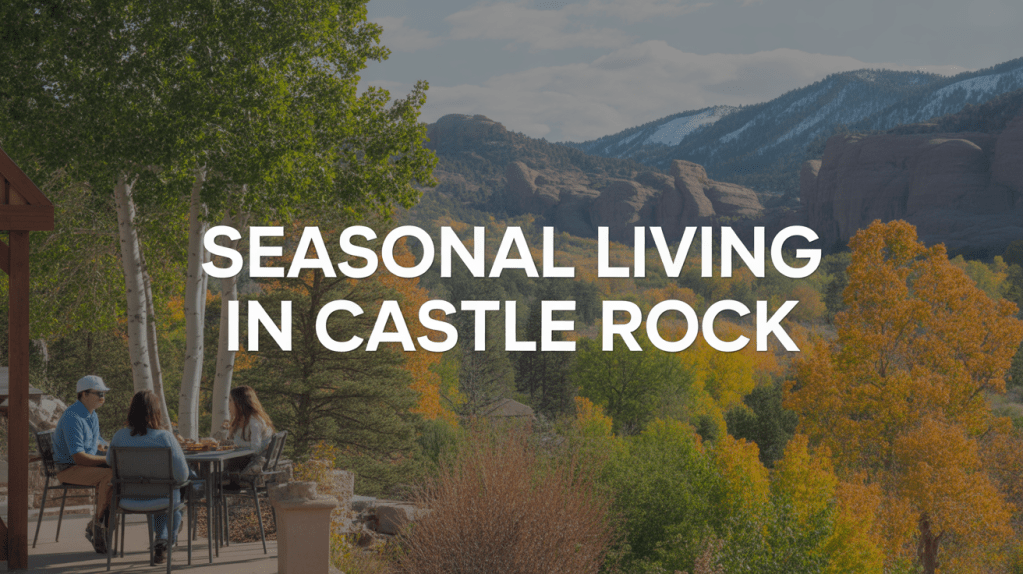
Seasonal shifts shape Castle Rock life in ways that long-time residents almost stop noticing until they reflect on it. Winter brings colder mornings, occasional significant snow, and a stronger focus on indoor routines, with rec centers, home projects, and shorter evenings. Snowstorms can slow I‑25 and ridge-top neighborhoods more than lower areas, so timing and route choice become key parts of winter planning.
Spring and fall are shoulder seasons when outdoor life ramps up and cools down in waves. Trails and parks fill with walkers and bikers on those first mild days, and youth sports fields come alive on weeknights and Saturdays. Summer brings early-morning and late-evening outdoor activity, mid-day heat, and a predictable pattern of evening events downtown and at neighborhood pools.
Deep Dives:
Snow Exposure by Castle Rock Neighborhood & Elevation
Winter Sun, Ridges & Street Patterns in Castle Rock
Spring/Summer Event Density in Downtown, Outlets & Neighborhoods
Trail Usage Year-Round on Castle Rock’s Ridges & Creeks
How Castle Rock’s Seasons Shape Daily Routines
Seasons anchor Castle Rock life more than many newcomers expect — once you’ve lived here a few years, your calendar and habits start to sync naturally with the town’s weather and event rhythm.
Experience, Authority & How This Hub Is Built
This hub is built by a Denver-metro real estate professional who has spent years working with Castle Rock residents — listening to their stories, watching neighborhoods evolve, and seeing how families actually use the town’s schools, roads, trails, and amenities. It is shaped by firsthand experience, client feedback, and careful observation of how Castle Rock behaves on random Tuesdays as much as on big event weekends.
It is a living resource, updated as new neighborhoods build out, road improvements shift traffic patterns, and community hubs grow or change over time.
Who This Hub Is For
This guide is for long-time Castle Rock residents reassessing whether their current neighborhood still fits, buyers prioritizing function and daily rhythm over just square footage, families balancing school options, yard space, and commute realities, professionals weighing remote work against corridor access, and planners thinking in ten- to twenty-year horizons rather than just the next move.
It is meant as lifestyle intelligence, not a sales piece — something you can use to test your assumptions about Castle Rock against how it actually operates.
Frequently Asked Questions About Living in Castle Rock
Does Castle Rock feel more like a small town or a suburb of Denver?
Day to day, Castle Rock feels like a small town with strong suburban amenities. Downtown gives you a walkable main street, regular events, and a sense that people know each other, while the outlets, Promenade, and big-box clusters provide the convenience you’d expect in a larger suburb. How it feels in your routine depends on whether your life leans more into local schools and downtown or heavily north toward DTC and Denver.
How much do school boundaries really shape neighborhood life in Castle Rock?
School boundaries in Castle Rock quietly structure a lot of daily life. They determine which families carpool together, which parks host informal after-school meetups, and where Saturday mornings are spent for youth sports. Over time, feeder patterns keep certain neighborhoods very stable, as families choose to stay put through multiple school stages, which strengthens social ties, community events, and neighborhood identity in ways that don’t show up on a listing sheet.
Is I‑25 traffic as big a deal as people say?
I‑25 is a major factor, but the impact depends heavily on your schedule and destination. A Castle Rock-to-DTC commute at classic rush hour feels very different from a flexible mid-morning drive, and southbound traffic can be a non-issue for some while a constant constraint for others. Many households learn to time departures, use alternate routes for local moves, or negotiate hybrid work arrangements so that Castle Rock’s benefits outweigh the corridor’s bottlenecks.
Do events around downtown and the outlets feel disruptive for nearby homes?
If you live right next to downtown or by the main outlet entrances, you will notice event days — more cars, more people on foot, and occasional music drifting into the evening. For most nearby residents, though, this becomes part of the charm and convenience: walkable access to markets, festivals, and concerts with the option to retreat a few blocks back to quieter streets. A couple of turns off the main corridors, the energy softens quickly while the benefits remain close.
How do seasons change the feel of living in Castle Rock?
In winter, life contracts a bit — people focus on home, school, and essential trips, and pay more attention to I‑25 conditions and hillside roads. From spring through fall, the town opens up: downtown events, trail usage, youth sports, and evenings in parks or on patios shape weekly life. The yearly cycle becomes a kind of metronome for long-time residents, guiding when to launch big projects, host gatherings, or simply enjoy the ridgeline views without worrying about road conditions.
Talk With a Castle Rock Lifestyle Expert
Living in Castle Rock means navigating its mix of historic core, outlet-driven commerce, ridgeline neighborhoods, and I‑25 corridor realities that change block by block — details that rarely show up in glossy descriptions but matter every single day. Whether you’re a long-time resident wondering if another part of town would fit your next chapter better, a buyer trying to balance school options with a DTC commute, or someone deciding if Castle Rock’s small-town feel and regional reach match your long-term vision, I’ve spent years helping people sort through exactly these questions.
Reach out directly when you’re ready — we can talk through how specific Castle Rock neighborhoods function Monday to Sunday, from downtown’s event rhythm to ridgeline trail usage and I‑25 timing, grounded in what I’ve watched work for real families over time. No pressure, no scripts, just a straightforward conversation about whether Castle Rock fits your life and how to make the most of it if it does. Call or send a note at your pace; my goal is to give you the kind of local, lived-in insight that helps you feel confident, not rushed, in your decisions.