


This hub is part of the larger Homeownership 101 Guide → [Homeownership 101]
A Practical Guide to Planning, Adapting, and Thriving in a Home Over Years of Ownership
Lifestyle Planning • Long-Term Comfort • Cost Evolution • Flexibility • Ownership Strategy
Overview
The Living in the Home Long Term Guide is a practical, reality-based resource for homeowners who plan to stay put—and want their home to continue working for them as life changes.
Buying a home is a moment. Living in it is a process.
Most buyers make decisions based on how a home feels at purchase: layout, finishes, room count, and immediate functionality. What’s rarely discussed is how that same home performs after years of daily use, shifting routines, evolving family needs, and changing financial priorities.
Long-term ownership introduces a different set of challenges than short-term ownership. Needs change gradually, not all at once. What once felt spacious can begin to feel tight. What once felt manageable can become inefficient. These changes don’t indicate a bad home—they signal that the way the home is being used has evolved.
This guide focuses on the lived reality of long-term ownership: how homes support (or resist) lifestyle changes, how small decisions compound over time, and how proactive thinking reduces friction before it becomes frustration.
Use this resource as a long-range ownership framework—not a prediction or a renovation checklist.
Explore This Guide
Last updated: January 2026
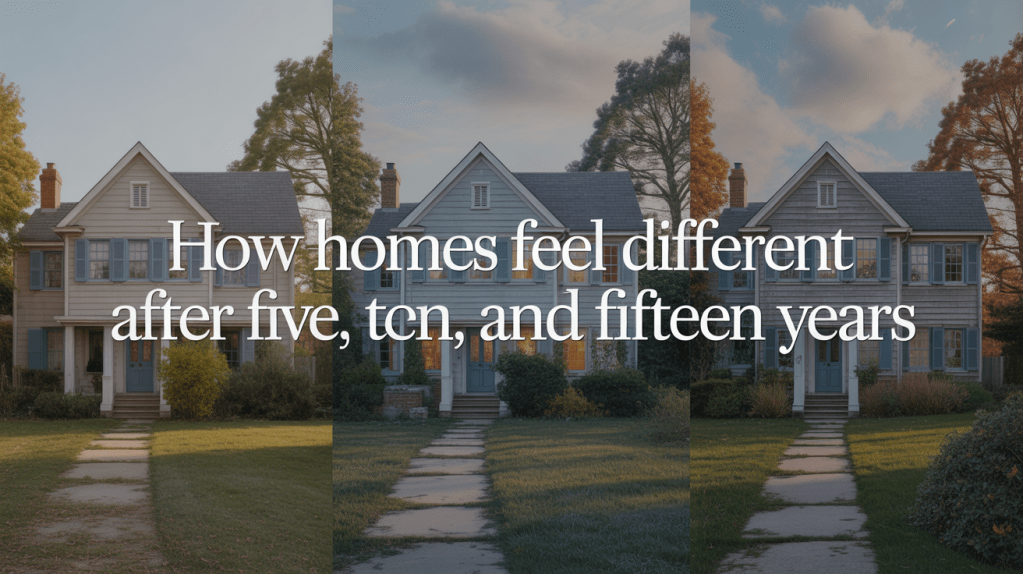
How Homes Feel Different After Five, Ten, and Fifteen Years
Homes don’t just age physically — they age functionally.
In the early years of ownership, most homes feel adaptable and forgiving. Storage seems sufficient. Layout compromises feel minor. Temporary solutions don’t feel permanent. Over time, however, repeated daily use exposes friction points that weren’t obvious at purchase.
After five years, usage patterns become consistent. After ten, they’re entrenched. After fifteen, the home either supports those patterns—or works against them.
Long-term satisfaction is often shaped less by square footage and more by how well the home handles real life:
- Daily flow between rooms
- Noise, privacy, and separation
- Storage relative to actual belongings
- Light, temperature, and comfort consistency
- Proximity to lifestyle amenities
Homes that continue to feel good over time are rarely untouched. They’re adjusted thoughtfully, incrementally, and intentionally as life changes.
Common Long-Term Living Mistakes Homeowners Make

Most long-term frustrations don’t come from buying the “wrong” home. They come from applying short-term thinking to long-term living.
Many homeowners make early decisions based on immediate needs, assuming they’ll reassess later. In practice, “later” rarely comes until friction becomes unavoidable.
Common missteps include:
- Designing exclusively for current routines
- Making permanent changes too early
- Treating inconvenience as normal instead of addressable
- Over-customizing without considering reversibility
- Letting temporary fixes quietly become permanent
The issue isn’t any single decision — it’s failing to periodically reassess how well the home still fits.
Related deep dives:
Why Homes Stop Feeling Functional Over Time
Over-Customization vs Long-Term Flexibility
When Early Design Choices Limit Future Options
Lifestyle Drift and Ownership Friction
Why Most Regret Comes Years Later
Planning for Life Changes Without Overbuilding
Long-term ownership requires planning — but not prediction.
Trying to design a home for every possible future often leads to wasted space, unnecessary cost, or features that never get used. The goal isn’t to anticipate everything. It’s to avoid locking yourself into layouts or decisions that limit reasonable future changes.
Life changes that commonly reshape how a home is used include:
- Remote or hybrid work becoming permanent
- Children arriving, growing, or leaving
- Aging-in-place considerations
- Caregiving for family members
- Income variability or lifestyle shifts
Homes that handle these transitions well usually emphasize flexibility: rooms that can change purpose, layouts that allow reconfiguration, and decisions that preserve optionality.
Related deep dives:
Designing for Change Without Wasted Space
Future-Proofing Without Over-Renovating
Flexible Rooms vs Fixed Purpose Rooms
Planning Ahead Without Paying Twice
Why Optionality Matters More Than Perfection
Designing Comfort – Not Just Layout

Comfort becomes more important than aesthetics the longer you live in a home.
While finishes and style influence first impressions, long-term satisfaction is driven by how a home feels during ordinary days. Comfort issues rarely appear all at once — they build slowly through repetition.
Over time, homeowners become more sensitive to:
- Noise travel and privacy
- Temperature inconsistencies
- Lighting quality throughout the day
- Ease of movement and access
- Daily friction points
Homes that remain comfortable are usually refined gradually. Small adjustments often deliver outsized improvements when they align the home more closely with real usage patterns.
Related deep dives:
Why “Open Concept” Feels Different Over Time
Comfort vs Aesthetics in Long-Term Living
How Small Adjustments Improve Daily Life
Designing for How You Actually Live
When Style Starts to Work Against Comfort
How Ongoing Costs Quietly Evolve Over Time
The cost of living in a home rarely stays static — even without major repairs.
Long-term ownership introduces gradual shifts: utilities trend upward, insurance changes, taxes adjust, maintenance accumulates, and lifestyle-driven improvements become more frequent.
What determines financial comfort isn’t avoiding cost — it’s avoiding surprise.
Homeowners who feel in control long term typically:
- Anticipate expense growth
- Smooth irregular costs over time
- Avoid reactive spending
- Time improvements intentionally
- Align upgrades with actual use
Ownership feels stressful when expenses arrive unexpectedly, not when they’re planned.
Related deep dives:
Why Monthly Ownership Costs Change Over Time
Turning Irregular Expenses Into Predictable Ones
Lifestyle Inflation Inside the Home
Planning for Long-Term Ownership Spending
When Upgrades Improve Life vs Add Stress
When “It Works for Now” Stops Working

Many homes don’t fail — they slowly stop fitting.
This usually happens when temporary solutions persist beyond their usefulness. What once felt manageable becomes daily friction. What once felt minor becomes exhausting.
Common signals include:
- Workarounds becoming routines
- Spaces being avoided
- Storage spilling into living areas
- Noise or privacy fatigue
- Reduced desire to host or use certain rooms
Catching these signals early allows homeowners to adjust thoughtfully, rather than reacting under pressure or assuming a move is the only solution.
Related deep dives:
Warning Signs a Home Is Outgrowing You
When Small Annoyances Compound
Recognizing Functional Fatigue
Fixing Flow Problems Before They Escalate
Adjusting Instead of Moving Too Soon
Flexibility vs Permanence in Home Decisions

Every long-term homeowner balances permanence and flexibility.
Some decisions should be durable and long-lasting. Others benefit from being reversible. Problems arise when permanence is applied too early, or flexibility is sacrificed unnecessarily.
Smart long-term ownership evaluates:
- Reversibility of changes
- Cost to undo or modify
- Impact on future buyers
- Confidence in long-term needs
- Timing relative to life stability
Not every decision needs to last forever — some just need to work well for the current chapter.
Related deep dives:
Which Home Decisions Should Be Permanent
When Reversible Choices Are Smarter
Balancing Customization and Resale
Timing Big Changes Correctly
Designing for the Next Chapter—Not Just This One
What Long-Term Living Can—and Cannot—Solve

Living in a home long term can:
- Create stability and familiarity
- Reduce transaction costs and disruption
- Allow gradual, thoughtful improvement
- Build emotional connection to place
- Improve financial efficiency over time
It cannot:
- Freeze life stages
- Eliminate change
- Prevent all dissatisfaction
- Guarantee perpetual fit
- Replace periodic reassessment
Long-term living works best when homeowners stay engaged rather than assuming comfort is automatic.
Closing Perspective

Living in a home long term isn’t about staying still — it’s about evolving deliberately.
Homes that continue to feel right over years of ownership aren’t accidental. They reflect owners who revisit decisions, respond to changing needs, and understand that long-term comfort is built through many small, informed choices — not one perfect purchase.
This guide exists to help homeowners think beyond move-in, remain flexible as life evolves, and treat long-term living as an active ownership strategy instead of a passive outcome.
This resource is maintained by Chad Cabalka, lead broker of Mile High Home Group, drawing on years of experience advising homeowners through long-term occupancy decisions, lifestyle transitions, and ownership planning across the Denver metro.