



This is part of the Denver Metro Relocation Guide → [Relo Guide]
Relocating from Texas to Colorado is not just a change of scenery — it’s a shift in daily rhythms, housing expectations, and long-term financial considerations. In recent years, families, professionals, and retirees from Texas have made Colorado one of their top destinations for job relocation, climate preference, and quality of life. But the transition isn’t only about adjusting to altitude and snowfall; it involves understanding how Colorado’s housing market, ownership costs, and living patterns differ fundamentally from Texas.
For serious buyers and sellers, the implications of this move reach far beyond the initial purchase price. Home design, commuting habits, maintenance costs, and even buyer psychology operate under a different set of assumptions here. Making smart real estate decisions requires understanding why these differences matter and how they impact long-term value.
Cost of Ownership: More Than Purchase Price
Buyers moving from Texas often begin their Colorado home search expecting comparable square footage or acreage for the same budget. Quickly, they find that price-to-space ratios diverge sharply. Texas’ abundant land and lighter construction costs keep suburban homes larger and newer, while Colorado’s topography, zoning limits, and higher infrastructure costs make housing denser and more vertically designed.
Property taxes tell a clearer story. Texas offsets its lack of state income tax through comparatively high property tax rates — often exceeding 2% of assessed value. Colorado keeps property taxes comparatively low (many metro counties hover under 1%), but balances that advantage with higher service costs, utilities, and insurance. Buyers who focus only on tax rates risk misunderstanding the full cost of ownership. In Colorado, energy efficiency, age of construction, and homeowners association (HOA) obligations often have greater influence on monthly budgets than local tax rates.
Why this matters: Over time, energy-efficient homes and low-maintenance properties retain stronger resale value in Colorado’s mountain climate. Buyers who consider long-term upkeep and systems efficiency — rather than only square footage — tend to make better financial choices.
Housing Stock and Design Differences
Texas homes often emphasize scale and land separation: one- or two-story layouts with larger yards, open floor plans, and broad driveways. In the Denver metro area and nearby suburbs such as Highlands Ranch, Parker, and Arvada, homes more often reflect vertical living — two- and three-story layouts on smaller lots that preserve mountain views and accommodate zoning limits.
Newer Colorado construction leans toward energy performance: tight building envelopes, high-efficiency furnaces, and strategic orientation to sunlight. This isn’t a design preference — it’s a necessity. Longer heating seasons and significant temperature swings make insulation, window quality, and ventilation critical to comfort and cost control.
Many relocating buyers are surprised at how attached Coloradans are to outdoor space even when lots are smaller. Decks, patios, and access to nearby trail systems replace the private acreage mentality seen in Texas suburbs. Value in Colorado real estate often shifts from “my land” to “my access” — proximity to open space, schools, and commuting routes.
Why this matters: Assessing a home here means weighing function against aesthetic. A smaller home with durable exterior materials and strong mechanical systems will outperform a larger, cheaper house in comfort, maintenance, and resale.
Climate and Its Impact on Home Care
Colorado’s dry air, strong UV exposure, and winter freeze cycles require a different approach to maintenance than humid Texas climates. Paint systems fail faster, wood decks weather quickly, and concrete driveways move with frost heaves. At the same time, the dry environment greatly reduces mold, rot, and pest problems common in coastal or southern markets.
Roofing materials, drainage design, and landscaping practices are key due diligence items in inspections. Sprinkler systems here are essential but seasonal; irrigation lines typically require blowout each fall to prevent freeze damage.
Why this matters: Buyers relocating from Texas should budget for annual seasonal maintenance cycles and understand that deferred upkeep — especially on exterior systems — tends to accelerate depreciation in Colorado’s climate. Sellers who proactively manage these systems often recover their investment through better inspection outcomes and faster offers.
Market Pace and Buyer Behavior
Texas real estate culture emphasizes negotiation and inventory variety. In contrast, Colorado’s Front Range market tends to move in quick, seasonal bursts defined by snow patterns, school calendars, and mortgage rate trends.
Inventory historically peaks in late spring and early summer, then tightens as weather cools. Buyers expecting year-round abundance may find fewer choices by late October. The pace can feel faster and less flexible; desirable homes — particularly those under $800,000 in good school districts — may draw multiple offers even in a balanced market.
At the same time, rising interest rates and a maturing housing cycle have slowed extreme price competition seen during 2021–2022. Sellers now face a more analytical buyer pool. Listings that show deferred maintenance or misaligned pricing tend to linger longer.
Why this matters: Texas buyers accustomed to ample selection need to prepare for a more limited and seasonal purchasing window. Understanding local timing prevents emotional decisions under pressure. Sellers, meanwhile, must recognize that post-2024 buyers are value-driven and attentive to condition.
Commuting, Work Patterns, and Location Value
Colorado’s geography compresses major job centers along the I‑25 and C‑470 corridors. Commutes longer than 30–40 minutes become less practical during winter weather, making proximity to employment hubs like the Denver Tech Center, Boulder, or downtown Denver a defining value factor.
In Texas, ample highway systems and lower density can extend acceptable commute distances. In Colorado, time and terrain shape buyer preferences differently. The rise of hybrid work models has allowed some flexibility, yet infrastructure realities persist.
Suburbs such as Highlands Ranch, Littleton, and Broomfield maintain strong appeal for their balance of accessibility, quality schools, and trail connectivity. Buyers seeking mountain adjacency often look to Evergreen or Conifer, accepting tradeoffs in drive time and cost of utilities.
Why this matters: Commute tolerance and accessibility strongly influence resale value. In a volatile rate environment, homes within efficient commuting zones tend to outperform those requiring extended travel.
Lifestyle Shifts Beyond the Home
Moving from Texas to Colorado involves subtle but significant lifestyle changes that influence housing choices. Outdoor recreation is not a “bonus” amenity here — it’s one of the defining features of local culture. Even those who don’t hike or ski often choose homes near open space or trail access because those features hold long-term market desirability.
Social and neighborhood dynamics also differ. Colorado communities often emphasize local sustainability, smaller schools, and regional governance rather than large master-planned developments. While Texas suburbs may revolve around private amenities and HOA-managed services, Colorado’s appeal often lies in municipal recreation centers, public parks, and proximity to natural resources.
Why this matters: Buyers accustomed to private, contained suburban experiences must recalibrate expectations toward shared amenities and public infrastructure. That shift often translates into stronger community cohesion and slower property turnover rates.
Utility Costs, Systems, and Seasonal Awareness
Utility structures differ meaningfully between Texas and Colorado. Air-conditioning demands drop substantially here, but heating loads rise sharply. Natural gas, not electricity, drives winter energy costs. Homes built with efficient furnaces, smart thermostats, and updated insulation manage better through the heating season.
In summer, utilities stabilize; most Colorado homeowners rely on cool nights and air flow rather than constant AC use. Water costs, however, often surprise new residents. Because Colorado’s water rights and supply infrastructure are complex, irrigation-heavy landscaping can inflate monthly bills. Xeriscaping — the use of drought-tolerant plants and efficient drip systems — is not a fad but an adaptive response to water economics.
Why this matters: Over time, lower energy consumption but higher water management costs balance unevenly. Smart buyers budget according to seasonal patterns rather than national averages and evaluate energy audits carefully before purchase.
Long-Term Value and Market Stability
Both Texas and Colorado maintain strong demographic fundamentals, but they diverge in risk exposure. Texas’ market leans more on new development and rapid expansion; Colorado benefits from natural geographic constraints and local building limits that support supply-side stability.
Historically, the Denver metro area demonstrates lower volatility and faster recovery from national corrections compared to broader Sun Belt markets. Limited land availability and sustained employment growth through technology, aerospace, and healthcare sectors contribute to dependable buyer demand.
Why this matters: For relocating homeowners, this means purchasing in Colorado often involves higher initial outlay but steadier appreciation. Sellers gain from constrained supply conditions, but buyers secure more durable equity over time.
Preparing for the Move: Practical Guidance
Relocating households do best when they synchronize timing, logistics, and financial planning ahead of the purchase phase. A few guiding principles:
- Start with utility and tax projections, not just mortgage comparisons. Base affordability on total monthly costs in the specific zip code.
- Adjust expectations on space and yard size. Focus on condition, neighborhood quality, and commuting balance instead of acreage.
- Engage a local real estate professional early. Colorado contracts, inspection practices, and seasonal timing differ from Texas norms.
- Plan for the climate’s effect on belongings and vehicles. Garages, basements, and snow management all factor into livability.
- Understand HOA and metro district structures. These entities often manage local services and can influence long-term ownership costs.
Why this matters: Relocation success depends less on finding the “perfect home” and more on aligning choices with realistic day‑to‑day patterns in a different environment.
Conclusion: A Thoughtful Transition
Relocating from Texas to Colorado rewards those who approach the process with deliberate research and open expectations. The environment, housing stock, and cost structures reward efficiency, durability, and location strategy over size or flash. Adjusting mindset from expansion to optimization is key.
Colorado real estate continues to attract thoughtful buyers who value stable appreciation and quality of life supported by strong job centers and accessible recreation. Understanding the state’s distinct ownership realities — from climate and commuting to maintenance and zoning — ensures a confident transition that protects long-term value.
If you’re considering a move from Texas to Colorado or are preparing to sell a Colorado property with relocation in mind, reach out to me for a tailored discussion of local market conditions, ownership costs, and long-term value strategies. An informed plan is your best advantage in making a confident move.
Get the full Denver Market Insights → [Market Insights]


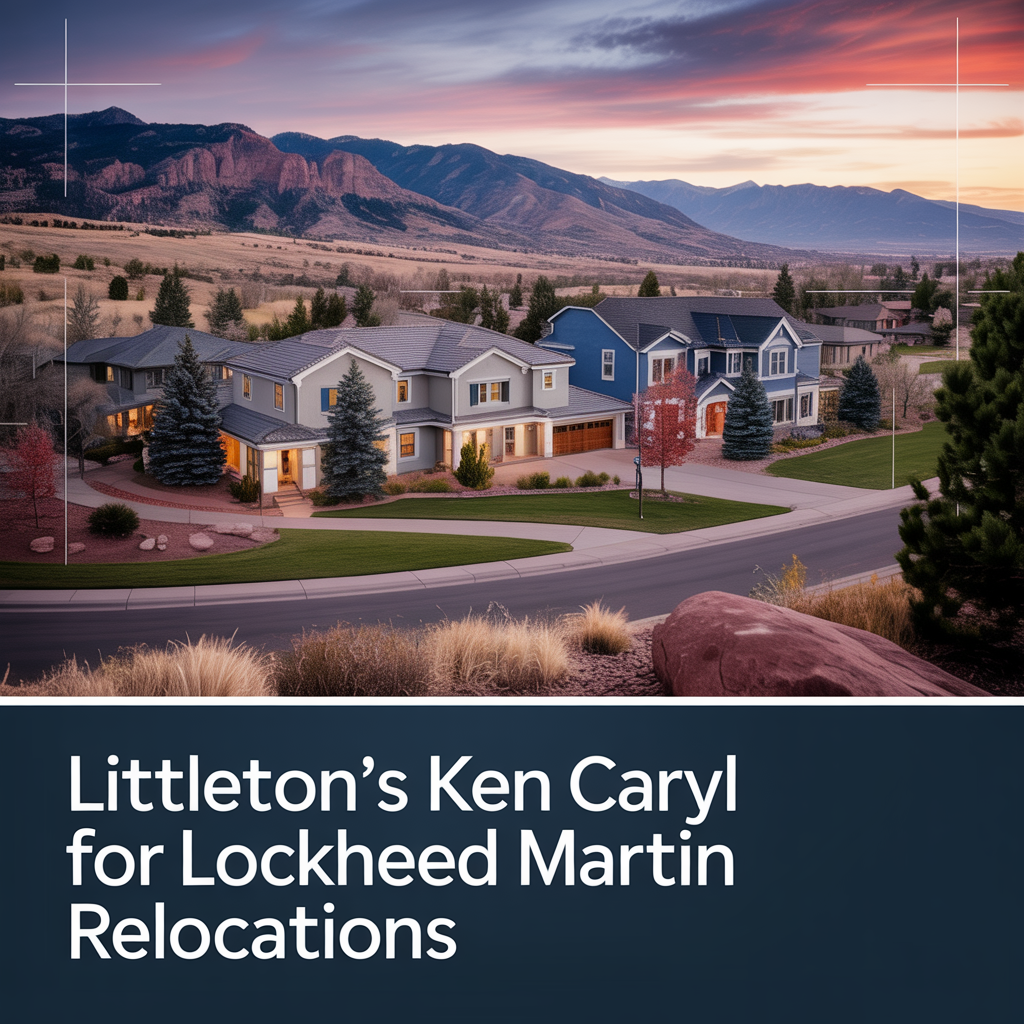
Littleton’s Ken Caryl for Lockheed Relocations
This is part of Lockheed Martin Relocation → [Lockheed Martin Relocation Hub] & the larger Denver Relocation Hub → [Denver Relocation Hub] Written by: Chad Cabalka Ken Caryl is one of the best-kept “family first” relocation options for Lockheed Martin employees who want foothills scenery, strong neighborhood appeal, and a real suburban lifestyle that still feels connected…


Centennial & Parker for Lockheed Relocations
This is part of Lockheed Martin Relocation → [Lockheed Martin Relocation Hub] & the larger Denver Relocation Hub → [Denver Relocation Hub] Written by: Chad Cabalka Centennial and Parker are two of the smartest suburban choices for Lockheed Martin employees relocating with families because they give you a strong balance of commute flexibility, good neighborhood variety, and…

Highlands Ranch for Family-Friendly Lockheed Relocations
This is part of Lockheed Martin Relocation → [Lockheed Martin Relocation Hub] & the larger Denver Relocation Hub → [Denver Relocation Hub] Written by: Chad Cabalka Highlands Ranch is one of the strongest choices for Lockheed Martin employees relocating with families because it delivers exactly what most parents want after a big move: stable neighborhoods, strong community…