



This is part of the Denver Metro Luxury Market Guide → [Luxury Guide]
In the Denver metro area, luxury homes priced above $2 million often face a subtle but persistent barrier to quick sales. This pricing ceiling emerges from a combination of local buyer preferences, inventory dynamics, and economic realities that limit the pool of qualified purchasers. Understanding this phenomenon helps sellers set realistic expectations and buyers identify opportunities in a market where high-end properties linger longer than expected.
Why Luxury Pricing Behaves Differently in Denver
Denver’s luxury segment does not mirror national trends where ultra-high-end homes move swiftly among cash buyers. Instead, properties over $2 million typically sit for 100 to 150 days, compared to 45 to 65 days for mid-range homes statewide. This stems from the metro area’s buyer base, which skews toward professionals relocating from tech hubs or California, seeking value rather than ostentation.
Local wealth concentrates in established enclaves like Cherry Hills Village, Broadmoor, and Genesee, where buyers prioritize land size, privacy, and school districts over sheer square footage. A 10,000-square-foot mansion on a half-acre lot in Hilltop may appraise high but struggles if it lacks the equestrian trails or mountain views that define true luxury here. Sellers who ignore this mismatch chase an illusion of demand that evaporates at higher price points.
Weather patterns exacerbate the issue. Colorado’s intense sun exposure accelerates roof and exterior wear, raising maintenance costs that savvy buyers factor into offers. Commute patterns further constrain appeal: homes in exurbs like Parker or Erie promise space but deter families tied to downtown Denver jobs, where I-25 congestion adds 30 to 60 minutes daily.
Defining the Ceiling: Where Demand Drops Off
The $2 Million to $3 Million Threshold
Homes priced between $2 million and $3 million represent the soft ceiling for many Denver luxury transactions. At this level, sales volume dips because financing becomes rare—most buyers rely on jumbo loans with stricter underwriting amid mid-6% interest rates. Cash buyers exist but focus on trophy properties under $2.5 million that offer immediate usability, like updated kitchens or smart home integrations suited to Front Range living.
Recent data shows median luxury sale prices in metro Denver holding at around $1.09 million for single-family homes in premium areas, with year-over-year declines of 1-2% signaling caution. Why does this matter? Overpricing by even 5-10% pushes a home into a bracket where comparable sales evaporate, forcing price reductions that signal weakness to the market.
Beyond $3 Million: The True Hard Cap
Properties exceeding $3 million encounter a harder ceiling, often exceeding 129 days on market with six months of supply in mountain-adjacent suburbs. Buyers here are predominantly out-of-state executives or retirees, but Colorado’s property taxes—averaging 0.5-0.7% of value—plus utility costs for oversized homes deter all but the committed. A sprawling estate in Ken Caryl might boast panoramic views, but its $4 million ask ignores the $20,000 annual heating bills driven by high-altitude winters.
Housing stock plays a role too. Denver’s luxury inventory favors 1970s-1990s builds with large lots, not the modern glass-walled estates popular elsewhere. Renovation costs to meet buyer standards—think geothermal systems for efficiency—can exceed $500 per square foot, eroding net value for sellers.
Local Factors Reinforcing the Ceiling
Buyer Psychology and Relocation Patterns
Denver attracts pragmatic buyers who weigh long-term ownership costs against lifestyle fit. Relocators from coastal markets expect California-style luxury but balk at Colorado’s realities: limited public transit means car dependency, and suburban sprawl stretches services thin in places like Highlands Ranch. Serious buyers scrutinize total costs—HOA fees in gated communities like Castle Pines often hit $1,000 monthly, capping willingness to stretch on price.
Market psychology amplifies this. In a balanced 2026 market with 4.3 months of statewide supply, luxury sellers face negotiation fatigue as buyers leverage longer days-on-market (up 12% year-over-year). Concessions like closing costs or repairs become standard, effectively lowering net proceeds by 5.7% off list.
Ownership Costs That Buyers Can’t Ignore
High-end ownership in Colorado carries unique expenses. Energy inefficiency in older luxury stock leads to utility bills 20-30% above national averages, while wildfire risk in foothills suburbs demands $10,000+ annual insurance premiums. Buyers model these into affordability, creating a de facto cap: a $2.5 million home with $40,000 yearly carry costs must outperform renting a comparable property at $10,000 monthly.
Commute realities compound this. A luxury home in Evergreen offers seclusion but a 45-minute drive to DTC offices, pricing out dual-income families who value time over space. Thoughtful sellers price accordingly, recognizing that perceived value hinges on utility, not just location prestige.
Strategies for Sellers Facing the Ceiling
Pricing Precision Over Optimism
Sellers of $2 million-plus homes must anchor pricing to recent comparables within a 5-mile radius, adjusting for lot size and updates. Overlisting by 10% might seem aggressive, but it guarantees stagnation—data confirms well-priced luxury homes sell 30% faster. Engage a local appraiser early to quantify the ceiling based on your suburb’s micro-market.
Enhancing Marketability Without Over-Improvement
Focus on buyer pain points: upgrade mechanicals for efficiency and stage to highlight indoor-outdoor flow suited to Colorado’s 300 sunny days. Virtual tours mitigate winter showing challenges, when snow closes mountain passes. Avoid cosmetic excess; buyers seek turnkey reliability over flash.
Pre-inspections reveal issues like foundation settling from expansive soils, common in Littleton. Addressing these proactively builds trust and avoids the 98% list-to-sale ratio seen in softer segments.
Timing and Presentation Tactics
List in late winter or early spring when inventory thins and relocators arrive post-tax season. Professional photography emphasizing views and space counters the ceiling’s psychological drag. For stubborn high-end listings, consider seller financing to bridge financing gaps, appealing to cash-light executives.
Opportunities for Buyers in a Capped Market
Buyers targeting capped luxury gain leverage through patience. Negotiate from multiple options in a 30% inventory uptick, securing 3-5% below ask plus concessions. Prioritize properties under the ceiling with expansion potential, like raw land in Genesee, where future appreciation outpaces overbuilt trophy homes.
Long-term value lies in suburbs balancing commute and amenities—think Superior or Centennial, where $1.5-2 million buys enduring equity without the stagnation risk. Model 3-5% annual appreciation against ownership costs to confirm fit.
Navigating Suburbs Around Denver Metro
Highlands Ranch exemplifies the ceiling’s nuance: spacious $2 million homes sell steadily due to top schools and A.C. Blake Field access, but oversized spec builds lag. In contrast, Bow Mar’s lakefront parcels hold firm under $3 million, buoyed by rarity. Roxborough’s geological uniqueness caps at $2.5 million unless paired with trail proximity.
These patterns underscore metro diversity—sellers in Castle Rock must compete with new construction, while Lakewood revivals pierce the ceiling via urban renewal appeal.
Looking Ahead: A Stable Luxury Landscape
As 2026 unfolds, expect modest 3-5% price growth metro-wide, with luxury stabilizing around current ceilings absent rate drops below 6%. Inventory growth in suburbs like Erie eases pressure, fostering balanced transactions where pricing aligns with buyer realities.
This equilibrium benefits thoughtful participants: sellers who price astutely close efficiently, buyers secure value-driven properties.
For personalized insights on how the pricing ceiling affects your Denver suburb or transaction, reach out to me directly. Let’s discuss your situation and strategies tailored to the current market.
Get the full Denver Market Insights → [Market Insights]


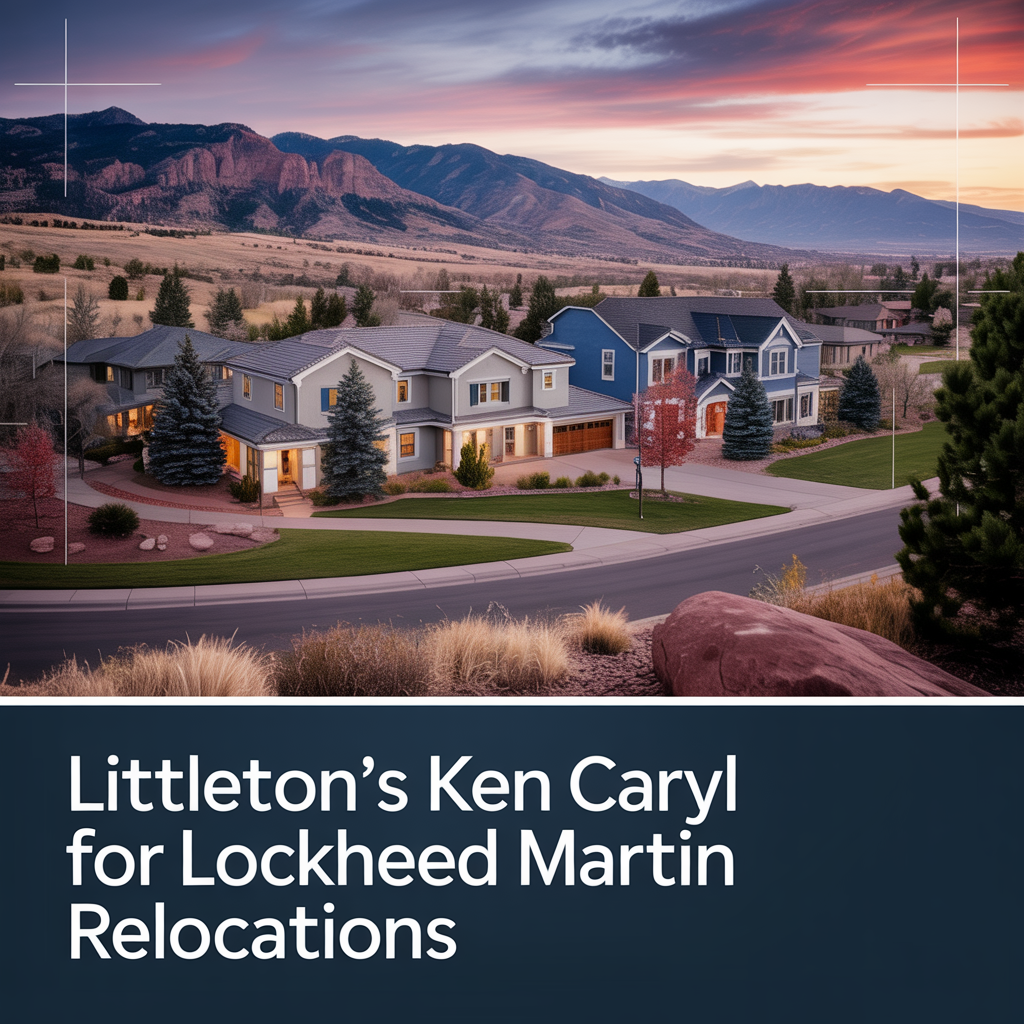
Littleton’s Ken Caryl for Lockheed Relocations
This is part of Lockheed Martin Relocation → [Lockheed Martin Relocation Hub] & the larger Denver Relocation Hub → [Denver Relocation Hub] Written by: Chad Cabalka Ken Caryl is one of the best-kept “family first” relocation options for Lockheed Martin employees who want foothills scenery, strong neighborhood appeal, and a real suburban lifestyle that still feels connected…


Centennial & Parker for Lockheed Relocations
This is part of Lockheed Martin Relocation → [Lockheed Martin Relocation Hub] & the larger Denver Relocation Hub → [Denver Relocation Hub] Written by: Chad Cabalka Centennial and Parker are two of the smartest suburban choices for Lockheed Martin employees relocating with families because they give you a strong balance of commute flexibility, good neighborhood variety, and…

Highlands Ranch for Family-Friendly Lockheed Relocations
This is part of Lockheed Martin Relocation → [Lockheed Martin Relocation Hub] & the larger Denver Relocation Hub → [Denver Relocation Hub] Written by: Chad Cabalka Highlands Ranch is one of the strongest choices for Lockheed Martin employees relocating with families because it delivers exactly what most parents want after a big move: stable neighborhoods, strong community…