



This is part of the Denver Metro Relocation Guide → [Relo Guide]
When experienced homebuyers enter a new market, they don’t chase the cheapest listing or the steepest price cut. They focus on long-term value, market position, and livability — the elements that define real estate performance over time. This mindset often surprises new or relocating buyers, especially in competitive regions like the Denver metro area, where pricing dynamics can be complex and sub-markets vary block by block.
Understanding why seasoned buyers avoid the “best deal” mindset requires unpacking what real value means in a market characterized by shifting demand, limited supply, and the distinct local factors that drive buyer behavior in Colorado.
The Illusion of a “Good Deal”
Why low price doesn’t always equal value
In any housing market, lower prices attract attention — especially from out-of-state buyers comparing home values to more expensive regions. But in Colorado’s Front Range, price is only one layer of value. The best-performing properties over time often aren’t the cheapest; they’re the ones that balance location quality, maintenance history, and long-term livability.
For example, a lower-priced home in an outer suburb may look appealing online, but commute times, school zoning, and rising municipal costs can limit future buyer demand. Conversely, a modestly sized property in Centennial or Arvada may hold its value better because it sits near stable employment hubs and consistent buyer interest, even when broader market conditions cool.
What matters isn’t whether a buyer “got a deal” at closing — it’s how the property performs over years of ownership. A discounted price can mask underlying inefficiencies that will cost far more over time.
Local Knowledge Always Outperforms Price Chasing
The structure of Colorado’s sub-markets
The Denver metro area and its surrounding counties — including Douglas, Jefferson, Arapahoe, and Boulder — operate as interconnected but distinct sub-markets. Each is influenced by different school systems, transportation networks, and zoning approaches. Experienced buyers know that these differences have far more impact on long-term value than whether they negotiated an extra two percent off the purchase price.
For example, Highlands Ranch and Parker attract families for balanced amenities, top-rated schools, and manageable commute times. In contrast, downtown Denver and nearby areas like Sloan’s Lake or Washington Park command premiums for walkability and proximity to employment. These price differences are rational — they reflect underlying lifestyle drivers and land scarcity, not short-term market anomalies.
A buyer unfamiliar with this structure may see a home priced well below the median and assume it’s a bargain. A seasoned buyer asks instead: what trade-offs am I accepting in exchange for that price? Those trade-offs often include resale limitations, neighborhood transitions, or deferred maintenance common in older Colorado housing stock.
Why Market Timing Rarely Works in Practice
Experienced buyers think in cycles, not seasons
It’s common for newcomers to hope they can “time the market” — waiting for prices to drop before they buy. Experienced buyers know this rarely works as intended. Colorado’s real estate cycles are driven by steady in-migration, limited land supply, and strong employment bases in tech, healthcare, and aerospace. While seasonal softening can occur in late fall or winter, overall demand has remained resilient even through interest rate swings.
More importantly, when prices dip, inventory quality also declines. Sellers who can afford to wait often do, reducing the number of desirable listings precisely when opportunistic buyers start hunting. This means “buying the dip” can leave a buyer choosing from less competitive properties, which limits long-term upside.
Market timing also overlooks the compounding value of owning a home in a stable region. A buyer who waits a year for theoretical savings may lose that advantage through missed appreciation or higher interest rates. Experienced buyers understand that buying well-positioned real estate during any stable period tends to outperform waiting indefinitely for better conditions.
The True Drivers of Colorado Property Value
Location consistency and quality of livability
Long-term property performance in Colorado depends far more on location consistency than temporary price movement. Proximity to employment centers along I‑25, access to light rail or major commuting corridors, and stable neighborhood planning all factor heavily into buyer psychology.
Neighborhoods like Greenwood Village, Littleton, and Broomfield offer strong examples. These areas combine predictable infrastructure with access to major job sites and lifestyle amenities. As a result, they tend to hold value during market corrections better than newly built outer suburbs that rely on longer commute patterns or developing retail access.
Livability also plays a key role. Colorado buyers place a premium on functional layouts, natural light, and energy-efficient upgrades suited to local climate conditions — priorities that directly affect resale appeal. A home that shows well in every season and doesn’t burden owners with heavy utility costs will retain buyer interest across market cycles.
Emotional Intelligence in the Buying Process
Understanding behavioral anchors
Experienced buyers are aware of their own cognitive biases. They know that early impressions can distort value perception — for instance, believing the first “affordable” listing they see online is an opportunity simply because it stands out from higher-priced comparables.
They also separate personal taste from market fundamentals. A buyer relocating from California might expect certain architectural styles or landscaping norms that don’t align with Colorado’s housing stock. Seasoned buyers adapt quickly; they assess functionality, not just aesthetic alignment with past experiences. This mindset prevents overpaying for the wrong reasons or passing on a solid property due to minor customizations that can be updated later.
By mastering this emotional discipline, experienced buyers make clearer decisions grounded in market logic, not momentary excitement or fear of missing out.
Evaluating Properties as Long-Term Financial Assets
Viewing the home as both lifestyle and investment
In Colorado’s appreciating-but-maturing market, homes must be evaluated on both livability and financial durability. Experienced buyers blend these perspectives. They consider:
- Neighborhood trajectory: Whether the surrounding area shows stable or improving appeal to future buyers.
- Structural soundness: Homes built during 1980s–2000s booms often require targeted updates to remain competitive.
- Operational costs: Heating efficiency, roof condition, and insurance considerations all affect long-term ownership math.
- Exit strategy: Easy-to-sell homes — near trails, with balanced layouts and neutral design — consistently outperform niche or over-customized properties.
This disciplined approach is particularly relevant in areas west of Denver, where lot scarcity and topographical variation can make valuation more nuanced. A great view adds emotional value but requires confirming build stability, drainage, and access — details experienced buyers prioritize over emotional impressions.
The Role of Professional Guidance
Why depth of local representation matters
Colorado’s market rewards context — and context comes from representation. Agents who understand micro-neighborhood differences, infrastructure timelines, and local buyer psychology help clients identify real value instead of just price anomalies.
This is especially critical for relocating homeowners who may not yet grasp local commute realities or weather-driven design considerations. For instance, buyers from coastal markets are often unprepared for how regional climate influences construction materials, utility costs, or resale timelines. An expert advisor frames these variables early, helping clients interpret listings through the lens of total cost of ownership, not just square footage and price per foot.
Good guidance doesn’t chase price — it clarifies leverage. Knowing which properties will hold attention from the next group of buyers is the difference between an informed purchase and a short-term compromise.
Why Value-Oriented Purchases Create Lasting Confidence
Confidence comes from clarity, not discount
Experienced buyers don’t measure success by how far below list price they negotiated; they measure it by how comfortably their property fits within their objectives. The most lasting satisfaction comes from homes that align with daily patterns, financial goals, and realistic resale potential.
In the Denver market, where conditions fluctuate but long-term demand persists, clarity beats timing. The security of knowing you purchased the right home in the right location — one you can hold confidently through cycles — proves far more valuable than chasing the deal that looked best on paper.
When viewed over a decade rather than a season, that’s the real “best deal.”
Conclusion: Real Value Is Bought, Not Found
The Colorado housing market rewards buyers who think beyond the short term. While headlines may shift with interest rates or new construction trends, the fundamentals stay the same: location depth, property condition, neighborhood stability, and the buyer’s own comfort in ownership create value that outlasts temporary market fluctuations.
In this state’s mature and increasingly competitive real estate environment, experience shows that chasing the lowest price rarely leads to the best outcome. The most successful buyers focus on buying confidently, holding patiently, and understanding their market deeply.
If you’re considering a move to or within Colorado and want to discuss which locations align best with your financial and lifestyle priorities, reach out to me directly. Thoughtful strategy and local insight always outperform shortcuts — and an informed plan is the surest foundation for lasting value.
Get the full Denver Market Insights → [Market Insights]


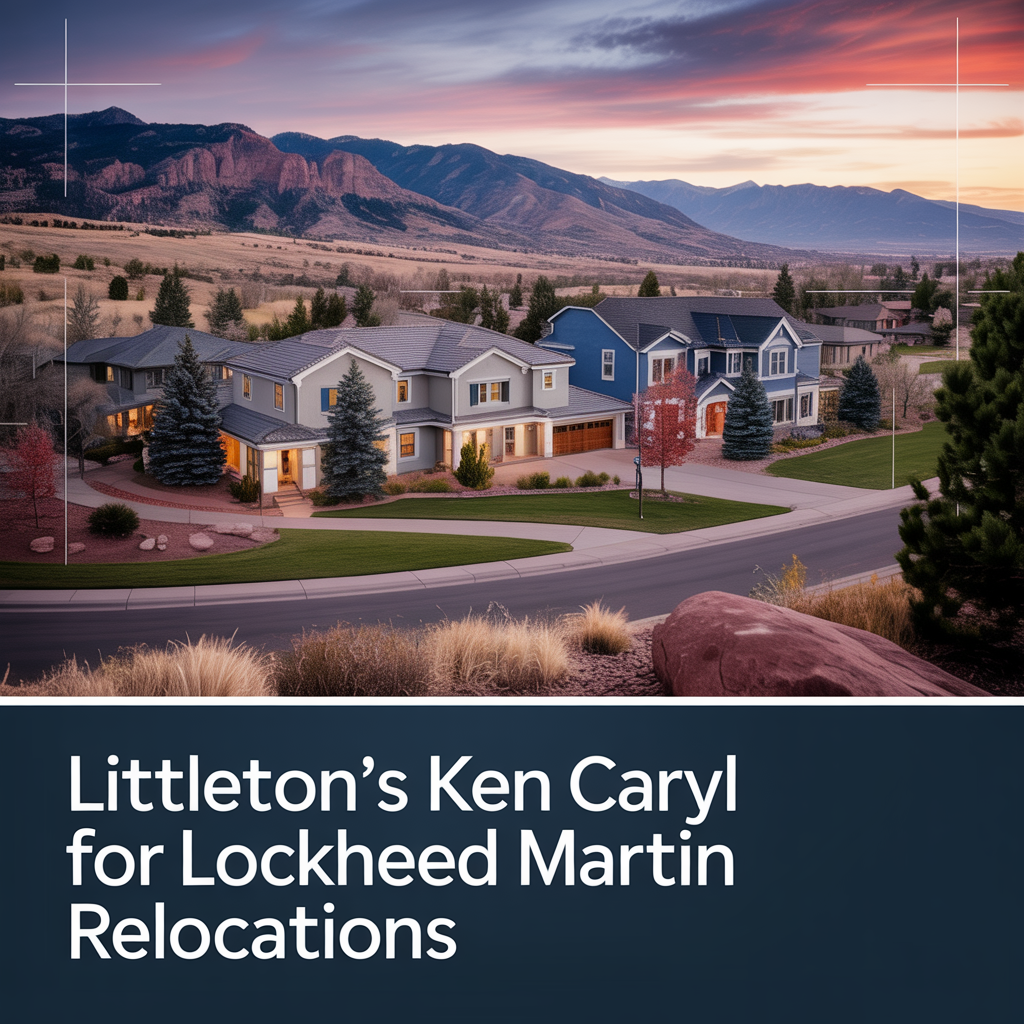
Littleton’s Ken Caryl for Lockheed Relocations
This is part of Lockheed Martin Relocation → [Lockheed Martin Relocation Hub] & the larger Denver Relocation Hub → [Denver Relocation Hub] Written by: Chad Cabalka Ken Caryl is one of the best-kept “family first” relocation options for Lockheed Martin employees who want foothills scenery, strong neighborhood appeal, and a real suburban lifestyle that still feels connected…


Centennial & Parker for Lockheed Relocations
This is part of Lockheed Martin Relocation → [Lockheed Martin Relocation Hub] & the larger Denver Relocation Hub → [Denver Relocation Hub] Written by: Chad Cabalka Centennial and Parker are two of the smartest suburban choices for Lockheed Martin employees relocating with families because they give you a strong balance of commute flexibility, good neighborhood variety, and…

Highlands Ranch for Family-Friendly Lockheed Relocations
This is part of Lockheed Martin Relocation → [Lockheed Martin Relocation Hub] & the larger Denver Relocation Hub → [Denver Relocation Hub] Written by: Chad Cabalka Highlands Ranch is one of the strongest choices for Lockheed Martin employees relocating with families because it delivers exactly what most parents want after a big move: stable neighborhoods, strong community…