


This is part of the Denver Metro Luxury Market Guide → [Luxury Guide]
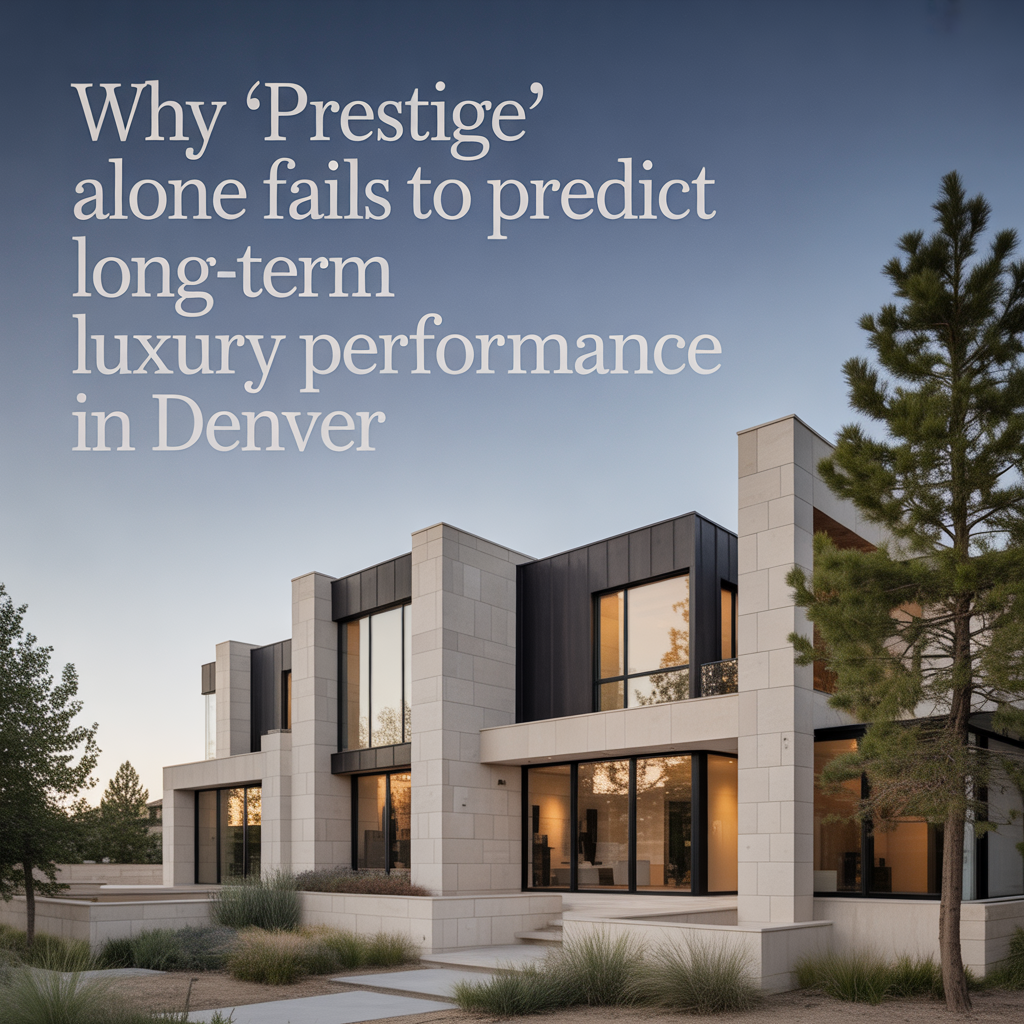
In Denver’s luxury real estate market, prestige—often tied to established neighborhoods or high-profile addresses—draws initial attention from buyers seeking status. Yet prestige frequently falls short as a reliable indicator of long-term value appreciation and performance. This disconnect arises because market dynamics prioritize fundamentals like location utility, infrastructure resilience, and demographic shifts over mere cachet, especially in a region shaped by Colorado’s unique growth patterns and economic cycles.
Defining Prestige in Denver Luxury Context
Prestige in Denver luxury homes typically refers to properties in historically affluent areas such as Cherry Creek, Country Club, or Washington Park, where median prices exceed $2 million and buyer pools include executives and second-home investors. These neighborhoods benefit from social signaling—proximity to fine dining, private clubs, and cultural venues—which appeals to buyers prioritizing immediate desirability.
However, prestige often masks underlying vulnerabilities. For instance, older prestige enclaves feature aging housing stock from the mid-20th century, with larger lots but limited modern amenities like smart home integration or energy-efficient designs. Buyers overlook this initially, drawn by the allure of established names, but resale performance suffers when younger affluent families demand updates that match their remote-work lifestyles and Colorado’s variable weather demands for resilient builds.
Prestige vs. Performance Metrics
Long-term performance hinges on measurable outcomes: annualized appreciation rates, days-on-market for resales, and capitalization rates for investors. Data from recent cycles show prestige-heavy areas like Cherry Creek averaging 3-4% annual growth over the past decade, lagging behind up-and-coming suburbs like Cherry Hills Village or Greenwood Village, where targeted infrastructure has driven 5-6% gains. This gap matters because it affects equity buildup for sellers and rental yields for those financing through ownership costs amplified by Colorado’s property taxes and utility demands.
Location Fundamentals Trump Neighborhood Branding
Buyers fixate on prestige because it simplifies decision-making amid Denver metro’s 2.3 million residents and sprawling suburbs. Yet fundamentals—commute access, school quality, and employment proximity—dictate sustained demand. Prestige areas near downtown Denver face chronic congestion on I-25 and C-470, extending commutes by 20-30 minutes during peak hours, which erodes appeal for hybrid workers post-pandemic.
Suburban luxury pockets, such as Highlands Ranch or Parker, outperform by aligning with buyer behavior: families prioritizing top-rated Douglas County schools and 30-minute drives to DTC tech hubs. These areas feature newer inventory—post-2000 builds with open floor plans suited to Colorado’s indoor-outdoor living—yielding faster resales and higher per-square-foot values over time.
Commute Patterns and Daily Realities
Colorado’s geography amplifies commute impacts. Prestige homes in central Denver contend with winter road maintenance delays and urban density, pushing ownership costs higher through insurance premiums tied to traffic exposure. In contrast, southeast suburbs offer light rail expansions and e-commerce fulfillment centers, stabilizing values as remote buyers from California relocate for affordability without sacrificing lifestyle utility.
Housing Stock Quality Drives Resale Velocity
Denver’s luxury prestige often clings to pre-1980s estates with grand facades but inefficient layouts and high maintenance. These properties sit longer—averaging 60-90 days on market—because discerning sellers demand concessions for renovations, eroding net proceeds amid rising material costs from supply chain issues.
Modern luxury in areas like Lone Tree or Centennial emphasizes durable construction for Front Range winds and temperature swings, plus features like home offices and EV charging. This stock turns over quicker, supporting 4-5% annual appreciation as millennials inherit wealth and target turnkey properties. Sellers in prestige zones underestimate this, pricing on comps from peak 2022 cycles, only to face price reductions that signal weakness to future buyers.
Adaptation to Ownership Costs
Colorado’s ownership realities—property taxes at 0.5-0.7% of value, plus HOA fees in gated prestige communities—compound issues for outdated stock. Buyers calculate total costs, favoring suburbs where lower mill levies and energy-efficient builds offset winter heating bills. Prestige sellers who ignore this face stagnant equity, as cash-rich out-of-state buyers pivot to functional alternatives.
Demographic Shifts Reshape Luxury Demand
Denver metro’s buyer pool evolves with in-migration from high-cost states, favoring practical luxury over symbolic prestige. Younger high-earners (35-50) prioritize family-centric suburbs with trails and breweries over urban prestige, driven by school districts and low-crime stats. Prestige areas, with their smaller demographics of empty-nesters, see slower turnover as heirs delay sales.
Relocating professionals from tech hubs like Austin or Seattle seek value stability, avoiding prestige premiums that evaporate in balanced markets like 2026’s projected 4.3 months’ supply. Suburbs capture this shift, with single-family luxury homes in Erie or Castle Rock appreciating steadily due to new builds matching buyer specs.
Buyer Psychology in Practice
Serious buyers assess psychological factors: prestige satisfies short-term ego but long-term regret stems from mismatched utility. In focus groups and transaction data, repeat buyers cite “lifestyle fit” over status, explaining why Highlands Ranch luxury outperforms Wash Park by 15-20% in five-year returns. Sellers must price accordingly, emphasizing upgrades that bridge the prestige-performance gap.
Infrastructure and Future-Proofing as Key Differentiators
Prestige neglects infrastructure evolution. Denver’s central enclaves grapple with aging sewers and limited expansion, capping lot splits or additions. Emerging luxury corridors along I-70 or US-36 benefit from highway widenings and TOD zoning, unlocking density without sacrificing exclusivity.
Colorado-specific factors like wildfire risk mitigation and water rights further favor suburbs with municipal planning. Prestige properties in fire-prone foothills lose insurance viability, while insulated southeast enclaves maintain lender confidence and buyer interest. Forward-thinking sellers highlight these in listings to compete.
Economic Anchors Matter More Than Views
Proximity to stable employers—Lockheed Martin in Waterton or Arrow Electronics in Centennial—anchors demand beyond prestige views of the Front Range. These nodes insulate against downturns, as seen in 2025’s softening where prestige dipped 1-2% while anchored suburbs held firm.
Market Cycles Expose Prestige Limitations
In seller-favorable peaks, prestige shines with bidding wars; balanced or buyer-leaning cycles reveal frailties. Current trends—mid-6% rates and growing inventory—punish overpriced prestige, with concessions averaging 5.7% off list. Suburbs adapt via developer partnerships, delivering spec homes that align with buyer timelines.
Long-term, cycles reward resilience. Prestige’s 129-day mountain lags contrast suburban 45-65 days, compounding opportunity costs for holders.
Positioning for Optimal Luxury Outcomes
Buyers should audit prestige claims against comps from the past 24 months, factoring commute simulations and school rankings. Sellers in prestige zones invest in audits—energy, structural—to boost appeal, or consider trade-ups to high-performance suburbs.
Relocators weigh total ecosystem: tax implications, resale horizons, family trajectories. Denver luxury thrives on substance; prestige is a starting point, not the endpoint.
In Denver’s evolving luxury landscape, prestige captivates but fundamentals—utility, stock quality, demographics, infrastructure—forecast enduring performance. Thoughtful buyers and sellers who dissect these layers build lasting equity amid Colorado’s growth trajectory. For personalized analysis on how these dynamics apply to your situation in the Denver metro or suburbs, reach out to me directly for tailored insights.
Get the full Denver Market Insights → [Market Insights]



Littleton’s Ken Caryl for Lockheed Relocations
This is part of Lockheed Martin Relocation → [Lockheed Martin Relocation Hub] & the larger Denver Relocation Hub → [Denver Relocation Hub] Written by: Chad Cabalka Ken Caryl is one of the best-kept “family first” relocation options for Lockheed Martin employees who want foothills scenery, strong neighborhood appeal, and a real suburban lifestyle that still feels connected…


Centennial & Parker for Lockheed Relocations
This is part of Lockheed Martin Relocation → [Lockheed Martin Relocation Hub] & the larger Denver Relocation Hub → [Denver Relocation Hub] Written by: Chad Cabalka Centennial and Parker are two of the smartest suburban choices for Lockheed Martin employees relocating with families because they give you a strong balance of commute flexibility, good neighborhood variety, and…

Highlands Ranch for Family-Friendly Lockheed Relocations
This is part of Lockheed Martin Relocation → [Lockheed Martin Relocation Hub] & the larger Denver Relocation Hub → [Denver Relocation Hub] Written by: Chad Cabalka Highlands Ranch is one of the strongest choices for Lockheed Martin employees relocating with families because it delivers exactly what most parents want after a big move: stable neighborhoods, strong community…