


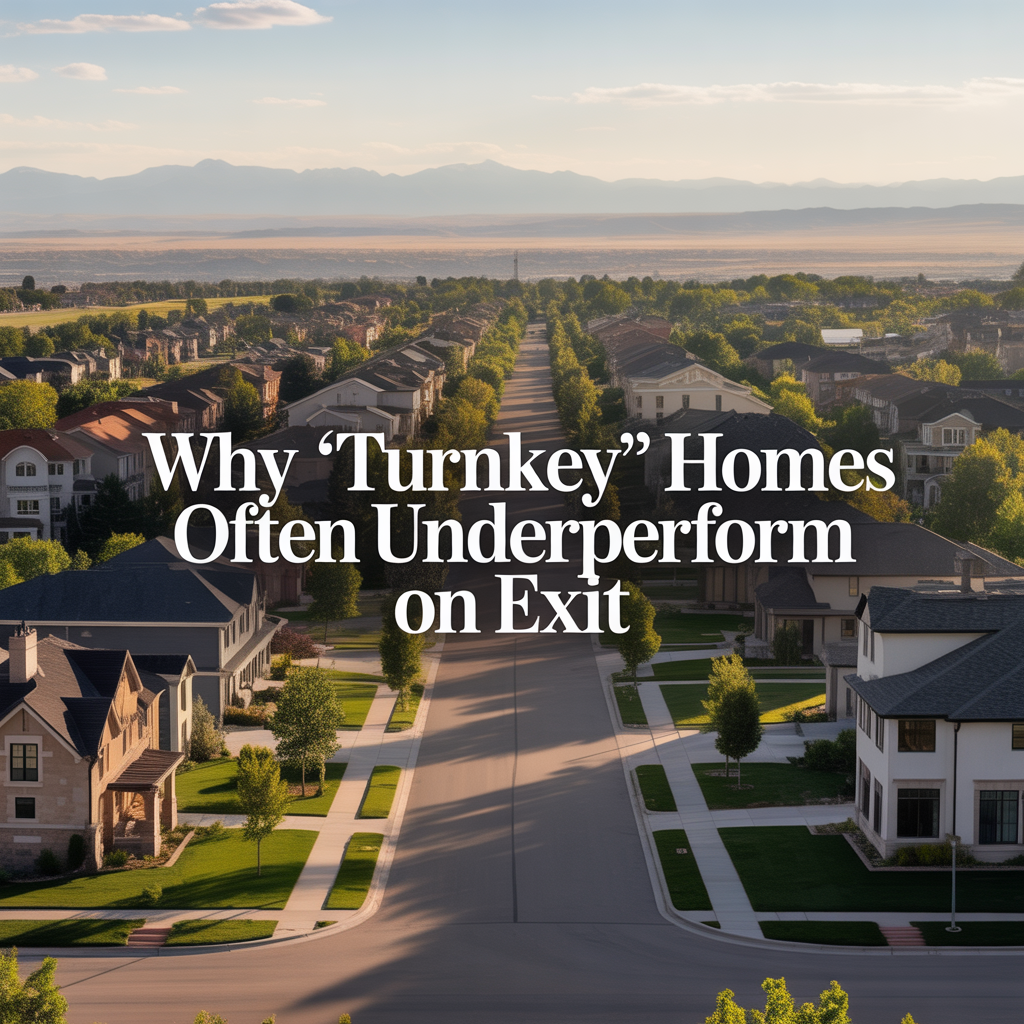
This is part of the Denver Metro Investor Guide → [Investor Guide]
In Colorado’s competitive housing market—especially across the Denver metro and Front Range suburbs—buyers often encounter the term turnkey. For many investors, it sounds like an invitation to avoid risk: a property that’s move-in-ready, modernized, and already generating income. Yet for all the convenience, turnkey homes frequently underperform when it’s time to sell.
Understanding why this happens requires looking beyond aesthetics and beyond the short-term rental math. Real estate returns in Colorado are driven primarily by fundamentals—market velocity, supply constraints, neighborhood life cycles, and buyer psychology. The same traits that make a home appealing as a “ready product” can also limit its upside potential over time.
This article explores why turnkey homes often disappoint investors on resale, what underlying dynamics are at play, and how discerning investors can protect long-term returns in markets like Denver, Highlands Ranch, Littleton, and Fort Collins.
The Allure of “Turnkey” for Colorado Investors
Turnkey properties attract capital for good reason. They minimize holding risk and uncertainty. Renovations are already complete, mechanical systems are new or updated, and prospective tenants or buyers see instant appeal.
In fast-moving markets such as Denver, Parker, and Castle Rock, turnkey inventory often commands a premium. Investors justify that higher price with the promise of stable rents and lower maintenance. Moreover, with Colorado’s year-round in-migration and steady job base in sectors like tech, health care, and energy, the narrative seems to support the decision: buy clean, rent fast, and exit easily.
But this surface-level logic misses two structural realities in the Colorado market:
- Appreciation outpaces rent growth.
Most Front Range appreciation comes from land value and neighborhood maturation, not cosmetic improvements. A turnkey home’s intrinsic value is already “harvested” at purchase. - Buyer psychology drives resale pricing.
Future buyers—especially Denver-area owner-occupants—want to personalize their homes. By definition, turnkey homes remove that emotional upside.
Why Fully Renovated Homes Have Limited Upside
Built-In Premiums Reduce Future Yield
Turnkey listings trade at a markup because someone else already captured the renovation arbitrage. The investor who buys ready-made inventory is effectively paying retail pricing.
For example, in a Denver suburb where comparable older homes sell around $600,000, turnkey counterparts might list at $665,000–$685,000. That 10–15% premium represents the finished condition. Because the renovations are depreciating features—paint, flooring, cabinetry—not enduring location advantages, their incremental value seldom compounds.
Over a five- to seven-year hold, price momentum will favor homes that started below market and benefited from neighborhood improvement, not those bought at peak retail value.
Homogeneity in Design
Much of Colorado’s renovated housing stock reflects national design templates: gray interiors, open shelving, black hardware, white cabinets. In markets like Highlands Ranch or Centennial—where large builder communities share similar layouts—turnkey flips can feel indistinguishable.
When buyers perceive options as interchangeable, competition shifts from emotional differentiation to price compression. Even small variances in square footage or yard condition can erode value at resale, especially when inventory rises, as seen cyclically each spring in Douglas and Arapahoe Counties.
Depreciation vs. Appreciation Channels
Renovation-driven value is finite. Roofs, HVAC systems, and finishes inevitably age. By contrast, value created through location, lot quality, and school district tends to endure.
Many turnkey homes maximize short-term aesthetics while limiting long-term land leverage. For instance, smaller infill lots in Englewood or Lakewood might photograph beautifully but appreciate slower than older properties with redevelopment potential in Wheat Ridge or Littleton. Investors who buy for optics rather than fundamentals often find that their clean, modernized homes stagnate in value once the market normalizes.
The Market Psychology Behind Exit Values
Buyer Expectations Reset Quickly
In a region like Denver—where new construction continues along the E-470 corridor and north toward Thornton and Erie—buyers quickly recalibrate what “updated” means. Cabinets that looked current three years ago can feel dated once builders introduce new finishes and spatial layouts.
When investors eventually list their turnkey holdings, they’re competing with genuinely new homes offering warranties, smart-home technology, and preferred financing incentives from builders. The once-turnkey property becomes a near-term maintenance risk without the same marketing advantage.
Emotional Value Drives Owner-Occupant Bidding
Resale performance depends on appealing to the next buyer demographic. Most Colorado single-family homes under $1 million resell to owner-occupants, not other investors.
Owner-buyers pay premiums for emotional resonance: the sense of “home.” When every turnkey listing looks identical, emotion declines and pricing becomes rigid. Meanwhile, older but character-rich properties—bungalows in Congress Park or 1970s moderns in Greenwood Village—often generate spirited bidding because buyers can envision making them their own.
Perception of “Profit-Driven” Flips
Colorado buyers, especially in established suburbs like Littleton and Golden, are increasingly attentive to resale history. Public records showing a short ownership period trigger scrutiny around renovation quality.
If an investor-owned “turnkey” property is perceived as optimized for profit rather than durability, buyers mentally discount its value. They anticipate corner-cutting or cheaper materials behind the cosmetic appeal. That perception, whether fair or not, limits the achievable price ceiling at exit.
Market-Specific Dynamics in Colorado
Supply Volatility and Seasonal Timing
The Front Range experiences pronounced seasonal listing waves tied to school calendars and weather stability. Turnkey homes—often positioned for quick summer sales—can underperform if timing lags.
A home bought turnkey in February for $700,000 might feel stale by August if competing listings hit with fresher updates and outdoor appeal. Investors banking on uniform appreciation underestimate Colorado’s timing sensitivity; micro-seasonal dynamics matter.
Ownership Costs and Rent Ceilings
While Colorado’s property taxes remain moderate relative to national averages, insurance and utilities have risen sharply in recent years. This compresses net yields for turnkey investors, particularly when rents plateau.
In Denver County, for instance, rental rates have grown only modestly since 2022 while operating costs increased faster. Turnkey investors who paid top-of-market purchase prices in expectation of steady rent growth now face tighter margins and longer breakeven periods. Cash flow diminishes, translating to pressure on resale returns.
Infrastructure and Commute Shifts
Real value growth along the Front Range follows commuting patterns and infrastructure investment—not polished interiors. The I-25 corridor between Denver Tech Center and Castle Rock, as well as I-70’s western slope expansions, demonstrate this.
Homes acquired before major transit or amenity improvements—such as light rail expansion or mixed-use redevelopment—see compounded appreciation even without heavy renovation. Turnkey properties purchased after these upgrades capture none of that incremental lift. Timing relative to infrastructure creates more upside than finish levels ever will.
Strategic Guidance for Colorado Real Estate Investors
Focus on Value-Add, Not Just “Ready-Made”
The most consistent performers in Colorado portfolios are homes purchased slightly below market where selective improvements drive value. Investors should target assets with unrealized potential—perhaps dated but sound mechanicals, or underutilized basements suitable for ADUs (where zoning allows).
This approach enables investors to generate equity through action, not passivity, mitigating exposure to external price compression. Neighborhoods like Arvada, Lakewood, and Northglenn continue to reward well-planned improvements over prepackaged perfection.
Prioritize Location Fluidity
Turnkey homes in mid-tier homogeneous subdivisions often lack future repositioning options. More versatile submarkets—older cores near transit or commercial corridors—offer adaptive reuse or redevelopment potential.
For instance, as Denver’s zoning evolves to encourage gentle density, duplex-eligible lots or accessory dwelling unit (ADU) additions can meaningfully alter long-term return forecasts. Investors restricted to “finished but fixed” product lose that flexibility.
Evaluate Total Return, Not Just Stability
Many investors equate risk reduction with return optimization. In practice, minimizing maintenance risk may suppress equity growth. Stable assets aren’t always accretive ones.
A property requiring strategic mid-term updates can outperform a flawless turnkey product precisely because the investor controls the next value cycle. This is especially true in cyclical or plateauing markets like Colorado’s—where sustained appreciation stems from incremental differentiation, not cosmetic uniformity.
When Turnkey May Still Make Sense
There are circumstances where turnkey acquisitions align with strategic objectives:
- Portfolio balance. An investor heavily weighted in heavy rehab projects may benefit from a few low-maintenance holdings for cash flow stability.
- 1031 exchange timelines. When reinvestment deadlines are tight, turnkey properties can preserve tax advantages while maintaining market exposure.
- Remote investment. Buyers based out of state who lack local vendor networks might justify the turnkey premium to avoid construction risk.
Even in these cases, investors should mitigate overpayment by prioritizing premier locations—corner lots, south-facing yards, or proximity to reliable commuting corridors like C-470 and I-25—so future demand remains insulated from cosmetic obsolescence.
Conclusion: Long-Term Thinking Wins in Colorado
Turnkey homes satisfy an understandable desire for safety and simplicity. In a market as regionally varied as Colorado’s, however, they rarely deliver superior exit performance. The same traits that make them attractive at purchase—predictability and polish—also cap their future potential.
Successful long-term investors build equity through foresight, timing, and adaptability. They view modern finishes as temporary, not transformative. By grounding decisions in location dynamics, housing policy shifts, and evolving buyer psychology, investors can outperform the passive turnkey model—both in yield and appreciation.
If you’d like a clear, data-informed assessment of which Colorado submarkets still offer genuine value-add opportunity—or to evaluate whether a recent turnkey acquisition fits your long-term goals—reach out to me directly. I provide tailored guidance for investors focused on sustainable returns, not marketing hype.
Get the full Denver Market Insights → [Market Insights]


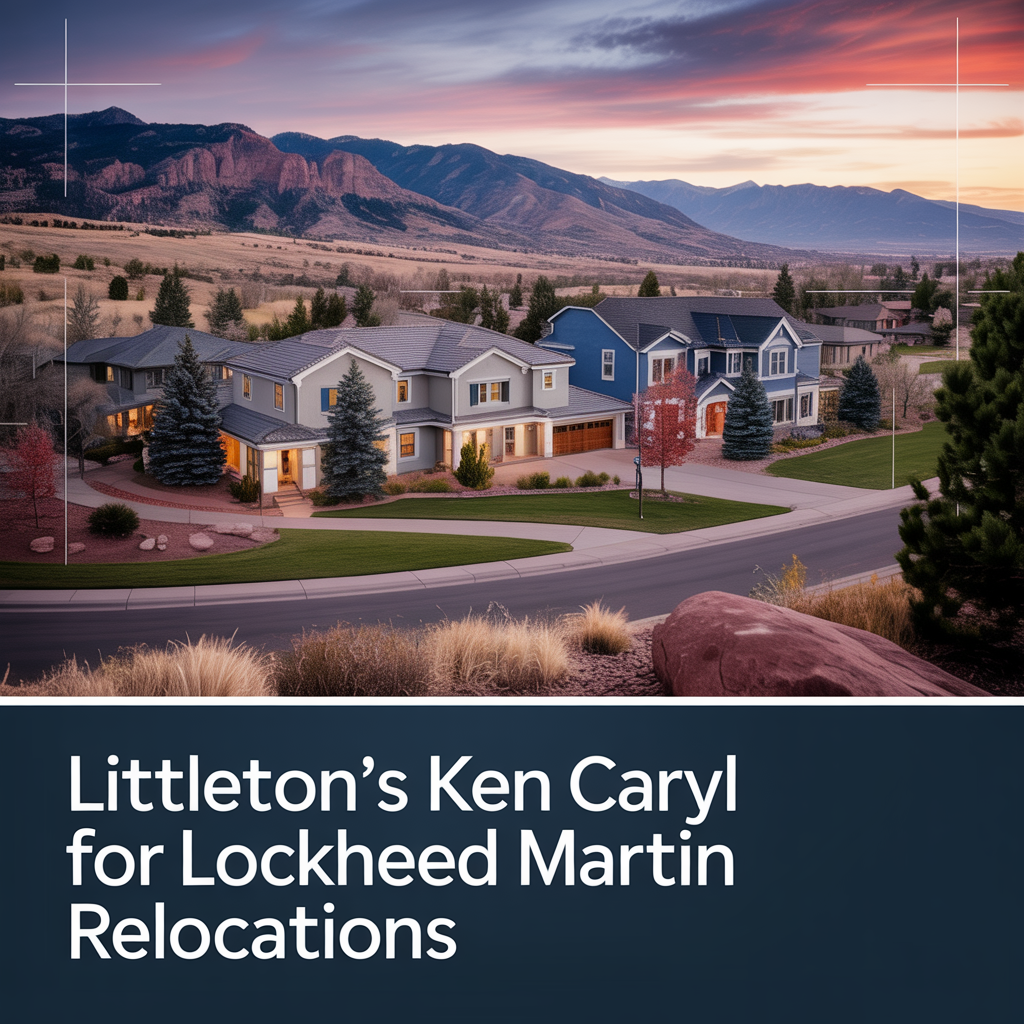
Littleton’s Ken Caryl for Lockheed Relocations
This is part of Lockheed Martin Relocation → [Lockheed Martin Relocation Hub] & the larger Denver Relocation Hub → [Denver Relocation Hub] Written by: Chad Cabalka Ken Caryl is one of the best-kept “family first” relocation options for Lockheed Martin employees who want foothills scenery, strong neighborhood appeal, and a real suburban lifestyle that still feels connected…


Centennial & Parker for Lockheed Relocations
This is part of Lockheed Martin Relocation → [Lockheed Martin Relocation Hub] & the larger Denver Relocation Hub → [Denver Relocation Hub] Written by: Chad Cabalka Centennial and Parker are two of the smartest suburban choices for Lockheed Martin employees relocating with families because they give you a strong balance of commute flexibility, good neighborhood variety, and…

Highlands Ranch for Family-Friendly Lockheed Relocations
This is part of Lockheed Martin Relocation → [Lockheed Martin Relocation Hub] & the larger Denver Relocation Hub → [Denver Relocation Hub] Written by: Chad Cabalka Highlands Ranch is one of the strongest choices for Lockheed Martin employees relocating with families because it delivers exactly what most parents want after a big move: stable neighborhoods, strong community…