


This is part of the Denver Lifestyle Hub→ [Lifestyle Hub]
Families moving to Denver often start by asking about schools or commute patterns — and those matter deeply — but what truly defines daily life here is how the region blends community, recreation, and livability into the rhythm of an ordinary week. The neighborhoods and entertainment hubs where families naturally spend their time are where you’ll find the pulse of this city.
Understanding those hubs is also critical from a real estate standpoint. They shape neighborhood identity, influence long-term property values, and drive demand cycles in ways that data alone can’t explain. Denver’s economy, school systems, and outdoor access get plenty of attention, but family life here is anchored in the small moments — from a game at Coors Field to an afternoon at City Park or a Saturday at Southglenn’s outdoor plaza.
Below is a grounded look at Denver’s family-oriented entertainment hubs, why they matter for homeowners and buyers alike, and how they contribute to the enduring appeal of everyday life across the metro area.
The Neighborhood Fabric Behind Denver’s Family Appeal
Denver’s neighborhoods are not just divided by geography or price points — they are defined by how residents use their local spaces. In established areas like Wash Park, Hilltop, and Berkeley, family life revolves around walkable amenities. In newer suburbs like Highlands Ranch, Centennial, and Castle Rock, the sense of entertainment comes from large-scale recreation centers, community markets, and highly organized public spaces that double as gathering zones.
Property values in these family-focused pockets hold up because they are anchored by consistent patterns of use. A neighborhood where you can walk to a splash pad, catch a summer concert, or bike to coffee will always attract steady demand. That’s why, in the Denver area, “proximity to recreation” is not just a quality-of-life feature — it’s a real estate asset class in itself.
Where Denver Families Actually Spend Their Weekends
When you live here long enough, you see a rhythm to how families use the city: an outdoor hike early, a team sport or youth event mid-day, and dinner at a neighborhood destination that feels family-friendly but still adult-worthy. Several hubs around Denver have evolved to serve exactly that pattern.
Southglenn and Highlands Ranch Town Center
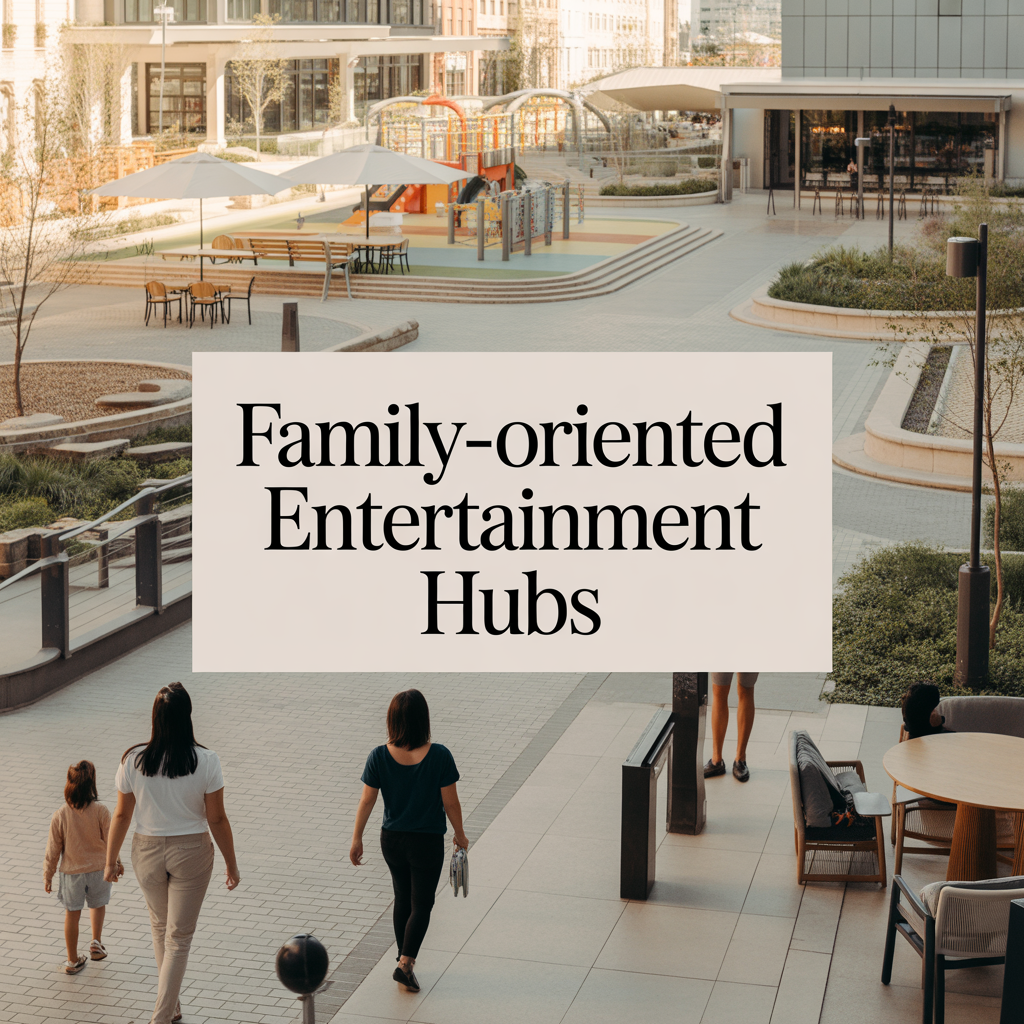
The Streets at Southglenn and the Highlands Ranch Town Center represent the modern evolution of suburban entertainment. They blend open-air retail with playgrounds, restaurants, fountains, and seasonal events that keep families returning year-round. These centers have built-in grocery, fitness, and professional services as well — making them less like “shopping centers” and more like mixed-use living environments.
Buyers often value these areas not only for convenience but for predictability. When your major errands, a date night spot, and outdoor recreation all sit within a mile, daily life feels more efficient — and that consistently supports long-term community retention.
Central Park and Northfield
Central Park (formerly Stapleton) remains one of the most well-executed examples of urban family design in the country. Its parks, pools, and expansive trail network connect directly to Northfield, which offers a movie theater, big-box retail, and dining options that meet most family needs without heading downtown. The intentional planning behind this area affects local housing prices; homes here often retain higher per-square-foot value because the neighborhood delivers exactly what today’s hybrid-work families want — accessibility without congestion.
Cherry Creek and Washington Park
For families who prefer a more established core location, Cherry Creek and Wash Park merge local entertainment with mature tree canopies and short commutes. Cherry Creek’s mix of luxury retail, casual patio dining, and the Cherry Creek Trail make it not only a destination but also a daily-use zone. Homes nearby benefit from that combination — established charm plus an evergreen lifestyle appeal that holds value through market cycles.
Wash Park, meanwhile, is iconic for a reason. Its 155-acre layout, tennis courts, and jogging paths create a natural gathering place every weekend. The ripple effect on surrounding values is profound; homes within walking proximity often outperform zip code averages because lifestyle demand here rarely declines.
Downtown and the Sports Core of Denver
No view of family entertainment in Denver is complete without the city’s sports identity. Few urban areas integrate athletics into local culture as seamlessly as Denver does. Even if your family is not full of die-hard fans, the collective energy around game days touches daily life in unmistakable ways.
Coors Field: The Best Bar in Denver
Locals often joke that the Rockies’ win-loss record is irrelevant because Coors Field remains one of the best places on earth to watch baseball. It’s not just the view of the mountains at sunset or the convenience of LoDo’s restaurants — it’s that Coors Field feels more like a city-wide patio than a stadium. In summer, it doubles as one of Denver’s most social family experiences: affordable tickets, an open-air environment, and a downtown setting accessible by light rail or bike.
For nearby property owners, proximity to LoDo and River North (RiNo) offers an interesting balance. While short-term rental opportunities are tightly regulated, neighborhood revitalization around these entertainment anchors has stabilized local markets and contributed to steady appreciation, even as interest rates have fluctuated.
Empower Field, Ball Arena, and the City’s Professional Pride
Football, basketball, and hockey dominate different parts of the year, but each plays a role in strengthening Denver’s civic fabric. The Denver Broncos at Empower Field, the Nuggets, and the Avalanche at Ball Arena keep a steady pulse of activity across the year. These events feed local restaurants, energize public transit, and bring multi-generational fans together — reinforcing the city’s sense of identity.
For families, that consistency translates into practical value. These venues drive ongoing investment in the surrounding infrastructure, improve transit links, and sustain nearby mixed-use development. From a real estate point of view, areas within a short commute of downtown — Jefferson Park, Sloan’s Lake, and Sun Valley — have begun evolving rapidly thanks in part to this entertainment ecosystem.
Suburban Family Anchors Beyond the City Center
Denver’s appeal doesn’t stop at the city line. The metro’s suburban anchors play enormous roles in shaping family lifestyles — and they’re often where long-term buyers focus their searches.
Lone Tree and Park Meadows
Lone Tree has become a southern metro powerhouse. Park Meadows serves as more than a mall — it’s a dining, entertainment, and social core for much of Douglas County. The addition of mixed-use zones, such as RidgeGate, provides residents with everything from amphitheaters to new light rail connections. When infrastructure and entertainment develop in sync, housing demand typically follows. Here, that translates into stable property performance across townhome, single-family, and even newer high-density units.
Golden and Lakewood
For families wanting daily outdoor access without feeling remote, Golden and Lakewood strike that balance well. Downtown Golden offers parades, tubing on Clear Creek, and local breweries that still fit family schedules instead of late-night bar crowds. Lakewood’s Belmar area mirrors that suburban-town-center formula: shopping, ice skating in winter, and concerts on the green in summer.
These areas also illustrate long-term planning at work. By tying entertainment and commerce to community walkability, these cities have made their housing markets remarkably resilient. Even during slower phases of Denver’s housing cycle, properties near these civic centers tend to hold stable buyer demand.
Littleton and Old Town Charm
Littleton’s downtown has transformed while retaining its historic framework. It draws families for festivals, weekend coffee, and proximity to the Platte River trail. The real estate advantage here lies in balance — you can be twenty minutes from downtown Denver, yet feel like you’re living in a self-contained community. Buyers find predictability here, particularly those wanting access to the highly regarded Littleton Public Schools system paired with genuine small-town texture.
Daily Living Patterns and Their Market Impact
When you evaluate family-oriented entertainment hubs from a real estate perspective, several consistent patterns emerge across the Denver market:
- Walkability and accessibility remain price stabilizers. Homes near usable shops, parks, and family gathering areas tend to show lower volatility in both good and challenging markets.
- Multi-use centers create permanence. Developments that integrate retail, dining, and community programs reduce turnover and sustain neighborhood energy.
- Neighborhood engagement supports resale desirability. Families often choose homes based on the “feel” after spending time in the area — something enhanced by active parks, recreation sites, and visible local events.
- Commute plus quality of life equals premium demand. Areas that balance manageable travel times with family-friendly infrastructure (like Centennial or Lakewood) continue to outperform outer-edge suburbs without defined amenities.
Denver’s geography and weather make some of these trends distinct. With over 300 days of sunshine, large public spaces receive year-round use, and developers build with that in mind. Outdoor entertainment, trails, dog parks, and plazas aren’t optional extras — they are essential community investments that translate directly into livability and long-term housing demand.
Long-Term Value of Entertainment-Centered Communities
As Denver’s population evolves, so does its definition of family living. Some buyers want traditional suburban homes; others seek smaller urban footprints with nearby amenities. What unites both groups is a desire for daily convenience and personal time reclaimed — an often-overlooked driver of property value.
From a market analyst’s perspective, areas with authentic community hubs — whether that means Coors Field downtown or Southglenn in Centennial — provide intangible benefits that stabilize home values over time. They draw repeat visitors, encourage responsible development, and support property appreciation through consistent demand rather than speculation.
For relocators, the lesson is simple: when assessing a neighborhood, consider not just the house, but where your family might spend a free afternoon. Those hubs are where long-term value quietly accumulates.
A City That Feels Alive Every Day
Denver offers a lifestyle that manages to be both active and relaxed. Families can picnic at Wash Park, ski within a 90-minute drive, or catch a ballgame downtown without feeling like those are “special outings.” They’re part of daily life. That rhythm — accessible, communal, and versatile — explains why Denver’s housing market remains fundamentally healthy, even when broader conditions fluctuate.
Living here, you learn that entertainment is not a separate category. It’s the backdrop of ordinary life — from walking to the farmers market on Saturday morning to hearing the downtown crowd roar after a Nuggets win on a Tuesday night. And those ordinary moments are what make Denver’s neighborhoods perpetually desirable for families putting down roots.
If you’re exploring where to buy, sell, or settle within the Denver metro area — whether you’re drawn to the suburban town centers or the energy of downtown — reach out to me for perspective built on decades of local experience. Understanding how lifestyle and location intersect is key to making confident, lasting real estate decisions in Denver’s ever-evolving market.
Get the full Denver Market Insights → [Market Insights]



Littleton’s Ken Caryl for Lockheed Relocations
This is part of Lockheed Martin Relocation → [Lockheed Martin Relocation Hub] & the larger Denver Relocation Hub → [Denver Relocation Hub] Written by: Chad Cabalka Ken Caryl is one of the best-kept “family first” relocation options for Lockheed Martin employees who want foothills scenery, strong neighborhood appeal, and a real suburban lifestyle that still feels connected…


Centennial & Parker for Lockheed Relocations
This is part of Lockheed Martin Relocation → [Lockheed Martin Relocation Hub] & the larger Denver Relocation Hub → [Denver Relocation Hub] Written by: Chad Cabalka Centennial and Parker are two of the smartest suburban choices for Lockheed Martin employees relocating with families because they give you a strong balance of commute flexibility, good neighborhood variety, and…

Highlands Ranch for Family-Friendly Lockheed Relocations
This is part of Lockheed Martin Relocation → [Lockheed Martin Relocation Hub] & the larger Denver Relocation Hub → [Denver Relocation Hub] Written by: Chad Cabalka Highlands Ranch is one of the strongest choices for Lockheed Martin employees relocating with families because it delivers exactly what most parents want after a big move: stable neighborhoods, strong community…