


This is part of the Long Term Rentals in Denver→ [Long Term Rentals in Denver] a hub of Denver Investing Guide → [Denver Investing Guide]
Written by: Chad Cabalka
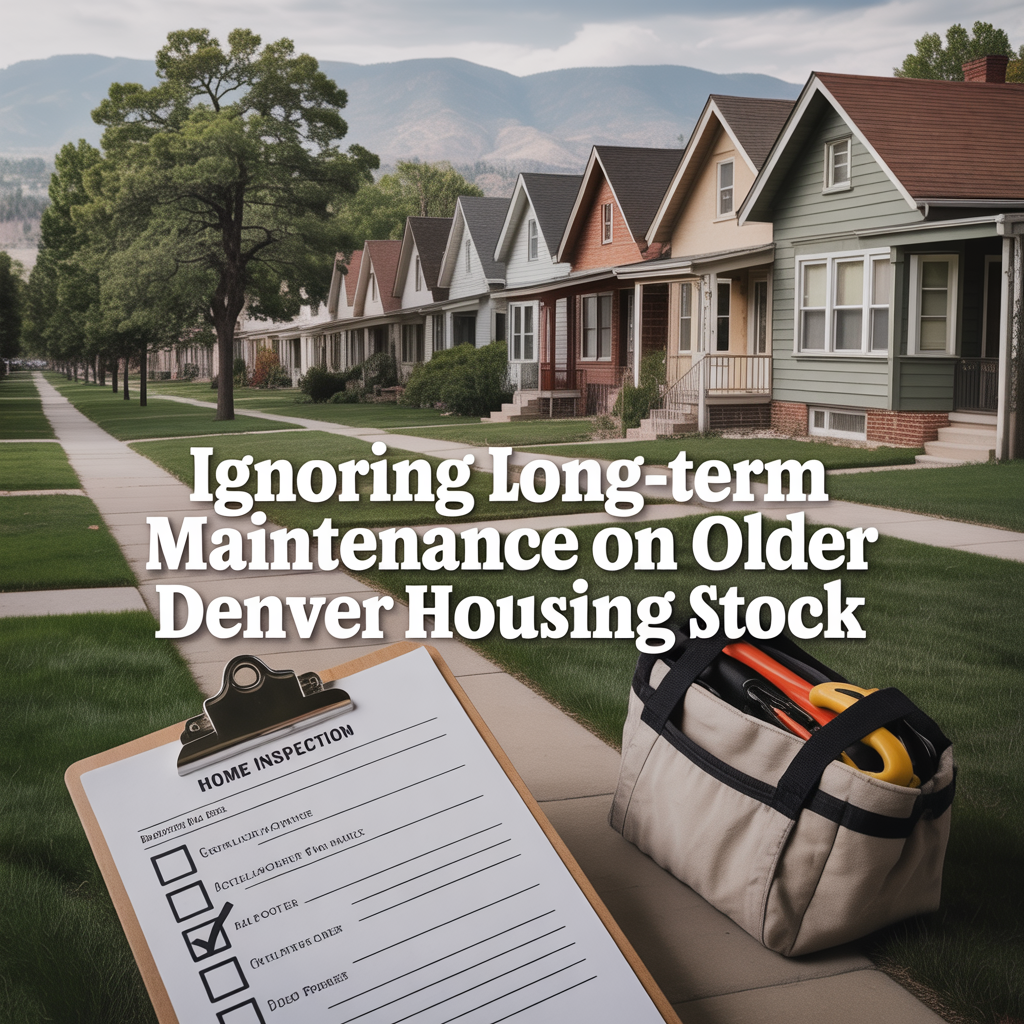
Ignoring Long-Term Maintenance on Older Denver Housing Stock: A Costly Mistake
Older homes dominate Denver metro resale inventory, from 1950s ranches in Lakewood to 1970s townhomes in Arvada. These properties offer larger lots, mature landscaping, and neighborhood stability that new construction rarely matches. However, treating maintenance as optional or deferrable undermines their value, inflates ownership costs, and exposes owners to financing and insurance risks in Colorado’s demanding climate.
This analysis details why neglect accelerates deterioration, how it impacts cash flow and resale across submarkets, and the disciplined strategies that preserve equity in aging housing stock.
Denver’s Aging Inventory: The Numbers Behind the Challenge
The metro area holds over 200,000 homes built before 1980, comprising 40-50% of single-family stock in suburbs like Littleton, Englewood, and Westminster. These structures now exceed their design life for key components—roofs average 22 years here due to hail and UV exposure, while clay sewer lines from mid-century builds fail after 50-60 years amid tree root intrusion.
Owners often prioritize cosmetic updates—granite counters, LVP flooring—over structural essentials. This selective focus creates hidden liabilities: a $15,000 proactive roof replacement prevents $35,000 in water-damaged attic repairs. Deferred costs compound at 15-25% annually under freeze-thaw cycles and high-desert aridity.
Why Maintenance Deferral Feels Rational But Fails Long-Term
Rising home values masked neglect through the 2010s and early 2020s. Equity gains outpaced visible wear, encouraging owners to extract cash via HELOCs for lifestyle spending rather than unglamorous upgrades. Colorado-specific pressures accelerated the gap:
- Labor shortages extended contractor wait times to 3-6 months for sewer scopes or foundation work.
- Material inflation post-pandemic doubled re-roofing costs from $10,000 to $20,000+ for 2,000 sq ft.
- Hail seasons—averaging 8-10 events yearly—damaged 20-30% of metro roofs without immediate claims.
- Utility spikes from inefficient 1970s HVAC added $300-500 monthly, diverting budgets from prevention.
The result: properties appraise 8-12% below peers with documented upkeep, even in appreciating areas like Highlands Ranch.
The Cascade of Deferred Costs
Neglect triggers overlapping failures. A compromised roof leaks into insulation, fostering mold that migrates to HVAC ducts. Tree roots invading 50-year-old sewer lines cause backups stressing foundations on expansive clay soils common in Aurora and Commerce City.
Typical progression:
- Year 1-3: Minor cracks, peeling paint—ignored at $500-2,000 fix.
- Year 4-6: Sewer camera reveals 40% pipe deterioration ($15,000 replacement).
- Year 7+: Foundation heave from poor drainage ($40,000+ with underpinning).
Rental owners face amplified hits: problem HVAC drives 25% higher utility bills passed to tenants, prompting disputes or early terminations. Five-year totals often exceed $50,000, slashing cap rates 2 points.
Buyer and Financing Realities Exposed by Neglect
Relocating buyers from Texas or California expect turnkey condition after touring cookie-cutter new builds in Windsor. Inspections on older Denver stock reveal:
- Galvanized plumbing prone to pinhole leaks.
- Knob-and-tube wiring failing modern panel loads.
- Settled foundations from 1960s grading practices.
- Asbestos/carcinogenic insulation in attics and walls.
Lenders reject 15-20% of FHA/VA loans on such homes without seller concessions. Appraisers apply 5-10% condition deductions, softening list-to-sale spreads. Insurers demand $5,000 electrical upgrades for coverage, turning marginal deals unfinanceable.
Colorado Climate: An Accelerator of Wear
Denver’s 300 sunny days belie harsh mechanics:
- 40°F daily swings shrink/expand wood framing 1/8 inch yearly.
- 6,000+ UV index degrades asphalt shingles 20% faster than sea level.
- Monsoon microbursts overload undersized gutters, eroding foundations.
- Clay soils swell/shrink 12 inches seasonally, cracking unreinforced slabs.
Paint fails every 6-7 years versus 10 nationally. Standard 1% hail deductibles hit $8,000 on $800,000 homes, deterring claims and prolonging exposure.
Submarket-Specific Maintenance Vulnerabilities
| Submarket | Common Build Era | Top Risks | Cost Multiplier |
|---|---|---|---|
| Lakewood | 1950s-70s | Sewer lines, roof hail | 2.2x |
| Arvada | 1960s-80s | Foundation heave, drainage | 1.8x |
| Aurora | 1970s-90s | Expansive soils, HVAC | 2.0x |
| Littleton | 1960s-80s | Tree roots, electrical | 1.9x |
| Highlands Ranch | 1980s-90s | HOA exteriors, asphalt drive | 1.6x |
Foothill zones like Evergreen add wildfire defensible space mandates, escalating brush clearance to $3,000 yearly.
Policy and Market Shifts Amplifying Exposure
Denver’s habitability ordinances require functional HVAC/electrical within 30 days of complaints, fining non-compliant landlords $500+. State insurance reforms limit carrier exits but approve 18-25% rate hikes, scrutinizing roof age >15 years.
New construction in Brighton and Commerce City competes by offering warranties, pressuring older stock to demonstrate condition via pre-listing reports. Buyers discount neglected homes 7-10% against updated comps.
Proactive Maintenance: The Equity Protection Playbook
Owners mitigate through phased discipline:
- Baseline audit. $600 whole-home inspection flags top-three risks.
- Annual allocation. 1.5% of value ($9,000 on $600k home) covers roofs, plumbing, exteriors.
- Documentation rigor. Timestamped invoices boost appraisals 3-5%.
- Insurance alignment. Bundle policies, claim-free discounts save 15-20%.
- Vendor networks. Local specialists handle Denver-specific issues like polybutylene repipes.
Rental pros budget 10% vacancy-equivalent reserves, targeting 92% occupancy via reliable systems.
Long-Term Market Consequences
Neglected clusters depress neighborhood comps 4-6%, signaling distress to institutional buyers. Well-maintained older homes outperform by 12-15% at resale, commanding cash offers in softening cycles. Investors chasing 7% yields prioritize them over new-build cap-rate compression.
As Denver moderates to 3-4% appreciation, maintenance separates wealth preservation from erosion.
Conclusion: Maintenance Builds Enduring Value
Ignoring long-term upkeep on older Denver housing turns assets into liabilities. Proactive investment preserves structural integrity, supports financing, and sustains resale strength amid Colorado’s environmental and regulatory pressures.
Owners who treat maintenance as equity insurance navigate market shifts with resilience, maximizing returns across cycles.
For assessments of older Denver properties, maintenance roadmaps tailored to submarkets, or long-term rental optimization, contact Long-Term Rentals in Denver. Expert guidance on buying, selling, or stewarding metro housing stock awaits.
Get the full Denver Market Insights → [Market Insights]



Littleton’s Ken Caryl for Lockheed Relocations
This is part of Lockheed Martin Relocation → [Lockheed Martin Relocation Hub] & the larger Denver Relocation Hub → [Denver Relocation Hub] Written by: Chad Cabalka Ken Caryl is one of the best-kept “family first” relocation options for Lockheed Martin employees who want foothills scenery, strong neighborhood appeal, and a real suburban lifestyle that still feels connected…


Centennial & Parker for Lockheed Relocations
This is part of Lockheed Martin Relocation → [Lockheed Martin Relocation Hub] & the larger Denver Relocation Hub → [Denver Relocation Hub] Written by: Chad Cabalka Centennial and Parker are two of the smartest suburban choices for Lockheed Martin employees relocating with families because they give you a strong balance of commute flexibility, good neighborhood variety, and…

Highlands Ranch for Family-Friendly Lockheed Relocations
This is part of Lockheed Martin Relocation → [Lockheed Martin Relocation Hub] & the larger Denver Relocation Hub → [Denver Relocation Hub] Written by: Chad Cabalka Highlands Ranch is one of the strongest choices for Lockheed Martin employees relocating with families because it delivers exactly what most parents want after a big move: stable neighborhoods, strong community…