


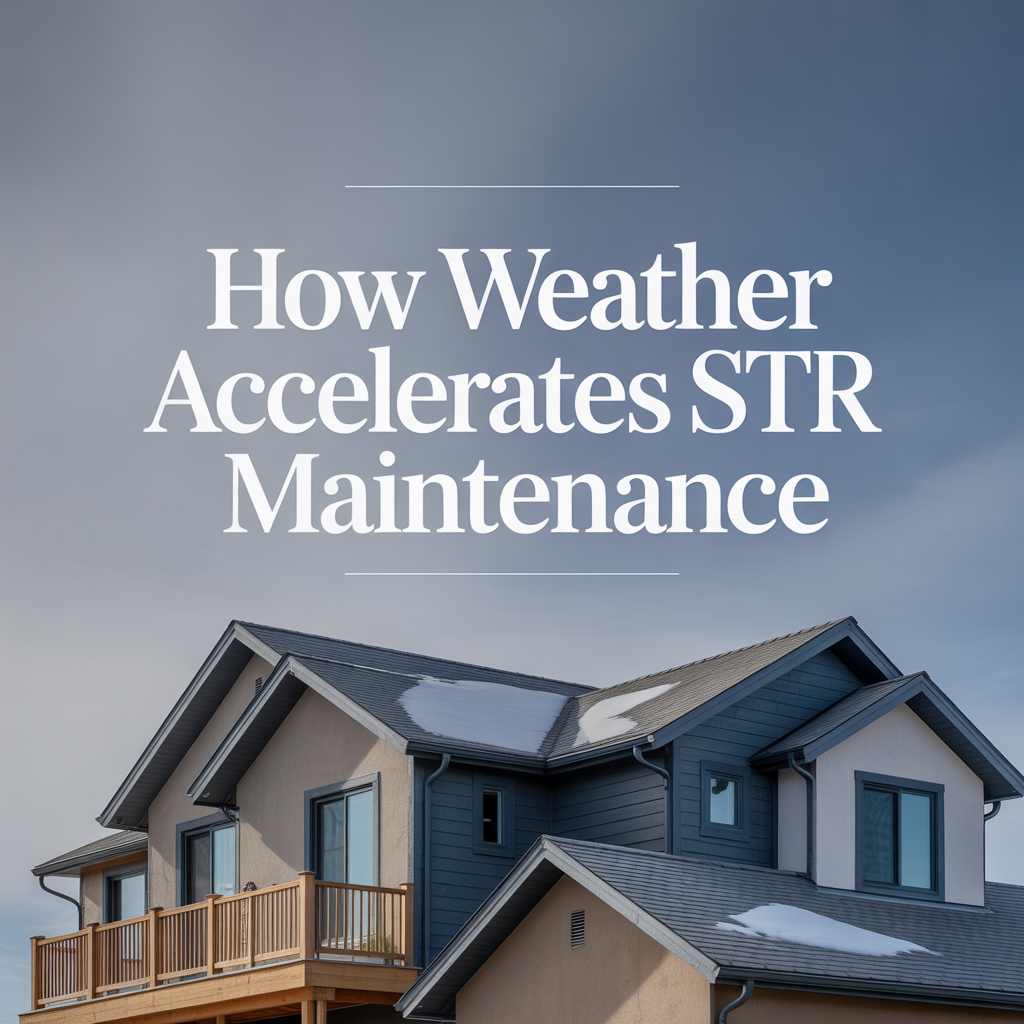
This is part of the Long Term Rentals in Denver→ [Long Term Rentals in Denver] a hub of Denver Investing Guide → [Denver Investing Guide]
Written by: Chad Cabalka
Weather accelerates maintenance demands on Denver short-term rentals (STRs) through rapid cycles of freeze-thaw, intense sun exposure, and heavy use during peak seasons, driving costs 25-50% higher than long-term rentals. Guest turnover amplifies wear on already stressed systems, turning routine upkeep into frequent replacements for hosts in neighborhoods like Washington Park or Edgewater. Serious investors account for this upfront, as underestimating weather-driven expenses erodes DSCR coverage and resale value in a compliance-heavy market.
Freeze-Thaw Cycles and Foundation Stress
Denver’s 300+ sunny days belie 50-70 annual freeze-thaw cycles, where daytime melts followed by sub-freezing nights expand moisture in concrete, mortar, and soil. STR hosts see accelerated cracking in driveways, patios, and basement walls—common in 1960s bungalows—requiring epoxy injections or full resealing every 2-3 years at $2,000-$5,000 per incident. Guest traffic on wet surfaces worsens slippage hazards, prompting city-mandated repairs under Denver’s $150 annual sidewalk fee program that began in 2026.
Interior impacts hit harder: warped hardwood from tracked snow demands sanding and refinishing ($3,000-$6,000), while furnace strain from constant heating cycles shortens lifespan by 20-30%, necessitating $8,000-$12,000 HVAC replacements every 8-10 years instead of 15.
UV Degradation and Exterior Wear
High-altitude UV exposure fades siding, roofing granules, and exterior paint 2-3 times faster than sea-level markets, with Denver’s 240 sunny days annually baking sealants and elastics. STR decks and hot tubs—key amenities in RiNo or LoHi listings—require annual staining ($800-$1,500) and membrane recoating every 3 years ($4,000+), as guest sunning accelerates breakdown. Flat roofs on mid-century moderns blister under reflected heat, demanding TPO replacements at $10-$15 per square foot every 12-15 years.
Windows seal failures from thermal expansion let conditioned air escape, spiking utilities 15-20% and forcing $500-$1,000 caulking yearly—costs that compound with turnover cleaning.
Snow Load and Seasonal Access Demands
Winter accumulation stresses roofs and gutters beyond code minimums, especially on older gable designs in Highlands Ranch or Wheat Ridge STRs. Icicle buildup clogs systems, leading to interior leaks that ruin ceilings and flooring ($2,500-$7,000 per event). Snow removal—mandatory for guest safety—runs $75-$150 per storm for pros, totaling $1,000-$2,500 seasonally, with de-icing salts etching concrete and accelerating patio spalling.
Spring mud season dirties exteriors, requiring power washing ($400-$800 biannually) to maintain 5-star ratings, while pollen and dust clog AC coils monthly ($200 service calls).
Interior Systems Under Constant Guest Strain
Weather extremes push HVAC, plumbing, and appliances into overdrive. Dry winters (10-20% humidity) crack leather furniture and shrink door jambs, while summer monsoons flood basements without proper grading—$3,000-$10,000 French drain installs common for ADUs. Furnishings wear 3-5x faster: mattresses sag from 100+ guests yearly, demanding $2,000 replacements every 18-24 months.
Smart locks and thermostats fail from battery drain in cold snaps, with repairs averaging $300 per incident under warranty voids from guest misuse.
Annual Weather-Accelerated Cost Breakdown
These figures assume 120-150 booked nights; condos add $1,000+ HOA specials for shared elements.
Mitigation Tactics for Denver STR Hosts
Proactive upgrades pay dividends: R-49 attic insulation ($2,500-$4,000) cuts heating costs 20-30% and extends duct life, qualifying for Xcel rebates up to $1,000. Weatherstripping and smart seals reduce infiltration by 15%, while permeable pavers handle runoff without city fees. Annual thermal imaging audits ($300) spot issues pre-guest complaints.
Hybrid hosts pivot to mid-terms during mud/snow seasons, slashing cleaning while preserving ratings. Bulk material contracts for sealants lock 10-15% savings.
Underwriting Weather as a Core Expense Line
Denver STRs demand 1.5-2% annual reserves versus 1% for long-term, with weather claiming 40% of that bucket. Investors blending ADUs or primary use spread risk, but pure weekend warriors face $5,000-$8,000 true capex yearly—equivalent to 25% of net operating income on modest performers. This reality tempers projections, ensuring DSCR holds through Denver’s predictable extremes.
To quantify weather impacts on your specific Denver STR or spec properties with resilient builds, reach out to me directly. I can audit maintenance logs, project reserves against local cycles, and target listings where upfront hardening offsets accelerated wear.
Get the full Denver Market Insights → [Market Insights]


Littleton’s Ken Caryl for Lockheed Relocations
This is part of Lockheed Martin Relocation → [Lockheed Martin Relocation Hub] & the larger Denver Relocation Hub → [Denver Relocation Hub] Written by: Chad Cabalka Ken Caryl is one of the best-kept “family first” relocation options for Lockheed Martin employees who want foothills scenery, strong neighborhood appeal, and a real suburban lifestyle that still feels connected…

Centennial & Parker for Lockheed Relocations
This is part of Lockheed Martin Relocation → [Lockheed Martin Relocation Hub] & the larger Denver Relocation Hub → [Denver Relocation Hub] Written by: Chad Cabalka Centennial and Parker are two of the smartest suburban choices for Lockheed Martin employees relocating with families because they give you a strong balance of commute flexibility, good neighborhood variety, and…

Highlands Ranch for Family-Friendly Lockheed Relocations
This is part of Lockheed Martin Relocation → [Lockheed Martin Relocation Hub] & the larger Denver Relocation Hub → [Denver Relocation Hub] Written by: Chad Cabalka Highlands Ranch is one of the strongest choices for Lockheed Martin employees relocating with families because it delivers exactly what most parents want after a big move: stable neighborhoods, strong community…