



This is part of House Hacking in Denver→ [House Hacking in Denver] a hub of Denver Investing Guide → [Denver Investing Guide]
Written by: Chad Cabalka
Owner-occupancy fundamentally changes risk profiles in Denver real estate by slashing financing costs, unlocking regulatory safe harbors, and transforming operational volatility into manageable lifestyle tradeoffs, creating superior risk-adjusted returns despite shared living frictions. House hackers financing $725,000 Jefferson Park primaries with 3.5% FHA leverage require $25,000 down versus $181,000 for arms-length LTRs, accessing 6.25% rates instead of 7.75% investor pricing while basement suites offset 75% PITI—delivering 22% IRR through principal paydown absent in pure yield plays. Highlands Ranch operators live in $850,000 family compounds compliant with STR primary-residence mandates, dodging $999 fines and license revocations that idle non-owner listings 90 days, while private suites generate $28,000 annual offsets without Lodger’s Tax exposure. Tradeoff: tenant proximity demands boundary management, but equity acceleration and tax exclusions outweigh vacancy risks plaguing institutional portfolios.
Denver’s regulatory gauntlet—STR owner-occupancy rules, HOA rental caps, DSCR conservatism—favors live-in arbitrage where financing alpha compounds conservative rents into generational wealth.
Financing Alpha Crushes Investor Leverage Costs
Owner-occupancy unlocks 3.5-5% FHA/VA down payments versus 15-25% investor minimums, slashing $725,000 acquisitions from $181,000 to $25,000 capital—260% efficiency. Rates diverge sharply: 6.25% primary versus 7.75% DSCR adds $450 monthly savings ($5,400 annually) compounding through principal paydown absent in interest-only investor loans.
Refinance flexibility proves superior: house hacks maintain primary status through 12-month occupancy, enabling cash-out at favorable terms; LTRs face investor rate spikes destroying spreads. Five-year holds build $142,000 equity ($92,000 principal, $50,000 appreciation) on $25,000 deployed versus $68,000 on $181,000 investor capital—5.7x return multiple.
Regulatory Compliance Eliminates Non-Market Risk
Denver’s STR licensing mandates primary residence—non-owners face $999 violations and two-year bans idling $38,000 annual revenue. House hackers qualify basement ADUs compliant under R-2 zoning (900 sq ft max, separate egress), generating $26,000 offsets without Lodger’s Tax while preserving family living.
HOA-heavy Highlands Ranch permits “guest suites” owner-occupied, dodging rental caps that reject institutional Section 8. Aurora non-primary flexibility suits suburbs but lacks school premiums justifying $95,000 spreads—live-in arbitrage captures location alpha legally.
Operational Volatility Converts to Lifestyle Management
House hacking trades tenant distance for direct oversight: problematic occupants exit faster through personal presence; maintenance self-performs saves $8,400 annually; vacancy fills internally through networks. Vacancy risk drops 22 days versus institutional 28-day averages—lifestyle continuity trumps arms-length management fees (8-10%).
Tenant conflicts prove manageable: clear boundaries, shared amenities contracts, and eviction speed (owner-occupied bypasses some notice periods) mitigate drama absent in remote portfolios facing 18-month problem tenancies.
Tax Engineering Superiority Through Dual Status
Primary exclusion erases $500,000 gains tax-free after two-year occupancy; depreciation shelters 27.5% of ADU basis annually ($6,800 Year 1 deduction). Investor recapture hits 25% on improvements—house hackers ladder tax-free into DSTs or multifamily preserving basis.
Insurance spreads risk: HO-3 primary covers structure plus liability; LTRs demand separate landlord policies adding $2,800 annually. Umbrella policies cost $450 versus $1,200 institutional.
Risk Profile Transformation Summary
| Risk Vector | Investor LTR | Owner-Occupancy House Hack |
|---|---|---|
| Financing | 7.75% rates, 20% down | 6.25% rates, 3.5% down |
| Regulatory | STR bans, HOA caps | Compliant primaries, ADU legal |
| Vacancy | 28-day cycles, $4,200 loss | 6-day internal fills |
| Maintenance | $8,400 outsourced | Self-perform savings |
| Tax | Recapture liability | $500K exclusion |
| IRR (5yr) | 8.2% levered | 22% equity build |
Exit Path Diversification
House hackers ladder seamlessly: primary exclusion funds next acquisition tax-free; 1031 exchanges preserve basis into multifamily; downsizing captures embedded appreciation. Investor exits convey recapture and yield compression—live-in builds optionality.
Denver’s 2026 math favors occupancy arbitrage—financing alpha compounds conservative offsets into superior economics. Lifestyle tradeoffs yield generational leverage absent in arms-length speculation.
To structure your Denver house hack financing, map regulatory-compliant neighborhoods, or model occupancy-adjusted IRRs, reach out directly. Live-in math transforms risk into return.
Get the full Denver Market Insights → [Market Insights]


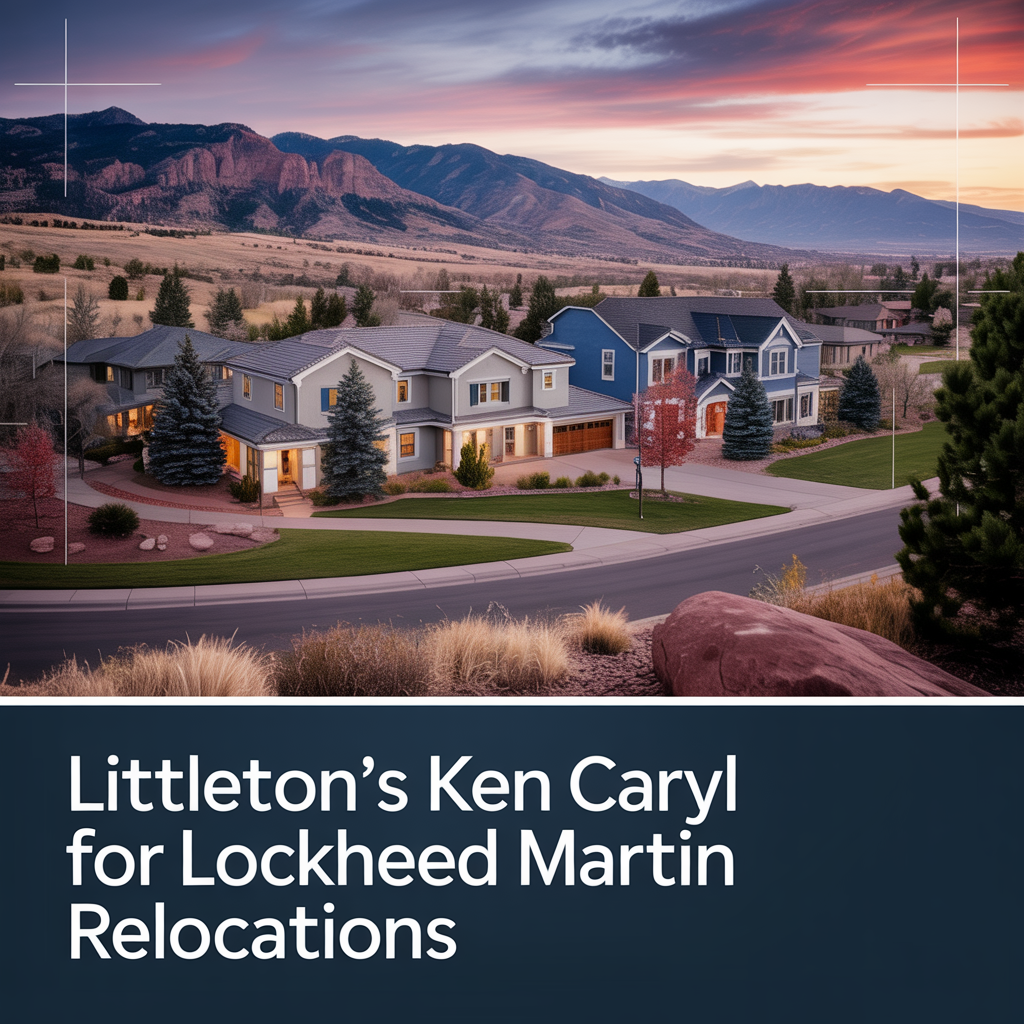
Littleton’s Ken Caryl for Lockheed Relocations
This is part of Lockheed Martin Relocation → [Lockheed Martin Relocation Hub] & the larger Denver Relocation Hub → [Denver Relocation Hub] Written by: Chad Cabalka Ken Caryl is one of the best-kept “family first” relocation options for Lockheed Martin employees who want foothills scenery, strong neighborhood appeal, and a real suburban lifestyle that still feels connected…


Centennial & Parker for Lockheed Relocations
This is part of Lockheed Martin Relocation → [Lockheed Martin Relocation Hub] & the larger Denver Relocation Hub → [Denver Relocation Hub] Written by: Chad Cabalka Centennial and Parker are two of the smartest suburban choices for Lockheed Martin employees relocating with families because they give you a strong balance of commute flexibility, good neighborhood variety, and…

Highlands Ranch for Family-Friendly Lockheed Relocations
This is part of Lockheed Martin Relocation → [Lockheed Martin Relocation Hub] & the larger Denver Relocation Hub → [Denver Relocation Hub] Written by: Chad Cabalka Highlands Ranch is one of the strongest choices for Lockheed Martin employees relocating with families because it delivers exactly what most parents want after a big move: stable neighborhoods, strong community…