



This is part of Homeownership 101 → [Homeownership 101] & Ownership Costs & Budget Planning → [Ownership Costs & Budget Planning]
Written by: Chad Cabalka
Insurance increases in the Denver metro area stem from a perfect storm of escalating rebuild costs, frequent severe weather events, reinsurance pressures, and stricter underwriting standards that have driven average premiums from $1,745 in 2015 to $4,142 by 2024—a 137% surge far outpacing national trends. Homeowners now face $4,200-$5,200 annual costs in 2026 depending on property value, location risks, and coverage levels, with hail and wildfire dominating loss ratios across the region. Carriers adjust base rates upward to cover these realities while passing through 40% of global reinsurance expenses tied to catastrophe losses. Legislative changes like HB23-1174 mandate higher dwelling limits to match $800+ per square foot rebuild realities plus 50% buffers, inflating policies beyond general inflation. Even claim-free households see hikes as insurers price entire ZIP codes for long-term hail frequency averaging 94 events yearly and $141 billion wildfire exposure. Non-renewals and carrier exits further concentrate risk into fewer options like the FAIR Plan, pushing fire-only desperation at $5,000+ excluding 80% wind and water perils common locally. Clean histories renew closer to $2,900-$3,900 through mitigation, but frequency flags trigger 40% universal surcharges haunting quotes seven years across all carriers.
Weather-Driven Loss Ratios
Hail storms batter the Denver metro relentlessly, generating $151 million average annual damages that overwhelm carriers with claims outstripping premiums collected by 18-65% over five years. Wildfire risks place 321,000 homes in moderate-to-high zones, prompting 35% hazard surcharges even for mitigated properties across Douglas County to Adams fringes. These events force insurers to reprice entire portfolios rather than individual risks, embedding weather losses into base rates for all policyholders. Construction inflation at 12-13.8% annually compounds repair payouts, turning $52,000 roofs into $65,000 necessities under updated codes. Carriers like those exiting high-exposure areas cite unsustainable loss ratios, leading to tighter underwriting where roof age and satellite imagery dictate eligibility. Homeowners in Aurora through Littleton see 60% jumps post-storm seasons as regional trends override personal claims history. Proactive Class A roofs and French drains qualify 20-25% credits, but unmitigated properties face universal hikes regardless of individual behavior. The FAIR Plan serves as last-resort fire-only coverage capping $750,000 actual cash value, leaving massive gaps for dominant hail and wind losses.
Reinsurance and Market Pressures
Global reinsurance costs have surged 40-50% from catastrophe losses, with Denver metro carriers passing significant portions downstream into policyholder premiums as they reinsure against regional hail and fire clusters. Industry leaders note Colorado’s unique risk profile places it among the top ten most expensive states, with averages now $897 above national benchmarks for $250,000 coverage. Stricter underwriting examines maintenance logs, prior CLUE entries, and drone imagery, denying or surcharging properties with aging roofs over 15 years or tree overhangs. Even clean histories encounter 25-38% increases as carriers limit exposure in hail-prone corridors and foothill interfaces. Bundling home/auto remains one strong lever for 10-15% savings, while independent brokers access surplus lines unavailable through captives. Policyholders shopping 20 carriers annually establish baselines before renewal shocks hit, often capturing better rates through risk-specific adjustments. Mitigation like Wildfire Partners certification trims foothill loads, but Front Range hail math remains unforgiving across the board. These dynamics create predictable rigidity rather than volatility, rewarding proactive reviews over passive renewals.
Regulatory and Coverage Mandates
HB23-1174 requires extended replacement cost matching true rebuild values plus buffers, inflating $450,000 lender minimums to $900,000 necessities that directly lift premiums 20-30% for compliant policies. Ordinance and law riders add 20% for code upgrades post-loss, while 24-month ALE extensions cover extended hail displacements averaging 18 months regionally. Wind and hail deductibles at 1-2% dwelling ($12,000-$30,000 on metro homes) become standard, shifting small losses to owners but stabilizing base rates for high-deductible adopters. DOI HB1182 transparency rules force carriers to disclose hail and wildfire scores, enabling appeals that yield 15% reductions post-mitigation documentation. Quarterly CLUE audits at $25 dispute inaccuracies haunting quotes universally, while annual $450 rebuild valuations preempt underinsurance gaps settled 25% lower. Clean execution preserves $2,900-$3,900 stability for mitigated properties, but frequency or unmaintained roofs trigger $5,600+ escalations and potential non-renewals. Pre-listing policy audits showcase $80,000 premium viability to buyers, justifying full offers faster than flagged comps docked 12-18% on disclosures. Regulatory evolution prioritizes long-term risk pricing over short-term shocks.
Strategic Responses to Increases
Homeowners counter hikes through high-deductible reserves scaling 2-3% property value ($15,000-$25,000 liquid) self-funding cosmetics below thresholds to dodge CLUE population and 40% surcharges. Class A impact-resistant roofs and CRS Class 7 floodplain certifications unlock 20-25% credits, with Wildfire Partners trimming foothill exposures significantly. Independent agents shop surplus markets when admitted carriers exit, matching HB23 buffers to regional rebuild math without overinsuring. Video inventories quarterly accelerate 21-day ALE settlements versus 90-day disputes costing $15,000-$28,000 out-of-pocket. Public adjusters at 10% fee maximize single catastrophes without frequency hits, preserving clean profiles that renew 30% below comps. Preemptive 60-day non-renewal shopping across 20 carriers establishes baselines before FAIR desperation. These layered tactics hold premiums near $3,000 despite market-wide 137% decade growth, compounding $100,000 equity advantages over reactive owners draining $25,000 decade-long on creep. Denver metro’s hail-wildfire-insurance trifecta demands precision over passivity.
Reach out to me directly about Insurance Increases Explained, and get expert representation for navigating Denver metro premium pressures with mitigation and shopping strategies.
Get the full Denver Market Insights → [Market Insights]


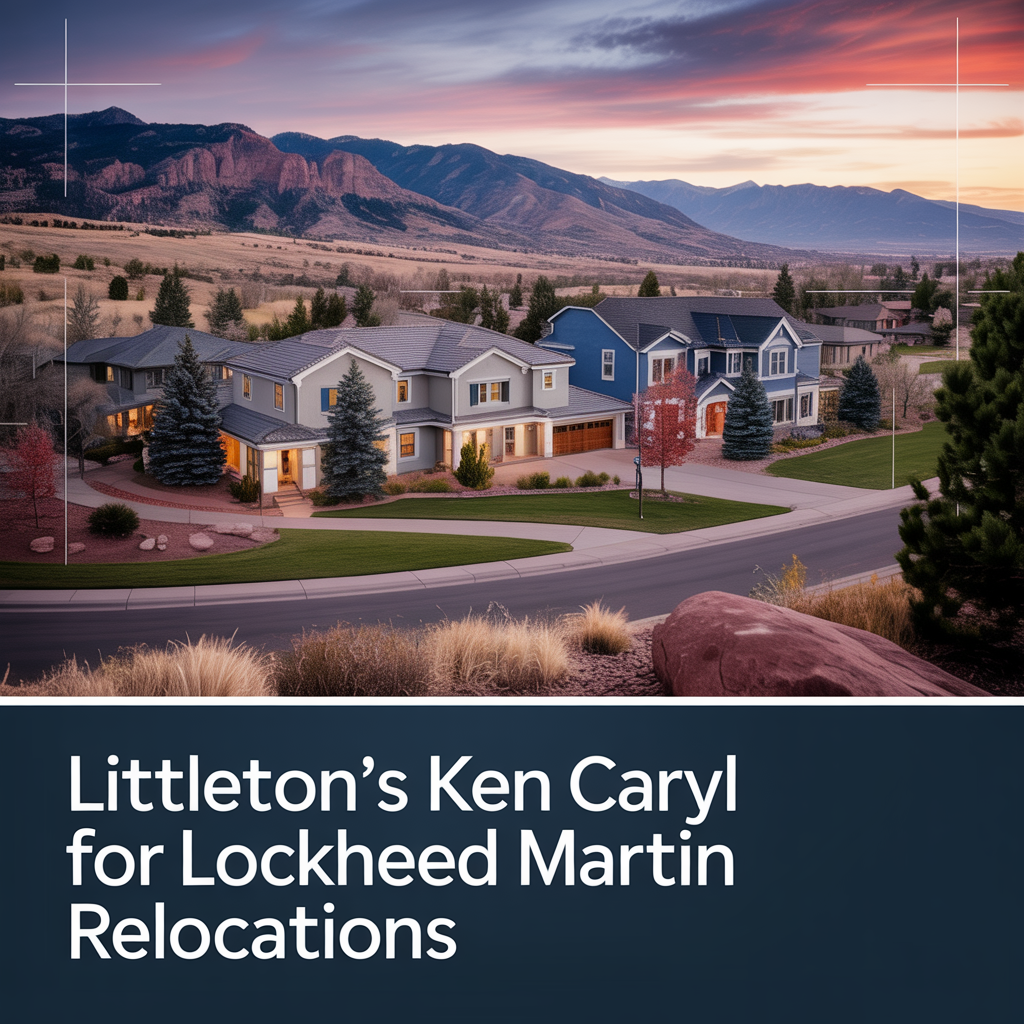
Littleton’s Ken Caryl for Lockheed Relocations
This is part of Lockheed Martin Relocation → [Lockheed Martin Relocation Hub] & the larger Denver Relocation Hub → [Denver Relocation Hub] Written by: Chad Cabalka Ken Caryl is one of the best-kept “family first” relocation options for Lockheed Martin employees who want foothills scenery, strong neighborhood appeal, and a real suburban lifestyle that still feels connected…


Centennial & Parker for Lockheed Relocations
This is part of Lockheed Martin Relocation → [Lockheed Martin Relocation Hub] & the larger Denver Relocation Hub → [Denver Relocation Hub] Written by: Chad Cabalka Centennial and Parker are two of the smartest suburban choices for Lockheed Martin employees relocating with families because they give you a strong balance of commute flexibility, good neighborhood variety, and…

Highlands Ranch for Family-Friendly Lockheed Relocations
This is part of Lockheed Martin Relocation → [Lockheed Martin Relocation Hub] & the larger Denver Relocation Hub → [Denver Relocation Hub] Written by: Chad Cabalka Highlands Ranch is one of the strongest choices for Lockheed Martin employees relocating with families because it delivers exactly what most parents want after a big move: stable neighborhoods, strong community…