


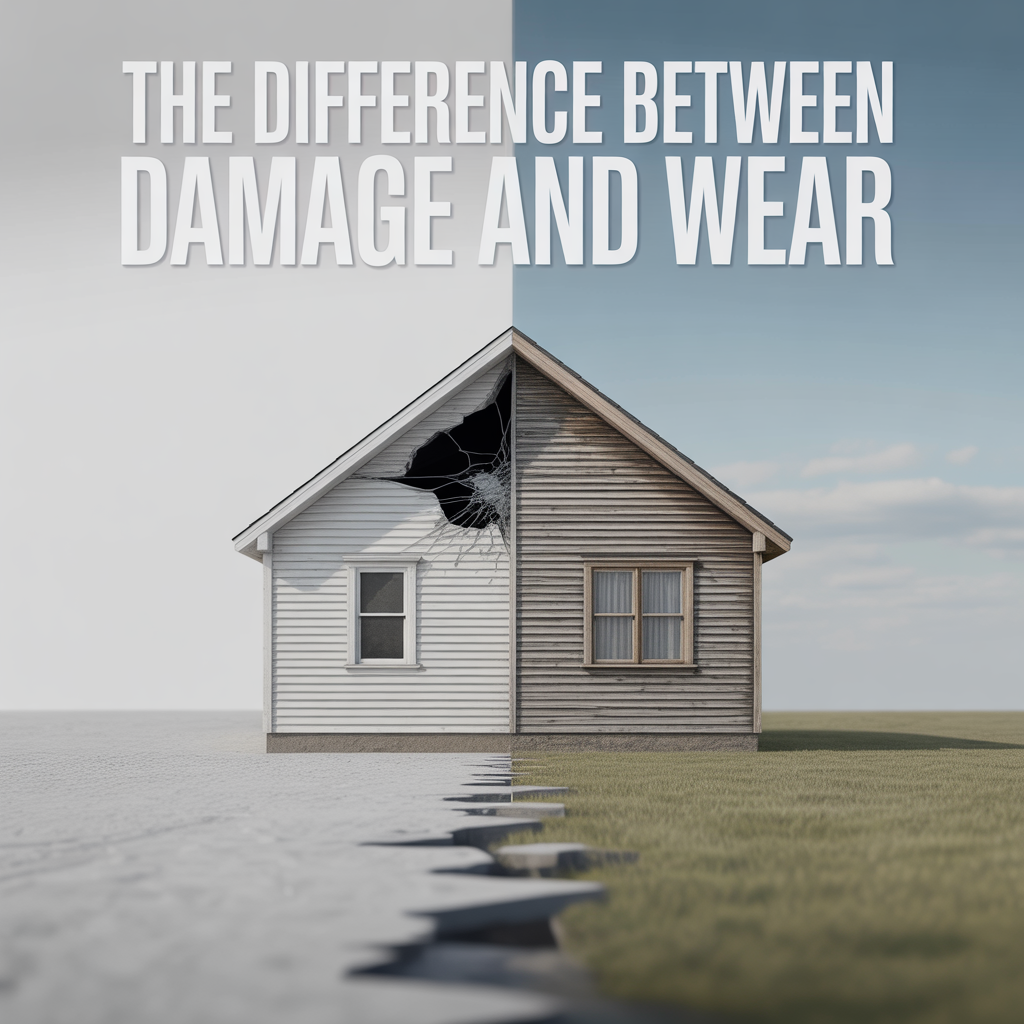
The difference between damage and wear lies in timing, cause, and predictability, with insurance covering sudden, accidental events while excluding gradual deterioration from normal use, aging, or lack of upkeep. Damage involves abrupt forces like a hailstone cracking a shingle or a tree branch puncturing siding during a storm, qualifying for claims under standard policies. Wear, by contrast, develops slowly through exposure—fading paint from UV rays, rust on pipe fittings, or curling roof edges from thermal cycles—falling squarely into exclusions as the homeowner’s responsibility. This distinction matters in everyday homeownership because misidentifying wear as damage leads to denied claims, unexpected costs, and eroded confidence in coverage.
Insurers define damage as fortuitous and external, while wear signals internal decay or neglect, often proven through inspection timelines or maintenance gaps. A fresh dent from wind versus years of granule loss determines payouts, turning assumptions into financial realities.
How This Shows Up in Real Homes
A homeowner files after hail dents south-facing shingles, with adjusters approving $8,000 repairs because impact marks show sudden force overriding prior UV brittleness. The claim pays out, restoring protection before further storms exploit weaknesses.
Nearby, wind lifts aged edges on a 20-year-old roof, revealing dry-rotted underlayment from years of unchecked curling. Inspectors cite wear—granule loss predating the event—denying coverage, leaving $15,000 replacement as owner expense despite storm timing.
Plumbing tells parallel tales: a frozen pipe bursts suddenly from an overnight low, covering $4,000 water damage as accidental. Corrosion pinholes leaking months undetected rot joists slowly, classified wear when discovered, forcing $6,000 out-of-pocket remediation.
Common Misunderstandings Homeowners Have
Many equate any visible flaw with insurable damage, filing for cracked driveways from soil settling as “earth movement” rather than gradual wear expected in clay regions. They overlook how policies distinguish predictable contraction from sudden shifts.
Another confusion blends symptoms: sagging gutters from ice weight qualify as storm damage, but rusted brackets weakening over seasons count wear, even if failure coincides with weather. Homeowners blame events, missing foundational decay.
People assume age alone triggers coverage, expecting old roofs to renew post-storm regardless of condition. Insurers apportion based on prior deterioration percentage, reducing payouts for wear contribution.
Why These Assumptions Create Problems Over Time
Misfiled wear claims raise red flags, hiking premiums 25% or risking non-renewal as high-risk profiles build. Denied roofs accelerate total failure, cascading attic rot at double costs when water paths widen unchecked.
Plumbing wear ignored compounds to backups flooding slabs, with mold exclusions adding remediation atop pipe swaps. Resale appraisers dock 10% for systemic neglect patterns, eroding equity from misclassified claims.
Apportioned storm payouts undervalue repairs, leaving partial roofs vulnerable to next events and insurance scrutiny over incomplete fixes, trapping owners in repair cycles without full restoration.
How Thoughtful Homeowners Handle This Differently
These owners photograph baselines annually—shingles, pipes, trim—timestamping against weather logs to prove sudden onset. Post-event inspections distinguish fresh breaks from prior fraying, strengthening claims with evidence.
They maintain logs proving upkeep: tune-up receipts counter wear allegations, while endorsements cover service lines preemptively. Reserves fund wear proactively, avoiding claim dependency altogether.
Thoughtful ones consult public adjusters for borderline cases, apportioning repair quotes to isolate damage portions insurable, maximizing payouts without misrepresentation risks.
What to Keep in Mind Moving Forward
Classify by onset: sudden impact or burst equals damage; slow fraying or rust equals wear. Document trends rigorously, maintain ahead of thresholds, and pair policies with reserves for gaps.
This clarity prevents claim pitfalls, aligning stewardship with coverage realities.
To reach out to me directly for a personalized damage-vs-wear analysis tailored to your Denver-area home—including claim-proof documentation strategies, maintenance thresholds, and policy alignment—contact me today for your free assessment. Protect your investment from coverage surprises now.