



This is part of Homeownership 101 → [Homeownership 101] & Ownership Costs & Budget Planning → [Ownership Costs & Budget Planning]
Written by: Chad Cabalka
Planning ownership like a business means treating your Denver metro home as a major financial asset with intentional management, projecting costs, building reserves, and measuring performance quarterly to maximize equity while minimizing cash flow stress. Homeowners who approach their property this way avoid the “house rich, cash poor” trap affecting 78% locally, where $300,000 equity sits idle amid $4,500 monthly ownership expenses squeezing lifestyle and savings. Business-minded owners separate ownership budgets ($4,000-$4,500 PITI + insurance $395 + utilities $350 + maintenance $1,000 + HOA $300) from personal spending, tracking ROI on upgrades like Class A roofs yielding 20-25% insurance credits against $52,000 costs. Annual $450 rebuild valuations forecast HB23-1174 inflation to $800/square foot plus buffers, while quarterly P&L reviews flag creep from Xcel 9.9% hikes or property tax reassessments before $2,000 escrow shortfalls hit. Reserves scale 2.5-3% value ($15,000-$25,000) matching deductibles, self-funding cosmetics to preserve $2,900 premiums versus $5,600 CLUE-flagged comps.
Quarterly Financial Reviews
Business planning starts with quarterly profit and loss statements for your home, comparing actual outflows against budgeted baselines like $3,200 PITI, $395 insurance, $350 utilities, $750 maintenance, and $260 taxes totaling $4,500 monthly on $600,000 properties. Flag variances over 10%—Xcel bills climbing $30 from rate requests, HOA jumping $110 with assessments, or insurance renewing $900 higher—and adjust immediately through shopping or mitigation. Track appreciation quarterly via Zillow or appraisals confirming 4% yearly gains building $24,000 equity, offsetting 12% construction inflation eroding rebuild coverage. Review reserves hitting $15,000-$25,000 targets via $400 monthly transfers (12% PITI), ensuring liquidity covers 90% $15,000 deductibles without claims spiking premiums 40%. P&L reveals creep patterns like $13,000 maintenance exceeding 1.5% value, prompting phased roofs over patches saving 50% long-term. These reviews turn reactive stress into proactive control, compounding $100,000 equity edges.
Annual Projections and Valuations
Project five-year forecasts like a CEO: $5,450 monthly peaks incorporating HB23 $800/square foot rebuilds, 58% insurance growth, 30% Xcel rises by 2032, and 20% tax reassessments scaling $3,120 yearly. Annual $450 rebuild reports lock extended coverage matching $900,000 necessities on $600,000 homes, preempting 25% underinsurance settlements post-loss. Capital expenditure plans phase $52,000 roofs Year 3, $12,000 HB23-1161 furnaces Year 5, $8,000 drains Year 1—handyman contracts save 15% bulk. ROI analysis prioritizes Class A shingles (20-25% credits vs $65,000 cost) over cosmetic $20,000 kitchens yielding zero premiums. Quarterly CLUE audits ($25) dispute flags blocking $5,600 surcharges, 20-carrier shops capture 15% savings—projections confirm ownership stays below 35% income for sustainability.
Reserve and Risk Management
Treat reserves as operating capital: $15,000-$25,000 (2.5-3% value) outside escrow funds deductibles and $400 fixes avoiding CLUE population, with $20,000 smoothing $52,000 hail without 40% hikes haunting seven years. High-yield auto-transfers build buffers, HELOCs (4-6%) remain contingency versus 18% cards draining $18,000 decade-long interest. Risk matrix ranks hail (94 events), clay shifts, wildfire vents—mitigations like French drains preempt $12,000 cascades. FAIR $5,000 desperation avoided through clean histories renewing $3,900 stable, parametric triggers injecting $25,000 liquidity instantly. Reserves preserve cash flow for investments outperforming home equity returns.
Performance Metrics and Exits
Measure success quarterly: equity growth 4% ($24,000 yearly), ownership costs under 35% income, reserves over 3 months expenses, premiums below $3,900 via credits. Total return factors appreciation minus $13,000 maintenance plus $80,000 premium lift from clean disclosures selling 12-18% higher ($75,000 $600,000 home). Exit strategies plan relocations or downsizes recapturing $300,000 equity tax-free, HELOCs funding opportunities at 8% versus 4% appreciation. Pre-listing audits showcase stability justifying full offers 45 days faster—business discipline compounds $100,000 advantages over emotional owners draining $25,000 decade-long creep.
Reach out to me directly about Planning Ownership Like a Business, and get expert representation for running your Denver metro home like a high-performing asset.
Get the full Denver Market Insights → [Market Insights]


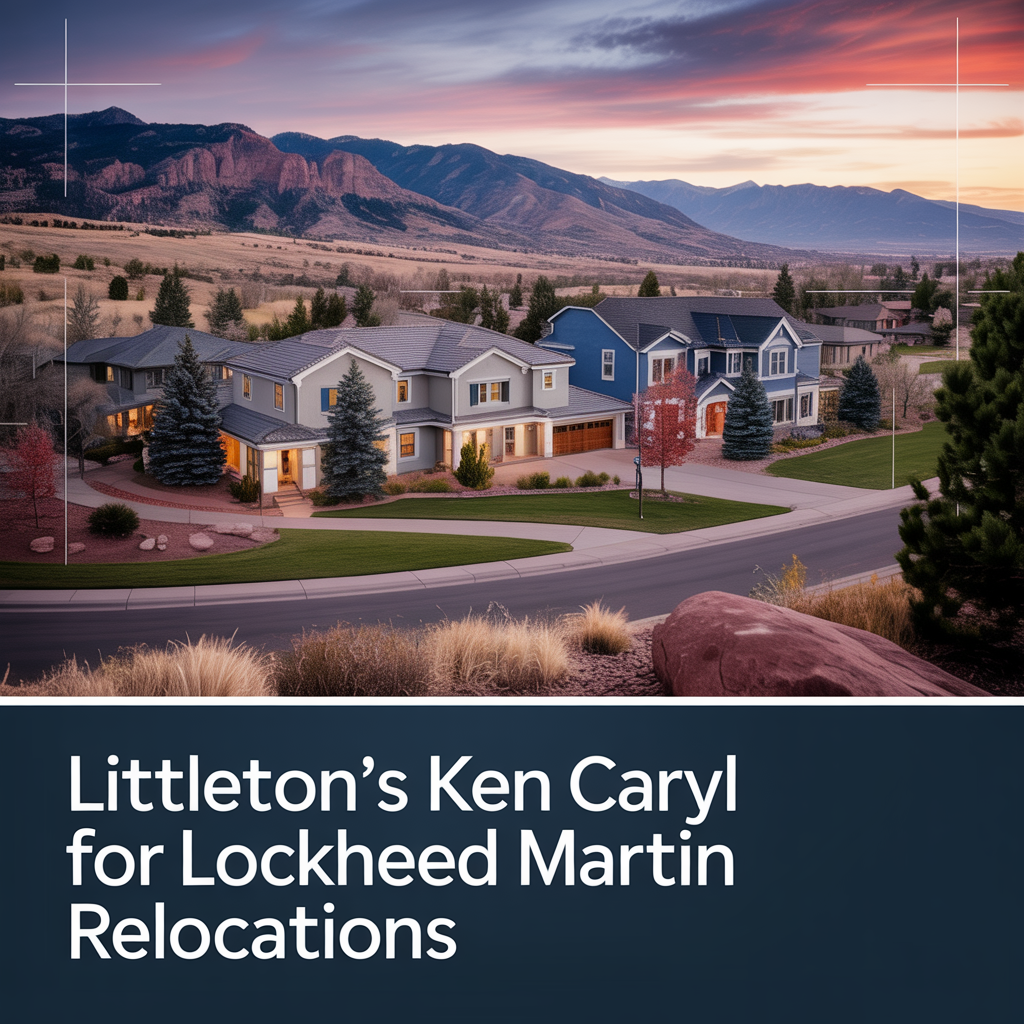
Littleton’s Ken Caryl for Lockheed Relocations
This is part of Lockheed Martin Relocation → [Lockheed Martin Relocation Hub] & the larger Denver Relocation Hub → [Denver Relocation Hub] Written by: Chad Cabalka Ken Caryl is one of the best-kept “family first” relocation options for Lockheed Martin employees who want foothills scenery, strong neighborhood appeal, and a real suburban lifestyle that still feels connected…


Centennial & Parker for Lockheed Relocations
This is part of Lockheed Martin Relocation → [Lockheed Martin Relocation Hub] & the larger Denver Relocation Hub → [Denver Relocation Hub] Written by: Chad Cabalka Centennial and Parker are two of the smartest suburban choices for Lockheed Martin employees relocating with families because they give you a strong balance of commute flexibility, good neighborhood variety, and…

Highlands Ranch for Family-Friendly Lockheed Relocations
This is part of Lockheed Martin Relocation → [Lockheed Martin Relocation Hub] & the larger Denver Relocation Hub → [Denver Relocation Hub] Written by: Chad Cabalka Highlands Ranch is one of the strongest choices for Lockheed Martin employees relocating with families because it delivers exactly what most parents want after a big move: stable neighborhoods, strong community…