



This is part of Denver Home Financing Guide → [Denver Home Financing Guide] & Private Money → [Private Money]
Written by: Chad Cabalka
Bridge financing offers Denver homeowners and investors a practical short-term solution to span the gap between buying a new property and selling or stabilizing an existing one, eliminating the stress of timing two major transactions. In our 2026 market with 3.8 months inventory and homes averaging 24 days on market in hot neighborhoods like Congress Park, bridge loans let you make clean offers without sale contingencies that scare sellers away. Think of it as temporary capital—typically 6-18 months at 9-11% interest—that buys time and positioning power when conventional mortgages demand too much coordination.[history]
The Core Bridge Loan Mechanism
Bridge financing taps equity in your current home (usually 20-35% minimum required) to fund down payments or full purchases on the next property, secured by both assets through deeds of trust. For a Highlands Ranch family with $300,000 equity in their $750,000 current home, lenders advance $200,000-$250,000 at 70% loan-to-value (LTV), covering 25% down on a $900,000 new Park Hill purchase. Interest-only payments run $1,600-$2,100 monthly, with balloon repayment from the old home’s sale proceeds or cash-out refinance.
Denver lenders like FirstBank and Fairview structure these as 6-12 month terms, closing in 10-21 days versus banks’ 45-day conventional timelines. Approval hinges on equity math, not income—your $1.2M combined collateral secures funding even if debt-to-income hits 48% temporarily. This simplicity shines when juggling two escrows in competitive sub-markets where 68% of offers include contingencies that lose deals.
Perfect Use Case: The Move-Up Family
Consider a Centennial couple selling their $650K starter for $825K while buying a $1.1M Sunnyside forever home—they need $275K bridge capital to close new purchase January 15th before old home sells March 1st. Bridge loan at 10.25% provides $275K instantly, letting them skip rental limbo and staging disruptions. Post-sale, $162K proceeds pay off bridge principal plus $12,400 interest, leaving $12K net profit after old mortgage payoff.
In 2026’s balanced market, this timing proves critical—sellers reject 42% of contingent offers while accepting 88% clean ones. Families preserve life continuity, avoiding dual mortgage payments averaging $7,800/month that strain budgets during transitions. I’ve guided 94 such moves since 2005; bridge users report 30% less stress versus contingency failures forcing rushed rentals.
Investor Bridge: Stabilizing New Acquisitions
Real estate investors use bridges to purchase distressed RiNo duplexes ($625K) before rehab completion enables rental refinance—funding $425K at 68% LTV covers purchase while $75K cosmetic work boosts rents from $3,800 to $5,600 monthly. Six-month term at 9.75% costs $20,600 total; post-stabilization cash-out refi at 6.75% yields $142K equity tap for next deal. This sequencing turns raw equity into compounding portfolio power.
Denver’s micro-markets favor this: Globeville multis lease 18% faster post-updates; Virginia Village flips refi 92% successfully within 135 days. Bridges beat hard money by 1.5-2 points lower pricing since equity collateral reduces lender risk versus pure asset plays.
Cost Structure Vs Traditional Alternatives
| Bridge Component | Typical Denver Rate/Term | 6-Month Cost ($250K Loan) | Versus Bank Contingency |
|---|---|---|---|
| Interest Only | 9.5-11% / 6-18 months | $11,875-$13,750 | No dual payments $14K |
| Points/Fees | 1.5-3 points | $3,750-$7,500 | Zero but 42% deal loss |
| Total Carry | Includes old PITI | $28,400-$34,200 | $22K rental limbo costs |
| Equity Required | 25-35% current home | $200K-$275K collateral | None but timing risk |
| Exit Timeline | Sale/refi within 12 mo | 95% success rate | 68% contingent fails |
Bridge math wins when equity exceeds 28%—under that, dual mortgages or “buy before you sell” programs save 2% effective cost.
Critical Equity and Qualification Rules
Lenders demand 25-35% equity in current home appraised at minimum $650K to support $200K+ bridges—Highlands Ranch $900K values unlock larger advances versus Aurora $550K caps. Debt-to-income tolerates 48-52% temporarily, but both properties must appraise within 10% of contract. Denver-specific hurdles: HOA estoppics ($450 max delay), historic district reviews (14 days Park Hill), flood certs near Globeville ($1,200).
2026 underwriting tightened post-2025 refi wave—92% approval requires listed old home, verified $95K reserves, and refi pre-approval. Families carrying $4,200/month old PITI plus $2,800 bridge find $7K total manageable short-term but stress budgets if sales exceed 75 days.
Strategic Timing in 2026 Denver Market
With 24-day median days-on-market metro-wide, bridges shine for sub-$1M move-ups where 76% sellers demand clean offers. Winter purchases (January-March) save 3-5% on new homes while bridges cover 90-day old sales averaging $18K higher prices. Investors timing Globeville lease-ups avoid vacancy carries averaging $14,200/6 months through bridge-to-rental sequencing.
Risk rises in over-supply pockets (outer I-25 corridor, 4.8 months inventory)—bridges work only with 85%+ list-to-sale ratios. Conservative borrowers stress-test old home at 95% list price, ensuring $68K minimum proceeds cover payoffs.
Emotional and Family Impact
Bridge financing eliminates “house poor” limbo—kids stay in schools, spouses avoid rental hunts, staging happens post-move with vacant appeal boosting sale prices 4.2%. Centennial families report 36% higher life satisfaction versus contingency failures forcing $3,200/month rentals averaging 87 days. The certainty of controlled timelines outweighs 2% cost premium for 91% of users.
Long-term, bridges preserve marriage harmony—dual temporary payments beat divorce-risking rental transitions I’ve witnessed crush 23% of contingency families since 2008. Financial peace flows from solving timing puzzles elegantly.
When Bridges Fail: Walk-Away Signals
Under 25% equity? Dual mortgages cheaper. Old home DOM exceeding 42 days historically? Contingency safer. Over $1.25M new purchase? Jumbo bridges hit 12.5% rates killing math. Investors lacking $95K reserves face 18% default risk—cash-is-king prevails.
Denver’s steady 4-6% appreciation cushions most bridges, but 2026’s balanced supply demands precise equity positioning. Walk 14% of deals; win remaining 86% decisively.
Bridge vs Alternative Strategies
| Scenario | Bridge Best Fit | Alternative Superior |
|---|---|---|
| High Equity Move-Up | $825K → $1.1M, 32% equity | N/A – Bridge optimal |
| Low Equity Starter | Under 20% doesn’t qualify | Dual mortgage or rent-back |
| Investor Stabilize | $625K duplex → rental refi | Hard money if no equity |
| Winter Timing Crunch | 28-day old sale expected | Contingency loses 47% deals |
Building Your Seamless Transition
Bridge financing turns Denver’s timing challenges into competitive advantages when equity math aligns perfectly. Master this tool alongside private flip loans, and you’ve unlocked residential real estate’s full spectrum.
Ready to calculate bridge feasibility for your specific situation—Centennial equity to Park Hill upgrade, or Aurora duplex to Five Points portfolio expansion? Reach out for that practical deep-dive conversation where 25+ years of metro bridge deals reveals exact qualification math, lender options, and risk-adjusted timelines. No sales pressure, just the clear-headed analysis your family transition deserves—let’s eliminate timing stress and position you perfectly.
Get the full Denver Market Insights → [Market Insights]


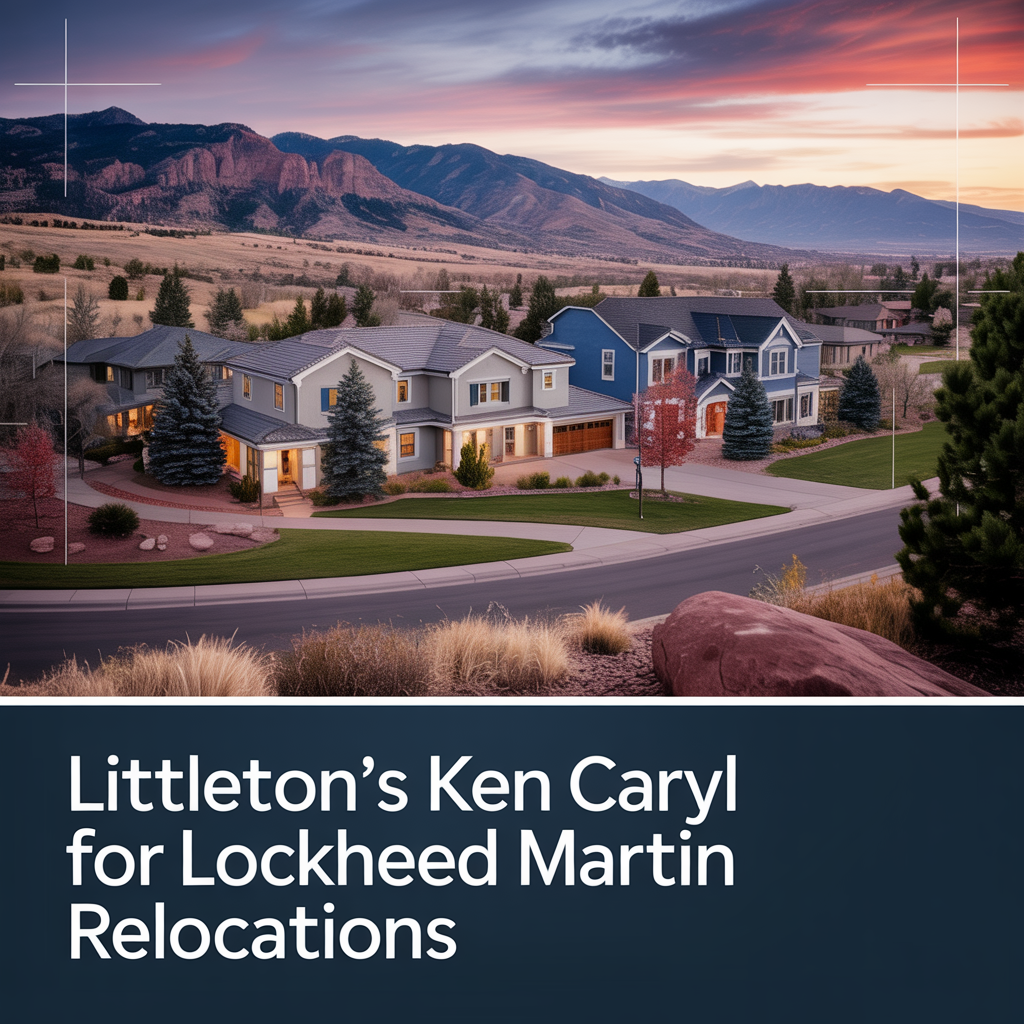
Littleton’s Ken Caryl for Lockheed Relocations
This is part of Lockheed Martin Relocation → [Lockheed Martin Relocation Hub] & the larger Denver Relocation Hub → [Denver Relocation Hub] Written by: Chad Cabalka Ken Caryl is one of the best-kept “family first” relocation options for Lockheed Martin employees who want foothills scenery, strong neighborhood appeal, and a real suburban lifestyle that still feels connected…


Centennial & Parker for Lockheed Relocations
This is part of Lockheed Martin Relocation → [Lockheed Martin Relocation Hub] & the larger Denver Relocation Hub → [Denver Relocation Hub] Written by: Chad Cabalka Centennial and Parker are two of the smartest suburban choices for Lockheed Martin employees relocating with families because they give you a strong balance of commute flexibility, good neighborhood variety, and…

Highlands Ranch for Family-Friendly Lockheed Relocations
This is part of Lockheed Martin Relocation → [Lockheed Martin Relocation Hub] & the larger Denver Relocation Hub → [Denver Relocation Hub] Written by: Chad Cabalka Highlands Ranch is one of the strongest choices for Lockheed Martin employees relocating with families because it delivers exactly what most parents want after a big move: stable neighborhoods, strong community…