



This is part of Littleton Lifestyle Hub → [Littleton Lifestyle Hub] & Littleton Real Estate Guide → [Littleton Real Estate Guide]
Written by: Chad Cabalka
Littleton Public Schools (District 6) operates with well‑defined attendance boundaries that shape home values, neighborhood choice, and long‑term stability in the metro area, and understanding how those boundaries and district dynamics work is practical for any family planning a move in or around Littleton. The district has not made major boundary changes in recent years, but it has a clear process for reviewing boundaries, balancing growth, and adjusting when needed, and those decisions directly impact which homes fall into specific schools and what families can expect in terms of stability. This overview is written for parents and homebuyers who want to think ahead about schools as part of their home strategy, not just a last‑minute checkmark.
How Littleton School Boundaries Are Drawn
Student attendance is based on geographic attendance zones for each elementary, middle, and high school in Littleton Public Schools, so which school a child attends is determined primarily by where the family lives, not by district choice like some charter or magnet models. The district uses a boundary study process to design those zones, recently adopting the “Rosewood” option for elementary schools, the “Spruce” option for middle schools, and the “Fir” option for high schools, and those boundaries are now in place unless the district decides to reopen a boundary study in the future.
Boundaries are generally stable from year to year, and families can expect that, once a child is in a neighborhood school, they will stay there for the full span of that school’s grades, with a clear path to the next school in the feeder pattern. This stability is helpful for families who are buying a home with a specific school in mind and want to avoid uncertainty about which school their kids will attend in elementary, middle, and high school.
How New Homes and Growth Impact Boundaries
New construction and redevelopment in Littleton increase student enrollment, which can eventually push the district to revisit attendance boundaries if schools become overcrowded or if capacity is too uneven across the district. When the district sees consistent growth in areas like newer parts of Highlands Ranch (which overlaps with Littleton schools) or new infill in older parts of Littleton, it monitors capacity and may propose modest boundary adjustments to move students to schools with more space.
Because of this, neighborhoods with recent or ongoing building tend to be the ones that are watched most closely for possible boundary changes. Families who are buying new construction or in a fast‑growing pocket should expect that, while today’s boundary is stable, the district could adjust it in the future if capacity becomes tight, especially if a particular elementary school, for example, begins to exceed its target student numbers.
How Littleton Works with Neighboring Communities
Littleton’s school district boundaries and city limits do not perfectly align, so some neighborhoods in Centennial, unincorporated Arapahoe County, and parts of Highlands Ranch are served by Littleton Public Schools because they fall within the district’s geographic boundaries, not just within Littleton city limits. This means that a home in a street that looks like it’s in Centennial, for instance, might actually be in Littleton 6 for schools, and this is a very common situation in the south‑west side of the metro area.
For families, this means that school district is something to verify using the district’s official boundary and bus route locator tool, not just assumed based on city address. It also means that Littleton’s boundary decisions affect homes in multiple communities, which can create coordination discussions with neighboring districts and municipalities about where growth is happening and how to manage school capacity across the region.
How Often Boundaries Are Reviewed
The Littleton Public Schools board does not redraw boundaries every year; instead, it uses a boundary study process when enrollment projections or growth patterns suggest that a change is needed. Recently, the board has opted not to make adjustments to elementary school boundaries at this time, which signals that current zones are considered manageable and that widespread redistricting is not planned for the near term.
But the district also keeps an eye on long‑term trends, including housing development, population changes, and demographic shifts, so a review could be triggered in the next three to five years if growth continues in certain areas or if a school’s enrollment significantly over‑ or underperforms within its current boundary. This pattern is common in many Denver‑area districts: stable for a few years, then a focused study when pressure builds on capacity.
What Stability Looks Like for Families
For most families, the biggest benefit of Littleton’s system is predictability: once a child enrolls in a neighborhood school, they can reasonably expect to stay there for the full grade span, without sudden shifts unless a major boundary change is approved years later. This is helpful for everything from neighborhood friendships to long‑term planning around extracurriculars, activities, and academic tracks, especially in the middle and high school years.
However, “reasonable” does not mean 100% guaranteed forever. If a boundary is changed in the future, students who are already in the new feeder pattern often get to stay (grandfathered in), while incoming students are assigned based on the new lines. Families who are buying now with a specific school in mind should confirm that the current boundary is in place, understand that it could be reviewed later, and plan for the possibility of a change several years down the road, particularly if they expect to stay in the home for a long time.
How School Quality Influences Home Values
School assignments matter to homebuyers, and certain neighborhoods in Littleton, plus parts of Centennial and Highlands Ranch served by Littleton Public Schools, tend to command higher prices because buyers are willing to pay a premium to be in a desirable elementary or middle school zone. The difference between being in one elementary zone versus another is often a small area, but it can meaningfully affect a home’s appeal to other families down the line.
For investors and families thinking about resale, this means that school boundaries are a real factor in how a home will hold its value and how quickly it will sell. Homes in highly regarded zones in Littleton often trade at a modest premium within the broader market, and that premium is something that tends to endure over time as long as the schools remain strong.
How to Check Which School Serves a Home
Littleton Public Schools provides a boundary and bus route locator tool that lets families enter a home address and see which school is assigned by attendance zone. This is the most reliable way to know which elementary, middle, and high school a specific property is in, especially in areas where city lines, district lines, and county lines are all a bit blended.
When working with a real estate agent, it’s worth double‑checking with this tool rather than relying only on what a listing says, since neighborhood names and school information are sometimes outdated or oversimplified. Knowing the exact school assignment helps avoid surprises later, especially if a family is prioritizing a particular school for either quality or fit.
How to Think About Future Changes
Littleton is not planning to redraw its boundaries right now, but the district is responsible for keeping schools at appropriate capacity, and a significant growth wave in a particular area can eventually prompt a new boundary study. Families who are buying with a long‑term view (10+ years) should think about the direction of growth around the neighborhood: are there many new builds nearby, large parcels being developed, or parts of town where the district has expressed interest in adding or expanding schools?
This doesn’t mean avoiding Littleton Public Schools if growth is happening; it means building in a buffer for the possibility of a change several years down the road. For example, a neighborhood that’s in a solid elementary school zone today might see boundary adjustments in five to seven years if capacity pressure grows, so the “best” zone today might not be the same in a decade.
Practical Takeaways for Buyers and Parents
If school assignment is important to your family, Littleton Public Schools offers a stable, predictable attendance zone model with clear feeder paths from elementary to middle to high school. The district reviews its boundaries when needed rather than changing them frequently, which supports neighborhood stability, but it does not rule out changes if enrollment trends shift significantly.
When buying, use the district’s boundary tool to confirm the assigned school, consider how new building in the area might affect capacity in the coming years, and think about how long you plan to be in the home in relation to school cycle dates. This long‑view, practical approach to school boundaries can help you make a more confident, informed decision that supports your family’s lifestyle and long‑term goals.
If you’re looking at homes in or near Littleton and want to discuss how specific addresses line up with Littleton Public Schools, I’m happy to help walk through which schools are assigned, how the feeder patterns work, and how to think about potential changes down the road. With 15+ years of experience in this market, I’ve helped many families prioritize school considerations that make sense for their family’s stage and long‑term goals, not just the current listing description. Let’s connect and talk through your priorities and what you’re hoping that next home will do for your family.
Get the full Denver Market Insights → [Market Insights]


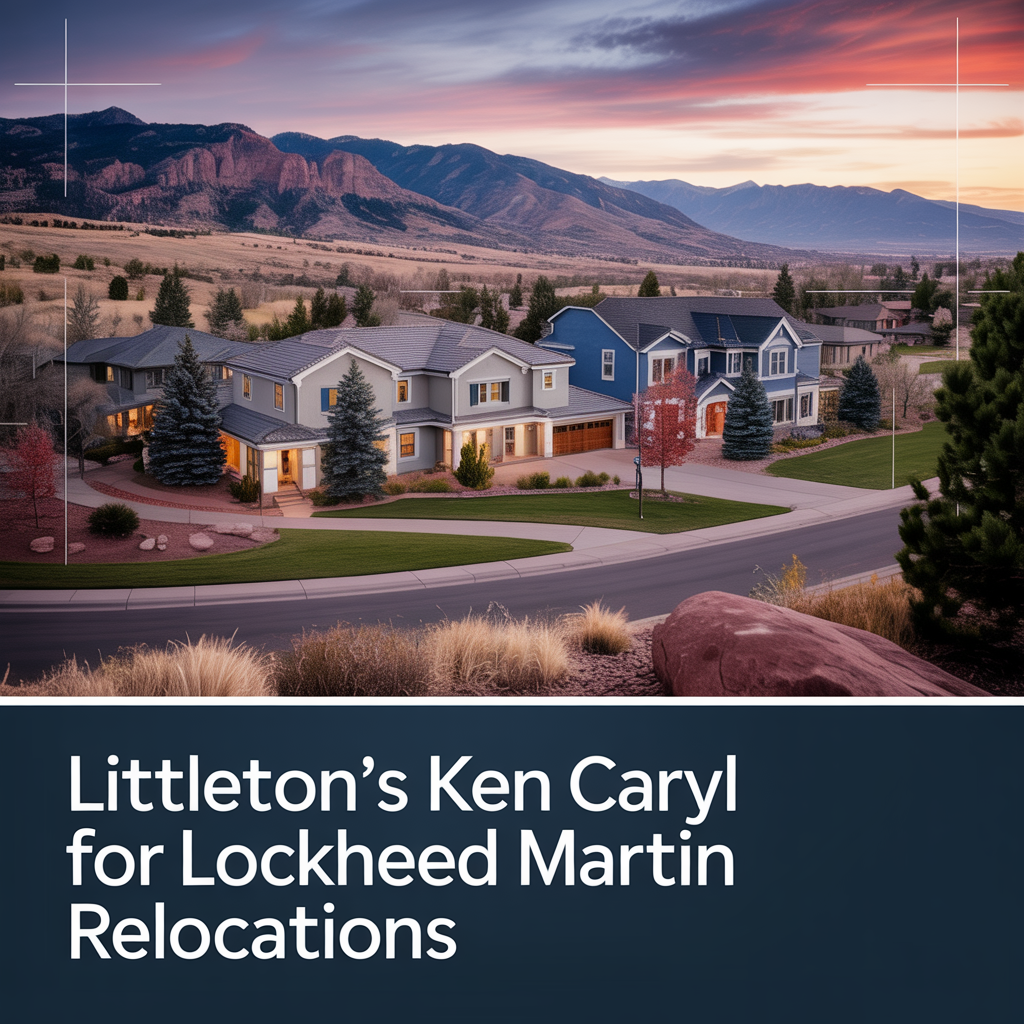
Littleton’s Ken Caryl for Lockheed Relocations
This is part of Lockheed Martin Relocation → [Lockheed Martin Relocation Hub] & the larger Denver Relocation Hub → [Denver Relocation Hub] Written by: Chad Cabalka Ken Caryl is one of the best-kept “family first” relocation options for Lockheed Martin employees who want foothills scenery, strong neighborhood appeal, and a real suburban lifestyle that still feels connected…


Centennial & Parker for Lockheed Relocations
This is part of Lockheed Martin Relocation → [Lockheed Martin Relocation Hub] & the larger Denver Relocation Hub → [Denver Relocation Hub] Written by: Chad Cabalka Centennial and Parker are two of the smartest suburban choices for Lockheed Martin employees relocating with families because they give you a strong balance of commute flexibility, good neighborhood variety, and…

Highlands Ranch for Family-Friendly Lockheed Relocations
This is part of Lockheed Martin Relocation → [Lockheed Martin Relocation Hub] & the larger Denver Relocation Hub → [Denver Relocation Hub] Written by: Chad Cabalka Highlands Ranch is one of the strongest choices for Lockheed Martin employees relocating with families because it delivers exactly what most parents want after a big move: stable neighborhoods, strong community…