


This is part of Littleton Lifestyle Hub → [Littleton Lifestyle Hub] & Littleton Real Estate Guide → [Littleton Real Estate Guide]
Written by: Chad Cabalka
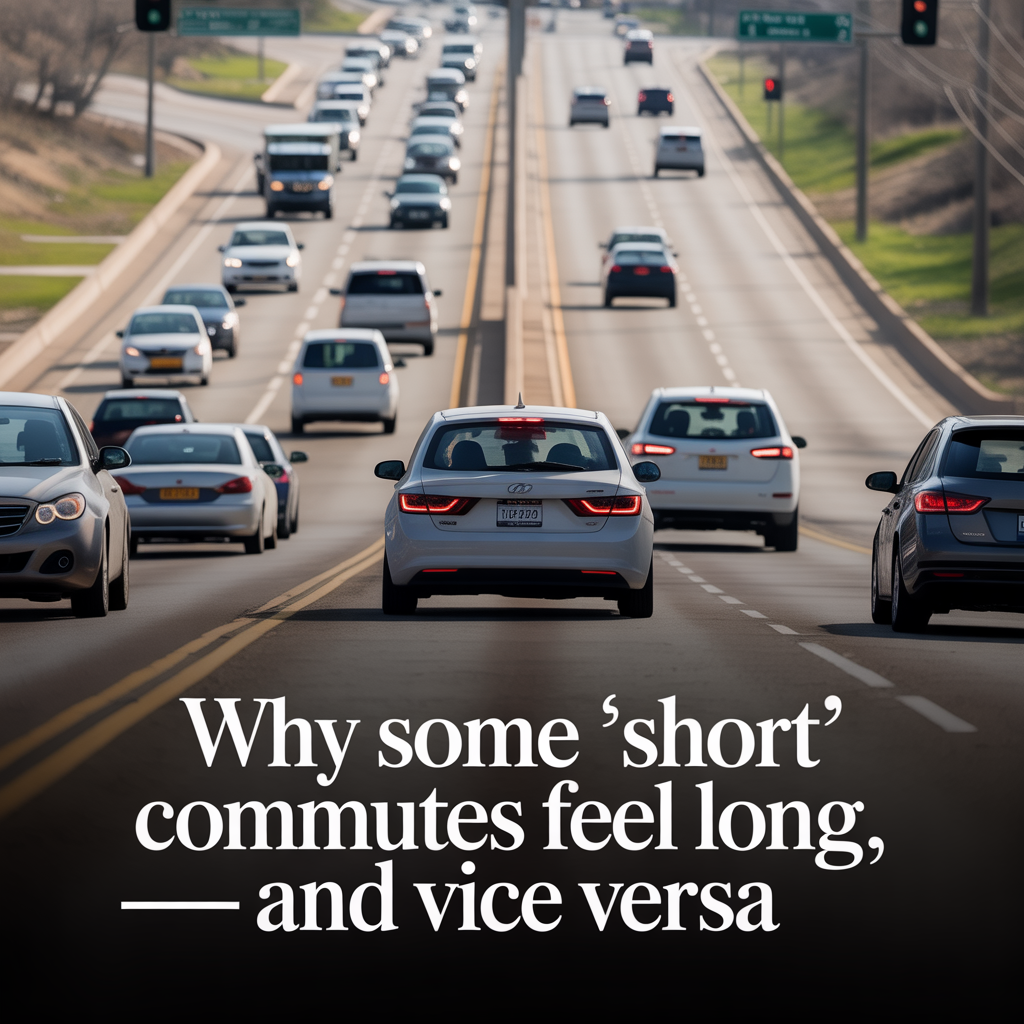
A “short” commute can feel like an eternity, and a “long” commute can feel surprisingly easy, and that’s not just about miles or traffic — it’s about how the commute fits into your life, your control, and your mental state. After 15+ years in Denver real estate, I’ve seen families move into a home thinking “15 minutes to work, perfect,” then realize they’re stressed and drained by a 15‑minute drive, while others with a 45‑minute drive feel more relaxed. Here’s why that happens, so you can choose a home that supports, not fights, your daily rhythm.
“Short” Commutes That Feel Long
A commute can be objectively short but feel endless because of three things: lack of control, high stress, and poor fit with your rhythm.
1. Stop‑and‑go, uncertain traffic
- A 12‑mile rush‑hour slog on I‑25 into downtown, with sudden slowdowns, no clear exit, and no idea how long it will take, feels long even if it’s only 25–35 minutes.
- Each stop, light, and merge eats mental energy; it’s not the clock time, it’s the constant “when will this be over?” feeling.
- In Littleton, this is common on Santa Fe/105th/Arpo, or any road that’s a school‑zone artery in the morning.
2. Loss of autonomy and predictability
- If the commute is crowded, chaotic, or full of delays, it feels like you’re trapped in a system you can’t control.
- Even a 15‑minute drive that’s unpredictable (e.g., school traffic, construction, accidents) can feel longer than a 30‑minute drive that’s calm and consistent.
3. Conflict with personal rhythm
- A short commute that forces you to leave at 6:30 a.m. every day, missing coffee with the spouse or time with the kids, feels heavy and draining.
- A short commute to a downtown job that requires parking, a lot of walking, or a complex final leg (light rail + walk + stairs) can feel “longer” than a longer drive with a simple in‑and‑out parking.
4. High stress, low benefit
- If the commute ties into a high‑stress job, long hours, or a lifestyle that values family time, exercise, or sleep, then even a short drive feels like a major time tax.
- That mental math — “I’m losing 1 hour/day for my family, my health, or my sanity” — makes the commute feel way longer than the clock says.
“Long” Commutes That Feel Short
A longer commute can feel surprisingly easy if it’s predictable, low‑stress, and fits your natural rhythm.
1. Predictable, consistent routes
- A 35–45‑minute drive on C‑470 or I‑25 DTC, with a known exit and a consistent time, feels “short” because it’s a reliable routine, not a daily guessing game.
- People learn the patterns, time the lights, and mentally “zone out,” so the time passes faster than it would in chaotic traffic.
2. Sense of control and separation
- A longer drive can create a better mental boundary between work and home, especially if the job is stressful.
- Many people actually use that time to decompress, listen to music, a podcast, or an audiobook, and they feel like they’re “getting time” for themselves, not just wasting it.
3. Aligns with a slower lifestyle
- Families who already live in Littleton for the schools, parks, and lifestyle are often more willing to accept a longer commute because it’s buying them a quieter neighborhood, a yard, and a slower pace at home.
- When the commute time is “traded” for a home that feels like a true home base, it feels worth it, and so it feels subjectively “shorter.”
4. Active or low‑stress modes
- A 30‑minute bike ride to work, even if it’s not the fastest route, can feel shorter than a 15‑minute car ride in stop‑and‑go traffic because it’s active, predictable, and calming.
- A light rail commute where you can sit, read, or work minimizes the feeling of “wasted time,” so a 40‑minute ride on the W Line or light rail can feel like a break, not a burden.
How This Should Shape Your Home Choice
After 15+ years in Denver real estate, what I see is that the right commute isn’t just about distance; it’s about matching your home and neighborhood to the kind of commute that feels sustainable for your family.
Ask these questions when evaluating a “short” commute:
- Is it predictable, or is it a daily guessing game of traffic, delays, and school congestion?
- Does it give you a good rhythm between home and work, or does it eat a lot of family time, sleep, or exercise time?
- Does it leave you feeling drained, or does it at least feel like a manageable routine?
And for a “longer” commute:
- Is it predictable and consistent, with a clear routine and a known time window?
- Does it create a good mental boundary between work and home, or does it just add stress and fatigue?
- Are you trading that extra time for a home that genuinely improves your quality of life (yard, schools, parks, safety, walkability)?
If you’re choosing a home in Littleton or south Jeffco and want to know which neighborhoods are actually structured for a commute that feels manageable and sane, not just a short drive on paper, I can help you match your exact work style, schedule, and family routine to the right neighborhood, so you don’t just get a home that looks good, but one that actually works for your daily life.
Get the full Denver Market Insights → [Market Insights]



Littleton’s Ken Caryl for Lockheed Relocations
This is part of Lockheed Martin Relocation → [Lockheed Martin Relocation Hub] & the larger Denver Relocation Hub → [Denver Relocation Hub] Written by: Chad Cabalka Ken Caryl is one of the best-kept “family first” relocation options for Lockheed Martin employees who want foothills scenery, strong neighborhood appeal, and a real suburban lifestyle that still feels connected…


Centennial & Parker for Lockheed Relocations
This is part of Lockheed Martin Relocation → [Lockheed Martin Relocation Hub] & the larger Denver Relocation Hub → [Denver Relocation Hub] Written by: Chad Cabalka Centennial and Parker are two of the smartest suburban choices for Lockheed Martin employees relocating with families because they give you a strong balance of commute flexibility, good neighborhood variety, and…

Highlands Ranch for Family-Friendly Lockheed Relocations
This is part of Lockheed Martin Relocation → [Lockheed Martin Relocation Hub] & the larger Denver Relocation Hub → [Denver Relocation Hub] Written by: Chad Cabalka Highlands Ranch is one of the strongest choices for Lockheed Martin employees relocating with families because it delivers exactly what most parents want after a big move: stable neighborhoods, strong community…