


This is part of Highlands Ranch Lifestyle Guide → [Highlands Ranch Lifestyle Hub] & Highlands Ranch Real Estate Guide → [Highlands Ranch Real Estate Guide]
Written by: Chad Cabalka
If you’ve spent any time in Highlands Ranch, chances are you’ve heard the name “BackCountry” thrown around as one of the most desirable neighborhoods in the area. But for families who are actually thinking about living there, it’s important to understand what that lifestyle really looks like — not just on the sales page, but on an ordinary Tuesday morning, in mid‑January, or at 6:30 p.m. on a busy sports night.
Over the years, I’ve helped many families move from the more standard Highlands Ranch neighborhoods into BackCountry, South Ridge, Westridge, and the other western ridge areas, and I’ve seen how these areas attract a specific kind of homeowner. They’re not just looking for a newer home or a bigger lot; they’re drawn to a particular rhythm — a blend of privacy, access to nature, and community that feels noticeably different from the rest of Highlands Ranch.
The BackCountry Lifestyle: More Than a Gated Community
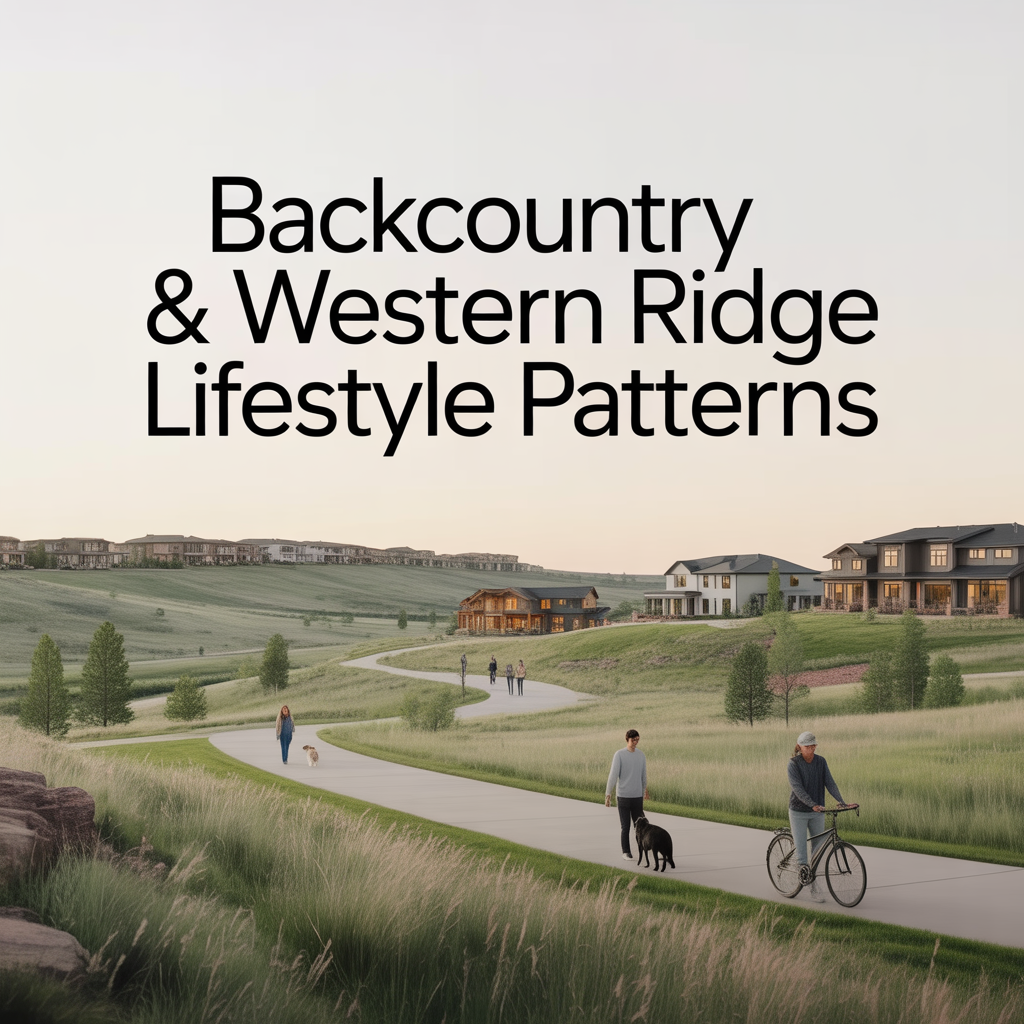
BackCountry, as a neighborhood, is often described as a luxury gated community, but for residents, it’s more accurately a distinct lifestyle choice. It’s the kind of place where families come if they want:
- A heightened sense of privacy and security, with a gate and a dedicated staff presence
- Direct access to the BackCountry Wilderness Area and thousands of acres of open space, with trails literally starting in the back of the neighborhood
- A more deliberate, nature‑oriented culture — where neighbors are more likely to be on the trails than in the auto parts store parking lot
- Larger lots, luxury finishes, and homes that feel more like a foothills retreat than a suburban tract
For buyers who value a “forever home” and a neighborhood that feels like a retreat, BackCountry is hard to beat. But it’s not for every family. The homes are typically more expensive, the HOA fees are higher (for the clubhouse, security, and amenities), and the culture is more curated than the classic Highlands Ranch neighborhoods.
Daily life in BackCountry revolves around the Sundial House, the community’s clubhouse and amenity center. It’s not just a rec center; it’s a lifestyle nucleus with a private restaurant, a bar, event spaces, a fitness center, pools, fire pits, and a calendar of concerts, wine tastings, and family activities. For families who value those kinds of curated experiences, this is a big draw. For those who prefer a more low‑key, unstructured neighborhood, it can feel like too much “community” and not enough personal space.
Access to the BackCountry Wilderness Area
What truly sets BackCountry apart from the rest of Highlands Ranch isn’t just the homes — it’s the access to the 8,000‑acre BackCountry Wilderness Area (BWA). This is an 8,200‑acre open space conservation area that the entire Highlands Ranch community can use, but residents in the BackCountry and nearby western ridge neighborhoods have the most immediate, on‑foot or on‑bike, access to it.
For families in this area, that means:
- Morning walks, runs, and bike rides that feel like a mountain escape, not just a neighborhood loop
- Kids growing up used to seeing deer, foxes, and seasonal wildflowers, and riding bikes on soft‑surface trails that feel like a real trail system, not just a sidewalk extension
- Winter that feels more like a foothills town — the roads get plowed and maintained, but the ridges, hills, and open spaces hold snow longer and feel more “outdoor” than the more urban‑style neighborhoods in the core of Highlands Ranch
This connection to nature shapes how families live. Many families in BackCountry are more likely to have a home office where the main view is hills and trees, and they’re more likely to value a home that opens up to the outdoors — large decks, patios, and walkout basements that feel like they’re part of the landscape, not just an extension of the house.
Western Ridge Lifestyle: South Ridge, Westridge, and Eastridge Patterns
Just outside the gates of BackCountry, the broader Western Ridge neighborhoods — South Ridge, Westridge, and Eastridge — share some of the same advantages, but they feel more like a classic Highlands Ranch neighborhood, just with a bit more outdoor access than, say, the neighborhoods near the Town Center.
The Western Ridge lifestyle is a mix of:
- Strong access to the EastWest Trail and the Highlands Ranch rec center system, with easy connections to the East/West Regional Trail, the parks, and the schools
- Homes that are generally newer than the original Highlands Ranch neighborhoods, but not as curated or as consistently high‑end as BackCountry
- A more “practical family” feel: more soccer parents, more school‑night chaos, and less of a resort‑style atmosphere, but still plenty of access to the trails, rec centers, and Highlands Ranch parks
Families in these neighborhoods often prioritize:
- A short walk or bike ride to the rec center, the pool, and the more active playgrounds, splash zones, and indoor water parks
- Being close to the Rock Canyon or Mountain Vista feeder patterns, so kids can move through the school system with a familiar friend group
- A balance of newer construction, good schools, and a neighborhood feel that’s both active and grounded, not flashy or “scene‑driven”
For many families, the Western Ridge pattern is the sweet spot in Highlands Ranch: newer, more convenient, and still very connected to the trails and rec centers, but without the higher price point and more curated culture of BackCountry.
How the Lifestyle Affects Home Choices and Long‑Term Ownership
One of the quiet truths I’ve observed after years in this market is that families in BackCountry and the Western Ridge neighborhoods tend to stay longer than in many other parts of the metro area. That’s not just about school quality; it’s about lifestyle fit.
BackCountry, in particular, is a neighborhood where families often buy with the intention of staying for 10–20 years. The homes are built for long‑term ownership: large primary suites, finished basements, and flexible spaces that can adapt as kids grow and parents retire. The community events, the trails, and the Sundial House give a strong sense of belonging that makes it harder to leave.
In the Western Ridge neighborhoods, the pattern is a bit different. Families often move there when they’re in the “middle” of their family life — kids in elementary and middle school, both parents working, and a need for a newer, more functional home that supports an active schedule. They tend to stay 7–12 years, then move again when the kids are in high school, or when they’re looking for a different dynamic (more downtown access, a smaller lot, or a different school district).
Matching the Lifestyle to Your Family’s Rhythm
When I sit down with a family considering BackCountry or the Western Ridge neighborhoods, I always ask a few simple questions:
- Does a “gated, resort‑style” neighborhood sound like a relief, or does it feel like too much “community” and too many events?
- How important is direct access to the BackCountry Wilderness Area trails and open space to your daily life?
- Are you looking for a forever home, or are you in a season where you’ll likely move again in 7–10 years?
- Do you value a very quiet, privacy‑oriented neighborhood, or do you prefer a more active, school‑focused, “soccer and PTA” vibe?
The answers to those questions usually tell us whether BackCountry is the right fit, or whether a Western Ridge neighborhood like South Ridge, Westridge, or Eastridge will better support the family’s real rhythm.
A Local Conversation About Your Ideal Highlands Ranch Lifestyle
If you’re thinking about whether BackCountry or one of the Western Ridge neighborhoods is the right fit for your family, I’d be glad to walk through the details: how the trails connect, how the schools line up, how the neighborhoods feel at different times of year, and how the real day‑to‑day rhythm matches your family’s priorities.
Reach out when you’re ready to talk about more than just square footage and price — about the kind of neighborhood and lifestyle that will truly support your family for years to come in Highlands Ranch.
Get the full Denver Market Insights → [Market Insights]



Littleton’s Ken Caryl for Lockheed Relocations
This is part of Lockheed Martin Relocation → [Lockheed Martin Relocation Hub] & the larger Denver Relocation Hub → [Denver Relocation Hub] Written by: Chad Cabalka Ken Caryl is one of the best-kept “family first” relocation options for Lockheed Martin employees who want foothills scenery, strong neighborhood appeal, and a real suburban lifestyle that still feels connected…


Centennial & Parker for Lockheed Relocations
This is part of Lockheed Martin Relocation → [Lockheed Martin Relocation Hub] & the larger Denver Relocation Hub → [Denver Relocation Hub] Written by: Chad Cabalka Centennial and Parker are two of the smartest suburban choices for Lockheed Martin employees relocating with families because they give you a strong balance of commute flexibility, good neighborhood variety, and…

Highlands Ranch for Family-Friendly Lockheed Relocations
This is part of Lockheed Martin Relocation → [Lockheed Martin Relocation Hub] & the larger Denver Relocation Hub → [Denver Relocation Hub] Written by: Chad Cabalka Highlands Ranch is one of the strongest choices for Lockheed Martin employees relocating with families because it delivers exactly what most parents want after a big move: stable neighborhoods, strong community…