


This is part of Centennial Lifestyle Guide → [Centennial Lifestyle Hub] & Centennial Real Estate Guide → [Centennial Real Estate Guide]
Written by: Chad Cabalka
Centennial sits at that sweet intersection of suburban calm and big‑city convenience. To anyone who has spent years driving Arapahoe Road or catching sunsets over the Front Range, that balance feels familiar — steady, livable, and surprisingly nuanced. In Centennial, even something as simple as where you go out to dinner can reveal a lot about how you live, how connected you feel to your neighborhood, and what kind of community rhythm fits your lifestyle.
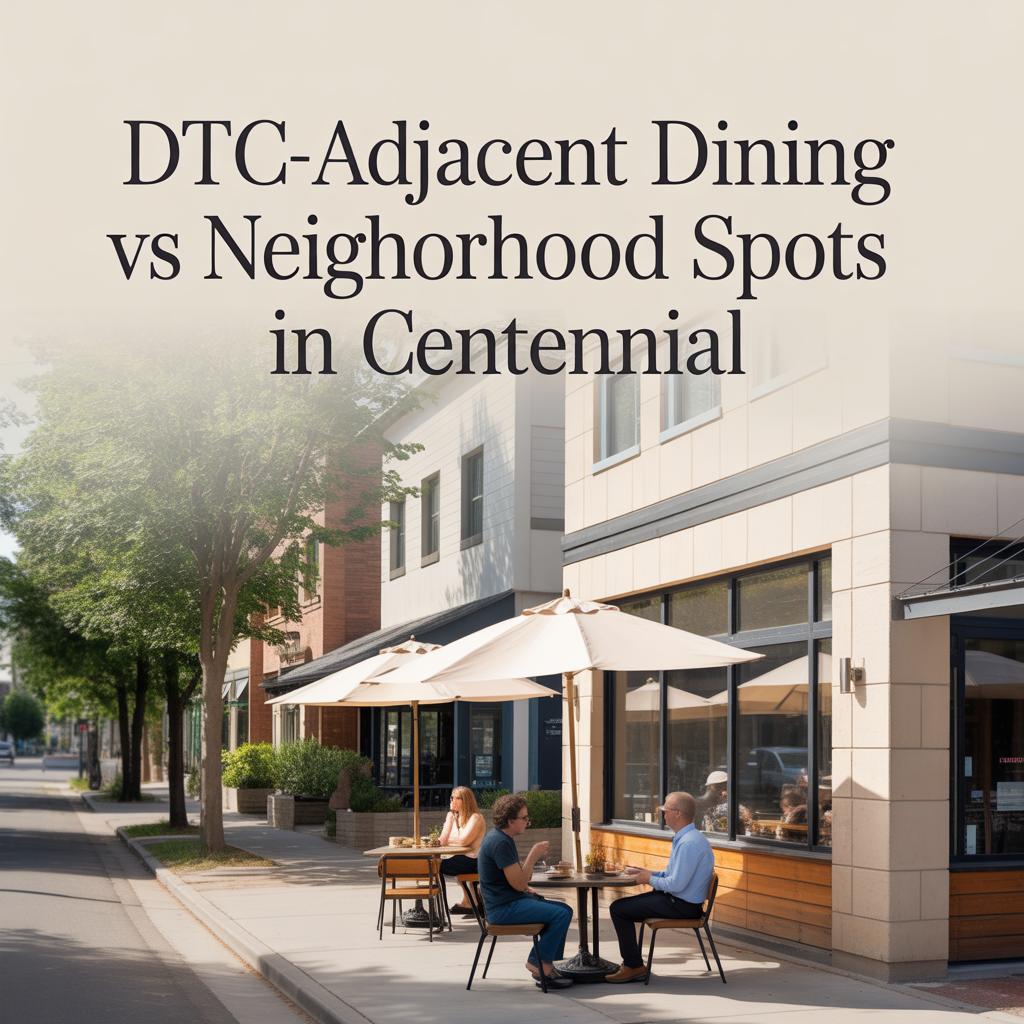
The city hugs the southern boundary of the Denver Tech Center (DTC), with business parks and high‑rise hotels blending gradually into quiet cul‑de‑sacs and family‑owned storefronts. That geographic overlap creates what I’d call a “dual‑pulse lifestyle”: residents can enjoy polished DTC dining one night and a cozy neighborhood tavern the next, all within ten minutes. But the difference between those experiences — and what they signal about where you call home — goes deeper than a menu.
The Denver Tech Center Dining Scene
Let’s start near the DTC itself. Over the past fifteen years, this district has matured from an office corridor into a lively after‑hours scene. The same professionals who fill the high‑rises by day tend to linger for dinner and drinks nearby, which has pulled in upscale concepts, craft cocktail lounges, and destination‑level sushi and steak houses. You’ll find sleek interiors, valet parking, and a steady hum of networking conversations.
Dining in the DTC area feels cosmopolitan, especially compared to Denver suburbs of a generation ago. Places like Shanahan’s, Ocean Prime, or The Great Divide Brewery & Roadhouse attract both Centennial residents and guests from downtown. These establishments operate with city‑level polish — sharp service, curated wine lists, and interiors designed as much for gatherings as for quiet meals. For many homeowners nearby, that convenience is part of the value proposition: you don’t have to drive into LoDo or Cherry Creek to enjoy an elevated dinner.
But over time, convenience isn’t the only factor that matters. I often talk with families who love being minutes from top restaurants yet recognize that dining close to the DTC tends to draw a transient crowd: business travelers, visiting executives, people heading home up I‑25 after events. It can feel energetic but not necessarily communal. That subtle distinction affects how you experience everyday life in Centennial.
Neighborhood Dining in Centennial: Where Familiarity Lives
Now, step a few miles away from the DTC core — into Foxridge, Southglenn, The Knolls, or near Arapahoe and Holly — and dining takes on a more personal tone. Here, neighborhood restaurants become extensions of home life. Owners often recognize repeat customers; servers remember your kids’ names; weeknight dinners feel woven into your routine rather than a special outing.
Centennial’s local dining gems aren’t glossy, but they’re steadfast. Spots like Los Dos Potrillos, Big Bill’s NY Pizza, or Toast operate on warmth and consistency rather than flash. Over years, these places develop what I call “micro‑communities” — informal social circles that form among regulars who see each other often enough to nod hello. If you’ve lived in Centennial for any length of time, you’ve probably felt that quiet comfort.
That sense of connection matters when evaluating what it feels like to live here long‑term. While DTC dining adds excitement and accessibility, neighborhood spots offer the emotional rhythm of belonging — something that often outweighs proximity to high‑end amenities once the novelty wears off. When you picture Thursday nights over the next decade, which kind of energy do you want surrounding you? For many Centennial homeowners, that answer shapes how satisfied they feel in their neighborhood well after the mortgage paperwork is done.
How Dining Reflects Different Lifestyles
People sometimes underestimate how food culture mirrors lifestyle priorities. The dining options you lean toward tend to match how you view community, convenience, and value.
For professionals or couples drawn to the DTC corridor, polished dining can align with work patterns — late meetings that spill into dinner, easy access to Arapahoe light rail, the ability to cross into Greenwood Village or Denver without committing to a long evening out. Homes near I‑25 or around Orchard Road appeal to those who thrive on that pulse. They like being near energy, regardless of whether every restaurant visit feels personal.
By contrast, those who favor neighborhood dining often prioritize rootedness over access. They appreciate the slower texture of community life — walking to breakfast spots, chatting with owners, attending school events where they run into the same neighbors they saw at dinner. These preferences might steer them toward areas like Southglenn, Willow Creek, or near Centennial’s eastern parks, where the street grid softens into family‑friendly neighborhoods and community centers.
Neither lifestyle is objectively better; they simply age differently. Early enthusiasm for proximity can fade if daily life starts to feel transactional. Meanwhile, the slower pleasure of neighborhood dining tends to deepen over time — the payoff of choosing familiarity over novelty.
Market Perspective: How Amenities Shape Perception and Value
As someone who has guided buyers through Centennial for decades, I’ve seen firsthand how dining and entertainment options influence long‑term property satisfaction. While restaurants don’t directly determine home value on paper, they signal the type of community growth, walkability, and resident engagement that help neighborhoods hold appeal.
Homes closer to DTC typically attract buyers who want world‑class convenience — newer builds, easy commutes, and nearby dining that impresses clients or visitors. These areas also maintain strong leasing demand thanks to the job density nearby. But the trade‑off is that turnover tends to be higher. People move for career shifts, shorter commutes, or relocation opportunities, which can influence neighborhood continuity.
Neighborhoods dominated by local dining see a different trend. They attract buyers planning longer stays — often second or third homeowners seeking stability. You’ll notice more block parties, more consistency in who owns which homes, and a deeper investment in schools. Local dining reinforces that identity. When a community café lasts decades, it quietly stabilizes the market around it. People don’t measure those benefits year to year, but they feel them over time.
From a housing viewpoint, it’s worth thinking about how the dining rhythm around you matches your personal timeline. If you expect to stay put through multiple life phases — growing families, empty nesting, gradual retirement — neighborhood‑anchored communities often provide the emotional return that makes a house feel like home, not just an address.
The Psychological Side of “Where You Eat”
Real estate conversations usually focus on square footage, finishing materials, or resale value. But lifestyle satisfaction runs on subtler currents. Dining is a small daily ritual that anchors people to place. When someone says they “love their neighborhood,” they’re often thinking of routines like Saturday breakfasts, familiar parking spots, or predictable takeout options that make busy evenings easier.
I’ve sat at many closing tables where buyers still debated how far they’d drive for a good dinner. That concern may sound trivial, but it speaks to human rhythm: how much effort daily life requires once you’re settled. If your go‑to restaurants are close and comfortable, your home feels more convenient and less stressful. If every dinner requires a trip through a congested corridor, small frustrations accumulate.
That’s why understanding the DTC versus neighborhood dining split matters beyond convenience. It reflects how you prioritize social texture versus sophistication, and familiarity versus variety. Denver’s metro area has seen this dynamic before—in Wash Park, Olde Town Arvada, or Highlands Ranch. Yet Centennial’s version stands out because of its balanced geography: neither fully suburban nor fully urban, constantly negotiating both identities.
What Locals Notice Over Time
Longtime residents often describe Centennial living as “steady” — not flashy, just enduring. Over twenty years, I’ve noticed that homeowners who stay happiest are the ones who orient their lives around relationships rather than options. They still visit high‑end DTC spots for occasions but find comfort in local staples that mark personal milestones: the breakfast place where their kids worked summer jobs, the restaurant that catered their anniversary, the patio where they watched sunsets with neighbors.
That continuity creates meaning that doesn’t fluctuate with market cycles. Neighborhood restaurants become generational touchpoints. Even as new developments rise along Arapahoe or Yosemite, it’s those familiar establishments that knit the city’s identity together.
In contrast, when people focus purely on proximity to “top‑rated” amenities, they sometimes later describe feeling detached. The restaurants remain excellent, but the experiences rarely accumulate into relationship — it’s good food without shared memory. That distinction is subtle but powerful when considering where you’ll feel content five or ten years from now.
Centennial’s Future Dining Landscape
Centennial’s city planners and developers understand this balance. Recent projects around The Streets at SouthGlenn, for example, intentionally blend national tenants with local operators, giving residents a mix of familiarity and choice. You can spend Saturday wandering a farmers market, then grab a fine steak near the DTC corridor that evening. The city’s long‑term design encourages exactly that blend: local authenticity supported by metropolitan access.
As the area continues to mature, expect dining to remain a defining quality-of-life factor. Neighborhood anchors will keep shaping community bonds, while DTC‑adjacent areas will evolve in style and diversity. The trick — for homeowners and future buyers alike — is understanding which rhythm fits your personality before you commit to a household location.
If you crave walkable routines and circles of familiarity, focus your search near established neighborhoods with long‑operating restaurants and coffee shops. If you enjoy spontaneous nights out and a bit more polish, homes closer to the DTC boundary can deliver that while still offering suburban calm. Both lifestyles have deep merit — the difference lies in pace, not prestige.
Guidance for Homeowners and Buyers
When advising clients, I often recommend spending a few weekends living as if you already owned in the area you’re considering. Dine locally, run errands, take note of how evenings feel. Notice not just how long the drives are, but how the community energy matches your internal rhythm. Do you see familiar faces after a week? Do you feel drawn to return, or does it start to feel impersonal? Those impressions reveal more about long‑term satisfaction than any brochure or online review ever could.
Homeownership in Centennial works best when lifestyle aligns with daily reality. Dining may seem like a small factor, but it influences countless decisions — how often you cook, socialize, and even unwind after work. Choose an area whose dining identity resonates with your life stage and temperament, not just your commute. Years from now, that harmony will shape whether your home still feels “right.”
A Local Perspective That Lasts
As someone who’s lived and worked in this region for much of my life, I see dining not as an amenity but as a mirror of how Centennial families grow roots. DTC‑adjacent dining will continue bringing in the newest flavors and excitement; our neighborhood spots will keep serving up familiarity, connection, and comfort. Both contribute to why Centennial remains one of Denver’s most livable areas — adaptable yet anchored, contemporary yet close‑knit.
If you’re weighing a move within Centennial or simply want to better understand how daily lifestyle ties into neighborhood satisfaction, I’m always glad to have that conversation. No pressure, no pitch — just a thoughtful talk about how to make this place fit your life as smoothly as possible. After all, real estate decisions aren’t only about property—they’re about the rhythm of living well right where you are.
Get the full Denver Market Insights → [Market Insights]



Littleton’s Ken Caryl for Lockheed Relocations
This is part of Lockheed Martin Relocation → [Lockheed Martin Relocation Hub] & the larger Denver Relocation Hub → [Denver Relocation Hub] Written by: Chad Cabalka Ken Caryl is one of the best-kept “family first” relocation options for Lockheed Martin employees who want foothills scenery, strong neighborhood appeal, and a real suburban lifestyle that still feels connected…


Centennial & Parker for Lockheed Relocations
This is part of Lockheed Martin Relocation → [Lockheed Martin Relocation Hub] & the larger Denver Relocation Hub → [Denver Relocation Hub] Written by: Chad Cabalka Centennial and Parker are two of the smartest suburban choices for Lockheed Martin employees relocating with families because they give you a strong balance of commute flexibility, good neighborhood variety, and…

Highlands Ranch for Family-Friendly Lockheed Relocations
This is part of Lockheed Martin Relocation → [Lockheed Martin Relocation Hub] & the larger Denver Relocation Hub → [Denver Relocation Hub] Written by: Chad Cabalka Highlands Ranch is one of the strongest choices for Lockheed Martin employees relocating with families because it delivers exactly what most parents want after a big move: stable neighborhoods, strong community…