


This is part of Aurora Lifestyle Hub → [Aurora Lifestyle Hub] & Aurora Real Estate Guide → [Aurora Real Estate Guide]
Written by: Chad Cabalka
If you’re trying to decide where to live in Aurora, one of the quiet but meaningful questions is this: do you want a neighborhood park right out your back door, or are you comfortable driving a bit for regional access to places like Cherry Creek State Park, the Arsenal area, or the big reservoirs? For Denver‑area residents, that choice shapes everything from your daily routine to how long‑term your neighborhood feels over time.
As someone who’s watched Aurora’s park system grow from scattered green patches into a connected web of trails and open space, I’ve come to appreciate how these two types of spaces serve different needs — and how they quietly influence home‑search behavior.
Neighborhood Parks: The Everyday Backyard
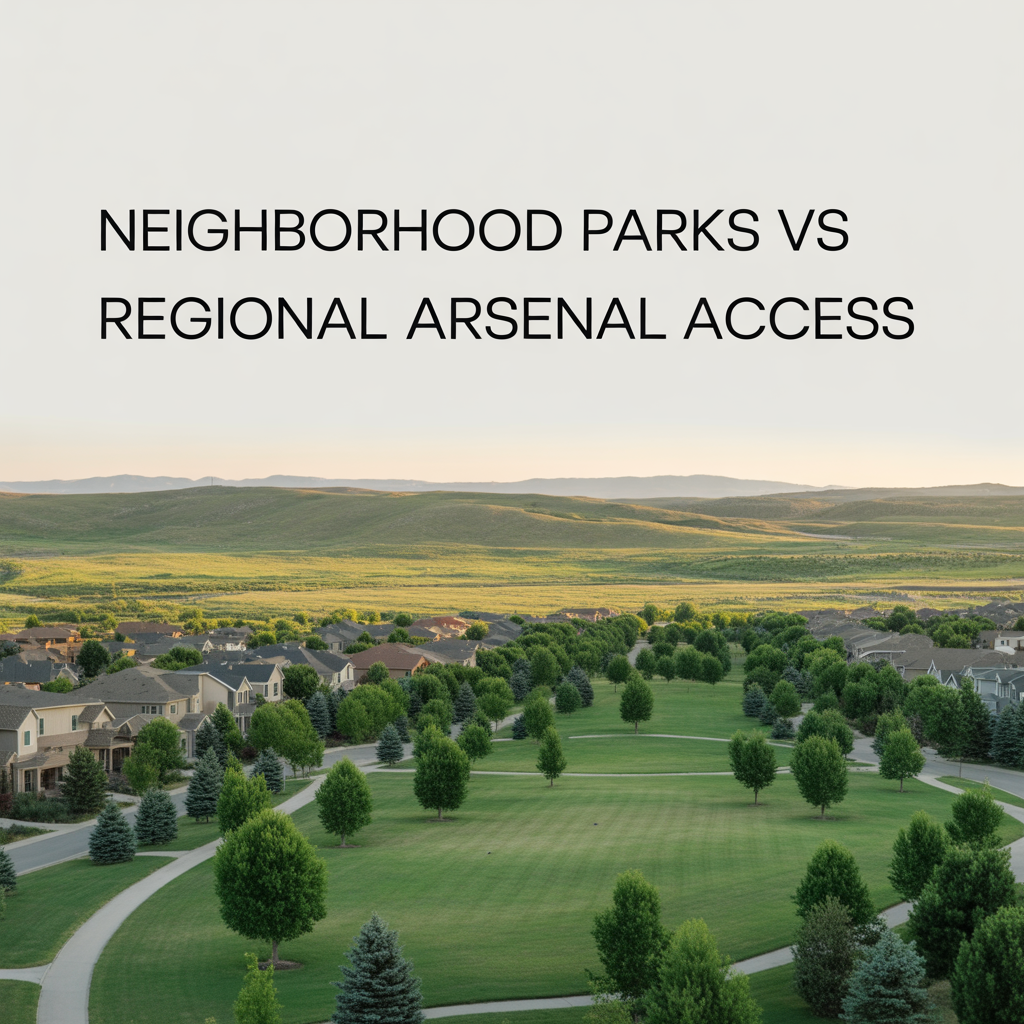
Aurora has more than 100 developed parks and roughly 8,000 acres of open space, with most neighborhoods anchored by at least one local park within a short walk. These are the places you use every day: the playground where your kids go after school, the basketball court where teens shoot hoops, the small green where you take the dog for a quick evening loop.
Neighborhood parks in Aurora typically include:
- Playgrounds, picnic tables, and open grassy areas.
- Spray grounds at parks like Great Plains Park and Red‑tailed Hawk Park, which become major summer hubs for families.
- Short, local trails that connect to larger systems like the Cherry Creek Trail or Sand Creek Regional Greenway.
For families, empty‑nesters, and anyone who values walkability, neighborhoods built around these parks feel more settled and self‑contained. You can run errands, drop off the kids, and still have a green space within a five‑ to ten‑minute walk — which makes it easier to stay put over the long term.
Regional Arsenal & State‑Park Access: The Weekend Hub
On the other side of the equation are the regional assets that draw people from across the metro: Cherry Creek State Park, the Arsenal area along the South Platte River, and Aurora Reservoir. These aren’t “walk‑to” amenities for most Aurora residents, but they function as weekend and after‑work destinations that shape how people think about the city’s lifestyle.
Cherry Creek State Park, for example, offers:
- Miles of paved and unpaved trails, fishing, boating, and camping.
- A large reservoir and open‑space buffer that feels more like a rural escape than a city park.
The Arsenal area — anchored by the former Lowry Air Force Base and the South Platte River corridor — provides:
- Extensive trail networks, river access, and open space that connect Aurora to Denver and beyond.
- A mix of urban and natural landscapes that appeal to runners, cyclists, and dog owners.
For Denver‑area residents, these regional parks are the kind of places you’d drive to for a long run, a bike ride, or a weekend picnic. They’re not part of your daily routine, but they’re the reason you might choose Aurora over other suburbs — the promise of easy access to big, open spaces without needing to drive deep into the mountains.
How These Choices Shape Neighborhood Character
For long‑term residents, the balance between neighborhood parks and regional access often determines how “finished” a neighborhood feels. Areas with strong neighborhood parks tend to have:
- More families and active adults who value walkability.
- Stronger community ties, as residents gather for playground meetups, sports leagues, and local events.
Conversely, neighborhoods that rely more on regional parks may feel more spread out or car‑dependent, but they often attract residents who prioritize access to larger, more diverse recreational options.
For Denver‑area buyers, understanding this balance can help you anticipate how a neighborhood will feel over time — whether it’s the kind of place you’d stay for years or the kind of place you’d treat as a stepping stone.
A Local, Relationship‑Driven Invitation
If you’re thinking about buying, selling, or simply spending more time in Aurora, I’m happy to talk through how neighborhood parks and regional Arsenal access might fit into your lifestyle — whether you’re a family, a runner, or an empty‑nester looking for a quieter corner of the metro. No pressure, no pitch — just straightforward, local insight from someone who’s lived and worked in this part of Denver for decades.
Get the full Denver Market Insights → [Market Insights]



Littleton’s Ken Caryl for Lockheed Relocations
This is part of Lockheed Martin Relocation → [Lockheed Martin Relocation Hub] & the larger Denver Relocation Hub → [Denver Relocation Hub] Written by: Chad Cabalka Ken Caryl is one of the best-kept “family first” relocation options for Lockheed Martin employees who want foothills scenery, strong neighborhood appeal, and a real suburban lifestyle that still feels connected…


Centennial & Parker for Lockheed Relocations
This is part of Lockheed Martin Relocation → [Lockheed Martin Relocation Hub] & the larger Denver Relocation Hub → [Denver Relocation Hub] Written by: Chad Cabalka Centennial and Parker are two of the smartest suburban choices for Lockheed Martin employees relocating with families because they give you a strong balance of commute flexibility, good neighborhood variety, and…

Highlands Ranch for Family-Friendly Lockheed Relocations
This is part of Lockheed Martin Relocation → [Lockheed Martin Relocation Hub] & the larger Denver Relocation Hub → [Denver Relocation Hub] Written by: Chad Cabalka Highlands Ranch is one of the strongest choices for Lockheed Martin employees relocating with families because it delivers exactly what most parents want after a big move: stable neighborhoods, strong community…