


This is part of Aurora Lifestyle Hub → [Aurora Lifestyle Hub] & Aurora Real Estate Guide → [Aurora Real Estate Guide]
Written by: Chad Cabalka
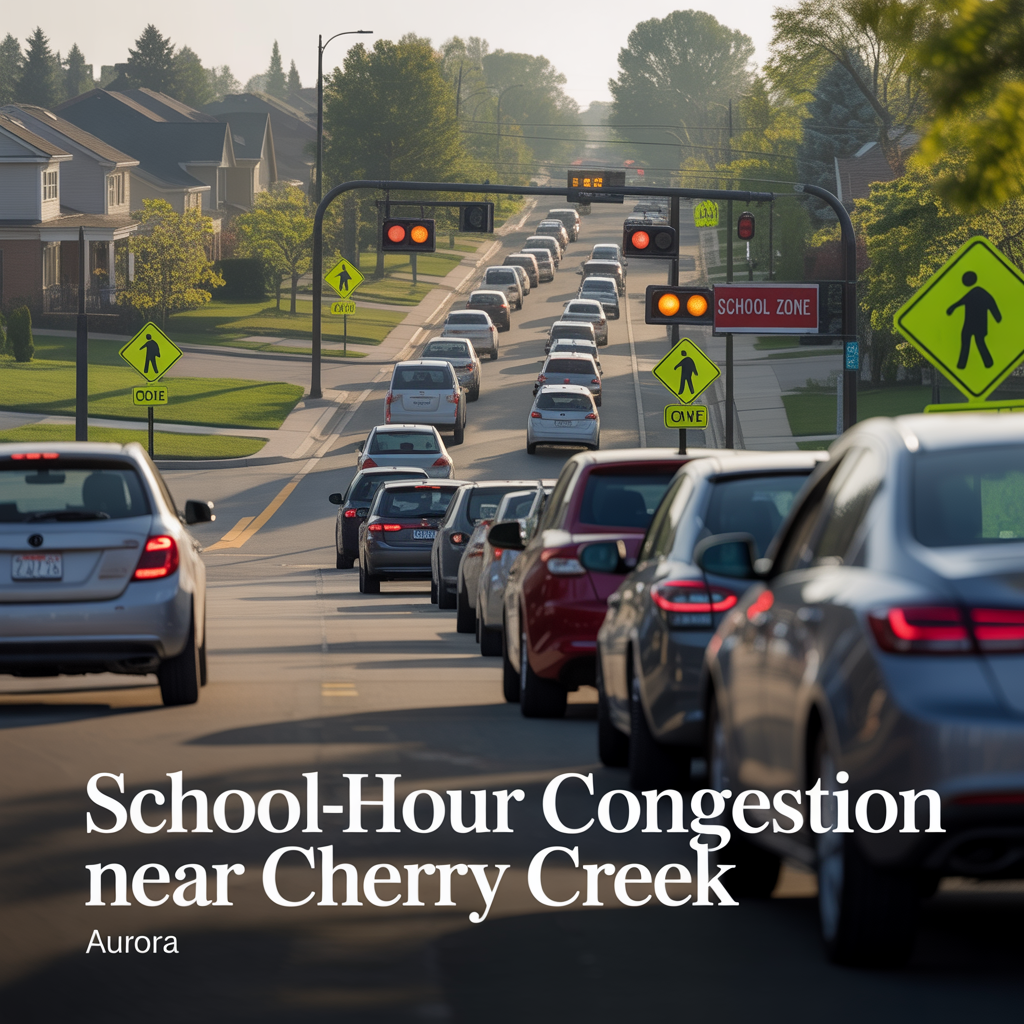
In Aurora, the morning and afternoon rush around Cherry Creek-area schools turns familiar streets into temporary parking lots, testing the patience of everyone from parents to longtime residents. This isn’t just a seasonal frustration—it’s a predictable pattern tied to some of our strongest school districts, like Cherry Creek 5, where drop-off and pickup lines spill onto major roads like Parker, Havana, and Iliff. As someone who’s lived in the Denver metro my whole life and spent decades helping Aurora families find homes that fit their real routines, I’ve seen how overlooking these school-hour bottlenecks can turn a dream neighborhood into a daily grind.
The congestion stems from high demand at well-regarded schools, combined with neighborhood layouts not always designed for volume. What starts as a 10-minute errand becomes 30, affecting not just school traffic but commutes to Anschutz, DIA, or even simple grocery runs. Understanding these patterns helps buyers and sellers choose locations that prioritize flow over time, ensuring your home supports family life rather than complicating it.
Cherry Creek’s Educational Pull in Aurora
Why Cherry Creek Schools Draw Crowds
Cherry Creek School District serves much of east and south Aurora, with standout elementaries, middles, and high schools like Eaglecrest, Grandview, and Cherokee Trail clustered near the creek’s path. These schools consistently rank high for academics and activities, pulling families from across the city and beyond. Neighborhoods like Saddle Rock, Tallyn’s Reach, and Mission Viejo fill with parents who value the district’s reputation, but that concentration amplifies morning arrivals between 7:45 and 8:30 a.m., and afternoon dismissals from 3:00 to 3:45 p.m.
The draw isn’t accidental. Strong test scores, sports programs, and college placement records make these schools anchors for home values—properties within walking distance often command 10-15% premiums. Yet for drivers, the payoff comes with a cost: circling lots without enough hug-and-go lanes, plus parents double-parking on side streets. Over years, I’ve advised clients that proximity sounds ideal, but a block away can mean smoother mornings if it dodges the core chaos.
Aurora’s Broader School Traffic Landscape
Aurora Public Schools and other districts add layers, with hotspots around Vista Peak, Rangeview, and Gateway High creating parallel crunch times. Unlike denser urban zones, our suburban streets—wide but residential—funnel everyone onto arterials like E-470 ramps or Iliff Avenue. Winter snow or construction on Parker Road turns manageable delays into hour-long ordeals, reminding families that school choice ripples into every drive.
These patterns evolve with enrollment. As new builds in southeast Aurora like Wheatlands or Dove Valley add students, pressure mounts on nearby roads. Longtime residents know the subtle shifts: a new crossing guard helps, but peak hours still dictate when you leave for work.
Mapping the Congestion Hotspots
Picture Parker Road near Cherry Creek High: northbound lanes clog as SUVs queue for the campus entrance, spilling back to Union Avenue. Havana Street by Laredo Middle School sees similar backups, with east-west cross-traffic on Iliff halting flow. These aren’t random; they’re where school zones meet commuter paths to I-225 or Anschutz, creating compounded snarls from 7:30 a.m. to 9:00 a.m., and 2:45 p.m. to 4:15 p.m.
South of the creek, Saddle Rock Elementary’s lot pushes onto busy Phagan Drive, while Grandview High’s massive student body overwhelms Havana interchanges. E-470 provides escape for some, but on-ramps jam with parents heading west. I’ve mapped these with clients using rush-hour test drives, revealing how a home two miles out often feels faster than one in the thick of it.
The emotional toll builds quietly. What feels like a minor wait during house-hunting becomes resentment after months of late dinners or missed carpools. Homes in these zones hold value for school prestige, but turnover rises among families who underestimate the drag.
How Congestion Influences Daily Family Life
School-hour backups don’t vanish at 3:45 p.m.—they reshape afternoons. Parents racing from jobs at the medical campus fight the same lines home, turning a 20-minute drive into 45. For dual-working households, staggering shifts or carpool apps become necessities, yet fatigue creeps in. Over time, this erodes the sanctuary feeling of home; evenings shorten, tempers fray, and weekends fill with recovery.
Buyers often romanticize “walking to school,” but in Cherry Creek zones, even walkers navigate crossing chaos. I’ve counseled families who traded prestige for peace in less-congested pockets like Sterling Ranch or Creekside, where buses or bikes suffice without the frenzy. The real win lies in balance: schools that educate without dominating your clock.
Neighborhood character shifts too. Congested streets mean fewer play-outside afternoons, more reliance on structured activities. Mature areas like Mission Viejo offer buffers with tree-lined walks, softening the impact compared to newer grids lacking that depth.
Common Misunderstandings Buyers Overlook
One myth: “Everyone walks in good neighborhoods.” In Aurora’s spread-out layouts, 70% of Cherry Creek families drive, per district patterns—buses help but don’t eliminate lines. Another: “It’s only bad the first week.” No, it persists all year, peaking mid-semester as routines settle.
Parents assume hug-and-go solves it, but oversubscribed lanes create new queues. And resale logic flips: congested hotspots inflate short-term values from school demand, but long-term buyers shy away from stress, favoring smoother enclaves. I’ve seen homes linger on Havana listings despite strong comps, purely from buyer drive trials.
Weather myths abound too—rain doesn’t thin crowds; it thickens them with wipers and nerves. Planning means testing in drizzle, not just sunshine.
City Efforts and Infrastructure Responses
Aurora collaborates with Cherry Creek on mitigations: dedicated turn lanes at Eaglecrest, crossing upgrades near Cherokee Trail, and signal timing tweaks on Parker Road. The city’s Connecting Aurora plan eyes broader fixes, like bike paths and transit links to ease car dependency. Recent I-225 projects near Havana add capacity, indirectly relieving school spillovers.
Schools adapt with staggered bells at some sites and carpool incentives. Yet growth outpaces fixes—new subdivisions feed enrollment without matching roads. For homeowners, this signals opportunity: properties near planned upgrades, like south Iliff expansions, gain early.
Long-term, light rail whispers along I-225 could transform access, letting teens ride independently. Until then, street-smart choices prevail.
Practical Strategies for Aurora Families
Test routes religiously: drive peak hours from candidate homes to schools, noting not just time but stress. Prioritize walkable or bus-served options—even a half-mile buffer cuts chaos. Map household flows: if one parent handles pickup, site near arterials; for shared duties, central spots like near Chambers balance all.
Carpool networks thrive here—apps like HiMama streamline them. Budget for flex time: leave 15 minutes early always. Sellers, disclose patterns honestly: “Proximity to Cherry Creek with quick E-470 escape” sells better than silence.
For new buys, scout neighborhoods like Adlon or Summer Lakes—strong schools minus core gridlock. Winter prep matters: all-wheel drive and early starts turn liabilities into routines.
Long-Term Impacts on Home Value and Satisfaction
Congestion subtly steers markets. Cherry Creek core homes appreciate briskly from school cachet, yet adjacent smoother zones like Tallyn match paces with less hassle, drawing stable long-holders. Over a decade, low-stress locations yield happier owners, fewer moves, and steady equity.
Families who adapt thrive, turning challenges into community bonds—neighborhood watches form around safe routes. But mismatches breed turnover, capping gains. In Aurora, the sweet spot fuses education with ease, building wealth through lived comfort.
Finding Your family’s Flow Near Cherry Creek
School-hour congestion near Cherry Creek tests Aurora’s growth, but it also highlights resilient neighborhoods that deliver on family promises. Decades of guiding locals show the right home anticipates these rhythms, freeing energy for what matters—growth, gatherings, stability.
If you’re navigating school choices amid Aurora’s traffic truths, or weighing a move to balance it all, I’m here for a real talk. No pitches, just grounded advice from someone who’s seen these streets evolve. Reach out—let’s find the spot where your mornings flow as smoothly as your family’s story.
Get the full Denver Market Insights → [Market Insights]



Littleton’s Ken Caryl for Lockheed Relocations
This is part of Lockheed Martin Relocation → [Lockheed Martin Relocation Hub] & the larger Denver Relocation Hub → [Denver Relocation Hub] Written by: Chad Cabalka Ken Caryl is one of the best-kept “family first” relocation options for Lockheed Martin employees who want foothills scenery, strong neighborhood appeal, and a real suburban lifestyle that still feels connected…


Centennial & Parker for Lockheed Relocations
This is part of Lockheed Martin Relocation → [Lockheed Martin Relocation Hub] & the larger Denver Relocation Hub → [Denver Relocation Hub] Written by: Chad Cabalka Centennial and Parker are two of the smartest suburban choices for Lockheed Martin employees relocating with families because they give you a strong balance of commute flexibility, good neighborhood variety, and…

Highlands Ranch for Family-Friendly Lockheed Relocations
This is part of Lockheed Martin Relocation → [Lockheed Martin Relocation Hub] & the larger Denver Relocation Hub → [Denver Relocation Hub] Written by: Chad Cabalka Highlands Ranch is one of the strongest choices for Lockheed Martin employees relocating with families because it delivers exactly what most parents want after a big move: stable neighborhoods, strong community…