


This is part of Aurora Lifestyle Hub → [Aurora Lifestyle Hub] & Aurora Real Estate Guide → [Aurora Real Estate Guide]
Written by: Chad Cabalka
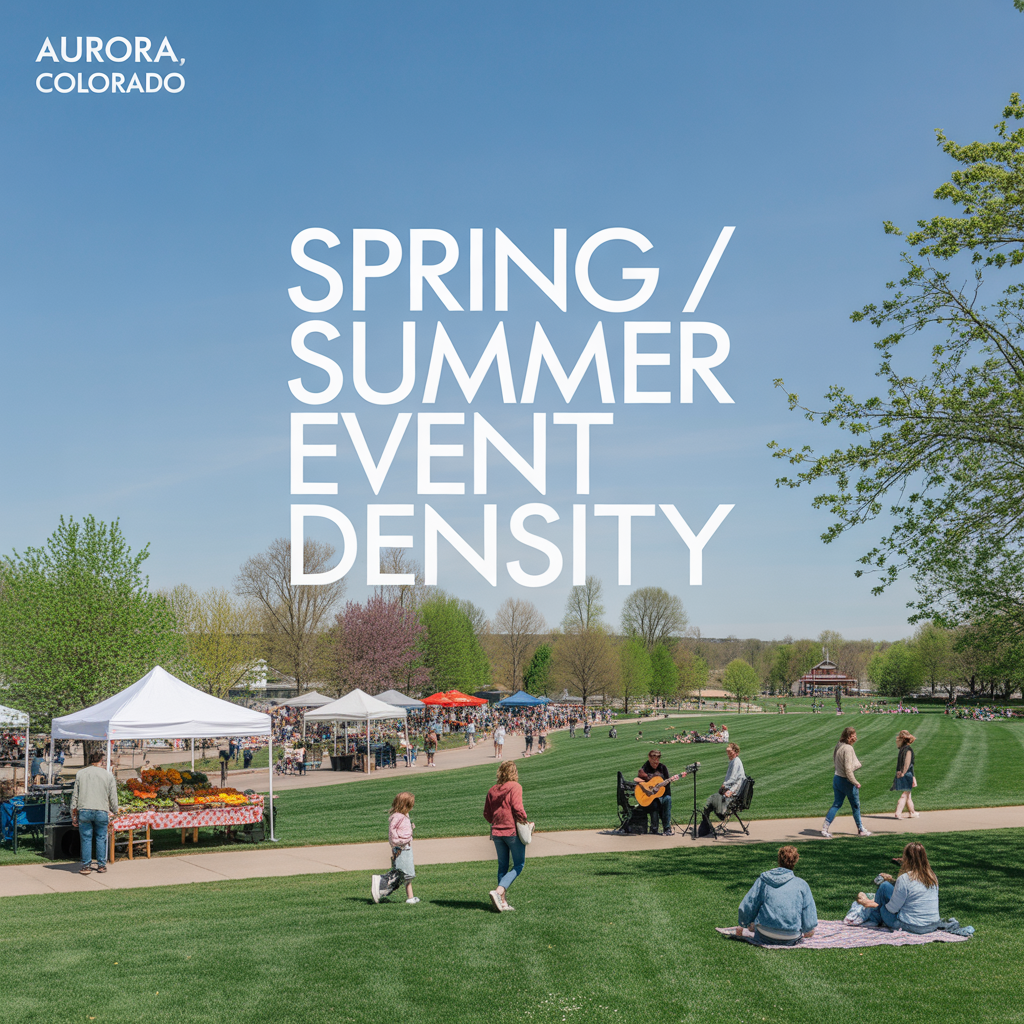
Spring and summer in Aurora bring a very steady drumbeat of events, and that rhythm absolutely changes how different parts of the city feel and function during the warmer months. Instead of thinking about individual events, it helps to think in terms of density — how often things are happening, how close they are to you, and how that affects traffic, noise, and day-to-day living.
What “Event Density” Means For Aurora
When I talk about event density with clients, I’m really talking about how frequently an area hosts:
- City-sponsored events (fairs, concerts, cultural festivals)
- Regional draws at major venues
- Regular seasonal gatherings like markets, car shows, or sports tournaments
In Aurora, event density isn’t uniform. Some zones are relatively quiet most weekends, while others stack multiple events across spring and summer. That difference affects how your neighborhood feels on Saturdays, how easy it is to park, and how much activity you see around parks, trails, and main corridors.
High event density doesn’t mean “good” or “bad” by default. For some people it’s a huge perk; for others it’s a stressor. The key is aligning the zone you choose with the lifestyle you actually want from April through September.
High-Activity Hubs In Spring And Summer
Certain parts of Aurora consistently feel busier in the warm months because they sit near major event and gathering nodes. Even without a detailed calendar in front of you, you can reliably expect more frequent activity around:
- The Arapahoe County Fairgrounds area, where large festivals, specialty fairs, and seasonal gatherings are common in late spring and summer.
- Retail and entertainment corridors like Southlands and the Havana corridor, which draw car shows, small festivals, and outdoor music or family events.
- Larger parks and sports complexes, which host tournaments, city events, and organized activities through most of the warm season.
If you live near one of these nodes, many weekends will come with extra cars, fuller parking lots, and a sense that “something’s going on” even if you’re not attending yourself. For some homeowners, that feels vibrant and fun. For others, especially if they prize quiet weekends, it can become tiring over time.
Quieter Residential Zones In Warm Months
In contrast, more interior residential areas — especially those tucked deeper into subdivisions, away from major parks or commercial centers — experience a much lower density of formal events. You still get block parties, barbecues, and neighborhood-level gatherings, but not the steady stream of large-scale happenings.
In these zones, spring and summer feel more like:
- Predictable traffic patterns, with only occasional spikes for school events or small park uses.
- Less spillover parking from visitors.
- Fewer amplified-sound events carrying into the evening.
This is often attractive to buyers who work odd hours, have very young kids, or just prefer a more relaxed, predictable sound and traffic environment once the weather warms up.
How Event Density Feels Over Time
The way event density shows up in your life is rarely obvious in a 30‑minute showing, but over a few years it becomes very clear. In higher-density event zones, homeowners often notice:
- A more “destination” feel on weekends, with friends and family more willing to visit because there’s something fun nearby.
- Occasional frustrations with navigating around closures, temporary signage, or extra traffic near major venues.
- Periodic noise later into the evening on event days, especially if they’re close enough to hear music or crowd noise.
In lower-density zones, owners often comment on:
- The steadiness and predictability of weekends — same sounds, same traffic, same routines.
- Fewer accidental interactions with new businesses, booths, or cultural events because they’re not happening on their doorstep.
- A stronger separation between “going out” and “being home,” which some people find mentally restful.
Neither pattern is inherently better. What matters is whether the reality matches what you pictured when you thought about your “ideal” spring and summer in Aurora.
What To Watch For As A Buyer Or Owner
If you’re already in Aurora and just trying to understand your zone better, pay attention this coming spring and summer to:
- How often you notice temporary event signage, parking pressure, or traffic changes.
- Whether you can hear music, PA systems, or crowd noise from your home on weekends.
- How parks and open spaces near you are used — casual neighborhood use versus frequent organized events.
If you’re shopping for a home, you can read event density without a calendar by looking for:
- Proximity to fairgrounds, big parks, large churches, and big-box retail clusters with lots of parking.
- How built-out the surrounding arterials are with hotels, chain restaurants, and family entertainment — these tend to follow event-heavy nodes.
- Physical signs of frequent use: large lots, permanent event infrastructure, and wide collector roads feeding into a specific area.
Ask current owners what an average June or July weekend feels like. Not “is it loud,” but “what does a typical Saturday look and sound like around here?” That question tends to surface honest, specific details.
Using Event Density As A Planning Tool
Long term, event density can influence property enjoyment more than property value. Values tend to track larger market forces, but your experience is hyper-local. Knowing your zone lets you plan:
- Parking and guest logistics when you host gatherings on busy weekends.
- When to run errands to avoid congestion near big venues.
- How to time outdoor projects, like painting or landscaping, when nearby areas aren’t overwhelmed with visitors and dust or noise won’t be competing with street activity.
For landlords and house hackers, understanding event density can also shape the kind of tenant or roommate who will be happiest in the space. Someone who loves being in the middle of things will feel very differently about a high-event zone than someone who works early shifts and values quiet.
If you’d like to go deeper, we can walk through specific parts of Aurora together and map how spring and summer activity really plays out on the ground. After many years watching this city’s warm-weather patterns evolve, I’m happy to be a sounding board as you decide which kind of spring/summer rhythm actually fits the way you live.
Get the full Denver Market Insights → [Market Insights]



Littleton’s Ken Caryl for Lockheed Relocations
This is part of Lockheed Martin Relocation → [Lockheed Martin Relocation Hub] & the larger Denver Relocation Hub → [Denver Relocation Hub] Written by: Chad Cabalka Ken Caryl is one of the best-kept “family first” relocation options for Lockheed Martin employees who want foothills scenery, strong neighborhood appeal, and a real suburban lifestyle that still feels connected…


Centennial & Parker for Lockheed Relocations
This is part of Lockheed Martin Relocation → [Lockheed Martin Relocation Hub] & the larger Denver Relocation Hub → [Denver Relocation Hub] Written by: Chad Cabalka Centennial and Parker are two of the smartest suburban choices for Lockheed Martin employees relocating with families because they give you a strong balance of commute flexibility, good neighborhood variety, and…

Highlands Ranch for Family-Friendly Lockheed Relocations
This is part of Lockheed Martin Relocation → [Lockheed Martin Relocation Hub] & the larger Denver Relocation Hub → [Denver Relocation Hub] Written by: Chad Cabalka Highlands Ranch is one of the strongest choices for Lockheed Martin employees relocating with families because it delivers exactly what most parents want after a big move: stable neighborhoods, strong community…