


This is part of Highlands Ranch Lifestyle Guide → [Highlands Ranch Lifestyle Hub] & Highlands Ranch Real Estate Guide → [Highlands Ranch Real Estate Guide]
Written by: Chad Cabalka
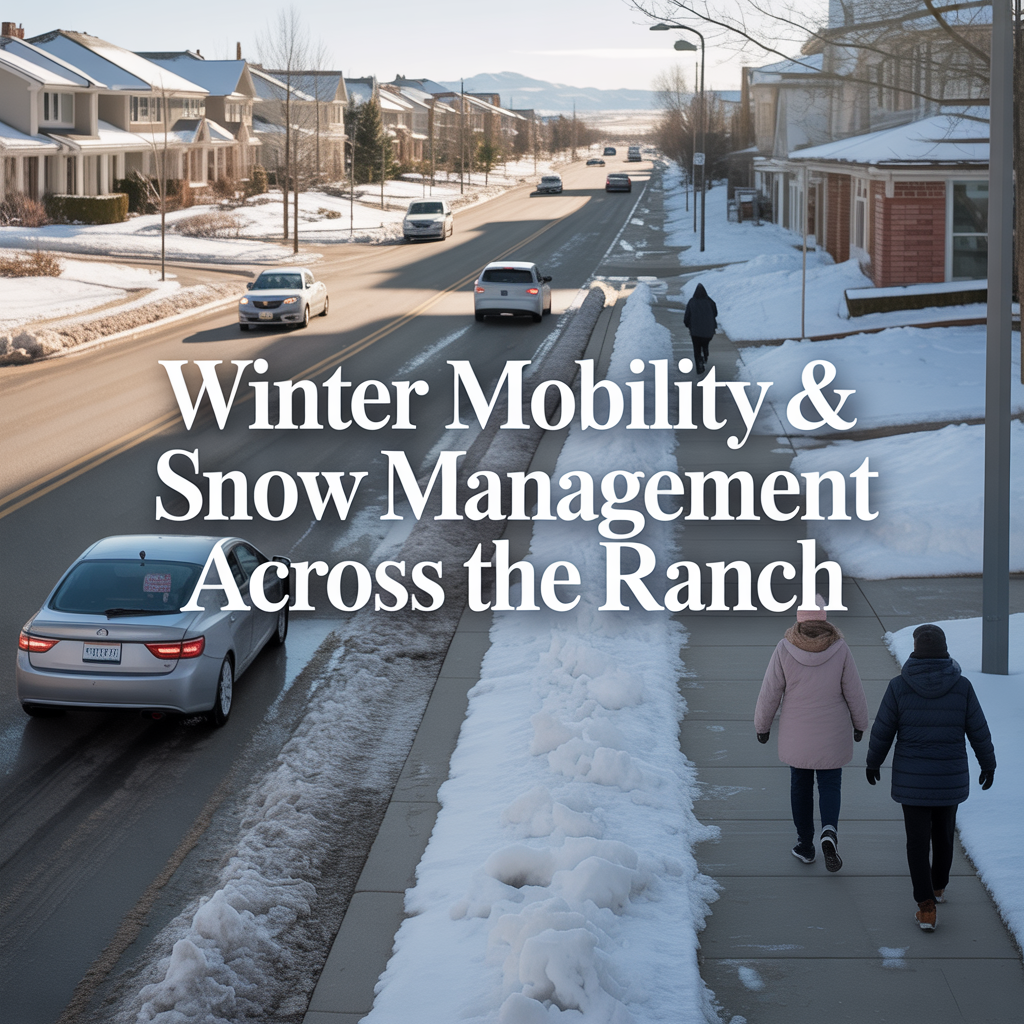
Winter in Highlands Ranch is a mix of beautiful mountain views, cozy fireplaces, and a few predictable realities: snow, ice, school delays, and the always slightly imperfect rhythm of getting the roads and driveways clear after a storm.
After many years advising families in this area, I’ve learned that the real winter experience here isn’t just about how many inches fall; it’s about how calmly and realistically families can plan for plowing, shoveling, school pickup, and evening errands on a 20‑degree, slippery night. The neighborhoods that feel like a true long‑term fit are the ones where the winter routine is manageable, not constantly stressful.
How Snow Removal Actually Works in Highlands Ranch
In most of Highlands Ranch, snow removal is handled by Douglas County Public Works, not a city, and that creates a clear, but not always perfectly satisfying, hierarchy.
County roads and main arterials
These are the priority: Mineral, Chadron, the main collectors, RidgeGate Parkway, University, Santa Fe (US 85), and the main roads feeding into C‑470.
- These roads are usually plowed and treated quickly because they carry the most traffic and emergency vehicles.
- After a significant storm, these roads tend to be “open and passable” within a few hours of the snow stopping, often before many neighborhood streets are touched.
For families in the western ridge and south‑central parts of the community, this is a real advantage: a fast, predictable route to the highway, work, and the Tech Center, even when it’s snowing.
Neighborhood and side streets
These are the roads that residents feel most acutely after a storm. Douglas County’s policy is clear: residential streets are a lower priority, and plows work their way into the neighborhoods after the major roads are passable.
- In normal storms, side streets are usually cleared within 12–24 hours, but the pavement is often packed and icy, not dry and bare.
- In heavy or “pack‑down” snows, neighborhood streets can remain rutted and slick for a day or more, especially on corners, hills, and cul‑de‑sacs.
- Families who are used to city plowing (like inside Denver or the central metro cities) often notice that the response is more spaced out and more dependent on storm intensity.
For families with small kids, older adults, or anyone who walks or bikes to the bus stop or rec center, this is why:
- A wider, more open street and more level ground matter more than they might on paper.
- A short walk to the bus stop on a relatively flat, regularly plowed side street is a big comfort in the winter months.
What’s Plowed, What’s Not, and Where the Lines Are
A big source of confusion in Highlands Ranch is who is responsible for snow removal in different areas, especially as new subdivisions come online.
County roads, collectors, and neighborhood streets
Douglas County Public Works handles:
- All county roads and most neighborhood streets in the unincorporated parts of Highlands Ranch.
- Widening, plowing, and ice treatment until the roads are passable, not perfect.
They’re also the ones to call for hazardous conditions, blocked driveways, or severe potholes that worsen in the freeze‑thaw cycle.
Private drives, cul‑de‑sacs, and shared lanes
In some neighborhoods, especially newer developments, parks, and shared community roads and paths, the responsibility can fall to the neighborhood association or an HOA, not the County.
- This means that in some subdivisions, homeowners may need to rely on:
- Individual driveway and sidewalk contracts with a local snow removal company.
- A shared neighborhood plow service that the HOA or a neighborhood group arranges.
- Families in these areas often budget for a seasonal snow removal contract, so they’re not scrambling every time it snows.
For families who are moving from an incorporated city, this is worth clarifying upfront: who clears your street, your driveway, and your sidewalks after a storm, and how quickly they respond.
How Families Actually Handle Winter Mobility
Over the years, families in Highlands Ranch develop a few practical habits that smooth out the winter rhythm.
Plowing and shoveling strategy
Most families fall into one of three patterns:
- Contracted snow removal
- Common in the western ridge, BackCountry, and many newer neighborhoods.
- Families pay for a seasonal driveway/sidewalk contract so they don’t need to shovel or hire last‑minute.
- This is especially popular with dual‑career families, families with young kids, and older adults who want to avoid the physical strain and early‑morning timing.
- DIY with good gear
- Common in the central and older neighborhoods, where driveways and sidewalks are shorter and it’s easier to own a good snow blower or shovel.
- Families often coordinate with neighbors to help each other after big storms, especially for older adults or families with newborns.
- A mix of both
- Many families use a contractor for the heaviest plows and snow blowers, but keep basic tools for light snow, ice melting, and last‑minute issues.
The key is matching the snow removal plan to the family’s age, health, career schedule, and tolerance for winter mornings.
School and commute adjustments
Winter in Highlands Ranch changes the rhythm of school, pickup, and work commutes, and families who plan for that tend to stay in the community longer.
- Families with kids in the Highlands Ranch schools quickly learn:
- School delays and cancellations follow Douglas County decisions, not individual school districts.
- The major roads into the high schools tend to be cleared first, so families on the main arterials have a more predictable commute.
- Families farther into the neighborhood, or on steeper, more wind‑exposed streets, often build in extra time for pickup, or switch to carpooling or a neighborhood buddy system on icy days.
For families in the western and ridge neighborhoods, winter commutes are often easier because of the direct access to the main roads and C‑470. For families in the farther reaches of the community, winter can feel slower and more cautious, and they often value homes that:
- Are on a relatively flat, well‑plowed collector, not a narrow, winding, uphill street.
- Are close to the main school access roads, not tucked deep into a subdivision that’s harder to clear first.
How Neighborhood Location Affects Winter Stress
After years of matching families with homes, one pattern is very clear: where a family lives in Highlands Ranch quietly shapes how stressed or relaxed winter feels.
Families in the western ridge and more exposed areas
These neighborhoods (BackCountry, parts of Westridge, South Ridge, and exposed ridge tops) have:
- Great views, quiet, and privacy, but also more wind, steeper grades, and more exposure to the full Colorado winter.
- Longer, more complex driveway and sidewalk clearing, which often means a higher reliance on contracted snow removal.
- Earlier plowing of the main roads, but potentially slower, more challenging conditions on the neighborhood streets and hills immediately around the home.
These families often choose these neighborhoods because they love the mountain feel, but they’re also realistic about the winter trade‑off: higher snow management cost and a few more “white‑knuckle” mornings after a big storm.
Families in the more central, protected neighborhoods
These neighborhoods (Eastridge, Indigo Hill, Falcon Hills, and the core around the Village and Town Center) tend to be:
- More sheltered, with more level ground and shorter, wider driveways.
- On the more established neighborhood streets, where plowing is more predictable and the wind tends to be less extreme.
- Closer to the main collectors and schools, so pickup and school runs are often faster and more certain in winter.
These families often value the winter “ease” as much as the school and rec center access, and they tend to stay in the community longer when their winter routine is calm and low‑stress.
Practical Tips for Managing Winter in Highlands Ranch
After watching families live through many Highlands Ranch winters, a few simple habits make a big difference in how manageable winter feels.
- Budget for snow removal
If shoveling is a strain, factor in the cost of a seasonal driveway/sidewalk contract. For many families, the peace of mind, especially early in the morning before school, is worth the cost. - Choose a location that matches the family’s winter tolerance
If winter is a big stressor (for health, mobility, or fear of driving), a home on a relatively flat, well‑plowed, centrally located street often feels more sustainable than a more exposed, higher‑elevation, or winding‑street home. - Have a “snow day” plan for school and work
Know the district’s delay/cancellation process, have a few carpool options, and build extra time into the schedule for pickup and errands on snowy days. - Respect the freeze‑thaw cycle
The biggest source of wear and tear on cars, driveways, and sidewalks isn’t just the snow; it’s the freeze‑thaw cycle that creates potholes and ice dam risks. Families who pay attention to gutter cleaning, drainage, and driveway maintenance in the fall often avoid the most expensive winter surprises.
A Local Conversation About Your Winter Comfort Level
If you’re thinking about how winter in Highlands Ranch will actually feel for your family, I’d be glad to talk through the different neighborhoods and explain how elevation, street design, plowing patterns, and snow removal services align with your family’s age, health, and lifestyle.
The right home isn’t just about square footage and price; it’s about finding a place where winter feels manageable, not exhausting, and where the neighborhood and the home itself support a calm, safe winter routine for many years.
Reach out when you’re ready to talk about more than just the checklist — about the kind of neighborhood and lifestyle that will truly support your family in Highlands Ranch.
Get the full Denver Market Insights → [Market Insights]



Littleton’s Ken Caryl for Lockheed Relocations
This is part of Lockheed Martin Relocation → [Lockheed Martin Relocation Hub] & the larger Denver Relocation Hub → [Denver Relocation Hub] Written by: Chad Cabalka Ken Caryl is one of the best-kept “family first” relocation options for Lockheed Martin employees who want foothills scenery, strong neighborhood appeal, and a real suburban lifestyle that still feels connected…


Centennial & Parker for Lockheed Relocations
This is part of Lockheed Martin Relocation → [Lockheed Martin Relocation Hub] & the larger Denver Relocation Hub → [Denver Relocation Hub] Written by: Chad Cabalka Centennial and Parker are two of the smartest suburban choices for Lockheed Martin employees relocating with families because they give you a strong balance of commute flexibility, good neighborhood variety, and…

Highlands Ranch for Family-Friendly Lockheed Relocations
This is part of Lockheed Martin Relocation → [Lockheed Martin Relocation Hub] & the larger Denver Relocation Hub → [Denver Relocation Hub] Written by: Chad Cabalka Highlands Ranch is one of the strongest choices for Lockheed Martin employees relocating with families because it delivers exactly what most parents want after a big move: stable neighborhoods, strong community…