


This is part of Parker Lifestyle Guide → [Parker Lifestyle Hub] & Parker Real Estate Guide → [Parker Real Estate Guide]
Written by: Chad Cabalka
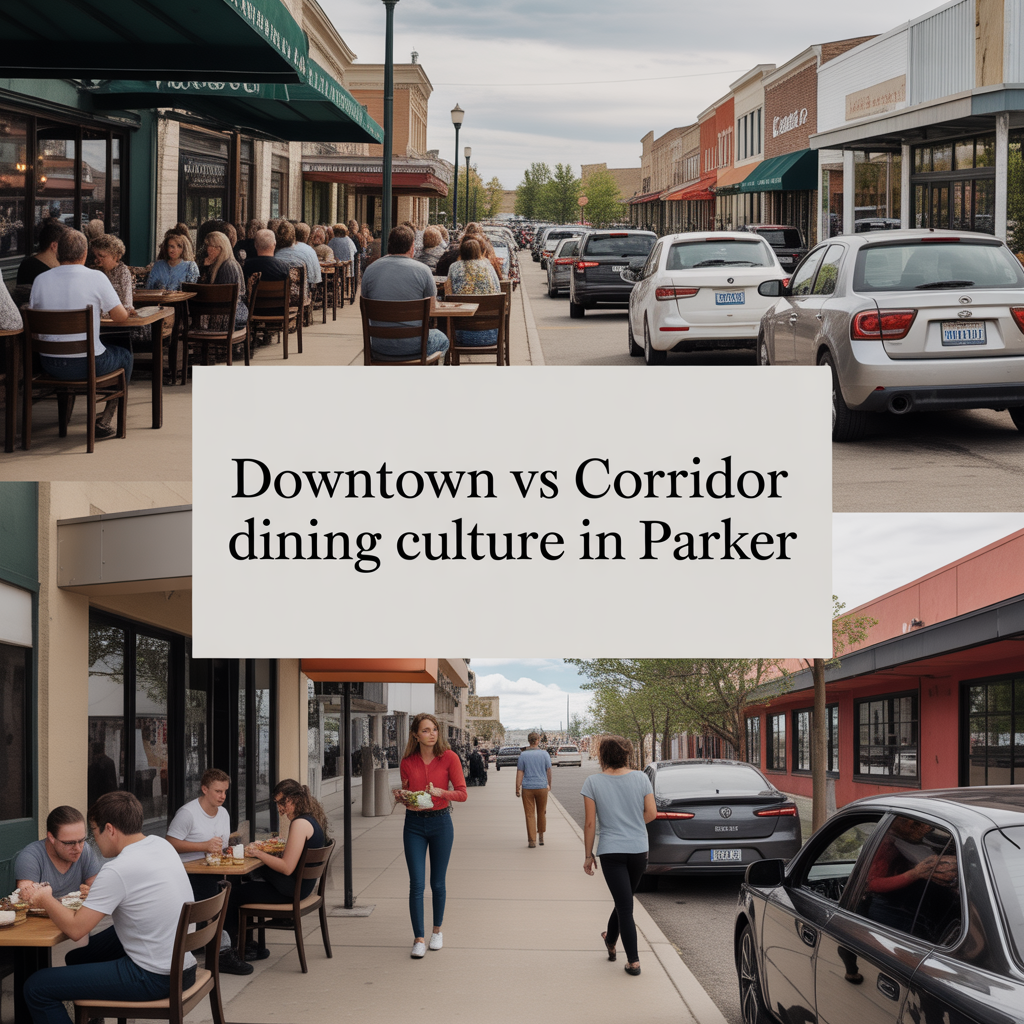
In Parker, the way families eat out tends to fall into two clear patterns: the neighborhood, errand‑driven, pull‑into‑the‑parking‑lot corridor spots and the more deliberate, walkable, destination‑style downtown experience. These two worlds overlap, but they appeal to different rhythms of life and shape how families choose neighborhoods, how they feel about living here over the long term, and what “home” really means when the school bag is dropped and the kids are asking, “What’s for dinner tonight?”
For a homebuyer, this isn’t just about which places are highly rated online. It’s about understanding how each culture plays out in real life — where you grab a quick bite after a cold soccer game, and where you take a relative for a proper dinner that feels like a celebration. It’s about how many times a week your family is in a hurry, and how many times you want to feel like you’re in a real town, not just another Denver suburb.
If you’re deciding where to live in Parker, the difference between downtown and corridor dining can quietly influence everything: noise and traffic, walkability, the type of neighbors you’ll see on the block, and how convenient or complicated daily life feels from one season to the next.
Corridor Dining: The Everyday Rhythm
Most of Parker’s restaurant life happens along the main commercial corridors — Parker Road, Mainstreet, and the loops around the large shopping centers like The Preserve, Parker Marketplace, and the stone‑faced plazas along the E‑470 frontage. These are the places built around convenience, routines, and the fact that most families here are balancing school, work, and after‑school activities across a wide footprint.
On any given weeknight, that means:
- The 6:30 p.m. pizza run after practice to Portofino Pizza & Pasta or a similar neighborhood Italian.
- The quick lunch stop at the reliable chain cafes and casual spots like Chick‑fil‑A, Panera, and Chipotle, often paired with a trip to the Target or the grocery store.
- The Saturday morning coffee and muffin run to the neighborhood bakery or café while running errands or dropping kids at activities.
These spots thrive on familiarity, predictability, and the ability to get in and out quickly with kids in tow. Families know the menu, they know the parking situation, and they know that the server won’t blink if a child spills a drink. That’s exactly what most busy Parker families value on a school night or a crowded weekend.
From a real estate standpoint, the corridor pattern is attractive because it’s efficient. Homes near the Parker Road/Mainstreet intersection, the Preserve, or the E‑470 exits are within just a few minutes of the most practical dinner options, pharmacies, grocery stores, and schools. That proximity isn’t glamorous, but it’s what makes the daily grind feel manageable instead of exhausting. It’s also what draws a lot of new families to Parker: the ability to live in a spacious, family‑oriented neighborhood while still being close enough to everything that matters day to day.
Downtown Parker: The Neighborhood Anchor
Downtown Parker is a different kind of animal. Instead of strip malls and drive‑thrus, it’s a walkable, tree‑lined core with a mix of independent shops, professional services, and a handful of restaurants that feel more like destinations than pit stops. It’s where the town deliberately designed a “main street” feel, with smaller buildings, parking structures, and a pace that slows down enough for neighbors to wave to each other.
Here, the dining rhythm is slower and more intentional. Families go downtown for:
- Friday or Saturday night dinners at places like Parker Garage, West Main Taproom + Grill, and Wolf Peach Public House, where tables are often reserved and there’s a sense of “going out.”
- Celebrations — birthdays, anniversaries, graduations — where the atmosphere, spacing between tables, and service quality matter more than how fast they can get the kids’ menu out.
- Casual but special meals at cafés and bakeries like Poulette Bakeshop, where adults can sit outside, drink coffee, and feel like they’re in a small town.
What makes downtown special is that it’s designed to support neighborhood life, not just transactions. It’s a place where you can park, walk to eat, run into a neighbor, and maybe even stay for a concert, the farmers market, or a holiday event. That creates a sense of belonging — a place that feels like a “home base” for the community, not just another strip of businesses. Homes in the blocks around downtown, or within a 5–10 minute walk or bike ride, benefit from that small‑town Pulse, even as the rest of the town keeps growing.
High‑Traffic, Parker‑Specific Restaurants That Define the Scene
To understand how corridor and downtown dining really feel, it helps to look at the actual high‑traffic, locally embraced spots that residents lean on. These aren’t the anonymous chains, but the places that feel like part of Parker’s own story.
Parker Garage (downtown)
Parker Garage is one of the anchor spots in Old Town and a real neighborhood institution. It’s American/modern with a strong bar program, a great brunch menu, and a polished‑casual vibe that works for everything from a work dinner to a family birthday. Locals know it for its seasonal dishes, craft cocktails, and the fact that they can usually get a table (with a little planning) on a Friday night. Being close to its two full parking structures, homes near Old Town gain that walkable, town‑center feel, which appeals to families who want to be able to walk to dinner and a show, not just drive to the nearest big plaza.
Wolf Peach Public House (near Mainstreet & Pikes Peak)
Wolf Peach is a well‑run, locally owned upscale‑casual restaurant that’s become a favorite for residents who want quality food and thoughtful cocktails without having to drive into the city. It’s known for its weekend brunch, signature cocktails, and a seasonal menu that changes with the seasons but still feels accessible. Families and couples alike use it for first dates, anniversaries, and adult nights out. It draws a strong local crowd, and it’s a good example of a non‑corridor, non‑strip‑mall restaurant that feels like a destination in its own right.
Portofino Pizza & Pasta (Mainstreet corridor)
Portofino is a long‑time family favorite on Mainstreet, and it’s a perfect example of a high‑traffic, corridor‑style standalone restaurant that feels uniquely Parker. It’s a well‑run, locally owned Italian spot with a broad menu that works for kids and adults alike. Families use it for soccer team celebrations, quick weeknight dinners, and takeout when the homework pile is big. It’s the kind of place where the staff starts to recognize your face, and it’s a clear indicator of a neighborhood that’s built around everyday family life, not just commuting and school.
The Red Llama (Mainstreet corridor)
The Red Llama is a popular, locally beloved upscale Mexican/Latin spot and agaveria just off Mainstreet that’s become a true neighborhood staple. It’s packed with families, couples, and groups who want serious tacos, fresh aguas, and a lively but comfortable environment. Residents often hit it up for Friday taco nights, after‑practice pickups, and weekend gatherings, and it’s a great example of a Parker spot that’s high‑traffic, independent, and deeply integrated into the local rhythm. Homes near The Red Llama tend to appeal to younger families and couples who want easy access to dinner out without feeling like they’re in a generic strip‑mall environment.
Cencalli Taqueria and Agaveria (near The Preserve / Mainstreet)
Cencalli is a vibrant, locally owned taqueria and agaveria that’s become a real neighborhood go‑to. It’s known for its handmade tacos, mezcal list, and energetic but not overwhelming atmosphere. It’s where families sit at the bar for drinks and apps, where parents meet up after school drop‑off, and where sports teams celebrate with big tables of shared dishes. It’s a high‑traffic, family‑friendly spot that feels like a genuine part of Parker, not just a franchise that landed here by accident.
How the Two Cultures Coexist in Daily Life
The smartest families in Parker tend to use both corridor and downtown dining, depending on the day and the need. They’re not choosing one at the expense of the other; they’re thinking about access to both kinds of convenience.
A typical family rhythm looks like this:
- Monday–Thursday: mostly corridor dining — fast, family‑friendly, and close to school, practice, and work. Think Portofino, a quick chipotle bowl, or a no‑stress dinner at a familiar neighborhood Italian or Mexican stand‑alone.
- Friday–Sunday: a mix of corridor and downtown, with at least one planned dinner in a more “destination” spot like Parker Garage, West Main, or Wolf Peach, where the atmosphere, spacing, and service make it feel like a real night out.
For example, a family in the Legend feeder might rely heavily on the Mainstreet and The Preserve corridor for school‑night dinners, Taco Tuesdays at The Red Llama, and soccer night pizza at Portofino. But they’ll also drive to downtown Parker for a birthday dinner at Parker Garage, where there’s room for a big table, good service, and a feeling of celebration.
Similarly, a family in the Chaparral area might use the Parker Road corridor for daily errands and quick stops, and then head to Old Town for a relaxed holiday dinner or a “we made it through the week” adults‑only dinner at Wolf Peach.
What Corridor vs. Downtown Says About Neighborhood Fit
The dominant dining culture around a neighborhood tells a quiet story about the kind of life that’s lived there. That’s useful when you’re evaluating whether a street, a cul‑de‑sac, or a specific section of a neighborhood will feel like home for your family, not just for you.
In the corridor world, the vibe is:
- Practical, fast, family‑oriented.
- Strong on variety and reliability, lighter on intimate, walkable atmosphere.
- Best for families who prioritize school access, a short commute, and day‑to‑day convenience above all.
Downtown Parker feels more like:
- A compact, walkable town center with a local identity.
- Stronger on service, ambiance, and independent ownership, but sometimes fewer ultra‑quick, budget‑friendly family options.
- Best for families who value neighborhood character, small‑town feel, and a “home base” for occasional nights out.
Neither is “better” in the abstract. The right fit depends on the buyer’s lifestyle:
- Some families want to live as close as possible to Parker Road and Mainstreet so they can be in and out of errands, school, and quick dinners in 15 minutes.
- Others would rather live a bit farther out but be able to walk (or a short drive) to downtown on a Friday night, enjoy the farmers market, and feel like they’re in a real town, not just another subdivision.
A Local Perspective on Choosing Around Lifestyle
After decades of helping families buy and sell homes in Parker, the most important insight has stayed the same: the best real estate decisions are made when you’re clear about how your family actually lives, not how you wish it looked on paper.
Ask yourself:
- How many nights a week is “dinner out” really a quick, practical stop vs. a planned event?
- Would it matter to walk to a downtown‑style dinner, or is it fine to drive 10–15 minutes for a special night out?
- Do you value the small‑town, walkable feel of downtown Parker, or do you care more about being close to the schools, parks, and the commercial corridors?
For many families, the ideal turns out to be a home that’s within a 10‑ to 15‑minute drive of both the main corridors and the Old Town core. That gives them the flexibility to live fully in the Parker rhythm — the pizza after practice, the neighborhood taqueria on a Friday, and the proper dinner out in a real town, all within a comfortable, familiar footprint.
If you’re thinking about a home in Parker and want to talk through how the eating‑out patterns in different neighborhoods might fit your family’s rhythm — not just the commute and school, but the Friday night dinner and the Tuesday night pizza run — I’d be glad to walk through that with you.
This isn’t about chasing the “best” restaurant; it’s about understanding the real, everyday rhythms of life in Parker, and finding a home that feels right from the first cup of coffee to the last family dinner.
Get the full Denver Market Insights → [Market Insights]



Aurora Southlands Living For Aerospace And Defense Families
This is part of Lockheed Martin Relocation → [Lockheed Martin Relocation Hub] & the larger Denver Relocation Hub → [Denver Relocation Hub] Written by: Chad Cabalka Relocating to Denver for Lockheed Martin changes the home search fast, because Waterton Canyon is not the kind of campus you casually “figure out later.” The southwest metro drives the whole…

Best Neighborhoods For Buckley Space Force Base Commuters
This is part of Lockheed Martin Relocation → [Lockheed Martin Relocation Hub] & the larger Denver Relocation Hub → [Denver Relocation Hub] Written by: Chad Cabalka If Buckley Space Force Base is the anchor of your move, the best neighborhoods are usually in east and southeast Aurora, with the strongest practical options around Southlands, Murphy Creek, East…
C-470 Commuting Strategy For South Denver Aerospace Workers
This is part of Lockheed Martin Relocation → [Lockheed Martin Relocation Hub] & the larger Denver Relocation Hub → [Denver Relocation Hub] Written by: Chad Cabalka If you work at Waterton, split time between Waterton and the DTC, or live anywhere in the south metro with a Lockheed Martin paycheck attached to it, C-470 is the corridor…