


This is part of Parker Lifestyle Guide → [Parker Lifestyle Hub] & Parker Real Estate Guide → [Parker Real Estate Guide]
Written by: Chad Cabalka
If you’ve lived in Parker for more than one winter, you’ve probably learned that Colorado’s snow doesn’t just fall on the mountains — it shows up on your driveway, your street, and your commute. As a lifelong Denver‑area resident who’s watched Parker grow from a quieter bedroom community into one of the most amenity‑rich parts of the metro, I can tell you that understanding how winter driving and snow management work here is one of the most practical things you can do when deciding where to live or how to prepare for the season.
Parker’s winters are generally milder than the high country, but they’re still enough to turn roads slick and slow traffic. The town’s snow‑management system and the way residents drive in winter shape how comfortable and safe you feel getting around, especially during morning and evening commutes.
How Parker Handles Snow Removal
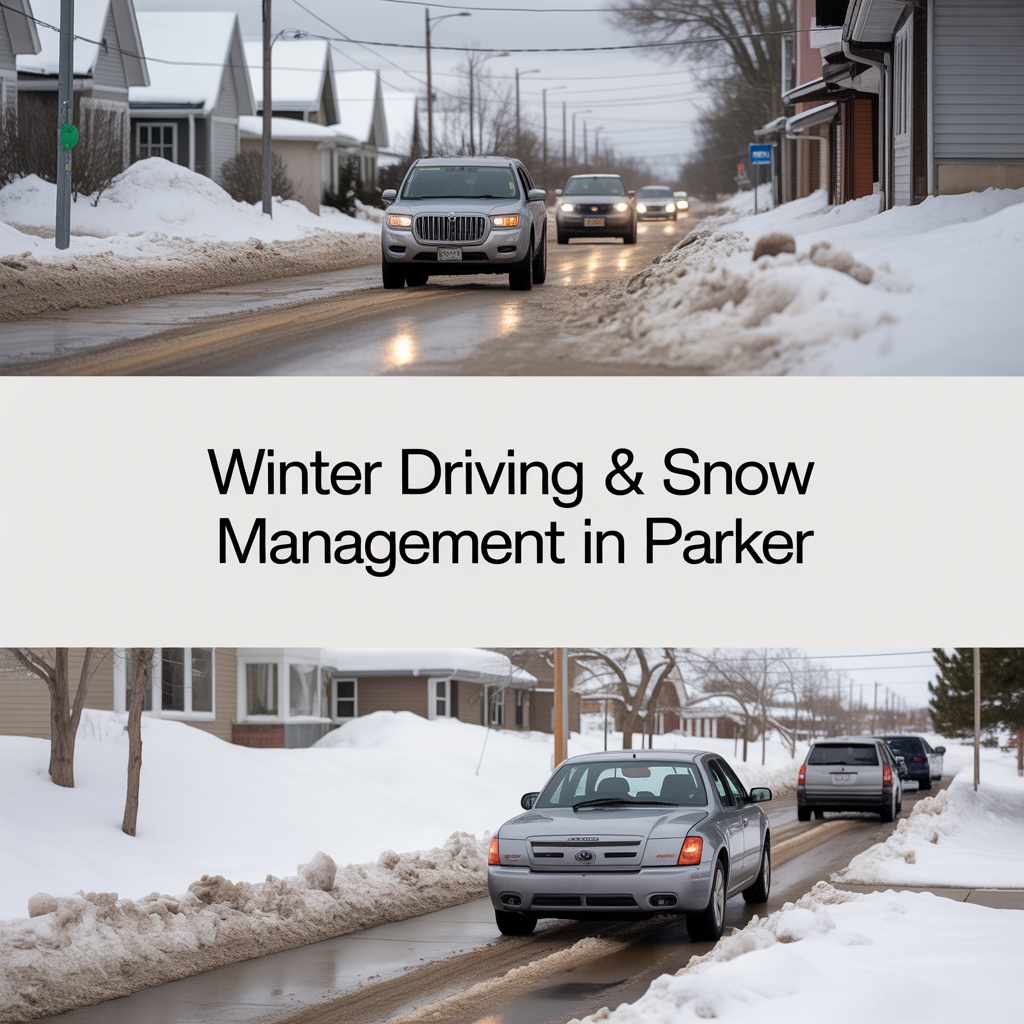
Parker’s snow‑management strategy is straightforward but important to understand. The town prioritizes streets based on traffic volume and safety, which means not every road gets plowed at the same time.
- Arterial streets (like Parker Road and major corridors) are cleared first, since they carry the most traffic and are essential for emergency vehicles and school buses.
- Collector streets and school bus routes are next, ensuring that kids can get to school safely.
- Local streets and cul‑de‑sacs are cleared last, typically only after 10 inches or more of snow has accumulated and the storm is still ongoing.
On local streets, the town usually makes a single pass, clearing a 12–15‑foot‑wide path. That means you may still need to shovel or plow your own driveway and walkway, especially if the snow is deep. The town appreciates residents’ help in keeping driveways clear and not blocking the cleared path.
Winter Driving Tips for Parker Residents
Parker Police and Colorado transportation officials emphasize a few key tips for winter driving that apply especially well to Parker’s mix of suburban streets and highways.
- Slow down. Snow‑covered roads take longer to stop and turn on, so driving slowly is the most important safety measure.
- Increase following distance. The normal 3–4‑second gap between cars should be extended to 8–10 seconds in winter conditions to allow for longer stopping distances.
- Avoid cruise control. Cruise control can cause your wheels to spin on slippery roads, so it’s best to keep your foot on the pedal and adjust speed manually.
- Give plows space. Snowplows need room to work, so slow down and stay behind them rather than trying to pass.
These tips are especially important during morning and evening commutes, when traffic is heaviest and roads are often still being cleared.
Snow Management and Neighborhood Impact
The way Parker manages snow can affect how you experience your neighborhood. Arterial streets like Parker Road and E‑470 are usually cleared quickly, which keeps traffic moving. But local streets and cul‑de‑sacs may take longer, especially after a heavy storm.
That means residents in neighborhoods like Stroh Ranch, The Pinery, and parts of Canterberry Crossing may need to plan for extra time to get out of their driveways or to clear sidewalks. Many homeowners keep shovels, ice melt, and snow blowers on hand for these situations, and some neighborhoods organize informal snow‑removal groups to help neighbors who can’t clear their own driveways.
A Conversation About Your Parker Lifestyle
Winter driving and snow management in Parker are a quiet but significant part of daily life. They shape how you plan your commutes, how you prepare your home, and how you experience your neighborhood. If you’re thinking about buying, selling, or simply understanding how your neighborhood fits into Parker’s larger fabric, these patterns are worth factoring into the conversation.
As a lifelong Denver‑area resident who’s watched Parker evolve, I’m always happy to talk through what these conditions mean for your lifestyle and your long‑term plans. This isn’t about pushing a sale; it’s about helping you find a home and a routine that fit how you actually live — today and ten years from now.
Get the full Denver Market Insights → [Market Insights]



Littleton’s Ken Caryl for Lockheed Relocations
This is part of Lockheed Martin Relocation → [Lockheed Martin Relocation Hub] & the larger Denver Relocation Hub → [Denver Relocation Hub] Written by: Chad Cabalka Ken Caryl is one of the best-kept “family first” relocation options for Lockheed Martin employees who want foothills scenery, strong neighborhood appeal, and a real suburban lifestyle that still feels connected…


Centennial & Parker for Lockheed Relocations
This is part of Lockheed Martin Relocation → [Lockheed Martin Relocation Hub] & the larger Denver Relocation Hub → [Denver Relocation Hub] Written by: Chad Cabalka Centennial and Parker are two of the smartest suburban choices for Lockheed Martin employees relocating with families because they give you a strong balance of commute flexibility, good neighborhood variety, and…

Highlands Ranch for Family-Friendly Lockheed Relocations
This is part of Lockheed Martin Relocation → [Lockheed Martin Relocation Hub] & the larger Denver Relocation Hub → [Denver Relocation Hub] Written by: Chad Cabalka Highlands Ranch is one of the strongest choices for Lockheed Martin employees relocating with families because it delivers exactly what most parents want after a big move: stable neighborhoods, strong community…