


Financing a Home in Denver → [Denver Home Financing Guide] & For more info on Buying in the Denver Metro Area → [Denver Metro Home Buying Process]
Written by: Chad Cabalka
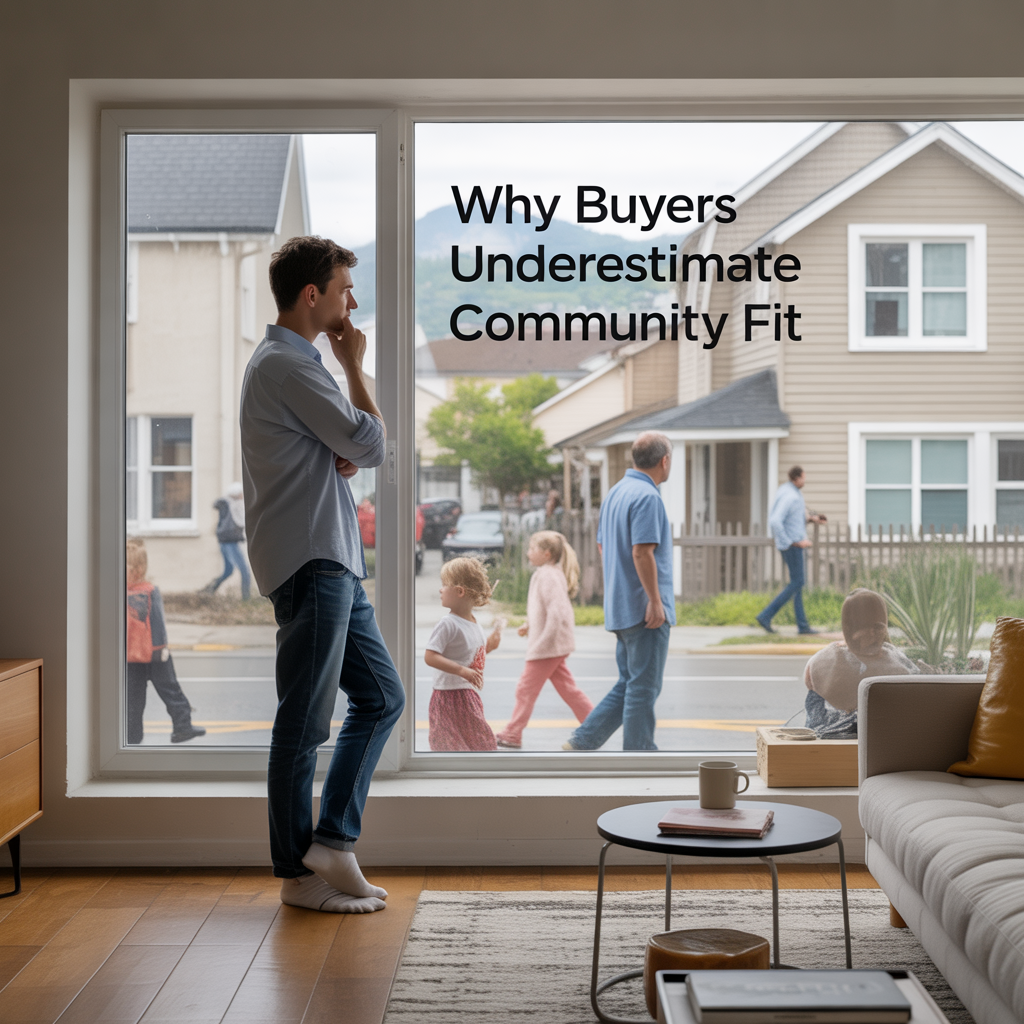
It’s one of the quiet, consistent patterns I’ve seen over decades in Denver real estate: buyers often underestimate how important community fit really is. They focus heavily on the home — the price, the square footage, the kitchen, the yard — and treat the neighborhood more like a backdrop than a living part of the decision. Then, a few years later, they start to notice how much the block, the neighbors, the schools, the noise, and the overall feel of the area shape their day-to-day happiness.
For families in the Denver area, especially those looking to stay in a home for the long term, the difference between “good on paper” and truly feeling at home almost always comes down to community fit, not just the listing details.
How Buyers Mistake the Home for the Whole Picture
Most buyers start with a checklist: price range, number of bedrooms, garage size, schools, commute time, and how updated the home is. That’s completely reasonable; all of those matter.
But in focusing on those tangible items, many don’t give enough weight to the less measurable parts of community fit:
- How safe and comfortable the street feels in winter, at night, and on weekends.
- How many neighbors are long-term, owner-occupants versus renters and investors.
- How much traffic, noise, and construction there is, and how that changes over time.
- How connected the neighborhood feels through parks, trails, schools, and local events.
The home can be perfect, but if the neighborhood doesn’t match the family’s lifestyle, the home can end up feeling like a compromise, not a real home.
Why the “Vibe” of the Block Matters More Over Time
In the first few months, a home’s appeal is often about the property itself: the layout, the finishes, the yard, the mountain views, and how much it matches the dream checklist.
But over time, what matters more is the day-to-day rhythm of the block:
- How many cars are on the street all the time, and how much parking pressure there is.
- How close the home is to schools, parks, and the routes that become part of the weekly routine.
- How quiet or busy the area feels, and how well the neighborhood holds up with more people and more development.
In Denver, families with kids often look back and realize that the neighborhood’s character — the safety, the schools, the walkability, and the sense of community — became far more important to their happiness than they realized at the time of purchase.
How Schools and Peer Groups Shape the Experience
Schools are one of the most powerful forces in community fit. A strong school with good leadership, consistent programs, and an engaged parent community tends to attract families who plan to stay, which creates a more stable, predictable neighborhood.
But school quality is only part of the story. Families also care about:
- How the school supports their parenting style (communication, safety, after-school options, and sports/activities).
- How compatible the peer group is, and how well the kids fit in socially.
- How much community there is around the school: events, volunteering, and the general tone of the school culture.
When a family feels like they’re in the right school community, they tend to feel more at home, regardless of which specific zip code they’re in.
How Turnover and Investor Presence Change the Dynamic
In some Denver neighborhoods and certain corridors, there’s a lot of investor ownership and a high rate of turnover. That brings certain advantages (more properties available, potentially lower prices), but it also changes the neighborhood’s feel.
Areas with a lot of short-term rentals, frequent resales, and investors tend to have:
- More noise and instability, especially near main roads or light rail lines.
- Less consistency in who lives nearby, which can make it harder to build relationships with neighbors.
- More pressure on parking, schools, and infrastructure, which can affect the quality of life over time.
Buyers who underestimate this dynamic often end up feeling like they’re living in a place that’s hard to put down roots in, even if the home and price looked good on paper.
How Walkability and Local Amenities Support Daily Life
In Denver, a lot of the “community” experience comes from walkability and how easy it is to get to everyday things without always driving.
Homes that are near:
- Parks, trails, and open space,
- Groceries, pharmacies, and coffee shops,
- Libraries, rec centers, and local restaurants,
tend to feel more integrated into a neighborhood, not just a distant house on a larger lot.
Families notice, over time, that a home that’s slightly smaller but very close to daily amenities feels more convenient and less stressful than a larger home far from everything. That kind of practical, everyday convenience is a big part of long-term community fit.
How the “Third Space” of a Neighborhood Contributes to Happiness
In real estate, people often talk about the home as the first space and the office as the second. But a huge part of community fit is the “third space” — the coffee shop, the park, the local brewery, the neighborhood events, the farmers market, and the places where families and individuals naturally connect.
Neighborhoods that have a clear center — a main street, a well-used park, or a strong local business district — often feel more like a community, not just a collection of houses.
Buyers who don’t consider this piece sometimes end up realizing, years later, that they’re missing a sense of connection, not because the home is bad, but because the neighborhood lacks that third-space feel.
How Noise, Traffic, and Density Define the Future
In Denver, many buyers fall in love with a home that’s near a major corridor, light rail line, or a rapidly developing commercial area. At the time of purchase, the home feels like a great value, and the location seems convenient.
But over time, the noise, traffic, and density often become more dominant than expected. New construction, more apartments, and more commercial activity can change the block in ways that make the home feel less like a retreat and more like a place to endure.
Buyers who underestimate this tend to be surprised by how much the long-term comfort of the neighborhood is affected by these factors, not just the initial price and commute.
A Practical Way to Evaluate Community Fit
If a home or neighborhood is being considered now, a simple way to focus on community fit is to ask:
- How much of daily life (school, errands, exercise, social time) can realistically happen within walking or short driving distance?
- How many long-term, owner-occupant families are there, and how much turnover is there on the block?
- How does the neighborhood feel at different times of day and in different seasons (snow, wind, heat)?
- How connected is the neighborhood through schools, parks, and local businesses?
When the answers are clear, the decision becomes less about chasing the “perfect” house and more about choosing a place that will feel like a true home over many years.
If thinking about a specific area or neighborhood, I’d be glad to talk through how community fit might play out in that part of the Denver area. Let’s discuss what kind of neighborhood really supports the way a family wants to live over the long term, not just what looks good today.
Get the full Denver Market Insights → [Market Insights]


Centennial & Parker for Buckley Lockheed Martin Employees
This is part of Lockheed Martin Relocation → [Lockheed Martin Relocation Hub] & the larger Denver Relocation Hub → [Denver Relocation Hub] Written by: Chad Cabalka If you work at Buckley and you’re deciding between Centennial and Parker, you’re really choosing between two very different versions of east-side suburban life. I’ve helped a lot of relocating professionals…

Aurora for Buckley and East-Corridor Professionals: Tollgate Crossing and Southlands
This is part of Lockheed Martin Relocation → [Lockheed Martin Relocation Hub] & the larger Denver Relocation Hub → [Denver Relocation Hub] Written by: Chad Cabalka If you work at Buckley or you’re a Lockheed Martin employee based in the east corridor, Aurora can be one of the smartest places to live. I’ve helped a lot of…
Castle Pines and Castle Rock for Waterton Campus Lockheed Martin Employees
This is part of Lockheed Martin Relocation → [Lockheed Martin Relocation Hub] & the larger Denver Relocation Hub → [Denver Relocation Hub] Written by: Chad Cabalka If you work at Lockheed Martin’s Waterton campus and you’re looking at Castle Pines or Castle Rock, you are making a very specific tradeoff. I’ve helped plenty of relocating professionals evaluate…