



This is part of Denver Home Financing Guide → [Denver Home Financing Guide] & Financial Readiness Guide → [Financial Readiness Guide]
Written by: Chad Cabalka
In the Denver market, those HOA dues on the monthly statement might look like a simple line item, but over time they’re one of the most important factors in whether a home continues to feel affordable. Many buyers in the city, Lakewood, Arvada, and the Front Range see condos, townhomes, and master‑planned communities as a great value — but they don’t always grasp how regular fees and the occasional special assessment can quietly reshape the long‑term budget. When I sit down with buyers, I make it clear: HOA costs aren’t optional extras; they’re a permanent part of homeownership, and they need to be planned for like the mortgage.
How HOA Fees Actually Work in Colorado
Most neighborhoods in the Denver area, and nearly all condos and townhomes, are run by a homeowners’ association (HOA) under the Colorado Common Interest Ownership Act (CCIOA). The HOA is responsible for maintaining shared spaces, enforcing community rules, and covering expenses like landscaping, snow removal, insurance, and often some utilities.
In practice, there are two main types of assessments:
- Regular assessments (monthly or quarterly dues): These are the recurring fees that appear on your statement. They pay for everyday operations: lawn care, trash, common area maintenance, insurance, management, and administrative costs.
- Special assessments: These are one‑time or project‑based fees for major work — things like a new roof, structural repairs, exterior painting, road repaving, or a big capital improvement. They’re less frequent, but they can be substantial, and they’re what catch many owners off guard after a few years.
Both types are legally binding. In Colorado, HOAs are allowed to place liens and, in the worst case, pursue foreclosure if assessments go unpaid, so it’s critical to treat them as a fixed obligation, not a flexible expense.
How Regular HOA Fees Shape Your Monthly Budget
In the Denver metro, regular HOA fees vary widely depending on property type, location, and what’s included. A few typical ranges for 2026:
- Condos and high‑rise buildings in the city, LoDo, or Capitol Hill: Often $300–$800+ per month. These usually include more shared services, elevators, lobbies, security, and sometimes even water or trash.
- Townhomes in Arvada, Lakewood, or Centennial: Typically $200–$500 per month. Many cover front yard landscaping, snow removal, a clubhouse, pool, and some insurance.
- Detached homes in master‑planned communities (like Highlands Ranch, The Pinery, or newer developments): Usually $150–$400 per month, covering roads, parks, and some exterior maintenance.
- Mountain‑adjacent and resort‑style communities: Can be $400–$1,000+ per month, where the cost includes heavy snow removal, extensive landscaping, and premium amenities.
These dollars are part of your housing budget, not extra. If your comfort zone is $3,000 for housing, and the HOA is $500, then your mortgage, taxes, and insurance (PITI) should fit into the other $2,500. That’s how people avoid feeling stretched once the HOA bill shows up each month.
How Special Assessments Affect Long‑Term Affordability
A special assessment is a one‑time or multi‑year fee that the HOA levies for a specific, large‑scale purpose. In Colorado, special assessments are common for:
- Roof replacement, siding or stucco repairs, exterior painting, or structural work.
- Major road or parking lot resurfacing.
- Upgrading or repairing elevators, HVAC systems, or electrical common areas.
- Replenishing a depleted reserve fund after a big claim (like a hail or fire damage).
Special assessments are often necessary, but they can be financially disruptive. A special assessment of $5,000–$20,000 (or more) is not rare in older or underfunded communities, and it’s usually paid over 12–60 months, adding $100–$400+ per month to your payment for years. In some cases, the HOA may finance the work itself, and the assessment is effectively a loan that each owner pays into.
For a buyer in the Front Range, this means that an otherwise comfortable home can start to feel tight if a large special assessment hits a few years in, especially if income is variable or there’s little cash cushion. Long‑term affordability depends not just on today’s payment, but on the realistic risk of these larger, recurring special charges.
How HOAs Decide What to Charge (and Why Costs Rise)
HOA fees are set by the HOA board, based on the community’s budget, and they’re approved by the association’s governing documents (Declaration, Bylaws, and CC&Rs). In Colorado, the board is supposed to balance the need for proper maintenance with the ability of owners to pay.
A few local factors that explain why HOA fees rise in the Denver area:
- Insurance costs: Many HOAs, especially in hail‑prone areas and older buildings, face rising insurance premiums, and those costs are passed down to owners.
- Deferred maintenance: Communities that saved on reserves for years may eventually need to catch up with a big project, leading to special assessments.
- Amenities and services: Pools, gyms, multiple recreation centers, and extensive landscaping all require staffing and upkeep, which drive higher monthly dues.
- Inflation and labor costs: Like the rest of the economy, lawn care, snow removal, and maintenance are more expensive than they were a decade ago.
It’s also common for HOAs in the Front Range to operate with a mix of a low reserve fund and a reliance on special assessments to fund big projects, which can be a warning sign about long‑term stability.
How to Evaluate HOA Fees and Assessments Before Buying
For a buyer in the Denver area, the key is to look at the HOA not just for the monthly number, but for the long‑term risk. Here’s what matters in practice:
- Review the HOA’s financials and reserve study
Ask for the last 2–3 years of financial statements and the reserve study. Look for:- How strong is the reserve fund? A healthy reserve can cover major components (roof, siding, structure) without a special assessment.
- How much is budgeted for maintenance vs. administrative overhead?
- Have there been recent special assessments, and are major projects on the horizon?
- Check the governing documents (CC&Rs and Bylaws)
These documents tell you:- How assessments are allocated (whether they’re equal or based on square footage, location, or unit type).
- How special assessments are approved (board vote vs. owner vote).
- What rules apply to delinquency, late fees, and interest (under CCIOA, interest is usually capped at 8% per year).
- Ask about planned and projected projects
Talk to the HOA manager or board:- Is there a capital improvement plan (road resurfacing, roof replacement, exterior work)?
- Are there known deferred maintenance items that could require a special assessment in the next 5–10 years?
- Look at the HOA’s ratio of dues to home value
A very high monthly HOA relative to the home price (e.g., $600 on a $400,000 condo) can be a sign that the community is already stretched. A lower HOA on a property with a weak reserve fund, though, can be a hidden risk of future special assessments.
How This Changes Your Home Search and Affordability
In a competitive market, it’s easy to want to stretch for a community with great amenities and great views, but HOA dues and the risk of special assessments should be built into the affordability decision from the start.
Practical rules of thumb for Colorado buyers:
- Cap your total housing cost (PITI + HOA) at 25–30% of gross income
That leaves room for car payments, retirement, taxes, and unexpected expenses. If the HOA is $500, then your PITI needs to be lower to keep that total comfortable. - Assume HOA fees will increase over time
Many communities raise dues 3–5% per year to keep up with inflation and insurance. Budget as if today’s $300/month will be $400–$500 in 10 years. - Plan for the possibility of a special assessment
In older or older-style communities, assume there might be 1–2 special assessments over 10–15 years, equivalent to $100–$300 extra per month for several years. That’s not a worst‑case scenario; it’s a realistic possibility. - Choose a home where the total payment feels sustainable, not just “affordable”
A buyer in Wash Park, Littleton, or the Foothills who reserves room for higher dues and possible special assessments is far less likely to feel stressed later than someone who buys at the very top of what the lender allows.
Making a Long‑Term Decision, Not Just a Purchase
HOA fees and special assessments aren’t a flaw in the system; they’re how shared communities stay maintained and functional. Many families in the Denver area happily pay dues because they value the amenities, stability, and security that come with a well‑managed HOA.
The goal isn’t to avoid HOAs entirely, but to buy with clear eyes:
- Understand exactly what you’re paying for in the monthly dues.
- Know the health of the HOA’s finances and the risk of future special assessments.
- Make sure the total payment, including HOA, still leaves room for life, savings, and emergencies.
If you’re looking at a home in the Denver area and would like to go over a specific HOA’s fees, reserves, and recent history to see how they affect long‑term affordability for your income and lifestyle, I’m always happy to help. That conversation should be local, clear, and grounded in your actual life. When you’re ready, I’m here for that.
Get the full Denver Market Insights → [Market Insights]


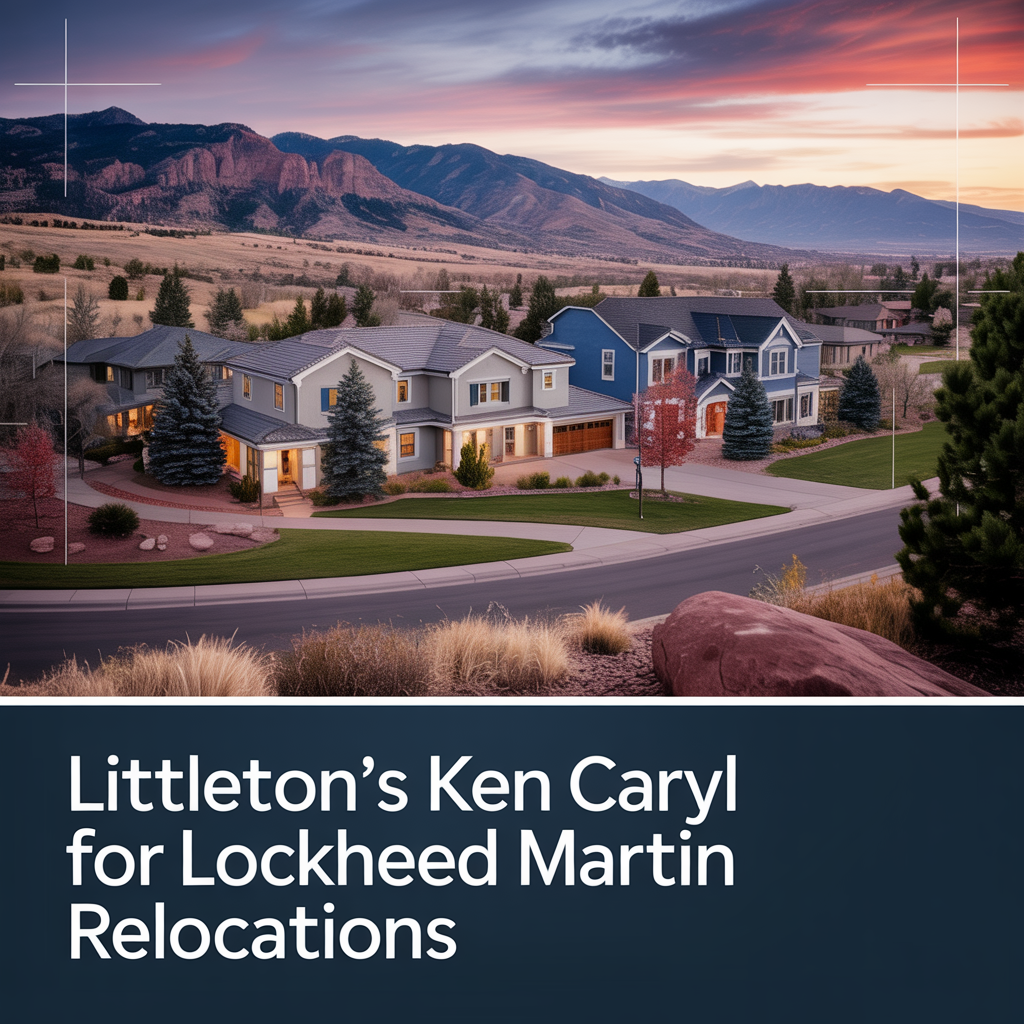
Littleton’s Ken Caryl for Lockheed Relocations
This is part of Lockheed Martin Relocation → [Lockheed Martin Relocation Hub] & the larger Denver Relocation Hub → [Denver Relocation Hub] Written by: Chad Cabalka Ken Caryl is one of the best-kept “family first” relocation options for Lockheed Martin employees who want foothills scenery, strong neighborhood appeal, and a real suburban lifestyle that still feels connected…


Centennial & Parker for Lockheed Relocations
This is part of Lockheed Martin Relocation → [Lockheed Martin Relocation Hub] & the larger Denver Relocation Hub → [Denver Relocation Hub] Written by: Chad Cabalka Centennial and Parker are two of the smartest suburban choices for Lockheed Martin employees relocating with families because they give you a strong balance of commute flexibility, good neighborhood variety, and…

Highlands Ranch for Family-Friendly Lockheed Relocations
This is part of Lockheed Martin Relocation → [Lockheed Martin Relocation Hub] & the larger Denver Relocation Hub → [Denver Relocation Hub] Written by: Chad Cabalka Highlands Ranch is one of the strongest choices for Lockheed Martin employees relocating with families because it delivers exactly what most parents want after a big move: stable neighborhoods, strong community…