



This is part of Denver Home Financing Guide → [Denver Home Financing Guide] & Financial Readiness Guide → [Financial Readiness Guide]
Written by: Chad Cabalka
In the Denver metro area, property tax trends are no longer a distant government story; they’re a core part of whether a home stays affordable year after year. For many homeowners, the last few years have been a reminder that low state tax rates don’t always mean low tax bills, and that a tax bill that’s stable for a while can still jump significantly when assessment rules and relief programs change. In today’s Colorado market, buyers should understand taxes not just as today’s dollar amount, but as a long‑term factor in whether a home truly fits their budget for the next 10–30 years.
How Property Taxes Actually Work in Colorado
Colorado’s property tax system is different from most states. It doesn’t rely on a high statewide rate; instead, it uses a lower assessment rate applied to the home’s actual value, and then local governments (counties, school districts, special districts, and cities) set their own levy rates (mills) to fund services. That means the total property tax is shaped by:
- Assessed value: a percentage of the home’s market value (set by the county assessor every two years).
- Assessment rate: a declining percentage of that value used to calculate taxable value (dropping from 7.15% in 2025 to 6.95% for most local levies in 2026, with a 10% reduction on the first $700,000 of appraised value).
- Mill levy: the total tax rate set by the county, school district, and special districts like fire, water, and libraries, which is applied to the taxable value.
The result is that a home in the $500,000–$600,000 range in the Denver area typically sees an annual property tax in the $4,500–$8,000 range, but that number can be much higher in more expensive or more heavily taxed communities. What matters most for buyers is not just the current bill, but how it’s likely to behave over time.
What’s Happening in 2025–2026
In 2026, many Colorado homeowners are seeing a noticeable increase in their property tax bills, even if their home value is flat or only slightly up. That’s driven by state‑level changes, not just local spending:
- The temporary statewide property tax relief that reduced assessment rates and provided a large valuation discount (up to $55,000 off taxable value) was temporary for the 2023–2025 tax years.
- In 2025 and 2026, those temporary discounts expired, and the assessment structure reset, so taxable value is closer to the full appraised value.
- For many homes, this means the tax bill is now reflecting a higher base of value, even if the market value isn’t rising sharply.
In practice, that’s led to many homeowners in Arapahoe, Jefferson, Douglas, and other Front Range counties seeing tax increases of 20–40% over the last two years, with some adding more than $1,000 to their annual bill. For people on fixed incomes or in older, paid‑off homes, this can feel like a real cost of ownership, not just a distant policy debate.
How This Shapes Long‑Term Affordability
A home in Colorado is a long‑term decision, and property taxes, unlike a 30‑year fixed mortgage, are not locked in. They can and do change over time, and those changes can affect how comfortable a home feels years after closing.
Key ways taxes impact long‑term affordability:
- Annual increases are common. Even without big jumps from policy changes, most homes see modest increases each reassessment cycle (every two years) and small annual mill‑levy adjustments. A home that feels comfortable at $6,000 a year can feel tighter at $8,000–$9,000 ten years later.
- Higher‑value homes see higher absolute increases. A 10% increase on a $6,000 tax bill is $600, which can be hard to absorb in a tight budget, especially if it’s on top of rising insurance and maintenance.
- Taxes are a permanent line item. Unlike HOA fees, which can sometimes be renegotiated or limited by community rules, property taxes are a fixed obligation until the owner sells, moves, or qualifies for a deferral or exemption.
- Budgets that were tight at purchase can become stressful. A buyer who qualified with a mortgage payment that uses 35–40% of gross income needs to account for the reality that taxes will likely rise over time, not stay the same, or else the home can feel stretched a few years in.
For many buyers in the Denver area, the safest approach is to buy a home where the total housing payment (mortgage, taxes, insurance, and HOA) is comfortably below 30% of gross income, so there’s room to absorb those gradual increases without panic.
How to Evaluate Taxes When Buying a Home
For a buyer in the Front Range, understanding taxes isn’t just about the current number; it’s about whether it’s likely to be stable or volatile. Practical steps to take:
- Look at the current tax bill and the last 2–3 years of bills.
Ask for a copy of the most recent real estate tax statement. Calculate the annual amount and make sure it’s included in your housing budget, not treated as an afterthought. - Check the county and local mill levies.
Each county and school district publishes its mill levies, and those can be used to project whether taxes are likely to be higher or lower in similar neighborhoods. A home in a high‑levy school district or a fire‑dependent area often has a higher long‑term tax bill. - Factor in reassessment timing.
In Colorado, counties reassess every two years, so a home bought in 2024–2025 might be in a relatively stable tax window, while a home bought in 2026–2027 may be on the cusp of a reassessment date that could bring a noticeable change. - Ask about tax deferral and exemption programs.
Colorado offers a senior homestead exemption and property tax deferral for qualifying homeowners, but these are usually not available to most buyers at the time of purchase. It’s wise to know whether those tools will be available later in life, especially if you’re planning to stay long‑term.
How This Changes Your Home Search and Price Range
In neighborhoods like Denver, Highlands Ranch, Lakewood, and Arvada, some homes are priced similarly but have very different tax bills based on location, school district, and special districts. For a buyer, that means:
- A home in a newer community with lower mill levies might be slightly more expensive to buy but cheaper to own over time.
- An older home in a desirable area might have a lower initial price, but a higher tax bill can make it less affordable in the long run, especially if it’s on a larger lot or in a higher‑value district.
- Choosing a home where the tax bill is modest and predictable can allow for a slightly higher price or mortgage, because there’s less risk of a big jump later.
The strongest buyers in the Denver area are the ones who treat property taxes as a non‑negotiable part of the housing budget, not just as a line item they hope stays low.
A Realistic Budget That Lasts
The goal isn’t to avoid property taxes entirely; it’s to buy a home that accommodates them comfortably over the long term. For a buyer in the Front Range, that usually looks like:
- A home where the total payment (PITI + HOA) is a realistic percentage of income, leaving room for savings, car costs, and other expenses.
- A clear understanding of whether taxes are likely to be volatile (due to policy changes or high mill levies) or more predictable (in a stable, moderate‑tax area).
- A plan to revisit the tax bill every reassessment cycle, so there are no surprises, and a willingness to appeal or challenge the assessed value if it seems out of line with the market.
If you’re thinking about buying in the Denver area and want to walk through how property tax trends will impact your long‑term payment, your budget, and your choice of neighborhoods, I’m always happy to help. That conversation should be clear, local, and grounded in your life, not just a headline about rising bills. When you’re ready, I’m here for that.
Get the full Denver Market Insights → [Market Insights]


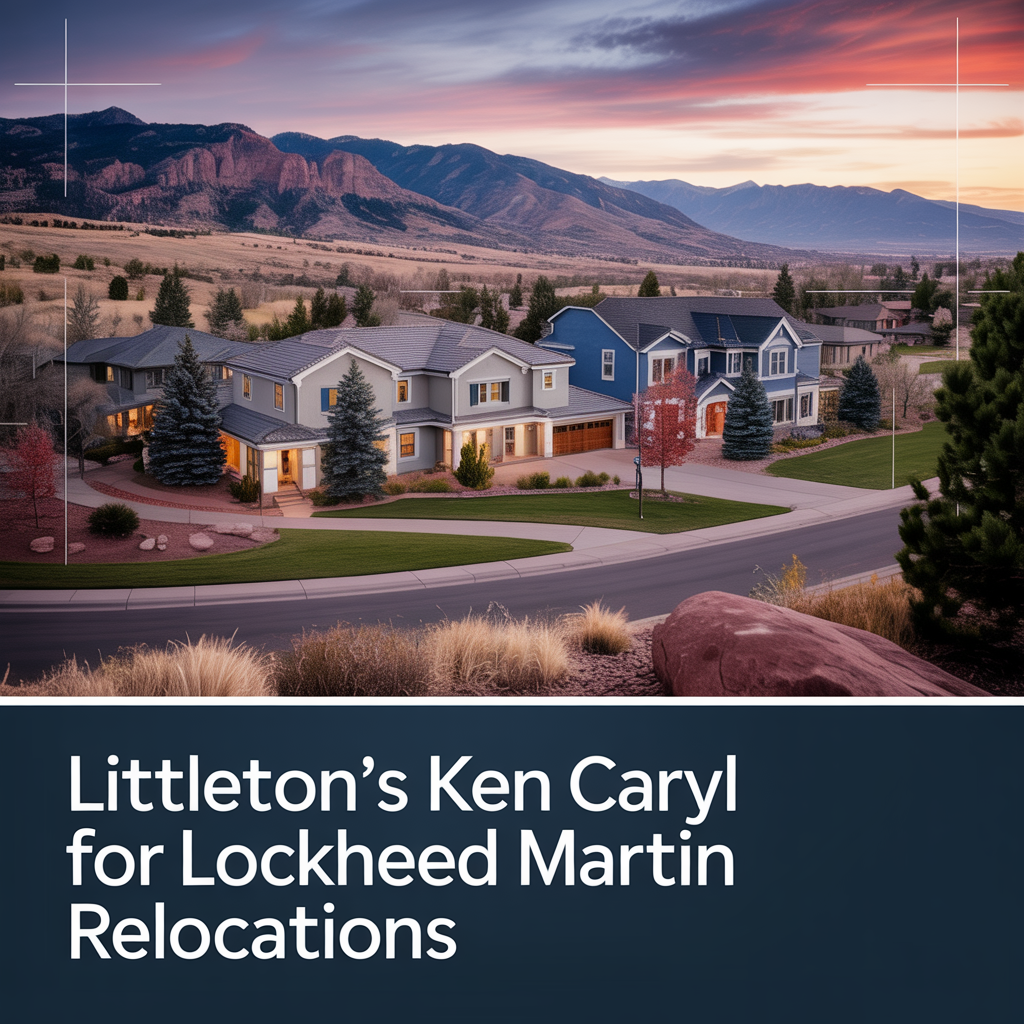
Littleton’s Ken Caryl for Lockheed Relocations
This is part of Lockheed Martin Relocation → [Lockheed Martin Relocation Hub] & the larger Denver Relocation Hub → [Denver Relocation Hub] Written by: Chad Cabalka Ken Caryl is one of the best-kept “family first” relocation options for Lockheed Martin employees who want foothills scenery, strong neighborhood appeal, and a real suburban lifestyle that still feels connected…


Centennial & Parker for Lockheed Relocations
This is part of Lockheed Martin Relocation → [Lockheed Martin Relocation Hub] & the larger Denver Relocation Hub → [Denver Relocation Hub] Written by: Chad Cabalka Centennial and Parker are two of the smartest suburban choices for Lockheed Martin employees relocating with families because they give you a strong balance of commute flexibility, good neighborhood variety, and…

Highlands Ranch for Family-Friendly Lockheed Relocations
This is part of Lockheed Martin Relocation → [Lockheed Martin Relocation Hub] & the larger Denver Relocation Hub → [Denver Relocation Hub] Written by: Chad Cabalka Highlands Ranch is one of the strongest choices for Lockheed Martin employees relocating with families because it delivers exactly what most parents want after a big move: stable neighborhoods, strong community…