



This is part of Denver Home Financing Guide → [Denver Home Financing Guide] & Financial Readiness Guide → [Financial Readiness Guide]
Written by: Chad Cabalka
In Colorado, saving for a home in Arvada or the Denver metro isn’t just about how much money can be scraped together—it’s about building a clear, realistic plan that fits the family’s actual income, job stability, and lifestyle, so the home feels sustainable for 10–15 years, not just for the first few months. For many families, the down payment is the biggest hurdle: it’s not just about the total figure, but how to reach it without sacrificing childcare, retirement, or everyday breathing room.
This section is about how to save for the down payment in a practical, long‑term way, how to reduce the cash needed through local and state programs, and how to decide when an amount is “enough,” so the home becomes a stable base, not another source of stress.
How Much You’ll Likely Need for a Home in This Market
In the Denver area in 2026, the down payment required depends on the loan type, home price, and neighborhood, but here are realistic ranges for most buyers:
- FHA loans (common for first‑time buyers and those with a 580+ credit score):
- Minimum 3.5% down on the purchase price.
- For a $500,000 home, that’s about $17,500, plus additional money for closing costs and a small cushion.
- Conventional loans (often used by repeat buyers, stronger borrowers, and families aiming for a single‑family home in a strong school district):
- 3–5% down for those with a 620–640+ score.
- 20% down to keep the monthly payment low and avoid private mortgage insurance (PMI).
- Special Colorado programs (CHFA, down‑payment assistance, NeighborhoodLIFT, and local city programs):
- Often allow 3–5% or less down from the buyer, with a second loan or grant covering the rest.
For most families in the metro area, a realistic target is:
- 10–20% down if the goal is a lower payment, less risk, and a home that can be kept long‑term, even if rates stay higher.
- Or 5–10% down (plus assistance) if that’s what’s realistic while still maintaining a decent cushion for life, schools, and emergencies.
The key is not to compare to other buyers but to decide how much feels safe and comfortable for this family’s income, savings, and long‑term priorities.
How to Make Saving Practical, Not Just Primitive
Saving a down payment isn’t about permanent austerity; it’s about designing a plan that aligns with the family’s real life, not some idealized version of it. The most successful savers in the metro area follow a few practical rules:
1. Start with a Clear Price Range and Down Payment Goal
- Pick a realistic price range for Arvada or the surrounding area (for example, $450,000–$550,000 for a single‑family home, or $350,000–$450,000 for a condo/townhome).
- Calculate what 5%, 10%, and 20% of that range would be so the target is concrete and doesn’t shift from month to month.
This turns “saving” from a vague idea into a defined number that can be tracked over time.
2. Create a Separate “Savings for Home” Account
- Open a dedicated savings account just for the home fund, separate from the everyday checking and the emergency fund.
- Set up automatic transfers each payday (for example, 10–15% of income) so saving happens consistently, not just when there’s extra money.
- Avoid treating this account like a vacation fund or a place to dip into for car repairs; protect it like a monthly bill.
Over time, this small, automatic transfer system often adds up faster than trying to save large, sporadic amounts.
3. Find the Biggest Leverage Points in the Budget
For families in the metro area, the largest savings usually come from a few big categories, not a hundred tiny cuts:
- Housing costs:
- Staying in a smaller, more affordable rental while saving.
- Avoiding a move to a more expensive area or a larger apartment while the down payment is being built.
- Transportation costs:
- Driving less, combining trips, and using light rail or carpooling when possible.
- Keeping one car if the family is comfortable with that, or delaying a big car purchase.
- Lifestyle inflation:
- Subscriptions, dining out, and recurring memberships are often the easiest places to pull back, at least temporarily.
- Planning a few “big” luxuries (a nice restaurant, a local event, a trip) rather than constant small spending often feels more satisfying.
- Big intentionality:
- Choosing to delay a big event (like a wedding, destination trip, or major home renovation) while saving for the home can free up thousands at once.
The goal isn’t to live like a college student for years, but to make a few intentional trade‑offs for 1–3 years so the home is more affordable and less stressful long‑term.
How Down‑Payment Assistance and Local Programs Reduce the Cash Needed
In Colorado, several programs can dramatically reduce the amount of cash the buyer has to pull from their own pocket at closing, which is especially helpful for families with two‑income jobs, W‑2 income, or those who qualify as first‑time buyers.
Key programs in the Denver/Arvada area include:
- CHFA (Colorado Housing and Finance Authority)
- Offers FirstStep, FirstStep Plus, HomeAccess, and HomeAccess Plus programs with 30‑year fixed mortgages and down‑payment help.
- Often requires a credit score of 620 (or 580 with an approved lender), income limits, and a home‑buyer education class.
- The assistance is usually a second mortgage or grant that can cover part or all of the down payment, reducing the cash needed from the buyer.
- NeighborhoodLIFT (in Adams, Arapahoe, Denver, Douglas, and Jefferson counties)
- Can provide up to $15,000 in down‑payment and closing‑cost assistance.
- Open to first‑time and repeat buyers, with some priority for teachers, first responders, and military.
- Requires home‑buyer education and income limits.
- Local city programs (e.g., Denver metroDPA, Aurora HOAP, Boulder H2O, CHAC)
- Offer grants or silent second loans that reduce or eliminate the required down payment.
- Often structured as a loan that is repaid only when the home is sold, refinanced, or paid off, not as a monthly payment.
For many families in the metro area, using one of these programs can mean:
- Putting down only 1–3% from their own savings, while the rest of the down payment and closing costs are covered by the program.
- Still qualifying for a home in a strong school district and a neighborhood that suits their lifestyle, without draining their entire savings.
How to Define “Safe” vs. “Comfort” Target
In this market, it helps to think of the down payment in two layers:
- “Safe” minimum (what’s required to qualify, with a modest cushion).
- This is the amount needed to meet the minimum down payment, plus a small buffer for closing costs and a few months of home expenses.
- For many families, that’s 5–10% of the home price, plus a few thousand in cash reserves.
- “Comfort” target (a larger down payment that reduces risk and long‑term cost).
- This is the amount that allows the family to keep the payment lower, avoid PMI, and build equity faster.
- For many families, that’s closer to 10–20%, especially if they are buying a home they expect to keep for 10+ years.
The “right” amount is the one that:
- Keeps the total monthly payment (mortgage, taxes, insurance, HOA) within a comfortable range (often 25–30% of gross income, not stretched to 40%+).
- Leaves enough savings for emergencies, repairs, and life’s other priorities.
- Allows the family to buy a home that genuinely fits their lifestyle, not just the one that’s the absolute cheapest.
How to Build a Realistic Timeline (and When It’s Okay to Borrow or Accept Gifts)
For most families in the metro area, a realistic timeline to save for a home is:
- 1–2 years for a 5–10% down payment, with moderate lifestyle adjustments.
- 2–3+ years for a 15–20% down payment, especially if the goal is a home in a higher‑price pocket or a very strong school district.
But it’s also realistic and acceptable to:
- Accept documented gifts from family (many loan programs allow it as long as the gift is properly documented and not a repayable loan).
- Use retirement funds cautiously (some IRAs allow first‑time buyers to withdraw a limited amount, but that comes with tax and long‑term trade‑offs).
- Accept a slightly higher payment now if the family is ready to settle into a neighborhood, schools, and commute, and the payment is still sustainable with a modest down payment plus a local program.
A Practical Next Step: Build Your Own Saving Plan
If a home is in the 1–3 year horizon, a simple next step is to:
- Choose a realistic price range and loan type (for example, FHA or conventional with DPA).
- Calculate the required down payment and closing costs for that range.
- Create a 6–12‑month experiment:
- Set a target monthly savings amount.
- Automate the transfer to a dedicated home‑savings account.
- Review the budget together to see where small changes make the biggest difference without sacrificing quality of life.
If it would help to walk through a specific price target, income level, and down‑payment assistance options, I’d be glad to help build a plan tailored to the family’s actual life, so the saving process feels grounded and doable, not overwhelming.
Get the full Denver Market Insights → [Market Insights]


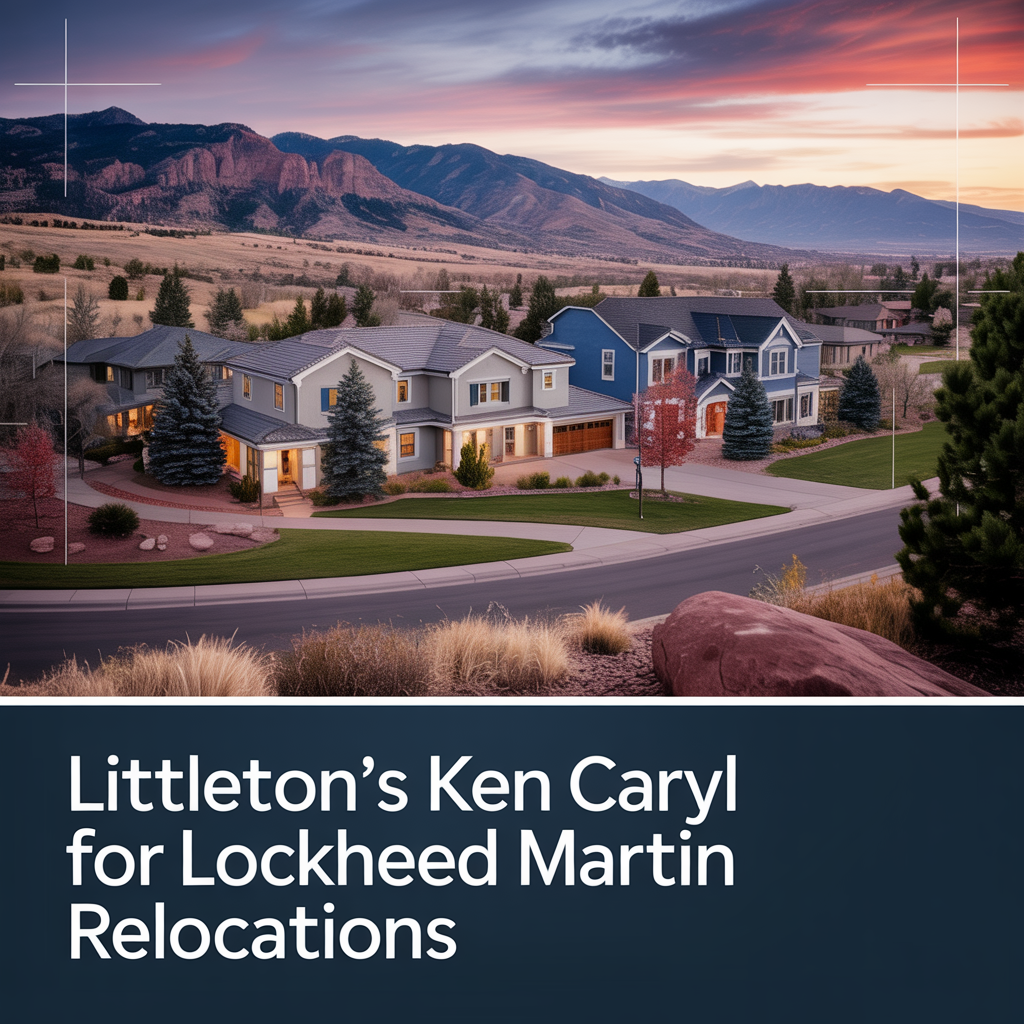
Littleton’s Ken Caryl for Lockheed Relocations
This is part of Lockheed Martin Relocation → [Lockheed Martin Relocation Hub] & the larger Denver Relocation Hub → [Denver Relocation Hub] Written by: Chad Cabalka Ken Caryl is one of the best-kept “family first” relocation options for Lockheed Martin employees who want foothills scenery, strong neighborhood appeal, and a real suburban lifestyle that still feels connected…


Centennial & Parker for Lockheed Relocations
This is part of Lockheed Martin Relocation → [Lockheed Martin Relocation Hub] & the larger Denver Relocation Hub → [Denver Relocation Hub] Written by: Chad Cabalka Centennial and Parker are two of the smartest suburban choices for Lockheed Martin employees relocating with families because they give you a strong balance of commute flexibility, good neighborhood variety, and…

Highlands Ranch for Family-Friendly Lockheed Relocations
This is part of Lockheed Martin Relocation → [Lockheed Martin Relocation Hub] & the larger Denver Relocation Hub → [Denver Relocation Hub] Written by: Chad Cabalka Highlands Ranch is one of the strongest choices for Lockheed Martin employees relocating with families because it delivers exactly what most parents want after a big move: stable neighborhoods, strong community…