


Mesa Lifestyle Guide → [Mesa Lifestyle Guide] & For more info on Mesa Real Estate → [Mesa Real Estate Guide]
Written by: Renee Burke
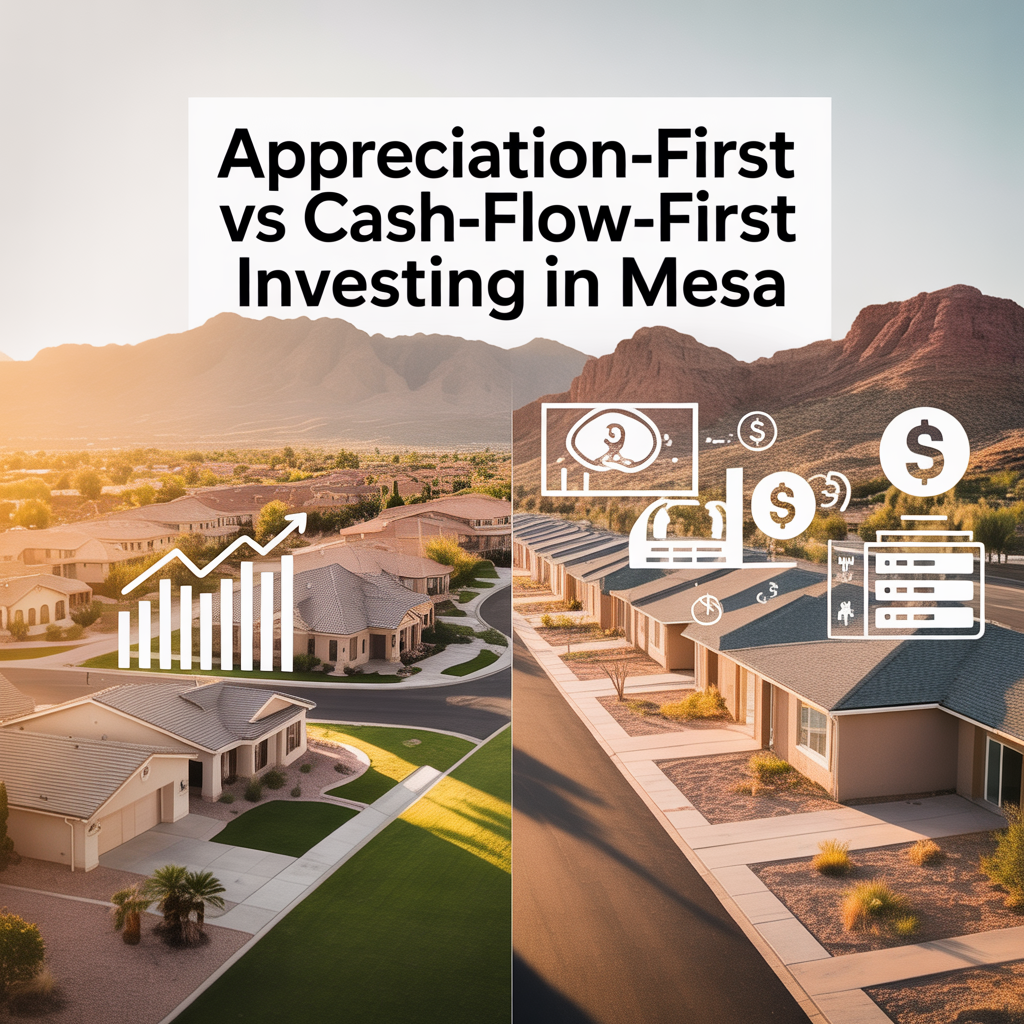
Mesa offers investors a clear fork in the road: chase appreciation in high-growth eastside pockets where values climb steadily, or prioritize cash flow in westside workhorses that cover mortgages from day one. Appreciation-first targets 5–8% annual gains in master-planned gems like Eastmark, banking on job booms and relocator influx; cash-flow-first squeezes 6–8% yields from older, affordable rentals near central hubs. Both leverage our balanced market—median $473K sales up 2.2% yearly, 3–3.5 months’ supply—but demand different timelines, risks, and stomach for upkeep.
I’ve guided portfolios through both, and matching your goals to Mesa’s rhythm makes all the difference.
Appreciation-First: Growth in Polished Enclaves
Focus here on southeast stars like Eastmark, Cadence, or Las Sendas, where newish builds ($450K–$600K) ride Gateway Airport expansion, top schools (85212 A-rated), and Loop 202 access. Values project 5–6% yearly through 2026, outpacing medians as families flock for amenities—resort pools, trails boosting 10–15% premiums. Low turnover (long-term owners) preserves scarcity; resale shines after 5–7 years as equity compounds.
Tradeoff: Negative or break-even cash flow initially ($2,200 rents barely cover $2,500 PITI at 6–7% rates). HOAs ($150–$300/month) and smaller lots pinch yields to 3–4%. Suits patient flippers or 1031 exchangers eyeing decade holds.
Cash-Flow-First: Income from Established Value Plays
West and central Mesa—Dobson Ranch, Lehi, westside 85204—deliver $1,800–$2,500 rents on $350K–$450K buys, netting 1–2% monthly after low 0.49% taxes ($1K–$1.5K/year). No-HOA flexibility attracts diverse tenants (airport workers, multi-gen); larger lots (8K+ sq ft) command steady $300–$500 spreads. Yields hit 6–8% with minimal vacancy (under 5%), covering maintenance while appreciation ticks 3–5%.
Catch: Higher capex—$3K AC cycles, pool care—erodes edges if neglected. Resale slower in revitalizing zones; quirkier layouts risk picky renters.
Head-to-Head Metrics
| Strategy | Best Neighborhoods | Entry Price | Rent/Mo | Yield | Appreciation (2026 Proj.) | Risk Profile |
|---|---|---|---|---|---|---|
| Appreciation-First | Eastmark, Las Sendas | $450K–$600K | $2,500–$3,500 | 3–5% | 5–8% | Rates, oversupply |
| Cash-Flow-First | Dobson Ranch, Lehi | $350K–$450K | $1,800–$2,500 | 6–8% | 3–5% | Maintenance, turnover |
Market Forces Shaping Each Path
Balanced inventory (62 DOM median) favors cash-flow buys—negotiate 2–5% off in westside flips. Appreciation shines on eastside momentum: relocators (net inflow top-10 metros) and tech/logistics jobs fuel demand. Both benefit from stable taxes and no state income tax, but appreciation bets on limited land; cash flow weathers softening rents (-1–2% yearly).
Hybrid wins: Lehi acreage blends 5% yields with upside; Desert Uplands luxury yields 4% but pops 6–7%.
Risks and Exit Strategies
Appreciation risks rates spiking (6–7% holds) or new-build floods cooling premiums; exit via forced appreciation (kitchens boost 15%). Cash flow falters on vacancies (westside noise) or capex overload—mitigate with $10K reserves. Long-term, both ride 7–8% decade trends, but cash flow funds life now; appreciation builds legacies.
Crafting Your Mesa Play
Appreciation suits horizon planners; cash flow fits income seekers. Mesa’s diversity lets you mix—westside starter feeding eastside growth.
If you’re thinking about making a move in Mesa, you don’t have to figure it out alone. Let’s align your timeline and risk with the right strategy, turning numbers into neighborhood fits. I’m here as your East Valley guide, ready to map steady wins.
Get the full Phoenix Market Insights → [Market Insights]


-
Short-Term Rental Enforcement Trends In Phoenix Neighborhoods And Investor Risk
-
Phoenix HOA Governance Rules That Change Rental Flexibility And Ownership Strategy
-
How Permit Backlogs Across Maricopa County Affect Housing Supply And Release Schedules
-
Why Development Impact Fees In Phoenix Quietly Increase New Construction Pricing
-
How Phoenix Water Certification Reviews Shape Subdivision Timelines And Buyer Inventory
-

Case Studies: The “Plan B” That Saved the Deal Years Later
-
Case Studies: HOA Rules That Changed the Exit Plan
-
Case Studies: Rental Conversions That Worked (and What Made Them Work)
-

Case Studies: Homes That Stayed Liquid Through a Soft Market
-

Case Studies: Bought “Perfect” — Felt Trapped Later (Why)
-

Costs Rose — And Reserves Made The Difference
-

HOA Rules Tightened — And Buyer Pools Changed
-
Rental Conversion Became Necessary — And It Worked (Or Didn’t)
-
A Job Shift Forced A Move — But The Exit Plan Held
-
The Neighborhood Changed — But The Home Stayed Liquid
-

Building a Plan B That Doesn’t Require Perfect Conditions
-

The Calm Home Principle: Why the Best Decisions Feel Steady
-

How to Buy With Options Without Overpaying
-

The “Liquidity Lens” for Phoenix Home Selection
-

The Phoenix Exit Strategy Checklist (Buyer Edition)
-
What’s the Likely 3–7 Year Life Path That Fits This Asset?
-

Is the Payment Sustainable Without Stress?
-

Are There HOA or Rule Constraints That Reduce Flexibility?
-

Can the Home Convert to a Rental if Needed — Realistically?
-

What Are the Top 3 Reasons Someone Would Avoid It?