



Mesa Lifestyle Guide → [Mesa Lifestyle Guide] & For more info on Mesa Real Estate → [Mesa Real Estate Guide]
Written by: Renee Burke
I’ve walked alongside so many families and individuals through this very journey right here in the East Valley, and I know how both exciting and overwhelming it can feel to finally take those first steps toward owning a home in Mesa. It’s not just about finding the right property—it’s about building a life that fits your rhythm, from morning coffee on a shaded patio to weekend floats down the Salt River. As your local guide who knows every corner of this market intimately, let me lay out a clear, patient path forward, tailored to how things truly work in Mesa today. We’ll go step by step, so you feel prepared and empowered, without any of the guesswork that trips people up.
Mesa’s market in early 2026 offers that balanced sweet spot we’ve discussed—steady prices in the mid-$460,000s, more inventory giving you breathing room, and neighborhoods from historic West Mesa ranches to sparkling Eastmark new builds waiting for the right fit. Whether you’re a first-time buyer eyeing Dobson Ranch affordability or a growing family drawn to Las Sendas views, this process rewards those who move thoughtfully. Let’s dive in, from dream to keys in hand.
Step 1: Clarify Your Vision and Get Your Finances in Order
Everything starts with knowing what you truly want—and what your numbers can support. Begin by painting a picture of your ideal life in Mesa: Do you crave walkable Main Street vibes, top schools in East Mesa, or golf course serenity in the northeast? Drive the areas at different times—sunrise over the Superstitions, rush hour on the 60, evening strolls in Red Mountain Ranch. Jot down must-haves like single-story layout, yard space for pets, or proximity to Banner Health jobs.
Then, turn to finances with quiet honesty. Pull your credit report (aim for 620+ for best rates), tally savings for down payments (3-5% often works with FHA or conventional), and list debts. Chat with a local lender familiar with Maricopa County programs like Home in Five or Arizona@Home—they offer forgivable assistance up to 5% for first-timers under $140,000 household income. Within a week, secure a pre-approval letter. This isn’t just paperwork; it’s your golden ticket, showing sellers you’re serious in a market where multiple offers still pop up in hot pockets like Eastmark.
I always tell clients: Treat this like mapping a hike through Usery—know your trail, pack water, and pace yourself. Pre-approval sharpens your focus and often unlocks lender credits that shave thousands off closing.
Step 2: Partner with a Local Expert and Start Hunting Thoughtfully
With pre-approval in hand, team up with an agent who lives and breathes Mesa—like me, who can spot off-market gems before they hit the MLS. We’ll set up customized searches via the Arizona Regional MLS, filtering for your priorities: three bedrooms minimum, no HOA over $100, built after 2010 for East Mesa efficiencies. Expect 20-30 showings over a few weekends; Mesa’s 60-day market pace gives you time to compare without frenzy.
Focus on diverse pockets: West Mesa for value-packed ranches under $400,000 needing light updates; Central for historic charm near the arts center; East for master-planned communities with pools and trails. Attend open houses, but lean on your agent for pockets—like seller concessions covering closing costs (common now at 2-4% of price) or rate buydowns shaving 0.5% off your 6.5% rate. Test the lifestyle too: Pop into a farmers market, time a commute to ASU Polytechnic, feel the summer AC hum. By now, you’ll have a shortlist of three to five contenders that whisper “home.”
This phase is where local insight shines. I’ve steered clients away from flood-prone older homes near the canals and toward hidden enclaves with mountain views—they thank me years later when values climb steadily.
Step 3: Make a Strong, Smart Offer
Once your heart picks a home—say, that $465,000 three-bed in Lehi Farms with a desert yard—craft an offer that stands out without overpaying. In today’s neutral market, aim for list price or 1-2% below, with escalations if competition brews. Include your pre-approval, a heartfelt letter tying your story to the home (sellers love envisioning you there), and request concessions for closing costs or minor repairs.
Standard terms: 7-10 days for inspections, 30-45 days to close. If it’s new construction from Eastmark builders, negotiate design upgrades or free fencing— they’re flexible to move inventory. Your agent handles comps to justify price, ensuring you’re not leaving equity on the table. Expect back-and-forth; Mesa sellers often meet in the middle, especially if they’re relocating snowbirds.
Sign, submit, and breathe. You’re under contract—celebration time, with champagne on a future patio in mind.
Step 4: Inspect, Appraise, and Seal the Deal
Now the protective layers kick in. Hire a Mesa-savvy inspector ($500-700) for our desert specifics: AC efficiency (lifeline come June), roof integrity against monsoons, pool plumbing if applicable. Review the report thoroughly—we’ll negotiate credits for fixes, like a $5,000 HVAC refresh, without killing the deal.
Your lender orders an appraisal (another $500ish, often lender-paid); it should match or exceed contract price in this appreciating market. Underwriting reviews everything—two weeks of patience-testing. Use this time to line up movers, transfer utilities, and explore HOA rules for your new community.
Title and escrow (Arizona’s dual-close system) handle the rest: Final walkthrough confirms condition, wires fund your down payment (3.5% on $465K is about $16,000 plus $10,000 closing), and you sign at a local office. Keys exchange—often with wildflowers blooming if timed for spring.
Navigating Mesa’s Unique Twists
Mesa adds flavors to the process worth noting. New builds dominate East—budget $20,000-40,000 extra for upgrades, but snag incentives. Resales in West shine for value, yet demand thorough inspections for pre-1990s plumbing. Light rail access boosts resale, but car dependency rules outside downtown. Taxes stay low at 0.51%, easing long-term ownership.
First-timers: Arizona Industrial Development Authority loans forgive assistance after five years. Investors: Rental demand thrives near Mesa Community College. Retirees: Age-restricted spots like Fountain of the Sun simplify.
My Gentle Advice from Countless Closings
This isn’t a race—it’s a thoughtful build. Budget 1-3 months total, stay flexible on cosmetic tweaks, and trust the team around you. I’ve seen first-timers nervous at Step 1 unpack joyfully by Step 4, their new Mesa mornings proving every wait worthwhile. Celebrate small wins: that accepted offer, a clean inspection.
If you’re thinking about making a move in the Phoenix area, you don’t have to figure it out alone. I’m here with the local insight, the patient ear, and the experience to guide you through every step—whether it’s your first Mesa home or your forever one. Reach out when you’re ready; let’s chat about your vision and make this process feel like coming home.
Get the full Phoenix Market Insights → [Market Insights]


-

How the Phoenix Desert Climate Shapes Everyday Life Inside the Home
-

How Phoenix Weather Patterns Shape Everyday Home Routines
-

Why Homes Often Feel More Comfortable After the First Year of Ownership
-

How Living in Phoenix Changes the Way Homeowners Use Their Homes
-

What New Phoenix Homeowners Learn During Their First Year of Ownership
-

How Daily Life Changes After the First Year of Living in a Phoenix Home
-
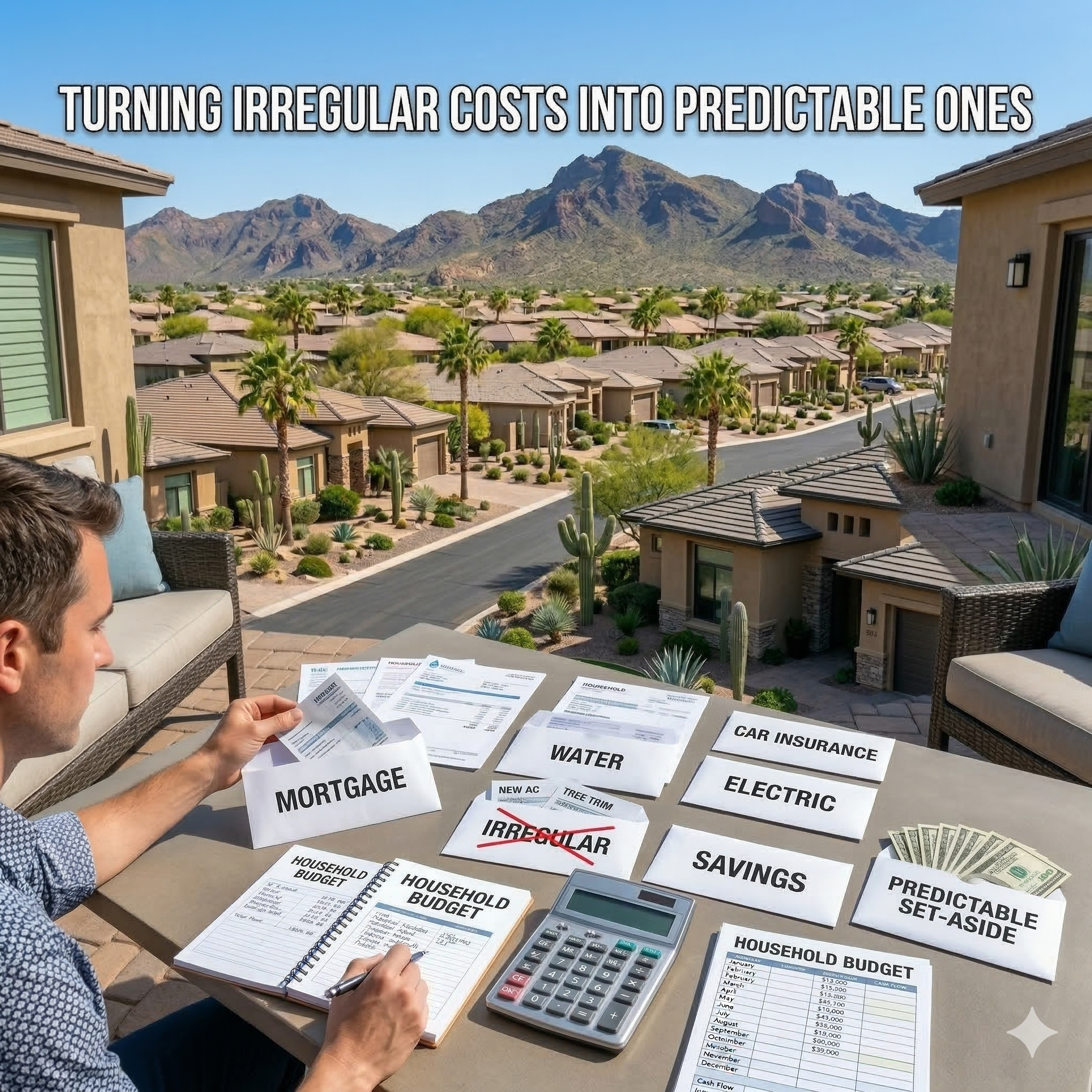
Turning Irregular Costs Into Predictable Ones
-

Budgeting for Ongoing Ownership
-

Repair vs Replace vs Defer Decisions
-

Planning Homeownership Like a Long-Term Asset
-

What Home Expenses You Can Safely Delay
-

Stopping Cost Creep Early
-

Cash Flow vs Net Worth Stress
-

Why “It’s Not That Much” Adds Up
-

Warning Signs Your Ownership Budget Is Tightening
-

The Cumulative Cost of Small Home Repairs
-

Designing Budgets Around Local Conditions
-

Utility Costs Over Time in Desert Climates
-

Insurance Increases Explained for Arizona Homeowners
-

How Inflation Impacts Phoenix Homeownership Costs
-

Avoiding Debt-Driven Homeownership Decisions
-

Replacing Systems on Your Timeline
-

Why Emergency Repairs Cost More
-

Timing Major Expenses Without Financial Shock
-

How Much to Keep in a Phoenix Home Reserve Fund