


Mesa Lifestyle Guide → [Mesa Lifestyle Guide] & For more info on Mesa Real Estate → [Mesa Real Estate Guide]
Written by: Renee Burke
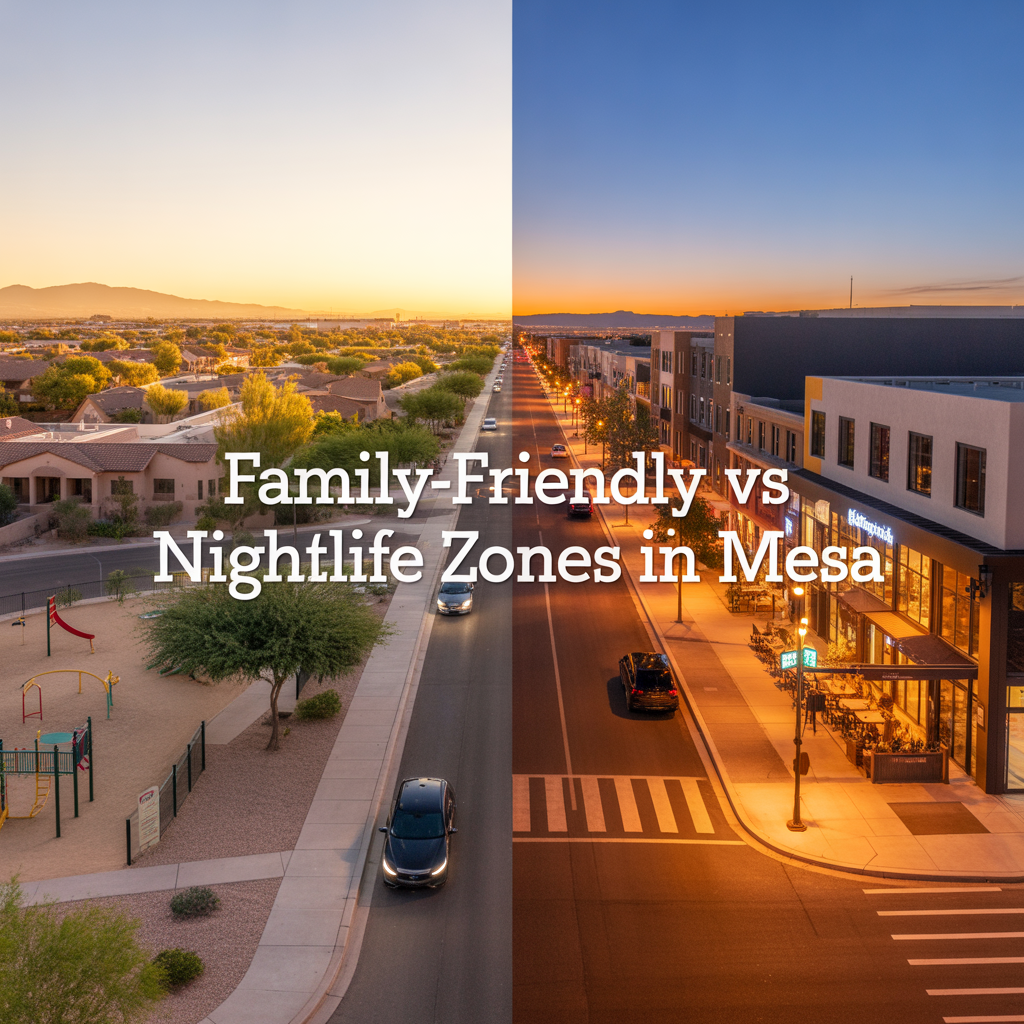
Mesa beautifully balances pockets where kids rule the day with swings and sprinklers, and others where adults unwind under string lights long after bedtime. I’ve walked families through both during home searches, watching them light up at neighborhoods that match their stage of life — from playground mornings to brewery evenings. As your East Valley guide, I know these zones shape not just daily rhythms, but how your home holds its charm over time.
Neither is “better” — it’s about fit. Let’s gently unpack the tradeoffs, so you can picture your family thriving here, whether chasing sunsets with little ones or savoring a quiet nightcap.
Family-Friendly Zones: Nurturing Everyday Joy
Eastmark stands as Mesa’s gold standard for family life — a master-planned haven where parks, lakes, and the Glasshouse anchor community events like summer concerts and farmers markets. Homes here, from $500K townhomes to $800K singles, cluster around BASIS charter and top district elementaries, with playgrounds every few blocks. Mornings buzz with bike rides to Audien Park, evenings wind down by 9 p.m. with fireflies and bedtime stories.
Las Sendas and Red Mountain Ranch offer a more serene escape in northeast Mesa, gated with mountain trails and golf courses that double as family outings. Think $550K-$900K estates overlooking the Superstitions, feeding into Zaharis Elementary or Pathfinder Academy. These spots prioritize quiet streets, HOAs with playgrounds, and views that soothe after school runs — perfect for parents craving nature without noise.
Superstition Springs and Dobson Ranch blend affordability ($400K-$600K) with convenience: neighborhood pools, Skyline High feeder paths, and malls for quick family outings. The Groves adds tree-lined charm near Meridian schools, where block parties feel like extended family. These zones hum until 10 p.m., then settle into cricket choruses — safe, walkable, and rooted in the continuity families cherish.
Nightlife Zones: Evening Energy Without Excess
Downtown Main Street owns the after-dark crown, pulsing from 5 p.m. to 2 a.m. with Cider Corps brews, Level 1 Arcade’s games, and Cake Nightclub’s DJ beats. Condos and lofts ($300K-$500K) perch above patios, steps from Espiritu’s fire-grilled specials or Alchemy 48 cocktails. It’s vibrant for young couples or empty-nesters — live music at the Amphitheatre, bar hops to The Little Pickle — but quiets by dawn, respecting nearby residents.
Fiesta District simmers south of downtown with a cultural edge: Tacos Chiwas until 1 a.m., Phantom Labs hazy IPAs, and mariachi under papel picado. Smaller homes ($350K-$550K) draw diverse crowds for late-night mofongo at Que Chevere, blending into warehouse vibes without overwhelming volume.
East Mesa’s Superstition edges and Legacy pockets glow steadily — Roosters Country Bar line-dancing to 2 a.m., The Trough’s DJ nights, Whiskey Wednesdays sports screens. Townhomes near Apache Trail ($400K range) suit social butterflies who want energy nearby, not next door.
Tradeoffs: Lifestyle, Noise, and Value
Family zones trade buzz for peace — Eastmark’s events end early, HOAs curb parties, and schools boost resale (5-8% annual appreciation). But nightlife feels a drive away, and density means shared walls in newer builds. Concerns like “too suburban”? Not here — trails to Usery or Eastmark’s markets keep it lively by day.
Nightlife areas flip it: spontaneous evenings elevate joy, walkability cuts car reliance, and urban lofts hold value for quick flips. Drawbacks? Bass thumps until midnight (earplugs help), higher turnover, and less kid-centric amenities — though downtown’s mornings are playground-quiet. Families worry about safety; these spots invest in lights, patrols, and events that foster community, not chaos.
Cost reflects it: family enclaves command premiums for schools and stability, nightlife zones offer entry points with rental upside. Hybrids like Superstition Springs bridge both — mall shops by day, bars by night — ideal for growing households.
How Zones Shape Daily Life and Homes
In family havens like Las Sendas, days orbit soccer fields and PTA coffees, syncing with Red Mountain High games. Homes appreciate steadily, drawing long-term buyers who value feeders over flash. Nightlife pockets weave workweeks into happy hours — a quick Cider Corps pour after Fiesta District errands — boosting social ties that make resale vibrant.
Mesa’s size lets you blend: live in family Eastmark, hit downtown 15 minutes away. Empty-nesters downsize to Fiesta lofts post-kids, keeping trails accessible. Real estate wisdom? Family zones suit 5-10 year holds; nightlife energizes flips or rentals amid revitalization.
Addressing Fears and Misconceptions
“Is nightlife rowdy?” Not like Scottsdale — Mesa’s tame, neighborly, with 10 p.m. cutoffs in residential overlaps. Families fear “no fun,” but Eastmark’s Glasshouse rivals bars with mocktails and bands. Night owls dismiss suburbs as sleepy; Red Mountain Ranch’s sunset patios prove otherwise. Growth balances it — 2026 expansions add family breweries without eroding quiet cores.
Visit evenings: families picnic downtown pre-shows, nightlife winds respectfully. It’s flexible Arizona living — your zone evolves with you.
Finding Your Family’s Fit
Mesa shines because family zones nurture roots while nightlife sparks connection — often minutes apart. Eastmark for playground sunrises, Main Street for starlit toasts: both weave into the East Valley tapestry that holds homes dear.
If you’re weighing a Mesa move between kid-friendly calm and evening hum, you don’t have to figure it out alone. I’ve matched dozens of families to zones that feel like home, blending lifestyle with lasting value.
Reach out anytime — let’s explore what balance looks like for you. Here in the East Valley, every neighborhood welcomes you home, just as you are.
Get the full Phoenix Market Insights → [Market Insights]


-

Designing Outdoor Living Spaces for Phoenix’s Unique Climate
-

How Pools and Shade Structures Change Backyard Living in Phoenix
-

Why Covered Patios Are One of the Most Valuable Features of Phoenix Homes
-

How Phoenix Homeowners Transform Their Outdoor Living Spaces Over Time
-
Ways Phoenix Homeowners Improve Indoor Comfort Over Time
-

How Long Cooling Seasons Influence Phoenix Home Design
-

How Phoenix Summer Heat Changes Daily Life Inside the Home
-

How Long-Term Homeowners Adjust Layouts to Fit Changing Needs
-

Converting Spare Bedrooms Into Home Offices in Phoenix Homes
-

How Life Stage Changes Affect the Way Phoenix Homes Are Used
-

When Homeowners Start Rethinking Space Inside Their Phoenix Home
-
How Phoenix Homes Adapt to Growing Families Over Time
-

How Local Parks, Restaurants, and Shops Shape Life in Phoenix Neighborhoods
-

Why Long-Term Residents Experience Neighborhoods Differently Than New Buyers
-

How Phoenix Communities Shape Everyday Life for Local Residents
-
Why Neighborhood Familiarity Improves Long-Term Home Satisfaction
-
How Living in a Phoenix Neighborhood Changes After Several Years
-
Why Desert Climate Living Changes Homeownership Expectations
-
Common Home Improvements That Make Phoenix Homes More Comfortable
-

How Extreme Summer Heat Changes the Way Phoenix Homes Are Used
-

Why Shade Structures and Covered Patios Matter for Phoenix Homes
-

Cost of Living in Phoenix: Housing, Utilities, and Everyday Expenses
-

The Best Neighborhoods in Phoenix for Lifestyle, Schools, and Value
-

Homes for Sale in Phoenix Under $650K: Where Buyers Are Still Finding Deals
-

Phoenix Housing Market Forecast: Will Home Prices Rise or Fall?