


Mesa Lifestyle Guide → [Mesa Lifestyle Guide] & For more info on Mesa Real Estate → [Mesa Real Estate Guide]
Written by: Renee Burke
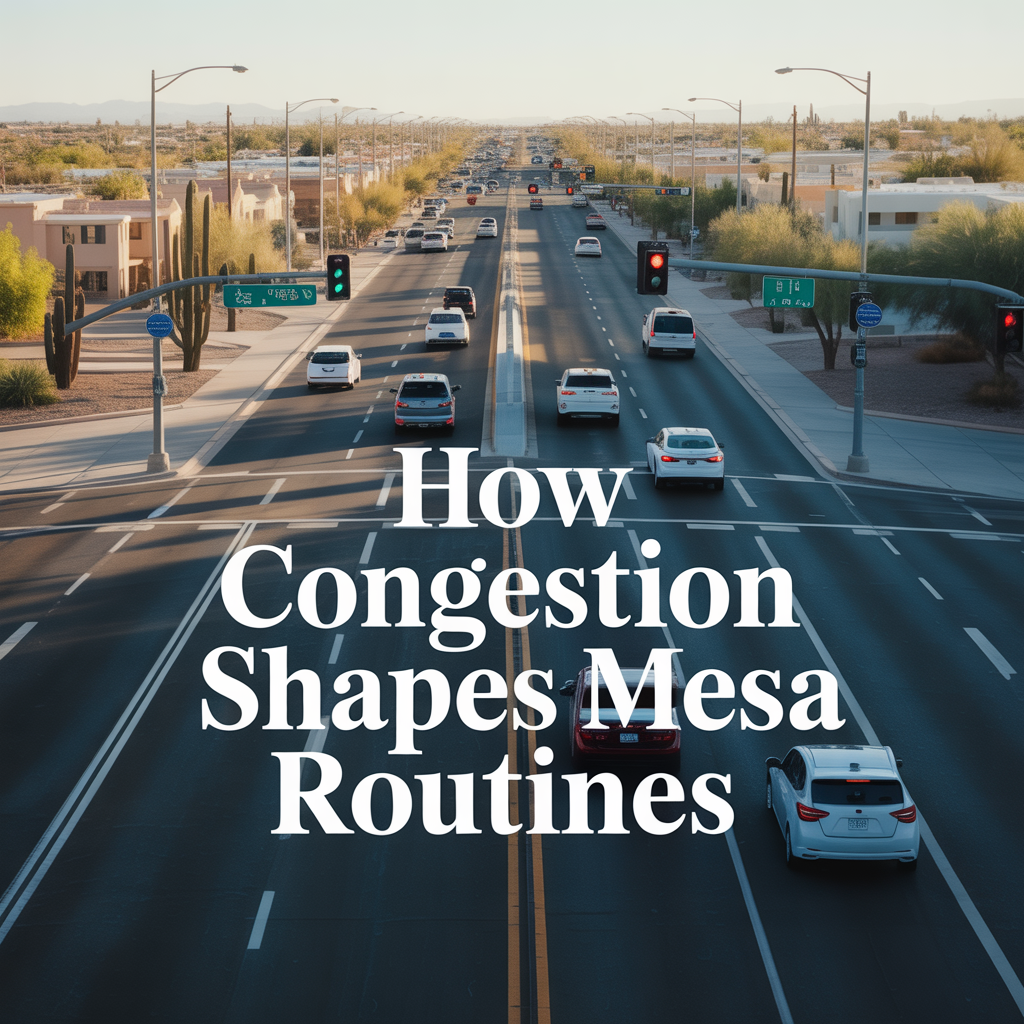
Living in Mesa means learning to dance with traffic — those predictable waves of brake lights and green stretches that nudge your daily rhythm just enough to keep you thoughtful about your moves. I’ve watched families adjust their school runs, coffee grabs, and park picnics around these flows over years of home tours and neighborhood chats, turning what could be frustration into a kind of quiet routine that feels like part of East Valley life. As someone who navigates these roads every day — from Power Road school shuttles to Main Street evening strolls — I know congestion doesn’t just slow cars; it shapes how we plan mornings, evenings, and everything in between, often for the better if you know the patterns.
Mesa’s congestion isn’t chaotic like downtown Phoenix gridlock; it’s steady and neighborhood-specific, influenced by our growth from Eastmark expansions to Loop 202 widenings. With average delays around 33% during peaks (dropping from last year’s highs), it creates gentle pressure points that encourage smarter habits — carpool clusters, trail walks over drives, and that satisfying feeling when you beat the rush. Let’s walk through how these patterns weave into daily life across key areas, without any jargon, just the real flow families live.
Morning School and Work Waves
Mesa mornings hum around 6:30-8:30 a.m., when school feeders and westbound Phoenix commutes collide, reshaping the start of your day. In Dobson Ranch and Superstition Springs, parents leaving Brisas or Meridian elementaries for US-60 westbound workplaces feel the first squeeze at Alma School Road ramps — a 10-mile stretch that can stretch to 25 minutes as Riverview Park joggers merge in. Families adapt by shifting drop-offs to 6:45 a.m., grabbing coffee at nearby Kneaders Bakery on the way home, turning potential stress into a peaceful solo drive with podcasts.
Eastmark parents face Power Road northbound thickening toward Loop 202, where BASIS charter buses and early airport shifts add volume. The smart rhythm here? Pre-7 a.m. Audain Great Park walks with the dog, then school runs via quieter Ellsworth Road, leaving mornings free for Glasshouse market breakfasts by 9 a.m. Congestion nudges these families toward walkable loops — strollers to Newton Park playgrounds instead of driving two blocks — building neighbor chats that last all week.
Northeast in Las Sendas and Red Mountain Ranch, Ellsworth south to US-60 feels the pull of hospital shifts at Banner Gateway, but reverse commuters heading east to Gateway Airport glide smoothly. Routines evolve to dawn Usery Mountain trailheads at 6 a.m., school via Signal Butte (pre-clog), then home for focused remote work by 8:30. Congestion here teaches patience for Apache Trail backups, rewarding with mountain views during the wait.
Downtown and Fiesta families weave Main Street grids, where 7:30 a.m. releases from Taylor Junior High spill onto University Drive. The fix? Horne Avenue coffee at Cartel Roasting pre-drop-off, Porter Park playground pitstops post-pickup — congestion clusters playdates naturally, turning waits into community glue.
Midday Shopping and Lunch Lulls
By 10 a.m.-2 p.m., congestion eases into a golden window for errands, letting Mesa’s hubs breathe. Superstition Springs Center buzzes lightly — Trader Joe’s produce runs via Dobson Road flow without hassle, unlike afternoon shopper piles. Families stack midday: Sprouts organics, Target diapers, then Riverview Park lunches under shaded ramadas, all under 15 minutes door-to-door.
Eastmark’s self-contained bliss shines — Power Road quiets for Fry’s bulk buys, Postino panini grabs, Newton Park popsicles. Congestion’s midday gift? Encouraging these tight loops, where kids nap in the car while you sip iced tea at the Glasshouse, fostering that “village” feel without spreading thin.
Northeast routines favor Bashas’ on Signal Butte for midday proteins, Red Mountain Park fields for casual kickball lunches — Apache Trail’s lunch lull makes it feel like a country drive. Downtown? Fiesta’s Green Corner falafel pairs with Mesa Arts Center library books, Main Street’s calm letting you linger over second coffees.
Congestion shapes these hours positively — no rush means thoughtful shopping, park picnics becoming weekly anchors that build family memories.
Afternoon Pickup and Activity Crunch
The 3-6 p.m. eastbound return wave reshapes afternoons most noticeably, as Skyline High and Fremont Junior High releases flood Stapley and Higley Roads. Dobson Ranch sees Alma School eastbound crawl with Riverview soccer traffic, nudging parents to 2:45 p.m. pickups via quieter Southern Avenue, straight to Countryside Park fields for practice cheers. Waits turn into carpool coffees at nearby Dutch Bros, bonding PTA friends.
Eastmark’s Power Road north thickens post-BASIS, but families counter with 3:15 p.m. walks to Curie Park water features, dodging drives entirely. Las Sendas loops Ellsworth south pre-4 p.m., hitting Zaharis then Phantom Labs growlers — congestion clusters evening brewery chats, where neighbors swap trail tips.
Downtown Fiesta pulses with Main Street post-school, but Porter Park playgrounds absorb the energy — parents claim shaded swings early, turning pickup delays into playdates. Across Mesa, this wave encourages activity bundling: school-to-park-to-dinner, saving an hour weekly while strengthening community ties.
Evening Wind-Down and Dinner Flows
Post-6 p.m., roads exhale, opening evenings for Mesa magic. US-60 clears for Dobson date nights at O’Kelley’s, Power Road glides Eastmark families to Glasshouse markets. Northeast Apache Trail dusks beautifully to Red Mountain Ranch grills, Usery stargazing unhurried.
Congestion’s evening gift? Pushing dinners homeward — carnitas in Eastmark backyards over restaurant waits, Main Street strolls from lofts to Tacos Chiwas without lines. Families reclaim time for fire pits, block parties, fostering roots that outlast traffic apps.
How Congestion Builds Better Routines
Mesa’s 33% average congestion (peaking 73% at 7 a.m.) steals 17 hours yearly but gifts intentionality — pre-peak walks, clustered errands, carpool kinships. West Mesa (Dobson) thrives on urban pulse; east (Eastmark) on walkable calm. Construction like Ellsworth widening (2027 complete) and SR 24 expansions promise relief, but current patterns teach flexibility: AZ511 apps, Meridian alternates, Valley Metro Rail hops.
| Time Slot | Congestion Shape | Routine Adaptation | Neighborhood Win |
|---|---|---|---|
| Morning | Westbound US-60 peaks | Early drop-offs, trail walks | Eastmark walkability |
| Midday | Lull for errands | Park picnics, market lunches | Superstition hubs |
| Afternoon | Eastbound school waves | Early pickups, playgrounds | Dobson carpool ease |
| Evening | Clearing for unwinds | Home dinners, brewery glides | Las Sendas sunsets |
Safety stays high — lit paths, patrols — summers shift to dawn/dusk. Resale favors low-congestion pockets; test drives reveal rhythms.
Misconceptions fade: congestion isn’t “bad” here; it’s the nudge toward trails over freeways, neighbors over isolation. Families bloom adapting — school moms meet at Dutch Bros, Eastmark blocks bond at popsicles.
Seasonal and Growth Nuances
Summers lighten loads with school breaks — Riverview tubing flows freely. Monsoons test Apache but clear to rainbows. 2026 Loop 202/SR 24 projects ripple short-term but promise long-haul ease, tying routines to rising values.
Embracing Mesas Flow
Congestion shapes Mesa routines into thoughtful tapestries — peaks pushing park time, lulls gifting presence, all deepening East Valley roots.
If youre discovering how Mesas traffic weaves into your day — school loops, dinner drives, park peace — you dont have to figure it out alone. Ive walked these roads with families like yours, matching homes to flows that feel right.
Reach out anytime — lets map your gentle rhythm. Here, even red lights lead to richer living.
Get the full Phoenix Market Insights → [Market Insights]


-

How the Phoenix Desert Climate Shapes Everyday Life Inside the Home
-

How Phoenix Weather Patterns Shape Everyday Home Routines
-

Why Homes Often Feel More Comfortable After the First Year of Ownership
-

How Living in Phoenix Changes the Way Homeowners Use Their Homes
-

What New Phoenix Homeowners Learn During Their First Year of Ownership
-

How Daily Life Changes After the First Year of Living in a Phoenix Home
-

Turning Irregular Costs Into Predictable Ones
-

Budgeting for Ongoing Ownership
-

Repair vs Replace vs Defer Decisions
-

Planning Homeownership Like a Long-Term Asset
-

What Home Expenses You Can Safely Delay
-

Stopping Cost Creep Early
-

Cash Flow vs Net Worth Stress
-

Why “It’s Not That Much” Adds Up
-

Warning Signs Your Ownership Budget Is Tightening
-

The Cumulative Cost of Small Home Repairs
-

Designing Budgets Around Local Conditions
-
Utility Costs Over Time in Desert Climates
-

Insurance Increases Explained for Arizona Homeowners
-

How Inflation Impacts Phoenix Homeownership Costs
-

Avoiding Debt-Driven Homeownership Decisions
-

Replacing Systems on Your Timeline
-

Why Emergency Repairs Cost More
-

Timing Major Expenses Without Financial Shock
-

How Much to Keep in a Phoenix Home Reserve Fund