



Mesa Lifestyle Guide → [Mesa Lifestyle Guide] & For more info on Mesa Real Estate → [Mesa Real Estate Guide]
Written by: Renee Burke
Living in the East Valley, you know Mesa’s market has a rhythm all its own—steady, resilient, and shaped by our desert pace. If you’re wondering how long it might take for your home to sell here, the answer isn’t a single number but a range that depends on preparation, pricing, and the time of year. Let me walk you through what you can realistically expect, based on how our local market truly moves.
Current Market Snapshot
Right now, in early 2026, homes in Mesa are typically spending about 60-70 days on the market from list date to close of escrow. That’s a bit longer than the ultra-tight frenzy we saw a few years back, but it’s still a competitive pace—especially for well-priced properties in desirable pockets like Eastmark, Red Mountain Ranch, or near the Superstition Freeway.
In January 2026, the average days on market (DOM) hit around 31 days for actively selling homes, speeding up to pending offers. By December 2025, Redfin data showed homes averaging 62 days to sale, up slightly from 53 days the year before, with 457 homes sold that month alone. This reflects a market that’s balanced—not overheated, not stalled—giving sellers room to breathe while attracting serious buyers.
Seasonal Influences on Sell Times
Mesa’s weather and lifestyle create predictable ebbs and flows in how quickly homes move.
- Spring (February-April): Often the fastest, with DOM dropping to 30-50 days. Snowbirds extend stays, locals upgrade before school starts, and curb appeal pops with milder temps. Homes here fly if staged right.
- Summer (May-August): Expect 65-80 days. Heat slows in-person showings, but online searches stay strong. Families buying for school-year moves push serious offers; energy-efficient homes (solar, new AC) close quickest.
- Fall (September-October): Around 55-70 days. Steady local demand from job relocations near Banner Health or Intel. Less competition means your home stands out.
- Winter (November-January): 50-65 days, sometimes faster for motivated buyers. Holiday pauses happen, but December shoppers—often relocators—move decisively with fewer listings.
Across the Phoenix-Mesa-Scottsdale area, median DOM hovered around 60-70 days late 2025, per FRED data, with Mesa mirroring that closely.
Factors That Speed Up or Slow Down Your Sale
No two homes are alike, and Mesa’s diverse buyer pool—families, retirees, tech professionals—means your timeline hinges on a few key elements.
Well-prepped homes consistently sell in half the average time. If yours has updates like foam insulation or a backyard oasis, expect quicker traction year-round.
Lifestyle Realities for Mesa Sellers
Selling here isn’t just numbers—it’s about aligning with life in the Valley. Families time moves around Apache Trail schools or Skyline Ranch; retirees eye golf-course communities like Las Palmas. A 60-day timeline gives space for inspections without rushing escrow.
Common worry: “Will summer heat kill my sale?” Not if you lean into virtual tours and evening open houses—buyers adapt, especially those relocating from colder states. Another misconception: “Longer DOM means trouble.” In Mesa’s steady growth (median prices ~$425K-$473K), it often signals picky pricing, not weak demand.
Making Your Timeline Work for You
Track your progress weekly: Week 1-2 for showings, 3-4 for offers, 30-45 to pending, then 15-30 more to close. Pre-inspect plumbing and roof—our monsoon history makes buyers cautious. Price aggressively but realistically, and you’ll likely beat the 62-day average.
In Mesa, patience pays without dragging on. Our market rewards intention over haste.
Let’s Personalize Your Timeline
Every Mesa home has its own story, and I’ve helped dozens navigate these timelines right here in the East Valley. Whether you’re upsizing near the Mesa Arts Center or downsizing to a lock-and-leave villa, the right strategy shortens the wait without stress.
If you’re curious how your home might perform—or ready to map out next steps—you don’t have to figure it out alone. Reach out; I’ll walk you through the details tailored to your neighborhood and goals.
If you’re thinking about making a move in Mesa—or anywhere in the Phoenix area—you don’t have to figure it out alone. I’m here when you’re ready to start that conversation.
Get the full Phoenix Market Insights → [Market Insights]


-

How the Phoenix Desert Climate Shapes Everyday Life Inside the Home
-

How Phoenix Weather Patterns Shape Everyday Home Routines
-

Why Homes Often Feel More Comfortable After the First Year of Ownership
-

How Living in Phoenix Changes the Way Homeowners Use Their Homes
-

What New Phoenix Homeowners Learn During Their First Year of Ownership
-

How Daily Life Changes After the First Year of Living in a Phoenix Home
-
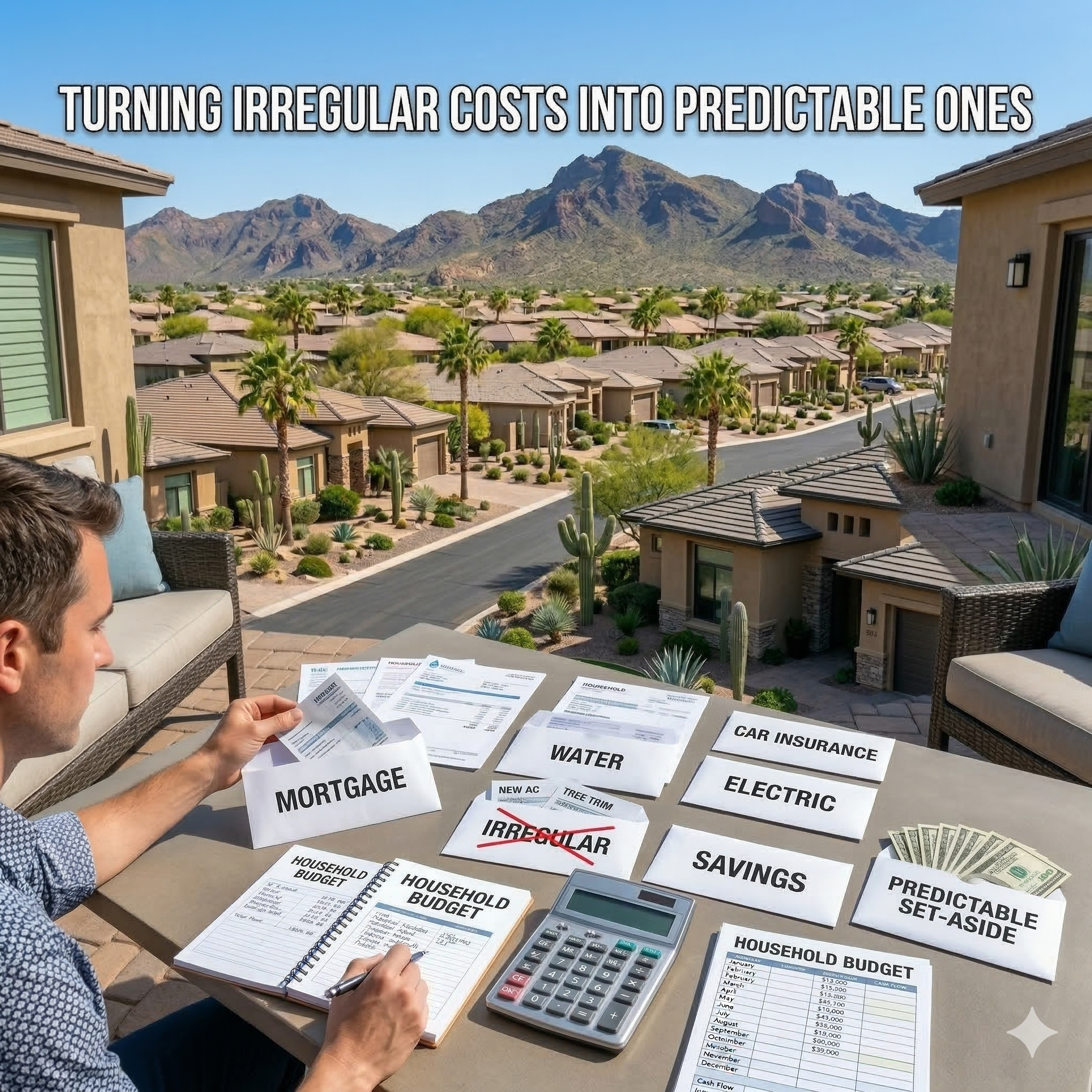
Turning Irregular Costs Into Predictable Ones
-

Budgeting for Ongoing Ownership
-

Repair vs Replace vs Defer Decisions
-

Planning Homeownership Like a Long-Term Asset
-

What Home Expenses You Can Safely Delay
-

Stopping Cost Creep Early
-

Cash Flow vs Net Worth Stress
-

Why “It’s Not That Much” Adds Up
-

Warning Signs Your Ownership Budget Is Tightening
-

The Cumulative Cost of Small Home Repairs
-

Designing Budgets Around Local Conditions
-
Utility Costs Over Time in Desert Climates
-

Insurance Increases Explained for Arizona Homeowners
-

How Inflation Impacts Phoenix Homeownership Costs
-

Avoiding Debt-Driven Homeownership Decisions
-

Replacing Systems on Your Timeline
-

Why Emergency Repairs Cost More
-

Timing Major Expenses Without Financial Shock
-

How Much to Keep in a Phoenix Home Reserve Fund