


Mesa Lifestyle Guide → [Mesa Lifestyle Guide] & For more info on Mesa Real Estate → [Mesa Real Estate Guide]
Written by: Renee Burke
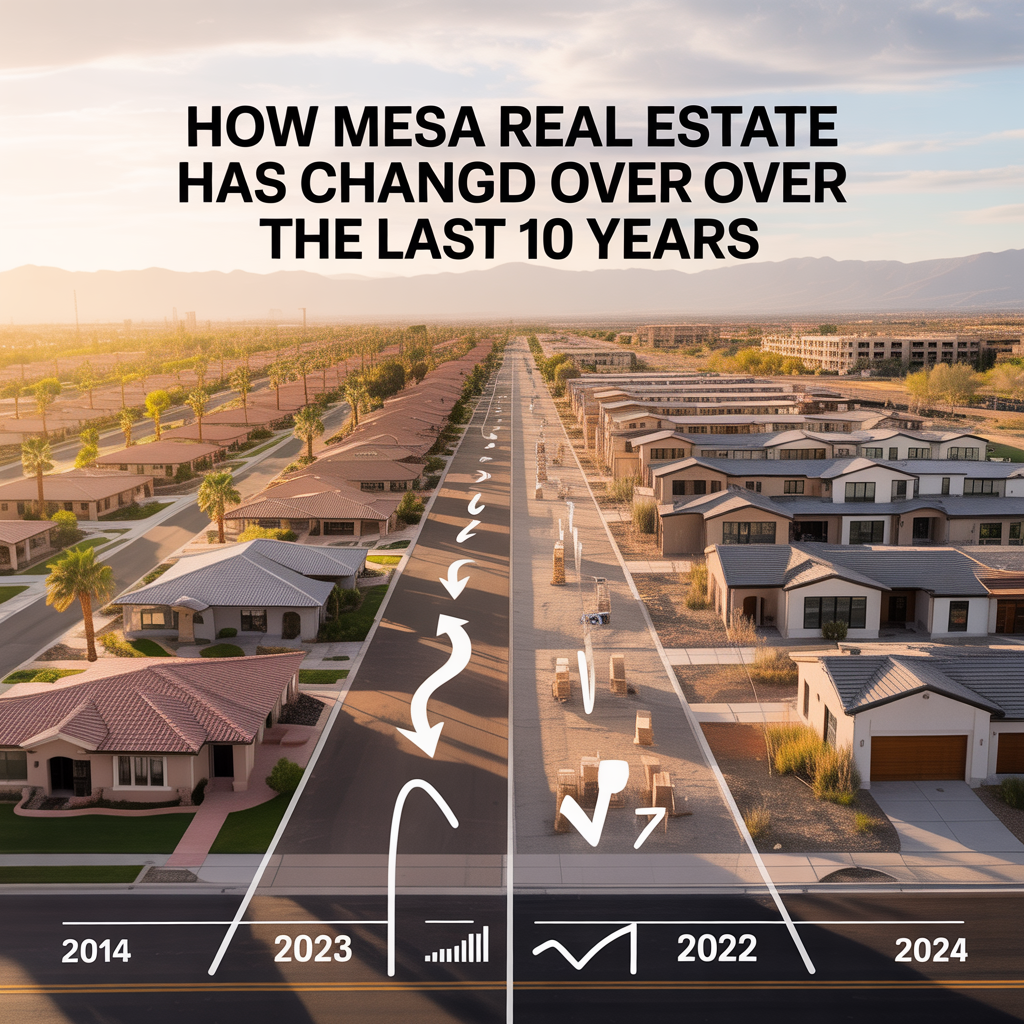
Over the past decade, I’ve watched Mesa transform from a sleepy East Valley hub into one of the Phoenix metro’s most dynamic players. What started as steady, affordable growth around 2016 has evolved through pandemic frenzy, rate hikes, and now a balanced market that feels more sustainable than ever. Buyers today have options their 2016 counterparts could only dream of, but the city’s core appeal—sun, space, and jobs—has only strengthened.
It’s a story of evolution, not revolution, and understanding it helps you see why Mesa remains a smart place to plant roots.
Price Growth: From Affordable to Aspirational
Back in 2016, the median home price in Mesa hovered around $229,000 for single-family detached homes—a steal for ranch-style gems in Dobson Ranch or west Mesa. Families could snag spacious lots near downtown for under $250,000, with annual appreciation at a healthy 8.5% that year. Fast forward to early 2026, and medians sit at $445,000–$473,000, reflecting roughly 7–8% compounded growth over the decade.
The surge peaked 2020–2022, when low rates and remote work drove prices up 40–50% in some spots, pushing eastside new builds like Eastmark past $500,000. But cooling hit by 2025: values dipped 1.8–3.3% year-over-year as inventory rose, settling now at a more breathable pace. Older neighborhoods like Lehi held steady with larger-acreage value, while southeast growth corridors saw the biggest jumps due to tech and airport expansion.
This trajectory doubled wealth for long-term holders, turning modest investments into six-figure equity—without the coastal volatility.
Inventory and Pace: Frenzy to Balance
Ten years ago, Mesa was a seller’s dream: tight supply, quick sales under 30 days, bidding wars rare but fierce. By 2020, it was frenzy mode—median days on market dropped to 16, inventory shrank to one month’s supply, and cash offers ruled.
Today, it’s flipped to neutral: 3–3.5 months’ supply, homes lingering 49–62 days, and 40% of listings seeing price cuts. Buyers negotiate again—no more waiving inspections. New construction boomed post-2022, adding 10–15% more units yearly in Mulberry and Gateway areas, easing pressure while older west Mesa revitalized with flips.
This shift favors families and investors, creating breathing room absent a decade back.
Neighborhood Shifts: West Revitalizes, East Expands
Older sections west of Stapley—once undervalued—gentrified beautifully. Dobson Ranch and central Mesa traded fixer-uppers for modernized ranches, drawing millennials with walkable vibes and light rail access. Values here climbed 100–150%, fueled by downtown Mesa’s arts boom and proximity to US-60.
East Mesa exploded: Eastmark and Cadence went from farmland to master-planned havens, with prices tripling on family amenities and top schools. Underrated gems like Desert Uplands and Red Mountain Ranch gained luxury traction, blending golf views with Loop 202 ease. Lehi preserved rural charm amid sprawl, becoming a horse-property haven.
The divide sharpened: west for value/character, east for polish/growth—mirroring our prior chats on older vs. newer.
Rental Market: From Steady to High-Yield
Rentals mirrored sales: 2016 averages around $1,200/month grew to $2,500–$4,000 by 2026, with vacancy under 5%. Pandemic migration spiked demand for eastside family homes, yielding 4–6% returns. Now, balanced supply tempers rents, but job hubs (Meta data center, airport) ensure long-term tenants.
Investors pivoted from flips to holds, capitalizing on tax stability (0.49% effective rate) and appreciation.
Driving Forces Behind the Change
Population swelled 15–20%, chasing 300 sunny days and jobs in logistics, healthcare, and tech. Infrastructure like Loop 202 expansions cut Phoenix commutes, while parks (Usery, Red Mountain) locked in lifestyle appeal. Higher rates post-2022 cooled speculation, weeding out weak hands and rewarding patient owners.
Challenges emerged: HOAs proliferated eastside (adding $100–300/month costs), heat drove AC upgrades, and water debates nudged efficient builds. Yet, Arizona’s tax caps and senior relief kept ownership affordable.
| Era | Median Price | Days on Market | Inventory | Key Driver |
|---|---|---|---|---|
| 2016 | $229K | <30 | Tight | Steady growth |
| 2020–2022 | $350K–$450K | 16 | 1 mo | Pandemic boom |
| 2025–2026 | $445K–$473K | 49–62 | 3–3.5 mo | Balance returns |
What It Means for Today’s Buyers
The decade proves Mesa’s resilience: from undervalued suburb to balanced powerhouse. Early adopters won big on appreciation; now, buyers snag deals in a market kinder than 2022’s chaos. Long-term? Job growth and limited land signal 3–6% annual rises, favoring holds in mixed portfolios—west for income, east for upside.
Misconceptions linger: “Too hot now” ignores cooling relief; “Overbuilt east” overlooks demand. Ownership costs rose modestly (taxes steady, utils efficient), but equity potential endures.
Your Place in Mesa’s Story
Mesa’s changes reflect thoughtful growth—a city maturing without losing soul. From 2016 bargains to 2026 stability, it’s built lasting value for those who stay the course.
If you’re thinking about making a move in Mesa, you don’t have to figure it out alone. Let’s trace your timeline—past lessons for your future home—and uncover how this evolution fits your dreams. I’m here as your East Valley guide, ready to make your chapter feel just right.
Get the full Phoenix Market Insights → [Market Insights]


-

Pool Liability and Insurance in Phoenix
-

Protecting Outdoor Structures and Shade Systems
-

HVAC Failures and Insurance Coverage
-

Roof Maintenance for Phoenix Climate Conditions
-

Preventing Water Damage in Desert Landscapes
-

How Monsoon Storms Affect Phoenix Homes
-

Why Policy Structure Matters More Than Premium
-

Understanding Coverage Limits and Exclusions
-

What Personal Property Coverage Actually Includes
-

How Liability Coverage Protects Homeowners
-

Replacement Cost vs Market Value in Phoenix Insurance
-

Understanding Deductibles Before You Need Them
-

How Renovations Affect Insurance Coverage
-

When to Review Your Home Insurance Policy
-

Why Replacement Cost Matters in Phoenix Insurance Policies
-

When a House Truly Starts to Feel Like Home
-

How Phoenix Neighborhood Living Builds a Sense of Belonging
-

Why Stability Plays a Major Role in Long-Term Home Satisfaction
-

How Familiarity Changes the Experience of Living in a Home
-

Renovate or Move? Deciding What to Do When Your Phoenix Home No Longer Fits
-
How Lifestyle Changes Affect Space Needs in Phoenix Homes
-
Why Some Phoenix Homes Begin to Feel Too Large After Children Move Out
-
When Homeowners Begin Considering Moving to a Larger Phoenix Home
-

Signs Your Phoenix Home Is Starting to Feel Too Small for Your Family
-

How Desert Landscaping Evolves Over Years of Phoenix Homeownership