


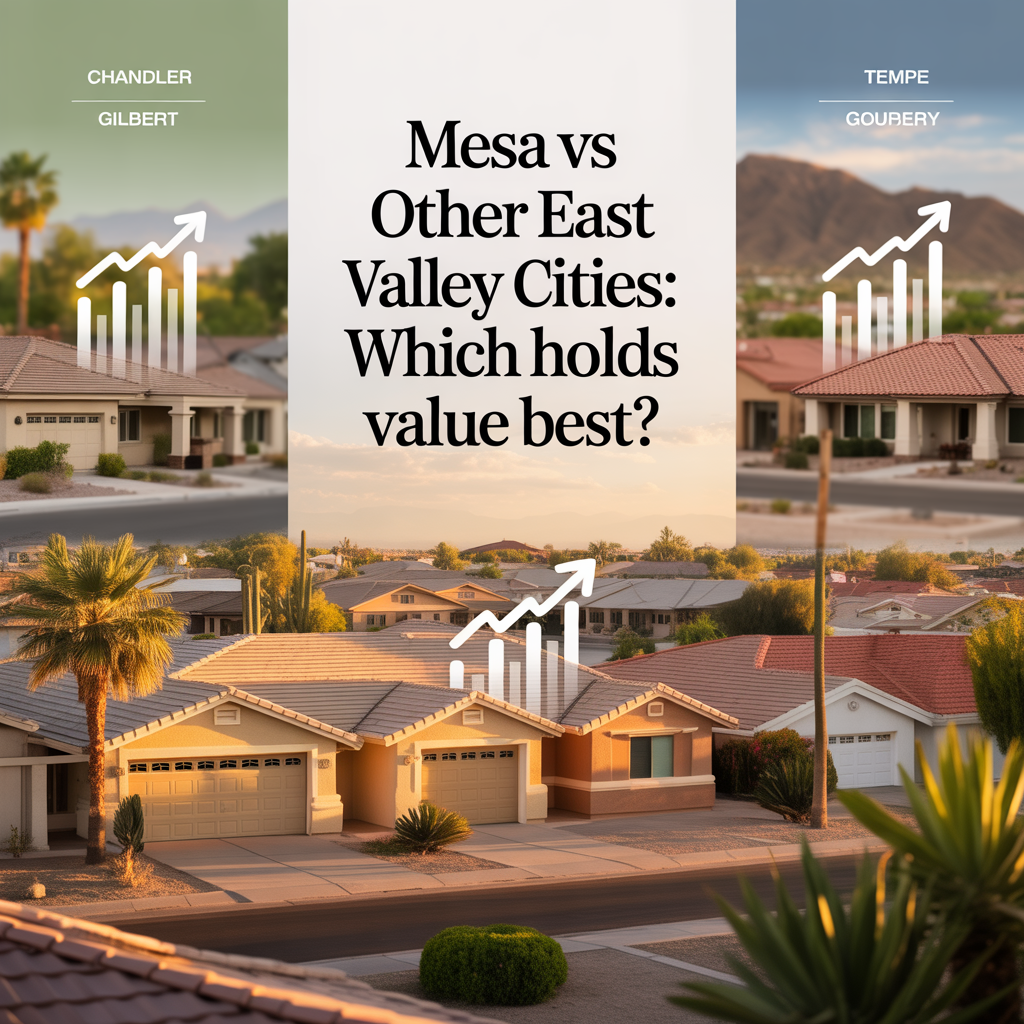
Mesa Lifestyle Guide → [Mesa Lifestyle Guide] & For more info on Mesa Real Estate → [Mesa Real Estate Guide]
Written by: Renee Burke
Mesa doesn’t always grab the headlines like its East Valley neighbors, but when it comes to holding value over time, it has a quiet edge that I’ve seen play out time and again. While Gilbert polishes its family-perfect image, Chandler leans on corporate jobs, and Queen Creek races toward the horizon, Mesa offers a balanced mix of affordability, central access, and steady demand that keeps equity building without the drama. It’s the kind of reliability that lets you focus on life, not market swings.
Let’s break it down thoughtfully, building on our chats about Mesa’s evolution, underrated neighborhoods, and investment strength.
Price Stability and Appreciation Track Record
Mesa’s medians hover around $445,000–$473,000, with recent 2–3% growth settling into a projected 3–6% annually—resilient without overheating. Over the last decade, it’s delivered 7–8% compounded returns, turning 2016 buys under $230,000 into today’s solid equity. Westside revitalization in spots like Dobson Ranch cushions dips, while eastside like Eastmark captures upside.
Gilbert’s $550,000+ prices promise similar 3–5% gains but demand perfection—tight inventory leaves less room for error. Chandler’s $500,000 average holds 4–5% via Intel stability, yet it’s tethered to employment cycles. Queen Creek’s $575,000 peak cooled 2–4% amid new-build floods, risking overextension for long holds.
Mesa shines in value retention: lower entry points and diverse demand mean smoother rides through rate hikes or slowdowns.
Inventory Dynamics and Buyer Leverage
Mesa’s 3–3.5 months’ supply and 50–60 days on market create breathing room—buyers negotiate without frenzy, unlike Gilbert’s brisker 40 days. Chandler matches at 3 months, but Mesa’s light rail and Loop 202 draw wider pools, stabilizing volume. Queen Creek’s 4+ months signals caution for resale pressure.
This balance preserved value post-2022 boom (40% jumps) and 2025 softening (-1–3%). No wild oversupply here—just measured growth.
Rental Strength and Cash Flow Reliability
Yields of 4–6% in Lehi or Red Mountain Ranch make Mesa a rental standout—$2,500–$4,000 rents cover costs amid low 5% vacancies. Gilbert’s 4–5% comes at higher premiums, Chandler’s 5% suits pros but HOA fees bite ($200+/month). Queen Creek’s 3–5% bets on growth over income.
Mesa’s underrated gems like Desert Uplands or Mulberry blend family appeal with Gateway jobs, ensuring tenants stay.
Lifestyle Anchors and Demand Drivers
Mesa’s mix—downtown arts, Usery hikes, central vibe—pulls retirees, families, and commuters alike. It sidesteps Gilbert’s uniformity, Chandler’s work focus, and Queen Creek’s sprawl. Top schools rival peers, parks outshine, and 15–20% population growth since 2016 locks in buyers.
Taxes at 0.49% effective rate keep ownership light across the board.
| City | Median Price | 10-Yr Appreciation | Rental Yield | Supply (Mos) | Value Hold Strength |
|---|---|---|---|---|---|
| Mesa | $473K | 7–8% | 4–6% | 3–3.5 | Balanced resilience |
| Gilbert | $550K+ | 8% | 4–5% | 2.5 | Premium stability |
| Chandler | $500K | 6–7% | 5% | 3 | Job-tied steady |
| Queen Crk | $575K | 9%+ (volatile) | 3–5% | 4+ | Growth potential |
Navigating Risks with Confidence
Gilbert’s HOAs limit flexibility; Chandler ebbs with tech; Queen Creek wrestles water and build glut. Mesa counters with no-HOA havens (westside), senior tax relief, and organic evolution—from 2016 bargains to 2026 anchors. It weathers 6–7% rates and inventory shifts better, rewarding holds.
Fear of “cooling”? Mesa’s west value plays and east momentum prove it’s stabilization, not stall.
Mesa’s Edge for Lasting Value
Mesa holds value best by being the all-rounder: entry affordability like no other, rental muscle, and central soul that keeps demand humming. It’s not Gilbert’s shine or Queen Creek’s sprint—it’s the East Valley’s steady heart, building wealth through cycles.
If you’re thinking about making a move in the East Valley, you don’t have to figure it out alone. Let’s weigh your priorities against these cities, spotlighting where your investment thrives long-term. I’m here as your guide, ready to make it feel secure and right for you.
Get the full Phoenix Market Insights → [Market Insights]


-

What Are the Top 3 Reasons Someone Would Choose This Home Later?
-

Who Is the Likely Resale Buyer Pool?
-

The Five-Year Rule: When It Helps and When It Doesn’t
-

When Refinancing Is a Strategy vs. a Fantasy
-

How to Know If You Can Hold Through a Soft Patch
-

Why Volume Changes Before Price (and Why That’s Not Always Bad)
-

What a “Normal” Market Pullback Looks Like in Phoenix
-
New Build vs. Resale: Which Has More Predictable Long-Term Costs?
-

Insurance Trends and What They Change About “Affordability”
-

Roof Types, Sun Exposure, and Long-Term Maintenance Planning
-

Pools: Lifestyle Upgrade or Long-Term Cost Variable?
-

The True Cost of Phoenix Summers: HVAC and Energy Reality
-
Building a Reserve Plan That Makes Renting Out Possible
-

When a “Good Buy” Makes a Weak Rental
-
Tenant Demand by Home Type: What Phoenix Renters Choose
-
Why Gross Rent Estimates Don’t Translate to Net Safety
-

Rent Reality in Phoenix: What Homes Actually Lease For
-
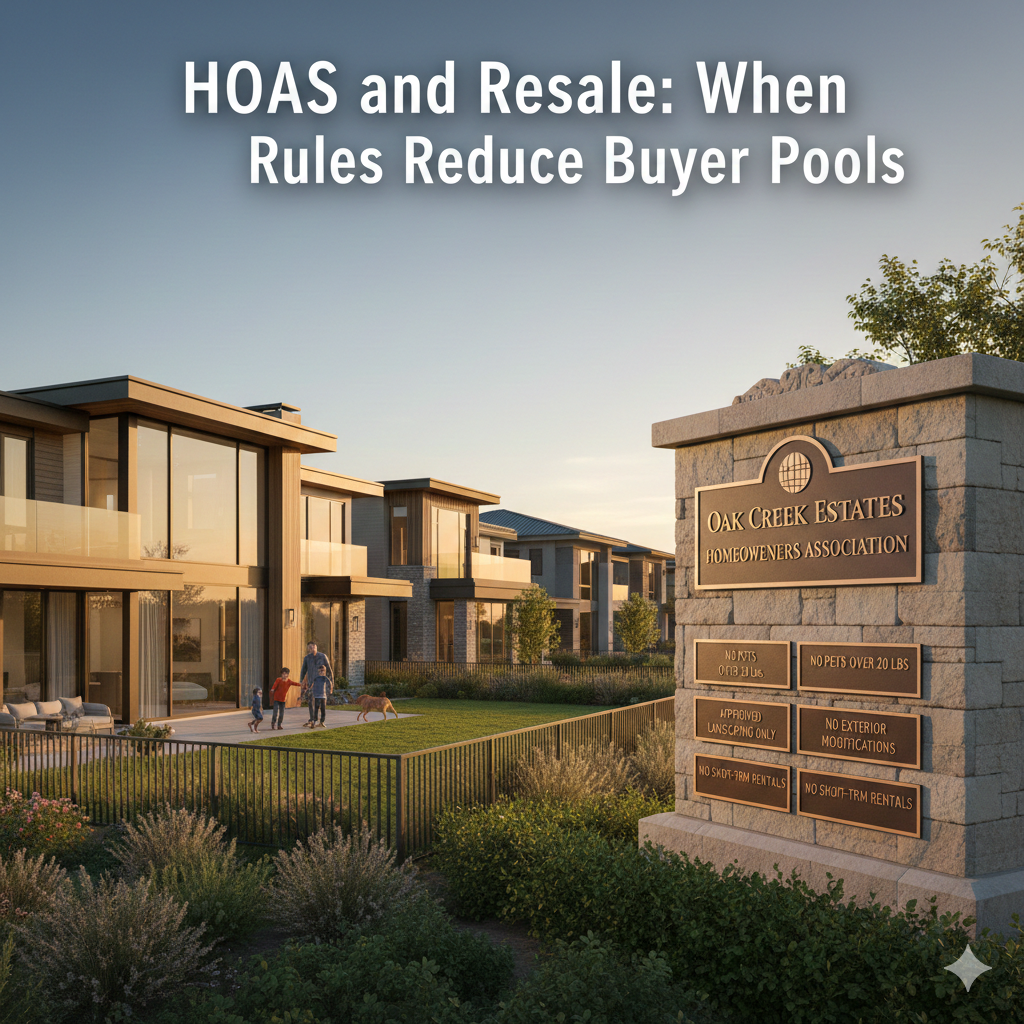
HOAs and Resale: When Rules Reduce Buyer Pools
-

What to Review in HOA Docs Before You Fall in Love
-

The “Enforcement Factor”: When HOAs Become a Daily Stressor
-
STR Rules vs. Long-Term Rental Rules in Phoenix Communities
-
HOA Rental Caps: What They Mean for Long-Term Options
-

What Days on Market Actually Signals at Different Price Levels
-

How “Over-Personalized” Homes Lose Liquidity
-
The Price Tier Where Buyer Depth Thins Out (and Why It Matters)