


Mesa Lifestyle Guide → [Mesa Lifestyle Guide] & For more info on Mesa Real Estate → [Mesa Real Estate Guide]
Written by: Renee Burke
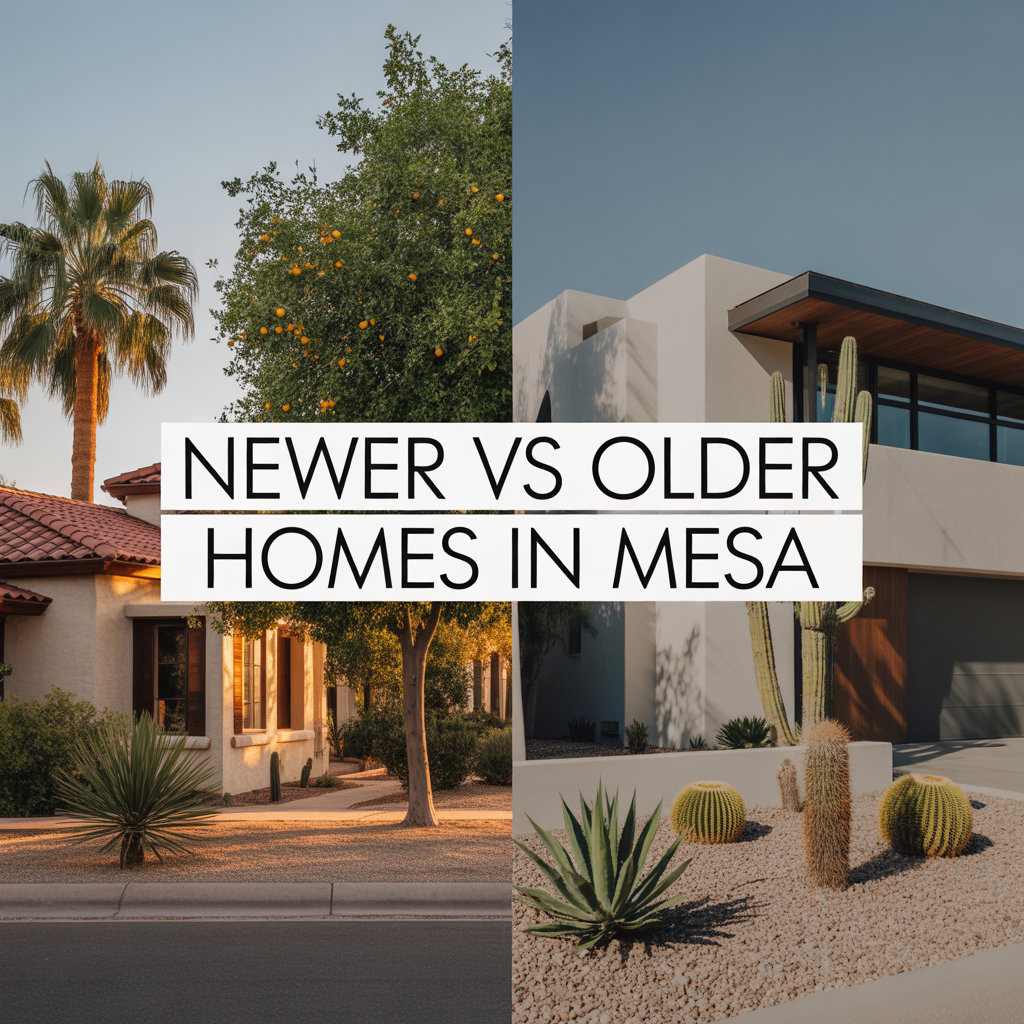
I often sit with clients at my kitchen table, maps of Mesa spread out, as they wrestle with this very choice: the crisp lines of a new Eastmark build or the lived-in warmth of a West Mesa ranch. Both have their place in this city I call home, and there’s no one-size-fits-all answer—it comes down to your life right now, your budget, and the kind of roots you want to put down under these wide desert skies. As someone who’s toured every block from Dobson Ranch to the Red Rocks, let me guide you through the real differences, the trade-offs that matter, and how each fits into Mesa’s rhythm in early 2026. You’ll leave here knowing exactly which path feels right for your family.
Mesa offers this beautiful range: older homes from the mid-century citrus grove days, full of character and value, sitting alongside sparkling new communities like Eastmark and Cadence that hum with modern energy. Newer homes—built post-2010, often in the east—start around $465,000 and climb to $600,000 with upgrades, drawing young families and professionals who want turnkey living. Older ones, pre-1990s gems in central and west areas, dip into the high $300,000s to mid-$400,000s, appealing to first-timers or those craving space without the premium. It’s a choice between fresh starts and seasoned comfort, and both build equity in our steady 4% appreciating market.
The Charm and Value of Older Homes
There’s something deeply grounding about Mesa’s older neighborhoods—think Lehi or West University, where homes from the 1960s and 70s nestle under mature palo verde trees, their block walls whispering neighborhood history. These properties often come with larger lots, sometimes a third of an acre, giving you room for a pool, citrus trees that actually bear fruit, or a workshop that feels like an extension of yourself. The architecture has personality: vaulted beam ceilings, Saltillo tile floors, and those classic ranch layouts where the kitchen flows straight to the backyard for barbecues as the sun dips behind South Mountain.
Location plays to their strength too. Older homes hug established areas—minutes from Main Street’s farm-to-table spots, the light rail for easy Tempe nights, or quick hops to Banner Health campuses. Schools like Mesa Public have deep roots here, with a community feel that new subdivisions chase but can’t quite match yet. And the price? You’re getting 2,000 square feet for what a 1,500-square-foot new build might cost nearby, leaving budget for personal touches like a fresh backsplash or desert-adapted landscaping.
Of course, these homes ask for patience. Pre-1990s builds mean potential updates—galvanized plumbing that might need copper swaps, original swamp coolers begging for central AC, or roofs tested by decades of monsoons. Maintenance runs higher early on, maybe $5,000-10,000 in the first few years if you’re not handy, but inspections catch most, and sellers often credit repairs in this buyer-friendly market. It’s not for the faint-hearted, but for those who love a project or value instant equity, it’s a doorway to wealth-building that feels authentic to Mesa’s heritage.
The Ease and Future-Proofing of Newer Homes
Head east to Eastmark, Cadence, or Las Sendas, and you step into Mesa’s newest chapters—communities where builders like Taylor Morrison, Toll Brothers, and Woodside Homes craft open-concept havens starting at $465,000 for a three-bed base model. These homes shine with today’s must-haves: quartz counters, tankless water heaters, spray-foam insulation that keeps summer bills to $200 even in July peaks, and smart thermostats that learn your routine. Floor plans prioritize flow—great rooms merging with kitchens island-large enough for homework and happy hours alike—plus flex spaces for offices or gyms, reflecting how we live post-pandemic.
Energy efficiency stands out in our climate; dual-pane windows and superior HVAC mean 20-30% lower utilities than older stock, a quiet savings that adds up under relentless sun. Builder warranties cover the big systems for 1-2 years (up to 10 on structure), buying you peace before the first monsoon season. Customization sweetens it: Pick your lot facing greenbelts, upgrade to solar-ready panels, or add a backyard ramada during framing—options that let the home grow with you.
HOAs come standard here, $100-200 monthly for pools, trails, and xeriscaped common areas, which keeps curb appeal high and resale strong. Proximity to booming spots like Bell Bank Park or data centers draws jobs, promising appreciation as East Mesa evolves. Drawbacks whisper too: Smaller lots (40-60 feet wide), cookie-cutter vibes until trees mature, and longer commutes to central Phoenix unless you’re Loop 202-savvy. New construction timelines stretch 6-12 months if not move-in ready, testing patience.
Weighing the Trade-Offs Side by Side
Both paths weave into Mesa’s fabric, but here’s how they balance for everyday life. Older homes win on immediate character and lot size—you inherit shade, privacy, and walkable maturity, often no-HOA freedom to paint your door sage green. They suit tinkerers, retirees downsizing to single-stories, or budgets under $450,000, with faster closings (30 days) and negotiation room for updates.
Newer ones edge ahead for low-maintenance families or remote workers craving warranties and efficiency—ideal if summers stress you or kids need modern play spaces. They hold value in growth corridors, but upfront costs include $20,000-40,000 in upgrades like blinds or pavers, plus HOA predictability.
Emotionally, older homes feel like slipping into a favorite sweater—cozy, storied. Newer ones? Fresh notebook pages, full of possibility. Resale data shows both appreciate steadily, but established west/central spots edge slightly for steady equity, while east surges with population.
Who Each Suits Best—and My Thoughtful Take
Older for souls seeking soul: First-timers stretching dollars, families with toolshed dreams, or anyone prizing neighborhood roots over bells and whistles. Newer for the forward-leaners: Busy parents wanting warranties amid chaos, professionals betting on East Valley boom, or those allergic to DIY.
Inspect ruthlessly either way—thermal imaging for older AC ducts, builder specs for new. Drive peak hours; budget reserves. I’ve closed both, watching a Lehi ranch family add a casita years later, or Eastmark newcomers host effortless block parties.
If you’re thinking about making a move in the Phoenix area, you don’t have to figure it out alone. I’m here with the local insight, the patient ear, and the experience to tour both worlds and find the one that wraps around your life just right—whether it’s a vintage Mesa charmer or a brand-new retreat. Reach out when you’re ready; let’s chat about your story and step into your next chapter together.
Get the full Phoenix Market Insights → [Market Insights]


-

Pool Liability and Insurance in Phoenix
-

Protecting Outdoor Structures and Shade Systems
-

HVAC Failures and Insurance Coverage
-

Roof Maintenance for Phoenix Climate Conditions
-

Preventing Water Damage in Desert Landscapes
-

How Monsoon Storms Affect Phoenix Homes
-

Why Policy Structure Matters More Than Premium
-

Understanding Coverage Limits and Exclusions
-

What Personal Property Coverage Actually Includes
-

How Liability Coverage Protects Homeowners
-

Replacement Cost vs Market Value in Phoenix Insurance
-

Understanding Deductibles Before You Need Them
-

How Renovations Affect Insurance Coverage
-

When to Review Your Home Insurance Policy
-

Why Replacement Cost Matters in Phoenix Insurance Policies
-

When a House Truly Starts to Feel Like Home
-

How Phoenix Neighborhood Living Builds a Sense of Belonging
-

Why Stability Plays a Major Role in Long-Term Home Satisfaction
-

How Familiarity Changes the Experience of Living in a Home
-
Renovate or Move? Deciding What to Do When Your Phoenix Home No Longer Fits
-
How Lifestyle Changes Affect Space Needs in Phoenix Homes
-
Why Some Phoenix Homes Begin to Feel Too Large After Children Move Out
-
When Homeowners Begin Considering Moving to a Larger Phoenix Home
-

Signs Your Phoenix Home Is Starting to Feel Too Small for Your Family
-

How Desert Landscaping Evolves Over Years of Phoenix Homeownership