


Mesa Lifestyle Guide → [Mesa Lifestyle Guide] & For more info on Mesa Real Estate → [Mesa Real Estate Guide]
Written by: Renee Burke
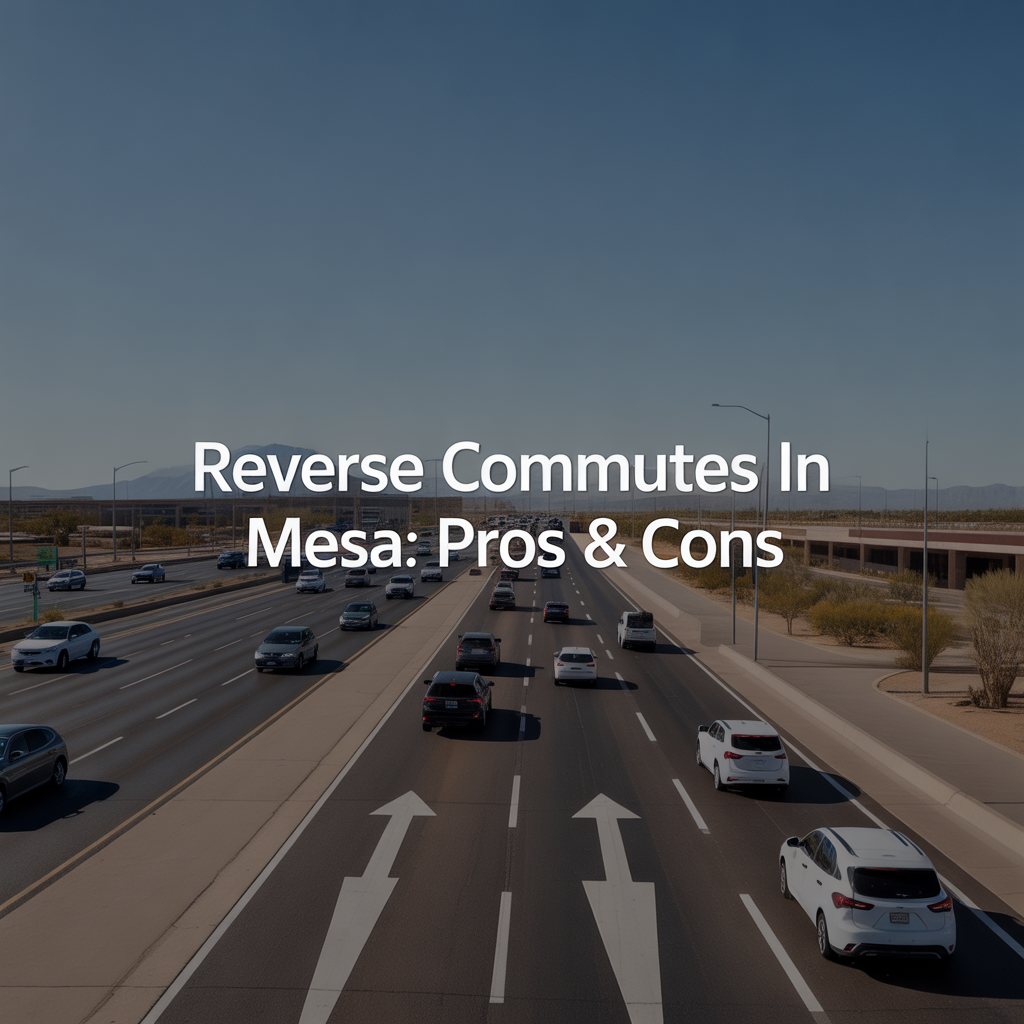
Reverse commutes in Mesa — heading eastbound mornings or westbound evenings against the main Phoenix rush — offer a quieter path through our East Valley sprawl that many growing families discover as a hidden gem. I’ve guided clients through these counter-flows during home searches, watching stress melt away on roads that feel refreshingly calm compared to the typical crawl. As someone who knows these arterials like my own backyard, living and working right here, I’ll walk you through the real tradeoffs, so you can weigh if this lifestyle lift fits your daily rhythm and neighborhood dreams.
Mesa’s growth means more local jobs at Banner Health, Mesa Gateway Airport, and Eastmark employers, naturally creating reverse patterns that sidestep the worst of US-60 and Loop 202 headaches.
Morning Reverse: Eastbound from Phoenix (6-9 a.m.)
Heading east into Mesa during morning peak flips the script on gridlock — Loop 202 eastbound glides smoothly past Higley toward Power Road, while US-60 east from Tempe flows freely toward Signal Butte. Dobson Ranch workers heading to Eastmark tech hubs or Red Mountain Ranch hospitals shave 15-20 minutes off typical westbound snarls, arriving fresh for school drop-offs or early shifts.
Power Road northbound stays serene for Phoenix returnees working Gateway Airport hangars, with minimal school overlap near BASIS charters. It’s the dream for hybrid schedules — grab coffee at Phantom Labs en route without stoplight frustration.
Evening Reverse: Westbound Toward Phoenix (3-6 p.m.)
Afternoons reward westbound travelers as US-60 clears quickly from Ellsworth to Alma School, bypassing eastbound returnee jams. Higley Road southbound eases toward Loop 202, perfect for Superstition Springs parents picking up Skyline High kids then heading west to part-time Tempe gigs.
Main Street downtown flows west without Fiesta District backups, blending seamlessly into evening brewery runs. This direction captures golden hour — sunset views over the Superstitions without brake lights.
Pros: Time, Calm, and Lifestyle Wins
Reverse commutes reclaim hours lost to typical peaks, often halving travel time (10-15 minutes for 10 miles versus 30+). Lower stress means arriving home happier for Riverview Park picnics or Eastmark fire pits — no honking road rage bleeding into family dinners. Fuel savings add up ($50-100/month), and HOV lanes open even solo during off-peak flows.
They align beautifully with Mesa’s local job boom — 25% employment growth in healthcare, aviation, and logistics means more east-side opportunities without Phoenix sacrifices. Neighborhoods like Las Sendas thrive here: trail runs pre-shift, home by dusk. Resale perks shine too — homes near reverse-friendly ramps hold steady value as remote work flexes.
Cons: Limited Opportunities and Hidden Hitches
Job pools skew smaller — fewer high-paying corporate roles east of Dobson versus Phoenix centers, potentially capping income for career climbers. East Mesa feels isolated post-6 p.m., with fewer evening amenities than downtown’s Main Street buzz; Eastmark walkability helps, but Fiesta’s vibrancy requires drives.
Social tradeoffs emerge: less mingling with broader Valley networks, though local breweries like Cider Corps build tight-knit ties. Growth strains quieter roads — Power Road school traffic spikes despite reverse flow, and 2026 Loop 202 expansions may ripple delays. Families with split commutes (spouse westbound) lose carpool ease.
Neighborhood Fit and Tradeoffs
Eastmark and Cadence shine brightest — reverse westbound mornings sync with BASIS runs, east evenings to Power jobs. Red Mountain Ranch flips east mornings to Las Sendas clinics, west evenings home. Dobson balances both, near US-60 flex points.
| Commute Type | Pros | Cons | Best Neighborhoods |
|---|---|---|---|
| AM Eastbound | Fast to jobs/parks | Fewer peak-hour services | Eastmark, Gateway |
| PM Westbound | Golden hour, HOV access | Limited evening hubs | Red Mtn, Superstition |
| Hybrid Flex | Time savings, fuel cuts | Job variety constraints | Dobson, Fiesta |
Apps like AZ511 confirm real-time wins, while Valley Metro Rail supplements for true reverses.
Addressing Common Hesitations
Worried about “missing out” on Phoenix perks? Mesa’s job surge (Dexcom expansions, airport logistics) rivals it now, with trails and tacos closer. Isolation fades with community events — reverse commuters claim the best park spots. Test drives during peaks reveal the calm.
Embracing the Reverse Rhythm
Reverse commutes in Mesa trade bustle for breathing room — faster paths to family time, local roots, and that East Valley ease we cherish.
If you’re considering a Mesa move and wondering how reverse flows fit your work-life balance, you don’t have to figure it out alone. I’ve helped families like yours rediscover road joy, matching homes to commutes that feel like wins.
Reach out anytime — let’s map a path that flows your way. Here in the East Valley, going against traffic leads straight to better living.
Get the full Phoenix Market Insights → [Market Insights]


-

How the Phoenix Desert Climate Shapes Everyday Life Inside the Home
-

How Phoenix Weather Patterns Shape Everyday Home Routines
-

Why Homes Often Feel More Comfortable After the First Year of Ownership
-

How Living in Phoenix Changes the Way Homeowners Use Their Homes
-

What New Phoenix Homeowners Learn During Their First Year of Ownership
-

How Daily Life Changes After the First Year of Living in a Phoenix Home
-

Turning Irregular Costs Into Predictable Ones
-

Budgeting for Ongoing Ownership
-

Repair vs Replace vs Defer Decisions
-

Planning Homeownership Like a Long-Term Asset
-

What Home Expenses You Can Safely Delay
-

Stopping Cost Creep Early
-

Cash Flow vs Net Worth Stress
-

Why “It’s Not That Much” Adds Up
-

Warning Signs Your Ownership Budget Is Tightening
-

The Cumulative Cost of Small Home Repairs
-

Designing Budgets Around Local Conditions
-
Utility Costs Over Time in Desert Climates
-

Insurance Increases Explained for Arizona Homeowners
-

How Inflation Impacts Phoenix Homeownership Costs
-

Avoiding Debt-Driven Homeownership Decisions
-

Replacing Systems on Your Timeline
-

Why Emergency Repairs Cost More
-

Timing Major Expenses Without Financial Shock
-

How Much to Keep in a Phoenix Home Reserve Fund