



Mesa Lifestyle Guide → [Mesa Lifestyle Guide] & For more info on Mesa Real Estate → [Mesa Real Estate Guide]
Written by: Renee Burke
When you’re exploring homes in Mesa, one of the first things families ask about is school district lines — those invisible boundaries that determine which elementary, junior high, and high school your children will attend based on your address. It can feel a bit overwhelming at first, like trying to solve a puzzle without all the pieces, but understanding how these lines work makes house hunting so much clearer and less stressful. As someone who’s helped countless families navigate this in the East Valley, I’ve seen how knowing your district upfront turns uncertainty into confidence, letting you focus on the neighborhood feel, backyard size, and that perfect park nearby.
Mesa isn’t served by just one district; it’s a patchwork of four main ones, with Mesa Public Schools covering the lion’s share. These lines don’t always follow neat zip codes or street borders — they zig and zag based on population growth, school capacity, and community needs. The good news? Online tools make it simple to check any address, and open enrollment gives flexibility if your heart is set on a specific school. Let’s walk through the landscape gently, area by area, so you can picture where your family might land.
Mesa Public Schools: The Heart of the City
Mesa Public Schools (MPS) is the biggest player, serving about 90% of the city with over 60,000 students across 82 schools. It’s Arizona’s largest district, known for strong academics, arts programs, and sports — think A-rated campuses like Mountain View High and Red Mountain High. Boundaries are straightforward in central and west Mesa, but they feather out east.
In west and central Mesa (think zip codes 85201-85204, around downtown and Dobson Ranch), you’ll find elementaries like Emerson, Kerr, and Whittier feeding into junior highs such as Taylor or St. Matthew, then to Mountain View High. Homes here — cozy ranches from the 70s and 80s — sit right in established neighborhoods with mature trees and quick walks to parks like Pioneer. It’s perfect if you want that small-town feel with big-city access, like Main Street coffee just minutes away.
Northeast Mesa (85207-85215, Las Sendas, Red Mountain Ranch) gets Zaharis, Las Sendas, and Falcon Hill elementaries flowing to Shepherd Junior High and Red Mountain High. These lines hug the Superstition foothills, so your backyard might overlook trails at Usery Mountain. Families love the newer homes ($500K+), gated communities, and resort-style rec centers, but note the drive to Superstition Springs shopping (10-15 minutes).
East central (85205-85206, like Highland and Johnson elementaries) leads to Fremont Junior High and Skyline High, blending suburban yards with easy Riverview Park access. It’s a sweet spot for affordability ($400K range) and feeder continuity — kids often grow up with the same friends.
MPS boundaries shift occasionally with growth — check choosemesa.org’s interactive map by entering your address for the latest. It’s user-friendly, showing elementary, junior high, and high school paths in seconds.
Gilbert Public Schools: Southeast Crossover
Southeast Mesa (mostly zip 85209, near Higley Road and Eastmark edges) crosses into Gilbert Public Schools (GPS), one of Arizona’s top districts with consistent A ratings. Elementaries like Weinberg or Neely feed Mesquite Junior High and Higley High — all “Excelling” labels.
This pocket appeals to families eyeing Eastmark’s master-planned charm: lakes, the Glasshouse, and BASIS charter options nearby. Homes start at $450K for townhomes, climbing to $700K singles with yards backing to washes. The tradeoff? Gilbert lines mean a separate district feel — great test scores, but less “Mesa proper” community events. Drives to Fiesta District tacos add 15 minutes, but Power Road Loop 202 ramps ease Phoenix commutes.
Higley Unified and Queen Creek Unified: Farther East Edges
Tiny slivers of far southeast Mesa dip into Higley Unified School District (HUSD) and Queen Creek Unified (QCUSD). Higley (zip 85209 pockets) serves with Corona Vista Elementary to Higley High — another A-rated powerhouse. QCUSD (85212 edges) includes Frances Brandon Elementary to Queen Creek High, often “Highly Performing.”
These lines suit Cadence or east-edge buyers chasing new builds ($500K+) and agritopia vibes. Pros: elite academics, growth syncing with neighborhoods. Cons: even longer hauls to downtown (20+ minutes), feeling more “Queen Creek adjacent” than Mesa core. Open enrollment lets you opt back to MPS if preferred.
How Boundaries Affect Daily Life
School lines aren’t just maps; they shape routines. MPS’s feeder patterns create continuity — Falcon Hill Elementary kids often end at Red Mountain High with familiar faces, easing transitions. In mixed areas like 85209, Gilbert’s edge means comparing district styles: MPS’s breadth (IB programs, biotech academies) versus GPS’s laser-focus on test scores.
Family rhythms vary: West Mesa (MPS core) offers walkable schools near Riverview splash pads. Eastmark (Gilbert/MPS mix) pairs BASIS with neighborhood parks. Northeast thrives on Zaharis-to-Red Mountain paths near Usery trails. Check boundaries early — lines redraw with enrollment (last big shift 2022 for east growth).
Open enrollment is Mesa’s flexibility ace: attend any MPS school if space allows, no address lock-in. Popular like BASIS fill lotteries, but magnets (STEM at Skyline) welcome cross-boundary kids.
Tools and Tips for Checking Lines
No guesswork needed — choosemesa.org‘s locator pulls your address’s full path instantly. MPSaz.org offers PDFs; GPS/Higley sites map theirs. Realtors overlay boundaries on listings — ask for it upfront.
Common pitfalls: Zip codes mislead (85209 splits districts). Growth redraws lines (east expansions frequent). Visit schools: peek playgrounds, chat principals.
| Area (Zip) | Main District | Sample Feeder Path | Neighborhood Vibe |
|---|---|---|---|
| West/Central | MPS | Emerson → Taylor JHS → Mountain View | Established, walkable |
| Northeast | MPS | Zaharis → Shepherd → Red Mountain | Gated, trail-adjacent |
| SE (85209) | Gilbert/Higley | Weinberg → Mesquite → Higley High | Master-planned growth |
| Far SE (85212) | Queen Creek | Frances Brandon → QC High | New builds, rural edge |
Tradeoffs and Neighborhood Ties
West MPS lines prioritize convenience — parks, shops steps away. East Gilbert edges chase excellence, trading drive time. MPS breadth suits diverse needs (arts, CTE at EVIT); Gilbert hones academics.
Congestion factors: Power Road school waves nudge carpools. Resale boosts with A schools (Mountain View zones premium). Families blend via open enrollment.
Growth smooths edges — 2026 redraws likely east with Cadence boom.
Why Boundaries Build Confidence
School lines guide more than education — they frame parks, friends, routines. MPS core anchors tradition; Gilbert east promises polish.
If you’re house hunting in Mesa and want to decode district lines for your family’s path — elementaries to highs, feeders to flex — you don’t have to figure it out alone. I’ve mapped these for dozens, matching homes to schools that fit just right.
Reach out anytime — let’s clarify your lines together. Here in the East Valley, the right district feels like home from day one.
Get the full Phoenix Market Insights → [Market Insights]


-

How the Phoenix Desert Climate Shapes Everyday Life Inside the Home
-
How Phoenix Weather Patterns Shape Everyday Home Routines
-

Why Homes Often Feel More Comfortable After the First Year of Ownership
-

How Living in Phoenix Changes the Way Homeowners Use Their Homes
-

What New Phoenix Homeowners Learn During Their First Year of Ownership
-

How Daily Life Changes After the First Year of Living in a Phoenix Home
-
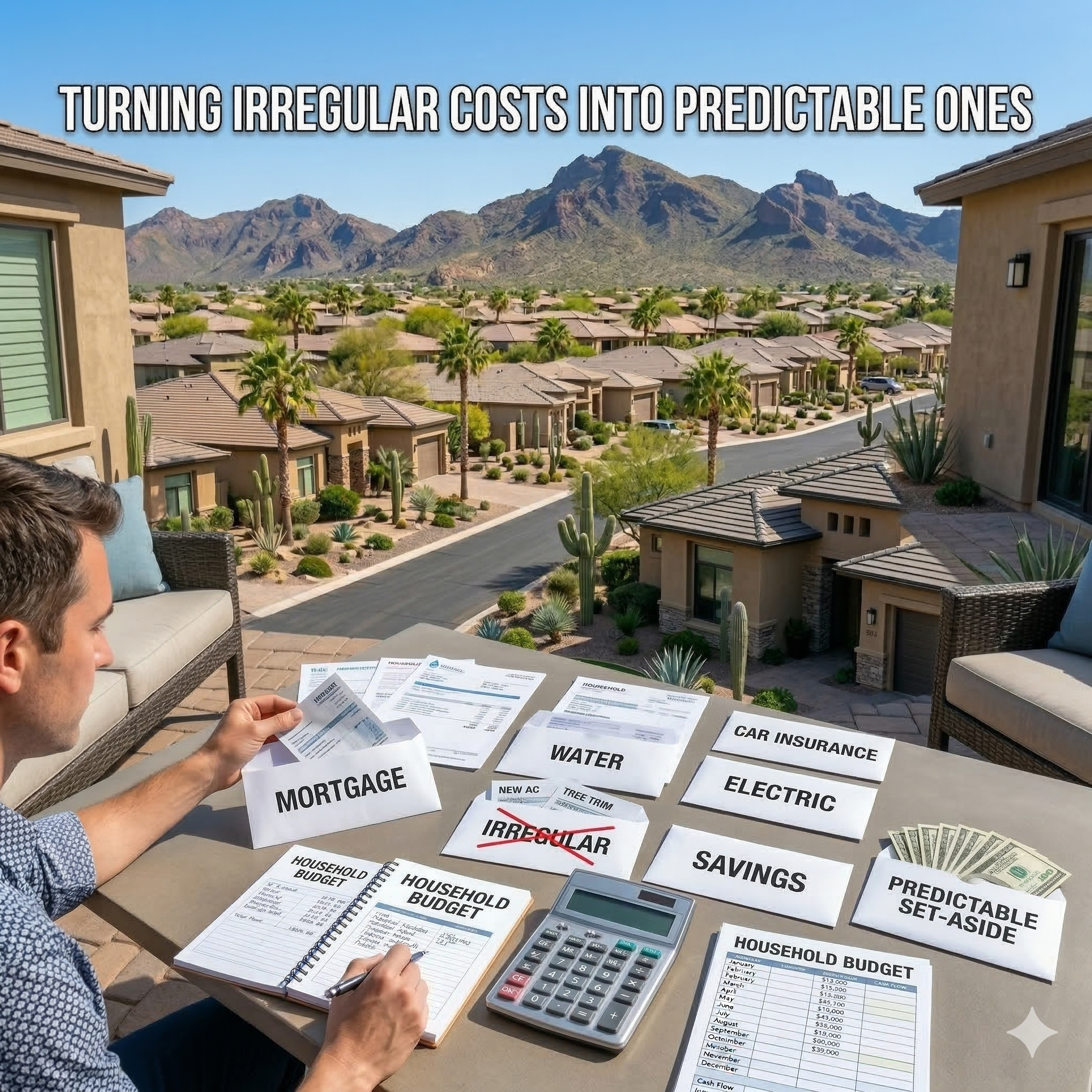
Turning Irregular Costs Into Predictable Ones
-

Budgeting for Ongoing Ownership
-
Repair vs Replace vs Defer Decisions
-

Planning Homeownership Like a Long-Term Asset
-

What Home Expenses You Can Safely Delay
-

Stopping Cost Creep Early
-

Cash Flow vs Net Worth Stress
-

Why “It’s Not That Much” Adds Up
-

Warning Signs Your Ownership Budget Is Tightening
-

The Cumulative Cost of Small Home Repairs
-
Designing Budgets Around Local Conditions
-
Utility Costs Over Time in Desert Climates
-

Insurance Increases Explained for Arizona Homeowners
-

How Inflation Impacts Phoenix Homeownership Costs
-

Avoiding Debt-Driven Homeownership Decisions
-

Replacing Systems on Your Timeline
-

Why Emergency Repairs Cost More
-

Timing Major Expenses Without Financial Shock
-

How Much to Keep in a Phoenix Home Reserve Fund