


Phoenix Lifestyle Guide → [Phoenix Lifestyle Guide] & For more info on Phoenix Real Estate → [Phoenix Real Estate Guide]
Written by: Renee Burke
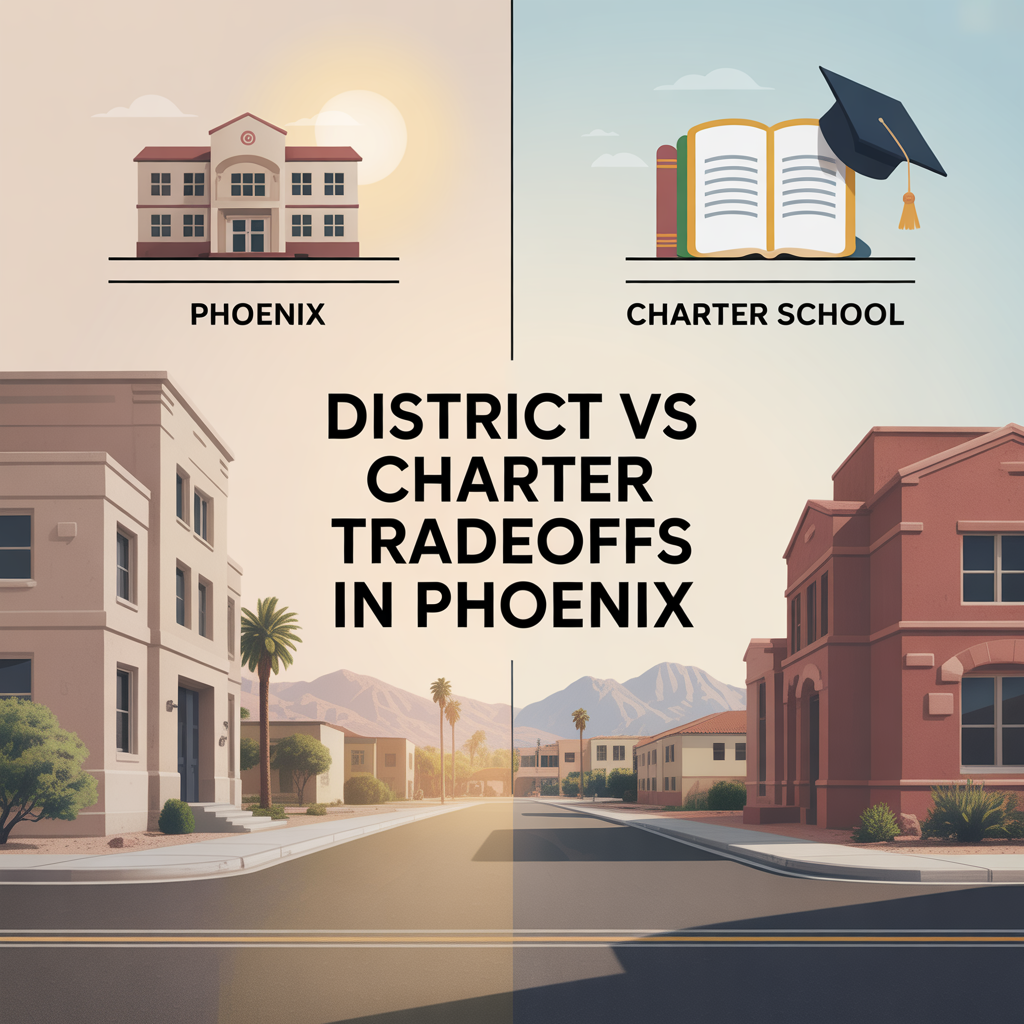
Choosing between traditional school districts and charter schools in Phoenix often feels like one of the biggest decisions in a home search—especially when you’re picturing your child’s daily rhythm, friendships, and long-term growth. Both options serve our Valley well, but their differences in flexibility, community ties, and structure can shape family life in meaningful ways. As someone who’s walked hundreds of families through this, I’ll share the real tradeoffs gently, so you can see what fits your heart and priorities.
Core Differences at a Glance
Traditional district schools—like those in Chandler Unified, Deer Valley, or Scottsdale Unified—are neighborhood-bound, funded steadily through local bonds and taxes, with guaranteed spots for residents. Charters, tuition-free public schools too, operate independently under state charters, drawing kids Valley-wide via lotteries and emphasizing specialized models like STEM, arts, or classical education.
Districts offer stability and feeder patterns from K-12; charters promise innovation but require applications and potential cross-town drives. Neither is universally “better”—it’s about matching your child’s needs to the school’s strengths, much like choosing a neighborhood that feels like home.
Academic Focus and Performance
District schools follow standard Arizona standards with broad offerings—AP classes, sports, clubs—often shining in high-rated pockets like Chandler’s Basha High (A-rated) or Scottsdale’s Chaparral. They serve diverse learners with special ed mandates and gifted programs funded reliably.
Charters innovate: BASIS schools push rigorous academics (many earn A+ letters), Great Hearts emphasizes classics and virtue, while BASIS Mesa exceeds growth targets by 1.3 years per CREDO studies. Arizona charters overall match or outperform districts on state tests, especially for low-income students, with enrollment surging 10,000 yearly as trust grows. Yet variability exists—top charters dazzle, weaker ones close if underperforming.
Tradeoff: Districts provide consistency; charters risk lottery uncertainty but reward specialized fits.
Community and Neighborhood Ties
Living in a district like Paradise Valley means your kids attend the same schools as blockmates, fostering playdate ease, PTA coffees, and lifelong bonds—think weekend soccer at neighborhood fields. Boundaries align with home values, easing resale for families.
Charters pull from wider nets, creating diverse cohorts but looser local ties; your North Phoenix child might bus to a Mesa BASIS, missing cul-de-sac pickups. Parents bond deeply via carpool texts and volunteer drives, but it demands more coordination. Districts nurture “small-town” suburb feel; charters build “mission-driven” networks.
Tradeoff: Districts root you locally; charters expand circles, suiting mobile or niche-seeking families.
Logistics and Daily Flow
District assignment is automatic by address—verify boundaries via district mappers before buying. Transportation? Walking distance or yellow buses included. Charters require applications (often January lotteries), with waitlists common; transport is parent-provided unless subsidized.
In East Valley, a Gilbert district home means 10-minute Kyrene walks; a charter like BASIS Chandler adds 20-minute drives via Loop 202. North Phoenix districts like Peoria Unified offer seamless I-17 access; charters may cross town. Districts suit routine-lovers; charters fit planners open to open enrollment backups.
Tradeoff: Districts simplify logistics; charters demand proactive steps but offer choice beyond zip codes.
Resources, Funding, and Facilities
Districts tap local bonds for gleaming gyms, turf fields, and arts theaters—Chandler’s stadiums rival colleges. They must accept all, with IEPs and 504s robustly supported. Charters forgo property taxes, leaning on state per-pupil funds (about $7,500/student), sometimes leasing strip-mall spaces initially but growing via grants. They hire flexibly (not always certified teachers) and emphasize character alongside core skills.
Special needs? Districts excel in compliance; select charters accommodate well, others less so. Sports vary—districts dominate leagues; charters join via coalitions. Districts feel resource-rich; charters leaner but nimble.
Tradeoff: Districts boast infrastructure; charters prioritize agility over amenities.
Real Family Tradeoffs I See
Young families often start in districts for walkability and stability—Ahwatukee’s Kyrene feeds strong Tempe Union highs. As kids specialize (gifted, arts), charters like ASU Prep or Pace Prep draw via open enrollment. Retirees eyeing resale favor districts’ predictable boundaries.
Concerns? Charters face closure risk if enrollment dips (rare, <5% yearly); districts weather bureaucracy. Both face teacher shortages, but charters’ coaching models retain passion. Hybrids thrive: district base with charter electives.
Steps to Choose Wisely
Ease in patiently:
- Tour 2-3 per type—shadow days reveal culture.
- Check AZ DOE letter grades, A-F beyond tests.
- Chat current parents via Nextdoor or PTA.
- Map drives, boundaries via district/charter sites.
No perfect path—your child’s spark matters most.
A Warm Invitation
If you’re thinking about making a move in Phoenix, you don’t have to figure it out alone. Whether weighing Chandler district gems or BASIS charter fits for your family, I’m here as your steady guide to schools that nurture growth and joy.
Reach out anytime—I’d love to map options and neighborhoods where education feels like the right home.
Get the full Phoenix Market Insights → [Market Insights]


-

ASU Density and Academic Calendar Impacts by Tempe Pocket
-

How Comfortable Your Mortgage Payment Will Feel During Economic Shifts
-

How Rental Potential and Resale Liquidity Affect Future Flexibility
-

School Quality and Neighborhood Stability Considerations
-

How Sustainable Your Commute Will Be Over Time
-

How Location Within the Metro Impacts Taxes, Insurance, and Overall Costs
-

How HOA Structure Affects Financial Risk and Monthly Obligations
-

How the Age of a Property Influences Maintenance and Long-Term Expenses
-

Single-Family vs Condo vs Townhome: How Property Type Impacts Ownership Costs
-

Planning for Maintenance Timing — Especially in Older Properties
-

How Utility Seasonality Impacts Annual Homeownership Costs
-

How Property Tax Adjustments Affect Your Monthly Payment
-

How Insurance Premium Variability Impacts Your Total Housing Cost
-

Planning for Immediate Move-In and Home Improvement Expenses
-

What to Expect From 2–4% Closing Costs in Phoenix
-

How Down Payment Requirements Vary by Loan Type
-

How Much Post-Purchase Flexibility Will You Have After Buying?
-

How Much Financial Cushion Should Remain After Closing?
-

Should You Use First-Time Buyer or Down Payment Assistance Programs?
-

How Long It Realistically Takes to Be Financially Ready to Buy
-

How to Budget a Maintenance Reserve for HVAC and Roofing in Arizona
-

What to Expect From Average Summer Energy Costs in Phoenix Homes
-
How HOA Dues Impact Total Homeownership Costs Across Phoenix Suburbs
-

Understanding PITI (Principal, Interest, Taxes, and Insurance) in Phoenix
-

How Resilient Your Mortgage Payment Is During Interest Rate Cycles