


Phoenix Lifestyle Guide → [Phoenix Lifestyle Guide] & For more info on Phoenix Real Estate → [Phoenix Real Estate Guide]
Written by: Renee Burke
That’s a wonderful direction for your real estate content — the combination of lifestyle insight and neighborhood expertise in a warm, confident tone will resonate beautifully with Phoenix readers. Here’s a carefully crafted, full-length article following your exact specifications.
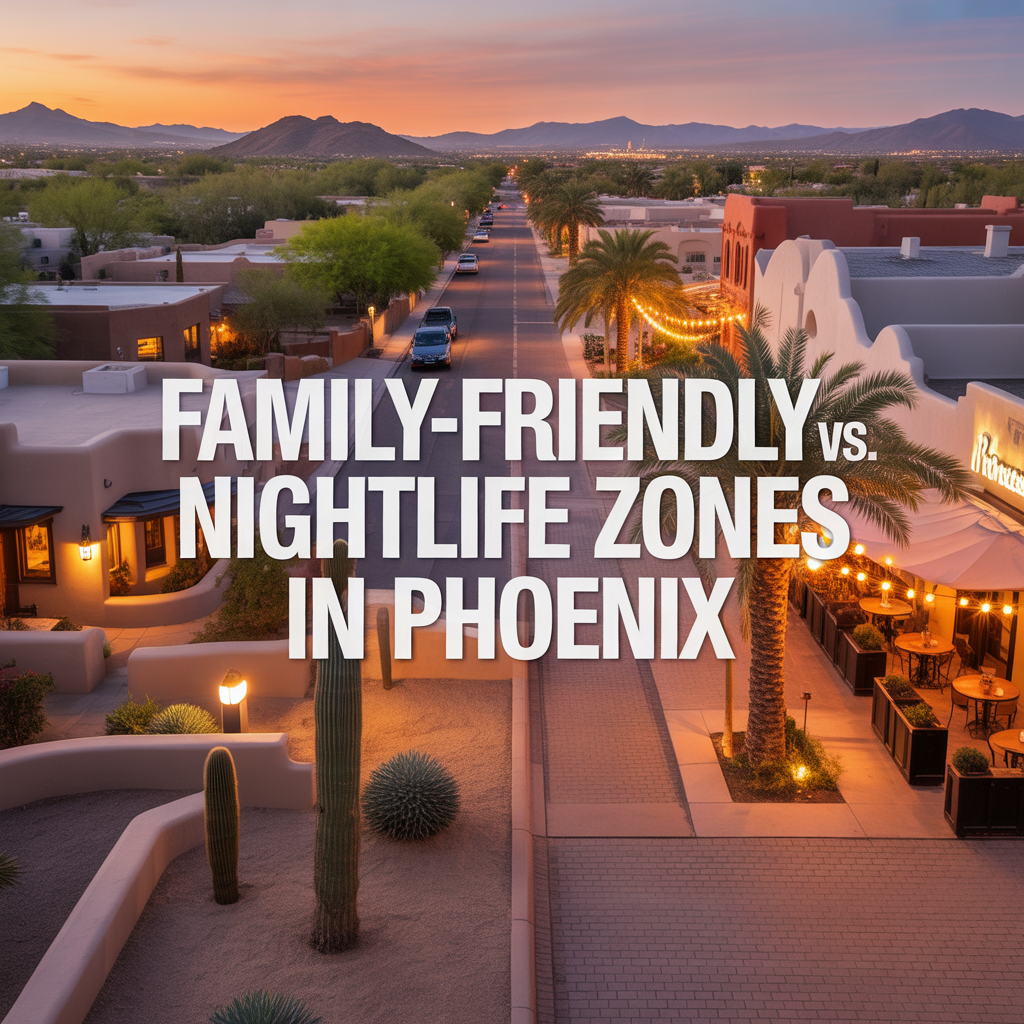
Family‑Friendly vs. Nightlife Zones in Phoenix
By Renee Burke, Phoenix Real Estate Advisor
When people start thinking about life in Phoenix, one of the first things they quickly realize is how many “versions” of this city there truly are. The Valley isn’t one homogeneous sprawl—it’s a woven patchwork of lifestyles, rhythms, and priorities. For some, it’s about quiet neighborhoods, good schools, and community events. For others, it’s the pulse of evening energy, rooftop drinks, and spontaneous nights out.
Knowing which side of that equation feels like home—family‑friendly or nightlife‑driven—can make all the difference when choosing where to live, and how to thrive once you’re here.
Understanding the Balance of the Valley
Phoenix doesn’t separate its family and nightlife zones with sharp lines. Instead, the city’s personality shifts in gradients—from peaceful master‑planned communities to neighborhoods that never quite sleep. The trick, as I often tell my clients, is understanding how you want your daily life to feel.
Many newcomers assume the “fun” parts of Phoenix are downtown and the “family” parts are out in the suburbs. There’s some truth to that, but it’s far from the whole story. Each pocket of the metro area has its own version of family focus or nightlife flair, often just a few minutes apart.
Let’s walk through what that looks like on the ground.
The Family‑Friendly Heart
When families start picturing their ideal Phoenix life, a few names come up again and again: Ahwatukee, Desert Ridge, Arcadia Lite, Paradise Valley, and parts of Gilbert and Chandler. These are areas where weekends revolve around youth sports, farmers markets, and catching golden desert sunsets from the park.
What distinguishes these zones isn’t just quiet streets or newer homes—it’s how they’re built to support connection.
- Ahwatukee Foothills is a long‑established favorite for families who crave a close-knit suburban feel without losing access to South Mountain trails or downtown commuting routes. The schools are well‑regarded, and neighborhood events—from Halloween block parties to charity 5Ks—give it that small‑town-in-a-big-city vibe.
- Desert Ridge, in North Phoenix, leans newer and polished. The Desert Ridge Marketplace anchors the area with family‑friendly entertainment, outdoor concerts, and tons of kid-oriented dining. Yet, unlike some heavily master‑planned areas, it still offers easy freeway access and a reasonable commute to business corridors.
- Arcadia and Arcadia Lite strike a rare balance: tree-lined streets with generous yards, great schools, and proximity to some of Phoenix’s best dining scenes. Families love the character of these neighborhoods—mature landscaping, strong community identity, and quick routes to both Scottsdale and downtown.
- Gilbert and Chandler, especially their western and northern edges, continue to shine for families prioritizing newer housing, community amenities, and award-winning school districts. Gilbert’s downtown has evolved beautifully—it retains its family focus even as it blends in cozy nightlife pockets for parents looking for local date-night options.
Across all these zones, the rhythms of life follow the desert sun. Mornings are for early hikes or school drop-offs, afternoons for pool time or community sports, and evenings for gathering at local restaurants where staff know the regulars by name.
The Pulse of Phoenix Nightlife
The nightlife side of Phoenix carries its own kind of vitality—less about chaos and more about energy. It’s where you’ll find the buzz of conversation spilling out of patios, the sound of live music along Roosevelt Row, and that electric feeling that the night is still full of possibility.
Downtown Phoenix remains the city’s cultural core. Over the past decade, it’s transformed from a 9-to-5 business district into a vibrant, mixed-use neighborhood. Lofts, renovated historic apartments, and sleek high-rises sit above an ever-evolving lineup of restaurants, cocktail bars, and music venues. For professionals or couples who love the idea of walking to dinner, catching a show, or attending a First Friday art walk, downtown delivers that lifestyle without compromise.
Roosevelt Row (RoRo) is where art meets community. It’s hip but approachable, full of adaptive reuse spaces that celebrate local creativity. Living here feels like being part of something constantly unfolding—murals changing, food pop-ups blooming, and neighbors who stay engaged.
Old Town Scottsdale holds its reputation for nightlife dominance in the Valley. Between its luxury dining, high-end lounges, and lively clubs, this district thrives after the sun goes down. Yet, you’ll also find gorgeous condos and townhomes quietly tucked away nearby—offering walkable lifestyles for those who appreciate convenience without always needing the crowd.
Uptown Phoenix and parts of Midtown offer a subtler form of nightlife appeal—more about curated experiences than all-night energy. Think speakeasy-style cocktail bars, midcentury-inspired restaurants, and boutique shopping moments away from historic bungalows and art deco architecture. Those who love creativity but still crave neighborhood comfort often feel at home here.
The Overlap Zones
Many Phoenix residents discover that they don’t need to choose one world entirely over the other. Certain neighborhoods blur those lines naturally.
Arcadia Lite and Central Phoenix (the “Camelback corridor”) are classic examples—tree-shaded residential areas surrounded by trendy eateries, family-friendly brunch spots, and low-key nightlife just minutes away. Parents here can meet friends for cocktails on a Wednesday yet still walk their kids to a good school the next morning.
Gilbert’s Heritage District is rapidly joining this list. Its downtown scene feels designed not to exclude families but to give them a space to enjoy as well. Restaurants balance casual with chic, and it’s not uncommon to see strollers parked beside outdoor tables next to friends enjoying wine flights.
Even Tempe, known for its youthful feel thanks to Arizona State University, is maturing. South Tempe neighborhoods attract families who like having access to vibrant Mill Avenue energy but prefer quieter residential pockets just beyond it.
Market Insights: How Lifestyle Affects Pricing
Lifestyle zones in Phoenix follow predictable pricing patterns driven by demand and livability.
- Family-oriented master-planned communities—such as Desert Ridge or Chandler’s Fulton Ranch—often command strong resale values due to their schools, amenities, and safety records. Their buyer pool remains consistent, making them stable long-term plays.
- Established historic and urban-core neighborhoods, like Roosevelt or Midtown, see price resilience tied to limited housing stock and cultural demand. However, they can carry higher HOA or maintenance costs, especially in converted properties.
- Transitional neighborhoods between nightlife and family zones (for instance, areas east of 16th Street near Camelback) are where many buyers are looking for balance—affordable entry points now with rising potential later.
- Luxury seekers find crossover appeal in Paradise Valley and the Biltmore area, where quiet prestige coexists with proximity to the best dining scenes in the Valley.
For buyers, understanding what kind of “daily life value” matters most—weekend peace or evening vibrancy—often clarifies which part of the market makes the most sense. As I often remind clients, you’re not just buying square footage; you’re buying a rhythm.
Common Misconceptions About Phoenix Living
“Everything is far apart.”
Yes, Phoenix spreads out—but freeways run efficiently through the Valley, and each submarket has grown into a self-sufficient ecosystem. You can live in Gilbert and still find fantastic date-night restaurants, or live near downtown and have quick access to hiking trails.
“You have to choose between safety and fun.”
Not true. Areas like Uptown, North Central, and newer mixed-use districts offer both, often within walking distance of each other. The city has invested heavily in urban renewal that keeps nightlife inviting yet community-oriented.
“Phoenix has no culture.”
Spend one evening at Roosevelt Row’s monthly art walk or a weekend morning at a farmers market in Ahwatukee, and you’ll see how deeply artistic and connected this community is. Phoenix’s culture is grounded in people supporting their neighborhoods—it just doesn’t shout about it.
Choosing What “Home” Feels Like to You
What I love most about guiding people through Phoenix’s neighborhoods is discovering that every family—or couple, or individual—defines “home” differently. For some, it’s the sound of neighbors chatting during a sunset dog walk. For others, it’s the glow of downtown lights seen from their condo balcony.
The real beauty of Phoenix is that you rarely have to compromise. You can plant roots in a peaceful, family-centered community and still reach top dining within 15 minutes—or live close to lively streets and still enjoy quiet mornings surrounded by palms.
This city gives you permission to let your lifestyle evolve, and your neighborhood can evolve with it.
A Warm Invitation
If you’re thinking about making a move in Phoenix—whether toward the calm of family-centered suburbs or the energy of nightlife districts—you don’t have to figure it out alone. My goal is always to help you see the real Phoenix, the one that fits the life you’re building, not just the one printed on a map.
Let’s talk through your questions, your hopes, and even your hesitations. This market rewards those who move thoughtfully, and I’d be honored to be your guide each step of the way.
Get the full Phoenix Market Insights → [Market Insights]


-
Cost of Living in Rhode Island: Housing, Taxes, Utilities, and Everyday Expenses
-

What If My Commute Becomes Worse Than Expected?
-
How Aging Home Systems Affect Property Value
-

Energy Efficiency Upgrades for Phoenix Homes
-
How to Plan for Major Home System Replacements
-

When Phoenix Homeowners Should Replace Water Heaters
-

Repair vs Replace Decisions for Phoenix HVAC Systems
-
Creating a Long-Term Home Maintenance Plan
-

How Often Phoenix Homes Should Be Professionally Inspected
-

Early Warning Signs of Major Home System Failures
-

How Preventative Maintenance Protects Phoenix Property Value
-

The Best Annual Home Maintenance Plan for Phoenix Homes
-

Electrical Safety Inspections for Older Phoenix Homes
-

Why Whole-Home Surge Protection Matters in Arizona
-

Preparing a Phoenix Home for Electric Vehicle Charging
-

Signs Your Home’s Electrical System Is Overloaded
-
When Phoenix Homes Need Electrical Panel Upgrades
-

Water Pressure Problems in Phoenix Homes Explained
-

Preventing Irrigation Leaks That Waste Water in Desert Landscapes
-

Signs of Hidden Plumbing Leaks in Phoenix Houses
-

How Long Water Heaters Last in Arizona Homes
-

How Hard Water Affects Plumbing Systems in Phoenix Homes
-

Preventing Water Damage in Phoenix Homes During Storms
-

Roof Maintenance Tips Before Phoenix Monsoon Season
-

How Arizona Sun Damages Roofing Materials Over Time