



Mesa Lifestyle Guide → [Mesa Lifestyle Guide] & For more info on Mesa Real Estate → [Mesa Real Estate Guide]
Written by: Renee Burke
There’s a quiet truth about the Phoenix real estate landscape that many people discover only after they’ve started their home search — school district lines hold real power here. Even for buyers without school-age children, these invisible boundaries can shape home values, neighborhood character, and the rhythm of everyday life.
When you live and work in Phoenix as long as I have, you start to notice how often a single street can divide two very different experiences — not just in schools, but in how communities feel and grow. Understanding school district lines in this valley isn’t about memorizing maps; it’s about recognizing how they influence where families plant roots and how neighborhoods flourish.
The Patchwork of Phoenix School Districts
Phoenix isn’t one unified school district; it’s a patchwork quilt of dozens. Within the city and surrounding metro area, you’ll find large unified districts like Paradise Valley, Scottsdale, Deer Valley, Peoria, and Chandler, alongside smaller or more specialized ones such as Madison Elementary, Roosevelt, and Osborn in Central Phoenix.
Here’s what makes Phoenix unique: our school boundaries don’t always line up neatly with city boundaries. A home with a Phoenix mailing address might fall under the Glendale Union High School District or the Tempe Elementary District, depending on exactly where it’s situated. The same goes in reverse — a Scottsdale address may feed into the Paradise Valley Unified School District, while parts of Gilbert attend Chandler schools.
That’s why people are often surprised when two homes just blocks apart feed into entirely different schools — with noticeably different reputations, ratings, and perceived values.
Why These Lines Matter to Buyers and Sellers
Let’s set aside academics for a moment and talk about real estate dynamics. The truth is, school district boundaries often influence property values, even among buyers who don’t have children. A district with strong test scores and community involvement tends to draw more demand, which leads to tighter inventory and steadier resale performance.
For example, homes in the Chandler Unified School District and parts of Scottsdale Unified often command a price premium compared to neighboring areas with similar floor plans. That’s not marketing; it’s the market reacting to the perceived consistency and quality of those school systems.
In a competitive Phoenix market, district lines become one of those subtle factors that affect long-term appreciation and how quickly a home sells when it’s time to move on.
Open Enrollment: Flexibility Within Boundaries
One of the things I appreciate about Arizona is its open enrollment policy. Families aren’t strictly confined to their neighborhood schools — they can apply to attend a school outside of their assigned boundary if space allows. This flexibility gives parents choices, but it can also create confusion during the home-buying process.
Buyers sometimes assume that open enrollment means boundaries don’t matter anymore. That’s not entirely true. While it’s wonderful to have options, open enrollment isn’t guaranteed. Priority often goes to in-district students first, and transportation is typically the family’s responsibility.
So, I always encourage clients to view open enrollment as a bonus opportunity, not a workaround. Living within a strong district boundary still brings advantages — community cohesion, consistent peer groups for kids, and a smoother experience overall.
The Charter and Private School Factor
Phoenix also has one of the highest concentrations of charter and private schools in the country. From BASIS and Great Hearts to Brophy and Xavier Prep, these schools draw families from across the Valley. Their presence adds another layer of flexibility — and complexity — to how people think about district lines.
In some areas like North Phoenix or Arcadia, strong charter options can mitigate concerns about public district ratings. In others, like Chandler or Queen Creek, public schools have become so competitive that families who once leaned toward private education are happily staying local.
But even with these alternatives, district boundaries still influence where people choose to live. Why? Because the feel of a neighborhood tends to reflect its schools — how the playgrounds are maintained, how active the parent community is, how often you see kids walking to class in the morning. Those small, lived-in details shape daily life more than any statistic online.
How Boundaries Affect Lifestyle and Community
It’s easy to view school boundaries as technical lines on a map, but they’re actually lifestyle markers. Crossing from one district to another can mean changes in zoning, class sizes, extracurricular funding, or even how your local parks and community centers operate.
For families, it often comes down to rhythm. Maybe you want your morning commute to drop the kids off at school along your route to work. Or you’re hoping for a neighborhood where kids attend the same schools from kindergarten through high school, creating deep, lasting friendships.
Those are the conversations I have every week with buyers — not just “what are the best schools,” but what kind of daily life feels right for you?
A young couple in Ahwatukee, for instance, might choose to stay within Kyrene Elementary boundaries for its reputation and strong parent networks. A family moving to North Peoria might target Vistancia Elementary and the Peoria Unified District for consistency and new growth. These aren’t just data points; they’re lifestyle choices shaped by education access.
The Boundary Myths That Trip Buyers Up
There are a few common misunderstandings I see regularly when clients start exploring school districts in the Phoenix area:
- Myth 1: “If a home is in Phoenix, it must be in Phoenix Union District.”
Not always. Phoenix encompasses parts of multiple high school districts, including Phoenix Union, Glendale Union, and Tolleson Union. - Myth 2: “Boundaries never change.”
They do, though not often. Population growth, new schools, or capacity shifts can lead to boundary adjustments. District websites and the Maricopa County Recorder’s maps are the best way to verify current lines. - Myth 3: “Online school ratings tell the whole story.”
They’re a starting point, but test scores can’t reflect everything — teacher dedication, advanced coursework, special programs, and community spirit all matter too. That’s why local insight matters so much.
Knowing how to interpret these nuances is what prevents buyers from overpaying out of fear or missing out on a home that actually fits their needs beautifully.
Doing Your Homework the Right Way
If you’re narrowing down neighborhoods, here are some smart steps to understand school district impacts before you fall in love with a listing:
- Check official boundary maps. Most districts post interactive maps where you can enter an address to confirm attendance zones.
- Visit schools if possible. Principals and staff are usually happy to talk with prospective families about programs or upcoming changes.
- Ask about feeder patterns. Some elementary schools feed into multiple middle or high schools; this can affect future planning.
- Consider both academic and community fit. Look at extracurriculars, arts opportunities, and family involvement — the energy of a school often parallels the spirit of its neighborhood.
- Talk with local parents or real estate pros. Anecdotal experience can help interpret statistics and trends more realistically.
When clients reach out to me about districts, it’s rarely a quick answer — and that’s a good thing. Every area of Phoenix has its own story, and part of my job is helping each family understand the nuances between them.
How Changing Boundaries Shape the Market
Phoenix continues to grow, and with that growth, new schools emerge in corridors like the Loop 303 and Southeast Valley. These new attendance areas can shift how buyers evaluate up-and-coming neighborhoods.
For example, early buyers in Eastmark in Mesa benefited when new schools and strong district investment followed the development boom. Meanwhile, families looking in North Buckeye now have more established elementary and high school options than they did even five years ago.
For investors and long-term homeowners, keeping an eye on proposed district adjustments can be a quiet but powerful part of predicting where value may increase next.
A Thoughtful Way to Approach It All
At the end of the day, school district lines in Phoenix are about much more than test scores. They represent how our communities organize themselves — how we gather, grow, and give children a sense of belonging.
Buying a home here isn’t about choosing the “best” line, but the one that fits your family’s story. Whether you’re drawn to the tradition of Madison Heights, the innovation in Chandler Unified, or the small-town warmth of Peoria Unified, each district brings its own strengths and character.
The key is understanding how those boundaries truly shape your experience — financially, socially, and emotionally — not just what they look like on a map.
A Warm Invitation
If you’re thinking about making a move in the Phoenix area — whether across town or across a district line — you don’t have to figure it out alone. These decisions take local insight, patience, and perspective, and I’d be honored to help you make sense of it all.
Reach out anytime. Together, we can find a neighborhood — and a school district — that fits exactly where your next chapter belongs.
Get the full Phoenix Market Insights → [Market Insights]


-

Pool Liability and Insurance in Phoenix
-

Protecting Outdoor Structures and Shade Systems
-

HVAC Failures and Insurance Coverage
-

Roof Maintenance for Phoenix Climate Conditions
-

Preventing Water Damage in Desert Landscapes
-

How Monsoon Storms Affect Phoenix Homes
-

Why Policy Structure Matters More Than Premium
-

Understanding Coverage Limits and Exclusions
-

What Personal Property Coverage Actually Includes
-

How Liability Coverage Protects Homeowners
-

Replacement Cost vs Market Value in Phoenix Insurance
-

Understanding Deductibles Before You Need Them
-

How Renovations Affect Insurance Coverage
-

When to Review Your Home Insurance Policy
-

Why Replacement Cost Matters in Phoenix Insurance Policies
-

When a House Truly Starts to Feel Like Home
-

How Phoenix Neighborhood Living Builds a Sense of Belonging
-

Why Stability Plays a Major Role in Long-Term Home Satisfaction
-

How Familiarity Changes the Experience of Living in a Home
-

Renovate or Move? Deciding What to Do When Your Phoenix Home No Longer Fits
-

How Lifestyle Changes Affect Space Needs in Phoenix Homes
-
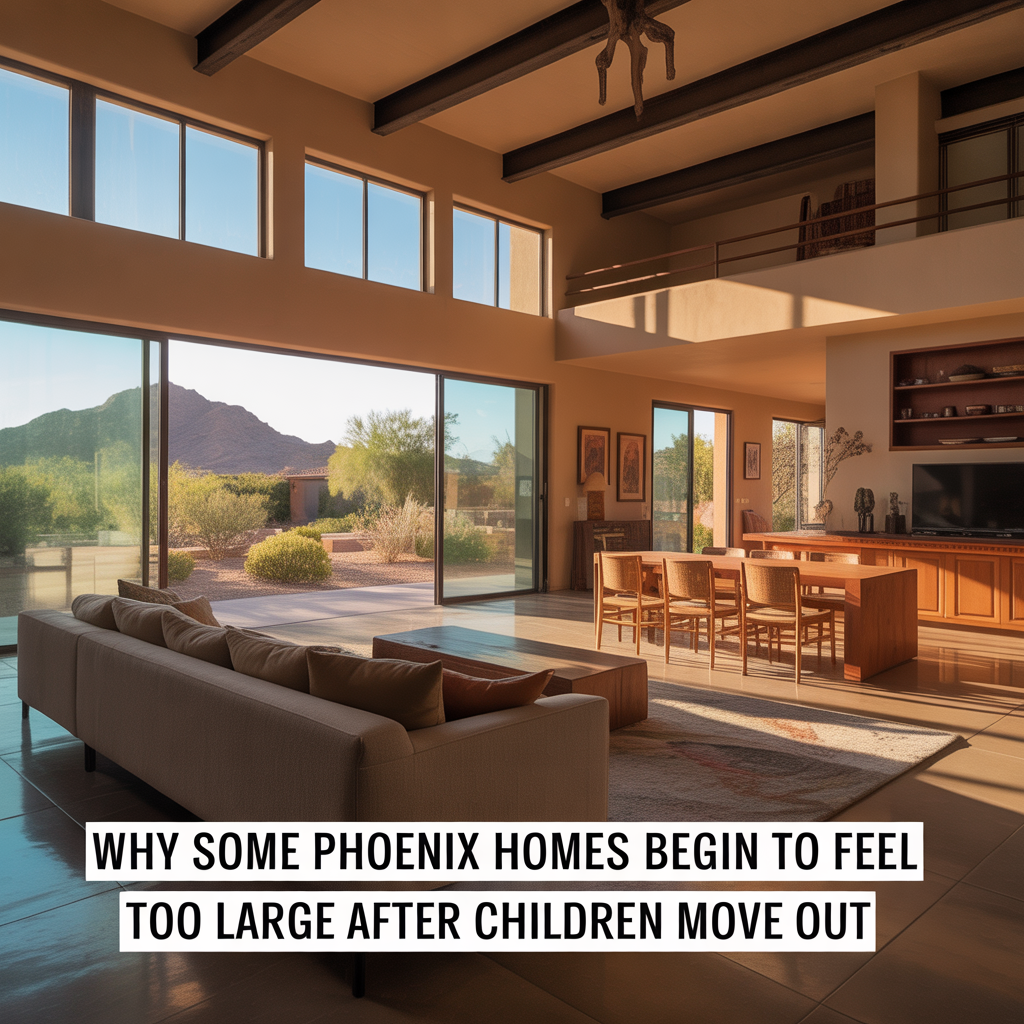
Why Some Phoenix Homes Begin to Feel Too Large After Children Move Out
-

When Homeowners Begin Considering Moving to a Larger Phoenix Home
-

Signs Your Phoenix Home Is Starting to Feel Too Small for Your Family
-

How Desert Landscaping Evolves Over Years of Phoenix Homeownership