Key Freeway Connections in Phoenix

Written by Chad Cabalka → Meet the Expert

Written by Reneé Burke → Meet the Expert

Written by Hilary Marshall → Meet the Expert

Phoenix Lifestyle Guide → [Phoenix Lifestyle Guide] & For more info on Phoenix Real Estate → [Phoenix Real Estate Guide]

Written by: Renee Burke

Phoenix freeways form a web that holds our Valley together, linking suburbs to jobs, schools, and sunsets with remarkable precision. Once you grasp the main connections — how I-10 threads through the heart, Loop 101 arcs north, and Loop 202 belts the south — navigating feels intuitive, not overwhelming. I’ve traced these routes with clients for years, turning what seems complex into simple paths home.

Our system revolves around three spines: I-10 east-west, I-17 north-south, and U.S. 60 diagonal, with loops creating shortcuts and outer rings. These hubs shape daily choices, from morning coffee runs to weekend escapes. Let’s map the essentials.

The Core Spines: I-10, I-17, and U.S. 60

I-10 (Papago and Maricopa Freeways) runs the Valley’s length, from Buckeye through downtown to Chandler. It’s the busiest artery — westbound evenings crawl from Sky Harbor, eastbound mornings flow from suburbs.

  • Key ties: Stack Interchange with I-17 (west Phoenix), Mini-Stack with SR-51/Loop 202 (near airport), Broadway Curve to U.S. 60 (Tempe).
  • Serves: West Valley (Goodyear) to East Valley (Casa Grande gateway).

I-17 (Black Canyon Highway) links Phoenix north to Flagstaff, curving through Glendale. Southbound mornings feed downtown; northbound evenings escape to Anthem.

  • Major node: Stack with I-10, future Loop 303 upgrade.
  • Vital for: North suburbs, Sedona trips.

U.S. 60 (Superstition Freeway) diagonals east from Tempe through Mesa and Apache Junction. Westbound mornings crush from Gilbert; it’s East Valley’s workhorse.

  • Connects: SuperRedTan Interchange (Loop 202), I-10 Broadway Curve.

Beltway Champions: Loops 101 and 202

Loop 101 (Agua Fria, Pima, Price Freeways) traces an inverted U north-to-southeast: west (Avondale), north (Peoria), east (Scottsdale), south (Chandler).

  • Critical junctions: I-10 in Avondale (widening 2026), SR-51 Mini-Stack, Loop 202 in Tempe (weave hotspot), Santan terminus.
  • Unlocks: North Scottsdale, Deer Valley Airport without core traffic.

Loop 202 (Red Mountain, Santan, South Mountain Freeways) belts south: Red Mountain (Tempe to Mesa), Santan (Gilbert to Chandler), South Mountain (Ahwatukee to I-10 west).

  • Standouts: Mini-Stack start, SuperRedTan with U.S. 60, I-10 stacks in Chandler and west Phoenix.
  • Game-changer: Bypasses downtown for East-West Valley hops.

Emerging and Support Links

Loop 303 (Bob Stump Memorial Parkway) rings far West Valley from I-10 near 91st Ave north to I-17. Widening to Glendale eases Buckeye growth.

  • Ties: Future SR-30 south, Loop 101 east.

SR-51 (Arizona Veterans Highway) stubs north from Mini-Stack through Phoenix to Cave Creek. Private toll road speeds central-north access.

SR-143 (Hohokam Expressway) funnels Sky Harbor east; short but essential.

ConnectionLinksBest For
Stack (I-10/I-17)West Valley ↔ DowntownCore transits
Mini-Stack (I-10/202/51)Airport ↔ TempeCentral hub
SuperRedTan (202/60)Mesa ↔ GilbertEast Valley
Loop 101/202 TempeScottsdale ↔ ChandlerBeltway skip
Loop 303/I-10Buckeye ↔ GlendaleWest growth

How Connections Shape Choices

These links dictate lifestyle: South Mountain Freeway saves Ahwatukee 30 minutes to West Valley. Loop 101 spares North Scottsdale the Stack. Construction (Loop 101 Pima 2026) shifts flows — surface arterials like Shea or Baseline bridge gaps.

For homebuyers, proximity to hubs boosts ease: Chandler near Santan/I-10 stacks feels connected without chaos. Test peak drives; what glides off-peak stalls in rush.

Mastering these turns Phoenix’s scale manageable — 80 miles end-to-end becomes neighborhoods away.

If you’re thinking about making a move in Phoenix, you don’t have to figure it out alone. Whether decoding freeway ties for your commute or finding a home where connections flow seamlessly, I’d be happy to guide you. Reach out anytime — together, we’ll navigate the Valley with confidence.

Get the full Phoenix Market Insights → [Market Insights]

Button labeled 'Contact Renee directly' on a blue background.
Logo of RE/MAX featuring the text 'Signature | Renee Burke' with a smiling woman in a light blue blazer.
  • Alt Text Phoenix backyard swimming pool with safety fence and shaded patio where a homeowner discusses insurance liability with an agent in a desert suburban setting.

    Pool Liability and Insurance in Phoenix

  • Alt Text Phoenix backyard with a pergola and patio shade structure being inspected by a homeowner and contractor to maintain outdoor structures in a desert climate.

    Protecting Outdoor Structures and Shade Systems

  • Alt Text HVAC technician inspecting an outdoor air conditioning unit at a Phoenix home while a homeowner discusses system failure and potential insurance coverage.

    HVAC Failures and Insurance Coverage

  • Alt Text Roofing contractor inspecting clay tile roofing on a Phoenix home under bright desert sunlight with desert landscape visible in the background.

    Roof Maintenance for Phoenix Climate Conditions

  • Alt Text Phoenix desert yard with gravel landscaping and a dry riverbed drainage channel directing rainwater away from a home during a storm to prevent water damage.

    Preventing Water Damage in Desert Landscapes

  • Alt Text Phoenix suburban neighborhood during a monsoon storm with dark clouds, strong winds, and rain over desert homes and palm trees.

    How Monsoon Storms Affect Phoenix Homes

  • Alt Text Phoenix homeowner comparing two homeowners insurance policies at a dining table with an advisor, illustrating how coverage structure matters more than price alone.

    Why Policy Structure Matters More Than Premium

  • Alt Text Phoenix homeowner and insurance agent reviewing a homeowners insurance policy with highlighted coverage limits and exclusions at a desk in a bright home office.

    Understanding Coverage Limits and Exclusions

  • Alt Text Phoenix homeowner documenting household belongings such as electronics, furniture, and valuables in a bright living room to illustrate personal property insurance coverage.

    What Personal Property Coverage Actually Includes

  • Alt Text Phoenix homeowner reviewing liability insurance paperwork with an agent during a backyard gathering near a pool and shaded patio at sunset.

    How Liability Coverage Protects Homeowners

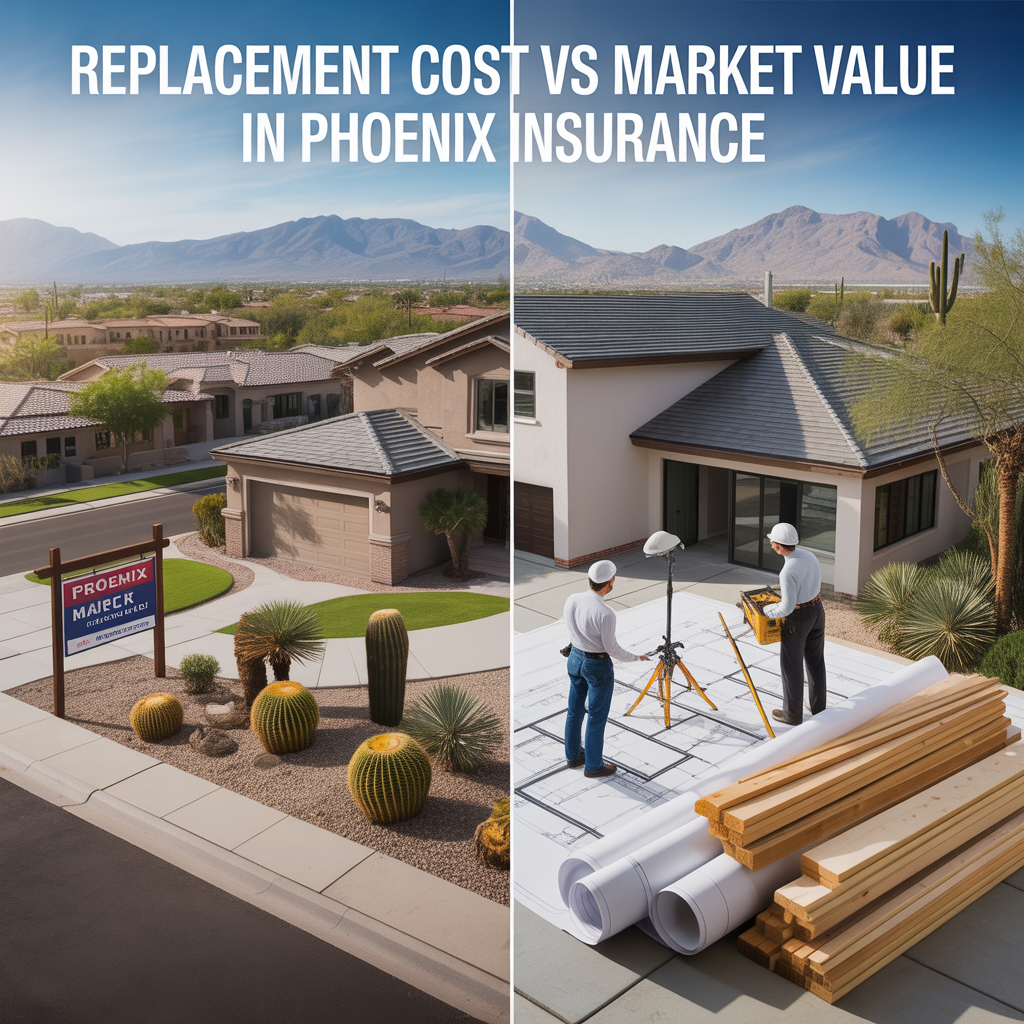
  • Alt Text Split scene showing a Phoenix home with a real estate sign representing market value and contractors with building materials representing replacement cost for insurance coverage.

    Replacement Cost vs Market Value in Phoenix Insurance

  • Alt Text Phoenix homeowner reviewing insurance documents on a laptop while calculating deductible options at a desk with desert sunlight coming through the window.

    Understanding Deductibles Before You Need Them

  • Alt Text Phoenix homeowner reviewing renovation plans and insurance paperwork inside a kitchen being remodeled with contractors installing cabinets and construction tools visible.

    How Renovations Affect Insurance Coverage

  • Alt Text Phoenix homeowner reviewing home insurance documents and renewal paperwork at a kitchen table with desert sunlight coming through large windows.

    When to Review Your Home Insurance Policy

  • Alt Text Contractors reviewing rebuilding plans inside a Phoenix home with construction materials and desert sunlight coming through large windows, illustrating the importance of replacement cost in insurance policies.

    Why Replacement Cost Matters in Phoenix Insurance Policies

  • Alt Text Cozy evening inside a Phoenix home with family relaxing in a warmly lit living room surrounded by personal decor and sunset light, representing the moment a house begins to feel like home.

    When a House Truly Starts to Feel Like Home

  • Alt Text Phoenix suburban neighborhood at sunset with neighbors talking on sidewalks and children riding bikes, illustrating how neighborhood living builds a sense of community and belonging.

    How Phoenix Neighborhood Living Builds a Sense of Belonging

  • Alt Text Long-term Phoenix homeowner relaxing on a front porch at sunset in a quiet suburban neighborhood with mature desert landscaping, representing stability and long-term home satisfaction.

    Why Stability Plays a Major Role in Long-Term Home Satisfaction

  • Alt Text Morning routine inside a Phoenix home with a homeowner making coffee in a sunlit kitchen surrounded by family photos and familiar living spaces, illustrating how familiarity shapes daily life in a home.

    How Familiarity Changes the Experience of Living in a Home

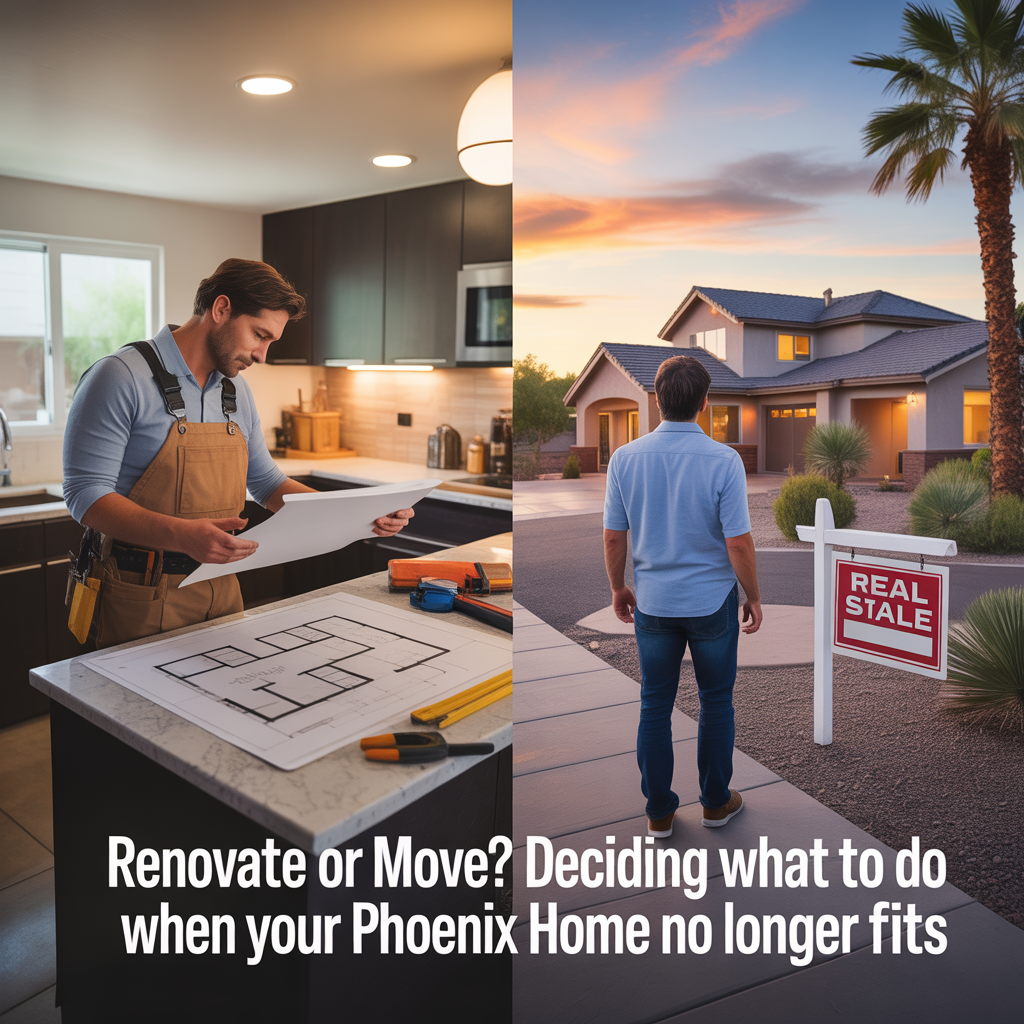
  • Alt Text Split scene showing a Phoenix homeowner considering renovation plans indoors while also looking at a larger home for sale outside, representing the decision between renovating or moving.

    Renovate or Move? Deciding What to Do When Your Phoenix Home No Longer Fits

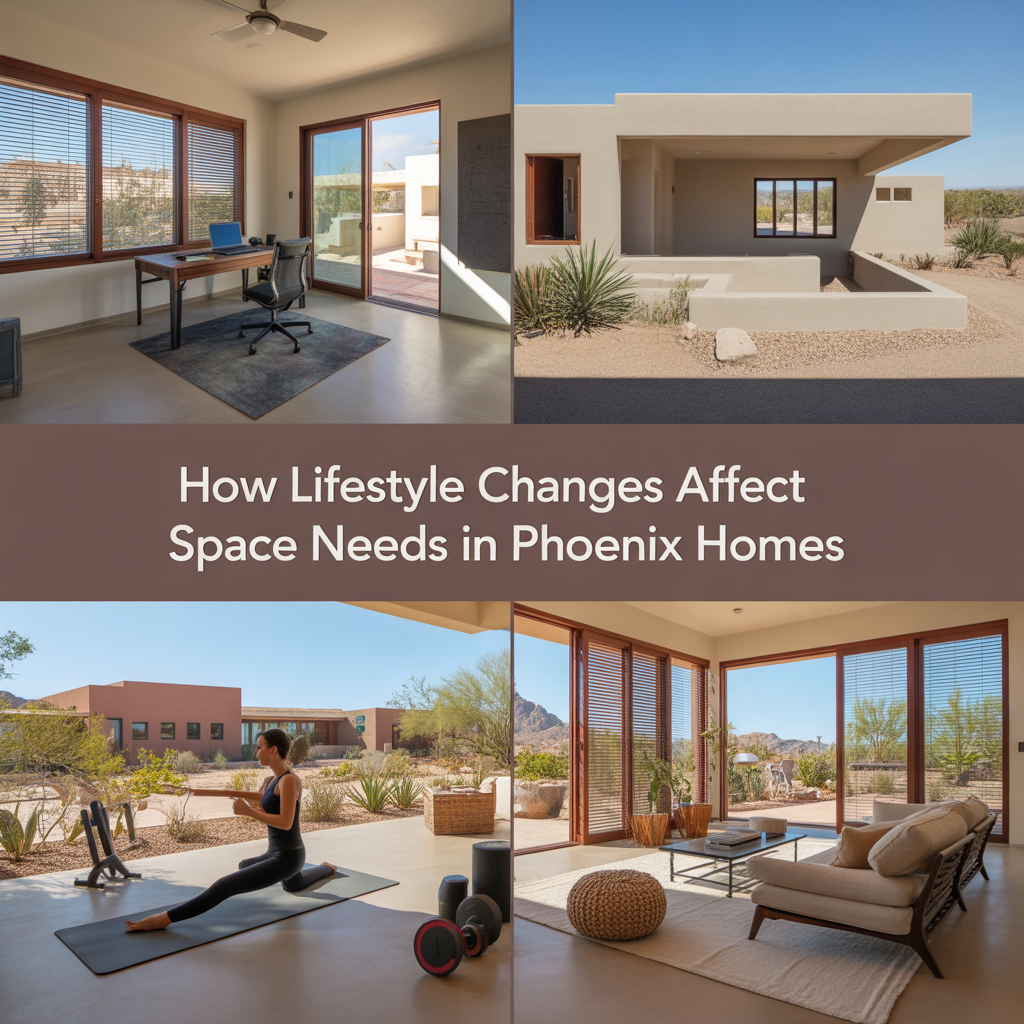
  • Alt Text Interior of a Phoenix home showing a flexible living space used as a home office, workout area, and lounge, illustrating how lifestyle changes influence space needs.

    How Lifestyle Changes Affect Space Needs in Phoenix Homes

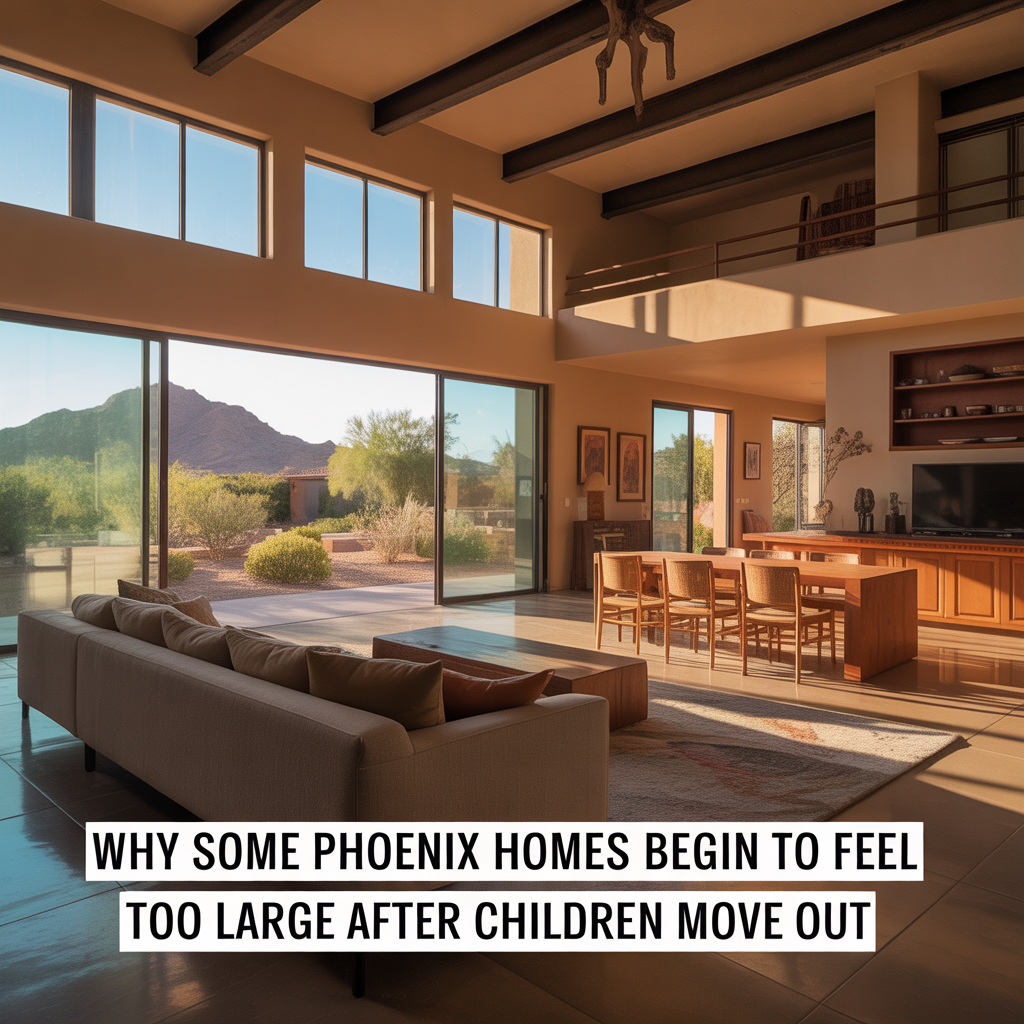
  • Alt Text Spacious Phoenix home interior with empty living and dining areas and desert sunlight through large windows, representing a house that feels too large after children move out.

    Why Some Phoenix Homes Begin to Feel Too Large After Children Move Out

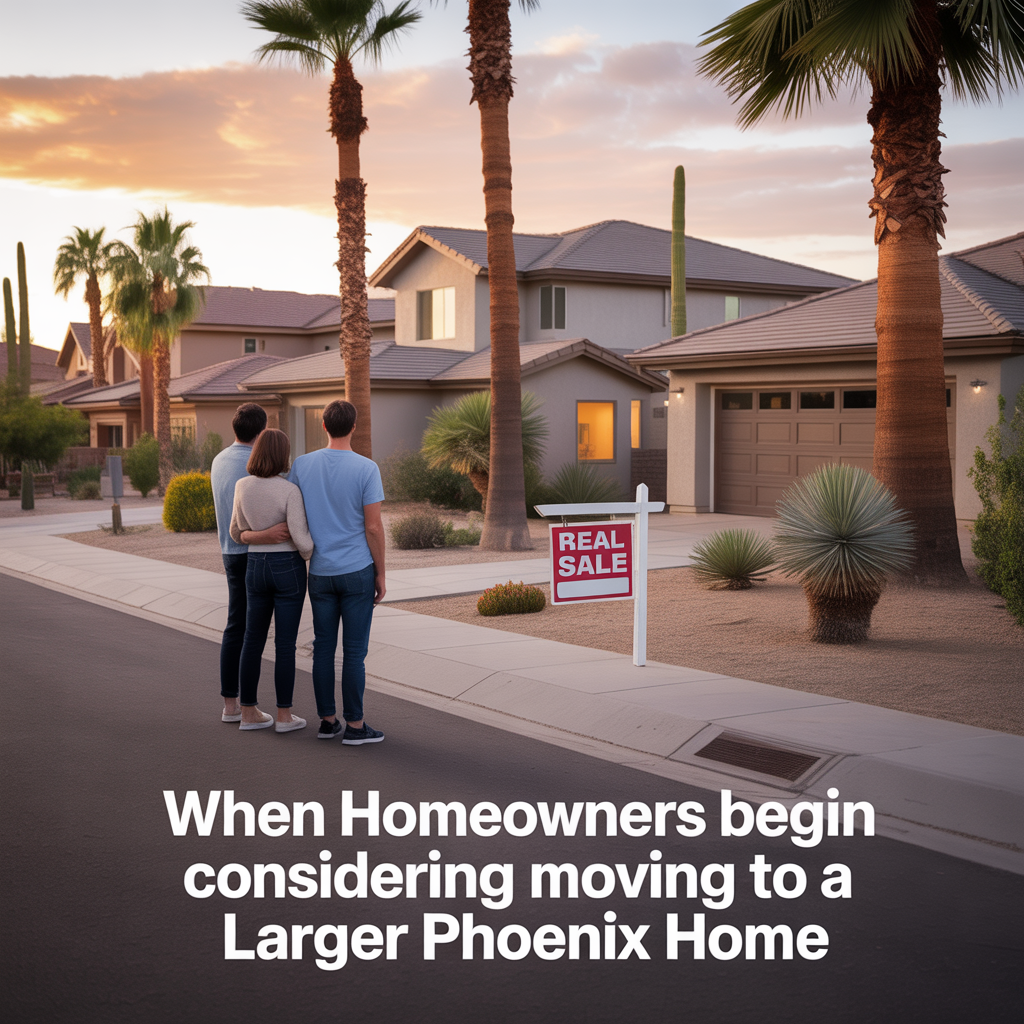
  • Alt Text Family standing outside their Phoenix home at sunset looking toward a larger nearby house with a real estate sign, representing homeowners beginning to consider upgrading to a bigger home.

    When Homeowners Begin Considering Moving to a Larger Phoenix Home

  • Alt Text Interior of a busy Phoenix family home with toys, school supplies, and workspaces crowded together, illustrating a growing family starting to outgrow their living space.

    Signs Your Phoenix Home Is Starting to Feel Too Small for Your Family

  • Ideogram Prompt (1:1) Side-by-side style desert yard evolution scene at a Phoenix home showing mature desert landscaping developed over many years: large established saguaro cactus, agave clusters, desert trees providing shade, natural stone pathways, and gravel xeriscape design surrounding a modern Southwestern home. Warm late-afternoon Arizona light, distant desert mountains, and a calm, well-established yard that reflects long-term homeownership and thoughtful landscape growth. Architectural landscape photography, wide-angle perspective, highly detailed. Text in image: "How Desert Landscaping Evolves Over Years of Phoenix Homeownership"

    How Desert Landscaping Evolves Over Years of Phoenix Homeownership

More from Denver

Most recent posts
    Loading…

    Discover more from Lairio — Real Estate Intelligence

    Subscribe now to keep reading and get access to the full archive.

    Continue reading