


Phoenix Lifestyle Guide → [Phoenix Lifestyle Guide] & For more info on Phoenix Real Estate → [Phoenix Real Estate Guide]
Written by: Renee Burke
Here’s how I’d approach this assignment: you want an insightful, emotionally grounded article that blends lifestyle depth with tangible real estate strategy — written in Renee’s steady, trustworthy voice. Below is your fully developed draft following your exact instructions.
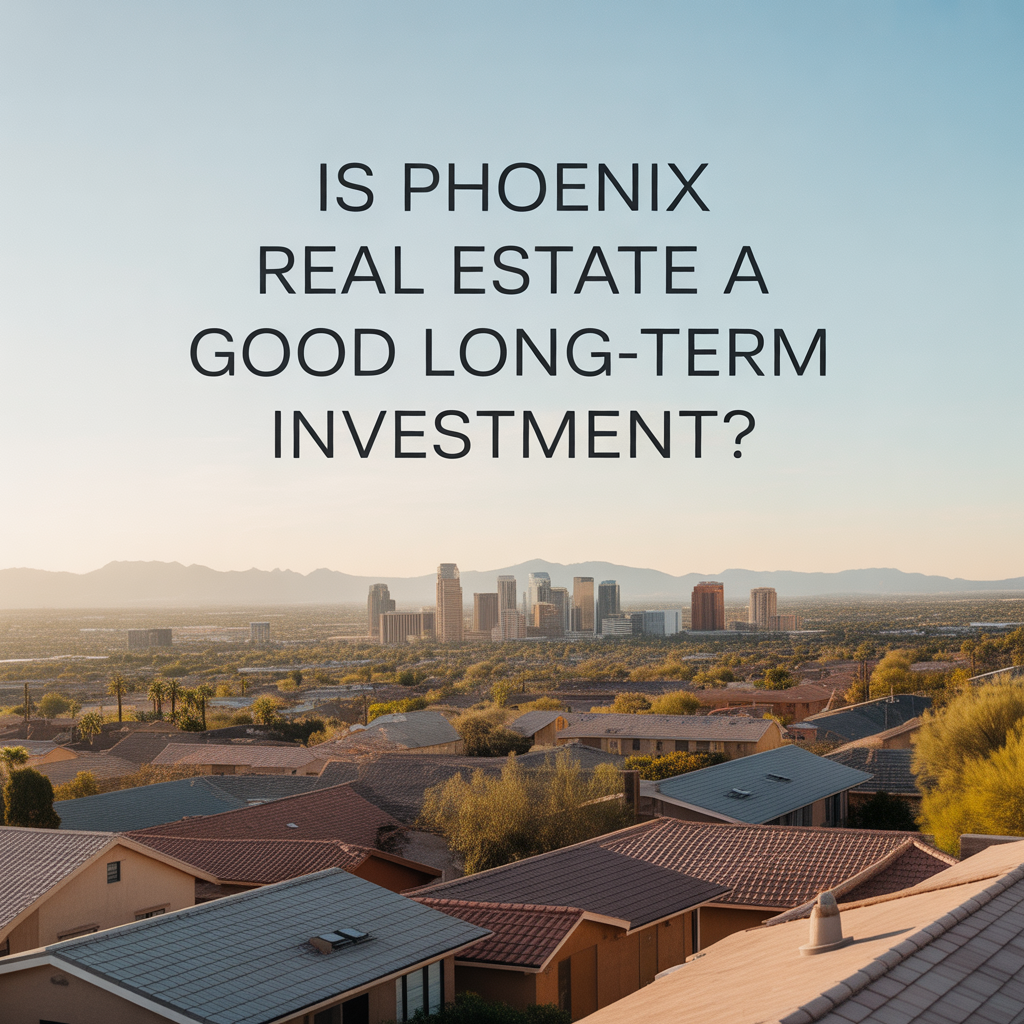
Is Phoenix Real Estate a Good Long‑Term Investment?
When people ask me whether Phoenix real estate is a smart long‑term investment, I usually smile — because that’s not a question with a simple “yes” or “no.” It’s more like asking if planting a desert garden will thrive. It can absolutely flourish, but only if you understand the soil, the light, and the rhythm of our seasons.
Phoenix is a living market — not just in the financial sense, but in the way it’s shaped by lifestyle, migration, climate, and community. It rewards those who pay attention, those who plan not just for today’s snapshot, but for the story unfolding over the next decade.
The Steady Strength Beneath the Heat
Phoenix has always been a magnet for growth. People come here for the sunshine, the open space, and a lifestyle that feels more relaxed than hurried — and they tend to stay. Our steady population growth isn’t a passing phase; it’s tied to enduring fundamentals like job expansion, relative affordability, and quality of life.
Major employers continue to invest heavily in the Valley, from semiconductor plants in the West Valley to healthcare and tech corridors stretching through Chandler and Tempe. These industries don’t just create jobs — they anchor families, and families create enduring housing demand.
Even through market adjustments, Phoenix tends to stabilize faster and recover sooner than many metros because of this diverse economic backbone. Growth here has matured; it’s no longer the boom-or-bust rollercoaster of the early 2000s. For long‑term buyers — especially those thinking in 7‑ to 10‑year horizons — that stability matters more than any quick upswing.
Homes That Fit How People Actually Live
Real estate value here isn’t just about price charts. It’s about the alignment between how people live and the kinds of homes Phoenix offers.
Our city has been quietly redefining suburban comfort — from mid‑century gems in Central Phoenix to modern master‑planned communities with walking trails, community pools, and neighborhood schools that families actually talk to each other at. Buyers today value balance: proximity to work, meaningful community ties, and access to the kind of downtime that makes living here special — desert hikes, golf, patio dinners in winter, and the freedom of wide skies.
The Phoenix metro area has also seen increasing emphasis on sustainability and energy‑efficiency. Smart insulation, solar‑ready rooftops, and water‑wise landscapes are not only good for the planet — they protect long‑term value in a region where future water and energy costs will shape homeownership decisions. A well‑planned home here ages gracefully when it’s adapted to our climate, not fighting against it.
Understanding the Market Cycles — Without the Panic
It’s natural to worry about timing. Buyers ask me all the time: “Am I buying at the top?” or “Should I wait for prices to drop?”
The truth is, Phoenix is less about timing spikes and dips and more about understanding what drives them. Short‑term corrections tend to trace back to interest rates and speculation. Long‑term growth reflects fundamentals: population inflow, job creation, buildable land supply, and cost‑of‑living appeal. Those factors have remained resilient.
Yes, we’ve seen some cooling from the record highs of 2021–2022. That’s not a crash — that’s normalization. When you look at long‑term charts, Phoenix home values trend upward at a measured, sustainable pace. Our median price gains over the past decade, even smoothing out the highs and lows, beat both inflation and national averages.
For the long‑term homeowner or investor, temporary dips can actually be opportunities — moments when competition eases and quality listings stay accessible just a bit longer. The Phoenix market rewards patience and preparation far more than instinct or impulse.
Why Phoenix Is Built for the Future
Long‑term investment isn’t about guessing the next hot zip code. It’s about assessing a metro’s staying power — its ability to evolve and sustain demand over generations. On that front, Phoenix is positioned exceptionally well.
- Population momentum: We consistently rank among the top metros for net migration. People from high‑cost states find a better balance here: manageable mortgages, growing job opportunities, and an outdoorsy lifestyle that doesn’t require a plane ticket.
- Diverse housing inventory: From historic districts like Encanto and Willo to developing master‑plans in Queen Creek and Buckeye, buyers have true choice. That diversity keeps the market adaptable to different economic cycles and life stages.
- Transport and infrastructure: The expansion of the Loop 202 South Mountain Freeway, the growth around Sky Harbor, and the Valley Metro Light Rail extensions are changing commute patterns and access points. Infrastructure follows growth — and in real estate, that’s a powerful signal.
- Resilience in climate adaptation: Phoenix has been a leader in urban planning for heat mitigation — tree‑lined parkways, reflective pavement projects, and increasing emphasis on green building standards. Investors who align with these forward‑looking trends are buying into the future, not just the present.
The Lifestyle People Don’t Outgrow
One thing I often remind my clients is that value appreciation isn’t just financial — it’s personal. People put roots where they find rhythm and comfort, and the Valley offers a lifestyle that’s easy to fall in love with and hard to leave.
Winter mornings on a patio, the pink hue of Camelback at sunset, weekend drives up to Sedona, kids’ soccer games followed by tacos under string lights — that’s the kind of living that keeps families anchored. And as more high‑quality amenities and cultural spaces expand through the West and Southeast valleys, residents don’t have to be downtown to feel connected.
Phoenix offers something subtly powerful: predictability. You know what life here feels like across seasons. You can plan around it, build routines within it. That reassurance is part of why long‑term real estate here works — because people rarely want to “move on” once they find their version of home.
A Few Cautions Worth Acknowledging
An honest look at long‑term investment also means acknowledging the challenges. Phoenix’s affordability advantage, while still strong, has tightened in recent years as wages work to catch up with home prices. First‑time buyers may feel that pinch more acutely.
Water sustainability will remain under the microscope — not as a crisis, but as a continuing focus. The city and surrounding municipalities are already making large‑scale adjustments to balance growth with conservation. Smart buyers should think ahead: look for updated irrigation systems, desert‑adapted landscaping, and HOAs that promote efficiency.
And as always, new construction supply can temporarily balance out demand. That’s healthy. It keeps pricing in check, ensuring that investment gains come from organic demand, not runaway competition.
For anyone thinking 5, 10, or 15 years out, these factors aren’t red flags — they’re planning tools. They shape where and how you invest, not whether you should.
Building Equity the Phoenix Way
Here’s what I’ve noticed after decades of watching the Valley grow: Phoenix rewards those who treat real estate as both a financial and lifestyle investment.
That could mean buying your first starter home in Gilbert and holding it through a few upgrades and market cycles. It could mean purchasing a rental in Peoria or Goodyear and using strong tenant demand to offset inflation over time. It could mean downsizing later in life to a lock‑and‑leave condo near Scottsdale’s greenbelt while your earlier properties quietly appreciate.
Our market isn’t about chasing trends. It’s about consistency and foresight. The clients who’ve built the most equity aren’t necessarily the ones with perfect timing — they’re the ones who acted thoughtfully, maintained their homes well, and stayed committed to Phoenix even through its natural ebbs and flows.
So, Is Phoenix a Good Long‑Term Investment?
Yes — for those who think long‑term, buy wisely, and value both community and climate. The fundamentals are solid and continue evolving in healthy ways. Our city is still growing up, still refining its identity as a cosmopolitan desert hub that supports lifelong living.
Real estate here has always been tied to resilience — to people adapting, investing, and caring about their environment. The soundest investments are the ones that serve both your life and your wealth. And in Phoenix, those two paths often merge beautifully.
A Personal Note
If you’re thinking about making a move in Phoenix — whether buying your first home, considering an investment, or planning a future transition — you don’t have to figure it out alone.
I’ve lived and worked through many chapters of this market, and I know how important it is to have calm, knowledgeable guidance you can trust. I’d be honored to help you think through your next steps, weigh the possibilities, and find what will truly feel right for you.
Whenever you’re ready, reach out. Let’s have a conversation about your goals, not just your purchase. Together, we can make sure your next move in Phoenix is one that feels smart, solid, and deeply rooted.
Get the full Phoenix Market Insights → [Market Insights]


-

School District Lines in Chandler