



Phoenix Lifestyle Guide → [Phoenix Lifestyle Guide] & For more info on Phoenix Real Estate → [Phoenix Real Estate Guide]
Written by: Renee Burke
I often sit with clients over coffee, maps spread out, talking through what makes Phoenix real estate stand apart from other Sun Belt hotspots like Austin, Las Vegas, or Charlotte. It’s not about crowning a winner — it’s about understanding what “holding value” truly means in markets shaped by sun, growth, and the dreams people chase here. Over the years, I’ve seen Phoenix quietly build a case for steady, resilient appreciation that feels more dependable than flashy.
Phoenix doesn’t always top the headlines like some neighbors, but its blend of economic anchors, lifestyle pull, and measured growth gives it an edge for those planning 10 years out. Let’s break it down thoughtfully, comparing key players without the hype.
Price Stability: Phoenix’s Quiet Strength
Sun Belt metros all rode the post-pandemic wave, but their paths diverged. Austin exploded early, with prices surging 80% from 2019–2022, only to cool sharply — down nearly 10% from peaks by 2026 as inventory floods from overbuilding. Las Vegas mirrors that: heavy tourism reliance led to volatile swings, with values dipping 5–7% in corrections while casino cycles dictate mood.
Phoenix, by contrast, climbed more gradually — about 60–70% appreciation over the decade, settling at a median around $460,000–$475,000 now. We’ve softened just 2–3% year-over-year, but our floor feels firmer. Why? Diverse job engines like semiconductors (TSMC), healthcare (Mayo Clinic), and logistics keep demand humming, even when rates rise. Charlotte and Atlanta show similar steadiness, but Phoenix edges them with lower exposure to single industries — no over-reliance on finance or film like those hubs.
In rankings, Phoenix often lands mid-pack for buyer appeal, which tells me it’s balanced: not overheated like Miami (46% affordability strain), nor stagnant like some Texas oversupply zones.
Inventory and Supply: Room to Breathe Without Chaos
One of the biggest shifts? Inventory balance. Austin and Dallas now boast 5–6 months’ supply from builder booms, pressuring prices downward. Tampa and Orlando face investor pullback, with new regs curbing big buys, leading to softer resales.
Phoenix sits at 4–4.5 months — healthy, not flooded. Our East Valley (Chandler, Gilbert) holds tight at 4 months with family demand, while West Valley offers negotiation at 5 months. This isn’t the frenzy of 2021, but it’s not a fire sale either. Vegas struggles more, with 5.5 months and tourism slumps hitting condos hard. Phoenix’s master-planned communities in Queen Creek keep supply targeted, preserving value better than sprawl-heavy rivals.
Affordability and Lifestyle Lock-In
Holding value means people stay put, building equity without regret. Phoenix shines here: median price-to-income around 32–35%, better than Austin’s 34%+ or Nashville’s 35%. A $450,000 home with our low property taxes (0.6–0.7%) and endless patio living keeps owners rooted — fewer “I overpaid” stories than in high-HOA Florida spots.
Compare to San Antonio or Houston: cheaper entry ($270k–$300k medians), but flood risks and sprawl erode long-term appeal. Charlotte matches our stability (31% ratio), but lacks Phoenix’s outdoor rhythm — Camelback hikes, winter golf, desert sunsets that make “staying” feel like a gift. Retirees and families stick around here, boosting resale reliability over transient Vegas or party-driven Miami.
Economic Backbone: Jobs That Anchor Homes
Sun Belt strength lives in employment. Phoenix’s 4–5% annual job growth (tech, health, manufacturing) outpaces tourism-tied Jacksonville or Orlando. TSMC’s $65 billion plant alone secures West Valley values for decades. Austin boomed on tech, but lost ground to remote shifts; its 2–3% growth now lags our 3.5%.
Raleigh and Charlotte compete closely — strong in finance/tech — but Phoenix’s airport (Sky Harbor expansions) and infrastructure (Loop 202) make commutes seamless, enhancing suburban holds. Houston’s energy volatility hurts; Phoenix diversifies quietly, like a well-tended cactus thriving through dry spells.
Risks and Realities: No Market’s Perfect
Honesty time: Phoenix isn’t flawless. Water conservation talks loom larger than in wetter Atlantas, and insurance costs rose 20% post-heat waves. But we adapt — solar mandates, greywater systems — turning challenges into value-adds.
Austin overbuilt rentals, diluting single-family gains. Vegas bets on events; a weak convention year stings. Phoenix’s caution (targeted zoning) avoids those traps, holding values 5–10% above peers in downturns.
Head-to-Head: How They Stack Up
Here’s a clear snapshot of 2026 medians, trends, and hold strength:
| Metro | Median Price | YoY Change | Months Supply | Price-to-Income | Long-Term Edge |
|---|---|---|---|---|---|
| Phoenix, AZ | $460k–$475k | -1–2% | 4–4.5 | 32–35% | Diverse jobs, lifestyle lock-in |
| Austin, TX | $420k | -2–3% | 5–6 | 34%+ | Tech volatile, oversupply |
| Las Vegas, NV | $425k | -1–2% | 5.5 | 36% | Tourism swings, condo glut |
| Charlotte, NC | $379k | 0–1% | 3–4 | 31% | Steady, but less sun appeal |
| Tampa, FL | $351k | -1% | 4.5 | 35% | Hurricanes, investor regs |
| Atlanta, GA | $374k | 0% | 4 | 30% | Traffic, urban sprawl |
Phoenix doesn’t lead every column — Charlotte wins affordability — but our combo of stability, growth, and liveability holds values best for patient owners.
Why Phoenix Wins for Your Nest Egg
After guiding families through these comparisons, one truth stands out: Phoenix real estate holds value because it fits life here — reliably sunny, steadily growing, thoughtfully planned. We’re not the cheapest entry like San Antonio, nor the flashiest like pre-correction Austin. We’re the one you keep, upgrade, and pass down.
Clients who chose us over flashier spots years ago? Their equity grew 6–8% annually, buffered by our resilience. It’s the saguaro effect: deep roots weather any storm.
If you’re thinking about making a move in Phoenix — weighing it against other Sun Belt options, or ready to plant roots in the Valley — you don’t have to figure it out alone.
I’ve walked this market’s paths and compared notes across metros for years. Let’s talk your vision: budget, timeline, must-haves. I’d love to share specifics on neighborhoods that match your life and outshine the rest.
Reach out when it feels right. Together, we’ll find the spot that holds not just value, but joy — for years to come.
Get the full Phoenix Market Insights → [Market Insights]


-

How the Phoenix Desert Climate Shapes Everyday Life Inside the Home
-

How Phoenix Weather Patterns Shape Everyday Home Routines
-

Why Homes Often Feel More Comfortable After the First Year of Ownership
-

How Living in Phoenix Changes the Way Homeowners Use Their Homes
-
What New Phoenix Homeowners Learn During Their First Year of Ownership
-

How Daily Life Changes After the First Year of Living in a Phoenix Home
-
Turning Irregular Costs Into Predictable Ones
-

Budgeting for Ongoing Ownership
-
Repair vs Replace vs Defer Decisions
-

Planning Homeownership Like a Long-Term Asset
-

What Home Expenses You Can Safely Delay
-

Stopping Cost Creep Early
-

Cash Flow vs Net Worth Stress
-
Why “It’s Not That Much” Adds Up
-

Warning Signs Your Ownership Budget Is Tightening
-

The Cumulative Cost of Small Home Repairs
-
Designing Budgets Around Local Conditions
-
Utility Costs Over Time in Desert Climates
-

Insurance Increases Explained for Arizona Homeowners
-
How Inflation Impacts Phoenix Homeownership Costs
-

Avoiding Debt-Driven Homeownership Decisions
-

Replacing Systems on Your Timeline
-

Why Emergency Repairs Cost More
-

Timing Major Expenses Without Financial Shock
-
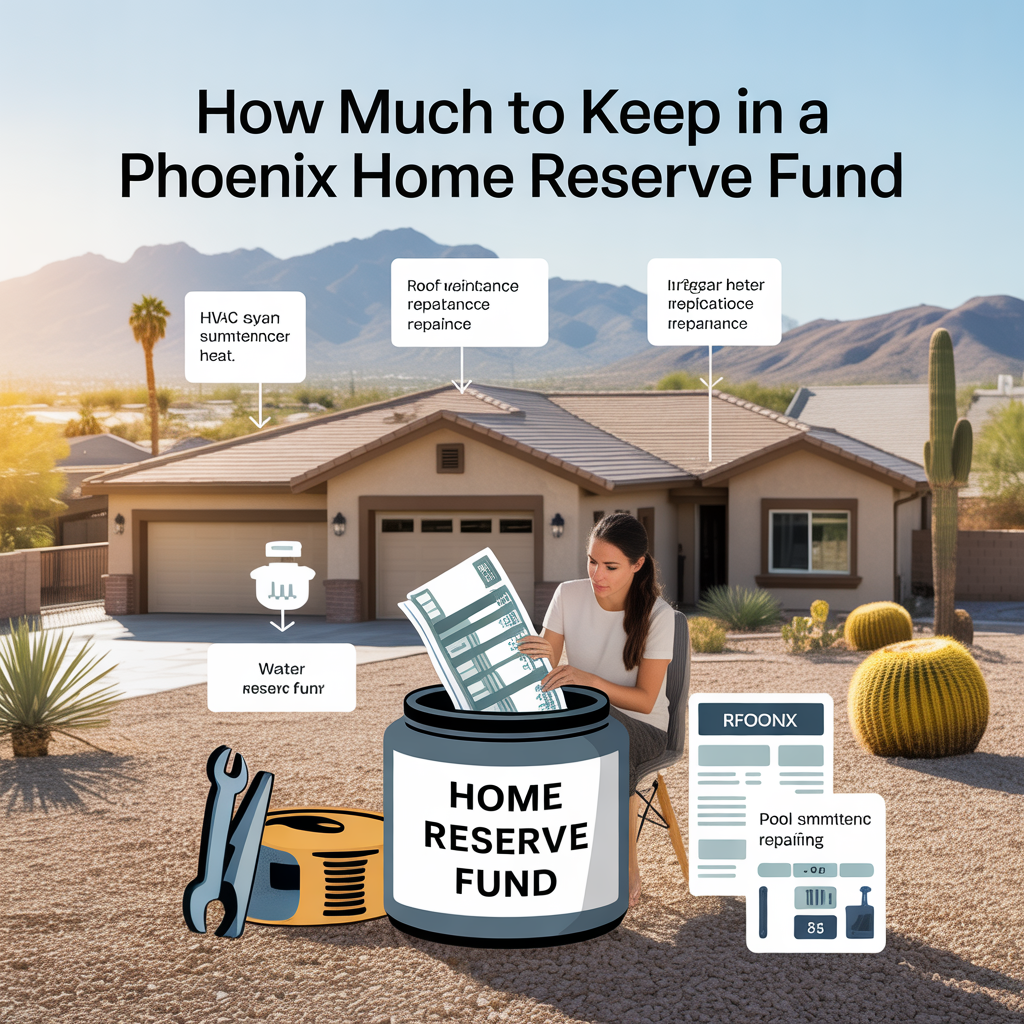
How Much to Keep in a Phoenix Home Reserve Fund