


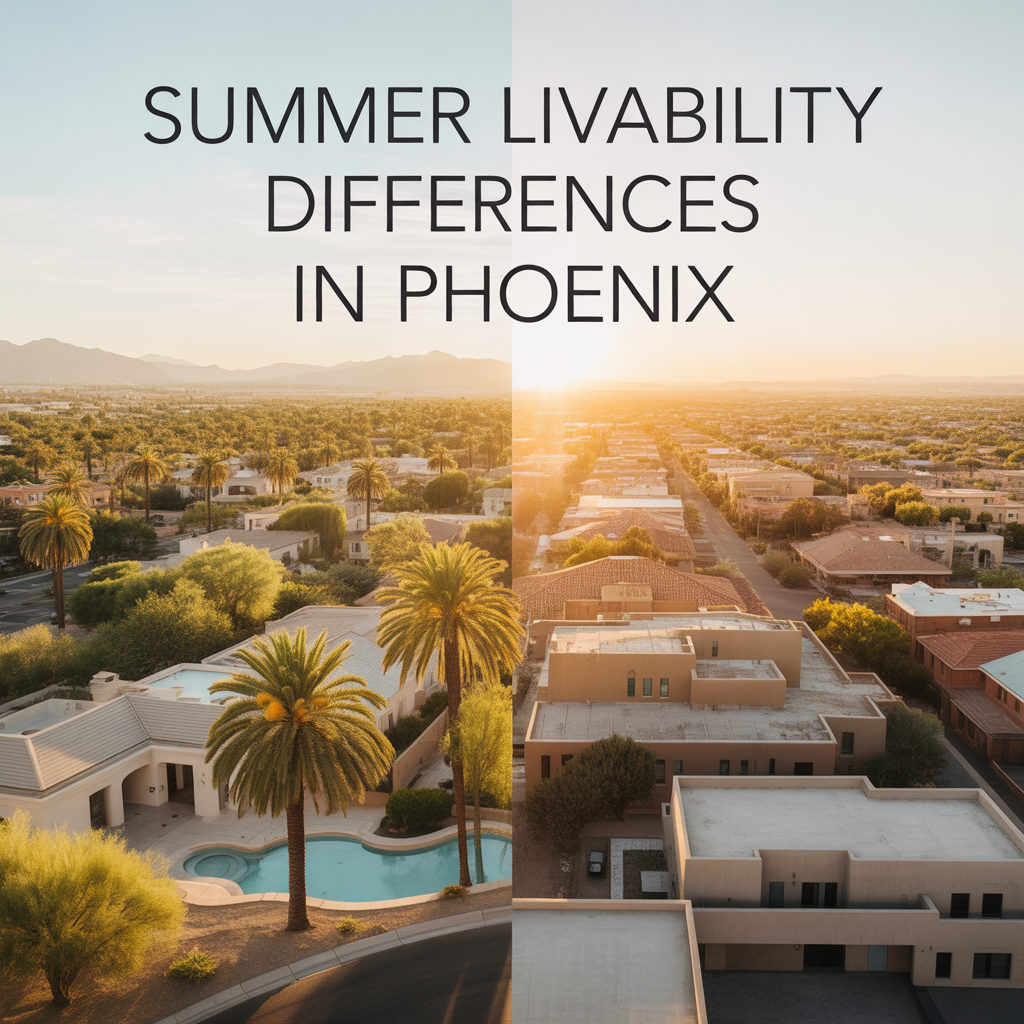
Phoenix Lifestyle Guide → [Phoenix Lifestyle Guide] & For more info on Phoenix Real Estate → [Phoenix Real Estate Guide]
Written by: Renee Burke
If you’ve ever wondered what it’s really like to live through a Phoenix summer, you’re not alone. Whether you’re planning a move here, have recently relocated, or are simply weighing the realities of desert living, understanding how our summers shape daily life is essential. Phoenix isn’t just another warm-weather city—it’s an entirely different rhythm. Summer has its own texture, pace, and personality, and how you experience it depends deeply on where in the Valley you choose to live.
Most people hear “Phoenix summer” and picture shimmering asphalt and triple-digit heat. They imagine air conditioners running endlessly or cars too hot to touch. And yes, that’s part of it—but it’s not the whole story. The truth is, livability here doesn’t vanish with the rising mercury. It simply shifts. You learn where shade falls earlier in the day, what times to grocery shop, which neighborhoods keep their breezes longer, and which communities make desert summers surprisingly comfortable.
Let’s take an honest look at how summer livability actually varies across the Phoenix metro, and what those differences mean when finding a home that fits your lifestyle year-round.
Elevation Matters More Than You Think
Phoenix is often described as one big flat valley, but the reality is more nuanced. The Valley of the Sun spreads across microclimates influenced by elevation, mountain proximity, and even pavement density. These subtle shifts can make a neighborhood feel noticeably different once the calendar shifts to June, July, and August.
For example, higher-elevation areas like Ahwatukee Foothills, North Scottsdale, and parts of Desert Hills often run three to five degrees cooler than the central city during peak heat. That might not sound dramatic, but step outside at 5 p.m. on a 113° day in Midtown versus 108° in the foothills, and you’ll feel the difference. Cooler overnight lows in those higher areas also mean mornings and evenings are more comfortable for walks, workouts, or simply sitting outside.
Meanwhile, dense urban neighborhoods like Downtown Phoenix and parts of Tempe tend to hold on to heat longer because of what’s known as the “urban heat island effect.” Concrete, glass, and asphalt absorb sunlight throughout the day, radiating warmth back into the air well after dark. The tradeoff, of course, is access—living in central areas means shorter commutes, more restaurants, and a youthful, walkable energy. So part of “livability” is simply aligning your lifestyle priorities with how you prefer to experience our long summers.
Shade, Wind, and Positioning: Micro-Comfort Zones
Beyond elevation, the way a home sits on its lot can shape your daily comfort more than you might expect. West-facing backyards, for instance, take the full brunt of the late-afternoon sun—an important consideration if you love alfresco dining or plan to enjoy your pool after work. East-facing patios, on the other hand, stay shaded and cooler through late afternoon, making them ideal for summer lounging.
Communities with mature landscaping—large mesquite trees, palo verdes, or desert willows—often create natural shade corridors that dramatically temper the heat. Drive through Arcadia or the older parts of North Central Phoenix in July, and you can instantly see why residents treasure those lush canopies. It’s not just charm; it’s craftsmanship designed to soften the sun.
Even small details like breeze patterns matter. Homes near the northern and eastern edges of the Valley often benefit from light winds descending from surrounding ranges like the McDowells or South Mountain, helping move warm air and cool evenings faster. In contrast, interior pockets within heavily built-out suburbs can become still and stagnant by late afternoon.
Pool Culture and Community Design
For many Phoenicians, pools aren’t just a luxury—they’re a lifestyle feature that defines how summers unfold. But how those pools integrate into neighborhood life varies widely.
In master-planned communities like Eastmark in Mesa, Morrison Ranch in Gilbert, or Vistancia in Peoria, summer livability is thoughtfully designed into everything from shaded play parks to club-style community centers with splash pads and event calendars that shift for summer hours. It’s a built-in social rhythm: early-morning dog walks, late-evening pickleball games, and families gathering as the sun goes down.
Older neighborhoods such as Biltmore, Uptown, or Windsor Square may not have shared amenities, but private backyard pools are standard—and often beautifully shaded, even framed by mature citrus trees. Here, summer is more intimate and personal. It’s about gracefully adapting your home to the heat: misting systems, pergolas, well-placed fans, and patience for monsoon season’s ragged bursts of beauty.
The Monsoon Effect: A Reprieve and a Reminder
Speaking of monsoon season, this is one of the Valley’s most surprisingly livable—and misunderstood—chapters. From late June to early September, moist air from the Gulf of Mexico shifts our dry heat into a more dynamic pattern of towering clouds, distant thunder, and the occasional electric storm that breaks the desert tension. Those evenings after a monsoon rain are among Phoenix’s most spectacular—a brief moment when the air feels alive again.
Neighborhoods surrounded by open desert or situated along mountain slopes—like Anthem or the far East Valley around Las Sendas—often experience these storms firsthand, complete with cooler bursts of wind and the scent of creosote in the air. Lower, more urban areas can feel steamier after a storm passes, since rainwater on hot pavement adds humidity back into the air. Again, it’s a tradeoff: nature’s drama versus urban convenience.
The Pace of Summer Life
More than any other season, summer sets the tone for how Phoenicians live day-to-day. Schedules shift. Gyms and parks fill before 8 a.m. Families plan errands and events early in the day or after sunset. Restaurants adapt with broader delivery options and shaded patios equipped with cooling misters. There’s an unspoken understanding across the city: you move with the sun, not against it.
This seasonal rhythm actually deepens community connection in a way that newcomers often don’t expect. When you choose to live in Phoenix year-round, you learn to cherish the stillness of a quiet mid-afternoon or the way neighbors gather outside just after dusk when temperatures drift below 100°. There’s beauty in that pacing—it’s a reminder that livability isn’t only about comfort; it’s about intention.
Energy Use and Home Design
Of course, practical comfort matters too. How a home handles summer heat will profoundly shape your experience here—and your utility bills. Modern construction in areas like North Peoria, Chandler, and Queen Creek often incorporates advanced insulation, low-E windows, sealed ducts, and strategic shade design that make newer homes impressively efficient. A well-built home can maintain indoor comfort without overburdening the A/C, even on a record-hot day.
In older properties, particularly those built before the 1990s, you’ll want to pay attention to roof materials, window upgrades, and airflow design. Many classic ranch-style homes have been updated, but others may still rely on older systems that struggle in sustained heat. This doesn’t mean those homes aren’t livable—far from it. With small upgrades like reflective roofing, improved attic ventilation, or additional shade structures, even mid-century homes can feel surprisingly cool and inviting in summer.
Community Differences in Summer Livability
If you’re comparing what it’s like to live in different parts of Phoenix during the summer, here’s how the lived experience often breaks down:
- North Scottsdale & Carefree: Cooler evenings, more natural desert breeze, and slightly lower average temps make outdoor life more feasible. The tradeoff: longer drives to central amenities.
- Central Phoenix: The highest heat retention but the richest culture and dining scenes. If you love walkability, you’ll simply adjust your hours and route your day around shaded streets.
- East Valley (Gilbert, Chandler, Mesa): Family-centered suburban comfort with plenty of parks and planned shading. Monsoon activity can feel heavier here but adds a refreshing break from dry heat.
- West Valley (Peoria, Surprise, Buckeye): Rapidly growing and more exposed sun-wise, but modern infrastructure and community pools make these areas surprisingly forgiving.
- Ahwatukee & South Mountain Foothills: The sweet middle ground—higher elevation, shade from the mountain range, and quick city access. The airflow here gives evenings a distinctly cooler feel.
Every pocket of the Valley has its own micro-livability signature in summer. Knowing those nuances is part of what makes finding the right home here an art, not just a process.
Why Summer Livability Shapes Real Estate Decisions
For buyers and sellers alike, understanding these distinctions is key. A home’s livability in summer isn’t just about weather comfort—it directly impacts long-term satisfaction, lifestyle, and even resale value. Buyers moving from milder climates often overestimate the “hardship” of summer, while locals know it’s simply a different pace of living. Positioning—both in location and design—often matters just as much as square footage or finishes.
Sellers, on the other hand, benefit from highlighting these features honestly. If you’re listing a home in the heat of July, showcasing energy-efficient systems, shaded outdoor spaces, or upgraded cooling designs makes a tangible difference in how buyers perceive the property.
A Different Kind of Home, A Different Kind of Beautiful
Summer in Phoenix teaches you to slow down, notice the beauty in routines, and embrace what the desert truly is: resilient, intentional, and quietly stunning. Once you learn how to live with it, not against it, you start to see the city differently. There’s a calm that comes with knowing your early-morning coffee on the patio is your moment before the sun rises high; a peace in that late-evening swim as cicadas hum in the distance.
Phoenix may be defined by heat, but those who live here year-round know it’s also defined by adaptability—and the many ways each community, each home, and each homeowner learns to thrive in it.
If you’re thinking about making a move in Phoenix, you don’t have to figure it out alone. I’ve helped families across the Valley find homes that feel right not just nine months out of the year, but all twelve. Whether you’re curious about how summer livability varies between neighborhoods or you’re ready to start exploring your options, I’m here to be your guide—patient, practical, and deeply connected to the rhythms of this desert home we share.
Get the full Phoenix Market Insights → [Market Insights]


-
Cost of Living in Rhode Island: Housing, Taxes, Utilities, and Everyday Expenses
-

What If My Commute Becomes Worse Than Expected?
-
How Aging Home Systems Affect Property Value
-

Energy Efficiency Upgrades for Phoenix Homes
-
How to Plan for Major Home System Replacements
-

When Phoenix Homeowners Should Replace Water Heaters
-

Repair vs Replace Decisions for Phoenix HVAC Systems
-
Creating a Long-Term Home Maintenance Plan
-

How Often Phoenix Homes Should Be Professionally Inspected
-
Early Warning Signs of Major Home System Failures
-

How Preventative Maintenance Protects Phoenix Property Value
-

The Best Annual Home Maintenance Plan for Phoenix Homes
-

Electrical Safety Inspections for Older Phoenix Homes
-
Why Whole-Home Surge Protection Matters in Arizona
-

Preparing a Phoenix Home for Electric Vehicle Charging
-

Signs Your Home’s Electrical System Is Overloaded
-
When Phoenix Homes Need Electrical Panel Upgrades
-

Water Pressure Problems in Phoenix Homes Explained
-

Preventing Irrigation Leaks That Waste Water in Desert Landscapes
-

Signs of Hidden Plumbing Leaks in Phoenix Houses
-
How Long Water Heaters Last in Arizona Homes
-

How Hard Water Affects Plumbing Systems in Phoenix Homes
-

Preventing Water Damage in Phoenix Homes During Storms
-

Roof Maintenance Tips Before Phoenix Monsoon Season
-
How Arizona Sun Damages Roofing Materials Over Time