


Phoenix Lifestyle Guide → [Phoenix Lifestyle Guide] & For more info on Phoenix Real Estate → [Phoenix Real Estate Guide]
Written by: Renee Burke
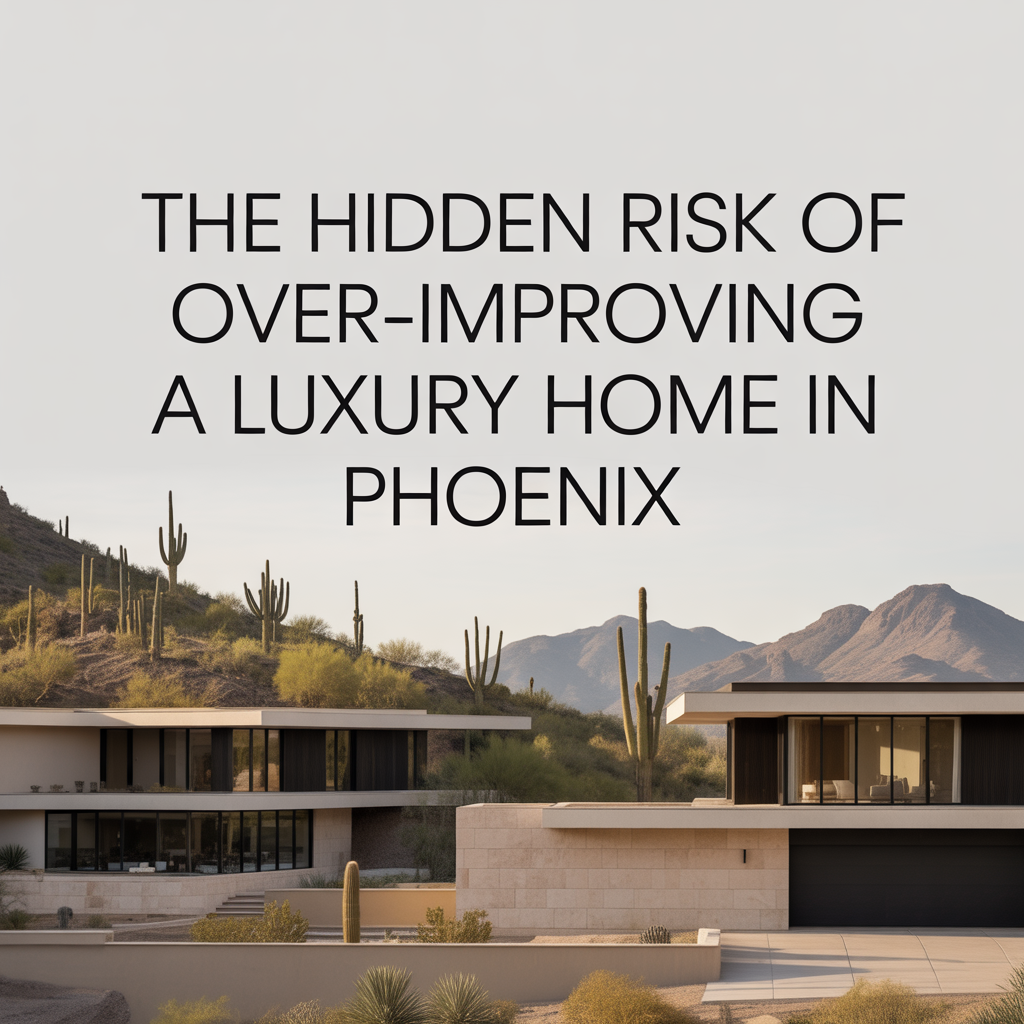
The Hidden Risk of Over‑Improving a Luxury Home in Phoenix
I’ve sat with so many clients in their Scottsdale estates or Paradise Valley retreats, dreaming big about that dream kitchen or infinity edge pool, only to see their excitement tempered by a hard truth: sometimes, the most beautiful upgrades don’t pay you back. Over-improving a luxury home here — pouring money into features that outshine the neighborhood — can quietly erode your equity instead of building it. It’s like dressing for a desert wedding in full fur: stunning, but out of sync with the landscape.
Phoenix’s high-end market rewards harmony, not excess. When improvements push your home’s value beyond what comparable properties support, you risk longer days on market, appraisal shortfalls, or resale discounts. Let me guide you through why this happens here and how to sidestep the pitfalls.
When Upgrades Outpace Neighborhood Comps
Luxury appreciation in Phoenix hinges on comparables — those “comps” within a half-mile radius that appraisers lean on heavily. If your neighbors’ $3 million ranches have builder-grade pools and you install a $500,000 resort-style lagoon with waterslides, your home suddenly stands alone. Appraisers won’t bridge that gap; they anchor to sales data, capping your value at, say, $3.2 million even if you’ve spent $1 million extra.
I’ve seen it in Silverleaf: a client’s $400,000 smart home theater wowed guests but didn’t budge the appraisal because nearby homes lacked similar tech. The market here prices views, lot size, and location first — custom wine cellars second. Over-improving disrupts that equation, leaving you to absorb the cost at sale.
Zoning, HOAs, and the Permit Trap
Phoenix luxury often lives in guarded enclaves with strict rules, and over-improving invites scrutiny. HOAs in DC Ranch or Gainey Ranch cap square footage, rooflines, or even garage doors. Add a second story for that gym casita? It might trigger design review, neighbor appeals, or outright denial — plus retroactive fines if unpermitted.
Permits are non-negotiable for structural changes, electrical upgrades, or pools over certain depths. Skip them, and insurance balks at claims (leaky spa? Denied). Worse, buyers walk during escrow when inspections reveal unpermitted work, or appraisers ignore the added footage entirely. In Paradise Valley, where lot coverage maxes at 35–40%, pushing boundaries can lien your property or stall sales for months.
Budget Blowouts and Lifestyle Mismatches
Luxury remodels here tempt with trendy must-haves: La Cornue ranges, Versace tiles, or home spas with Himalayan salt walls. But costs spiral — a “mid-range” kitchen hits $150,000–$250,000, primary suite additions top $300,000 when you factor desert-proofing like foam insulation and UV glass. Labor shortages post-pandemic add 20–30% premiums.
The hidden risk? Functionality over flash. A $200,000 outdoor kitchen shines for your entertaining style, but if resale buyers prioritize low-maintenance xeriscaping or four-car garages for their Teslas, it becomes a money pit. Trends fade; appraisers value timeless over bespoke. I counsel clients: match the home to its life stage and buyer pool — empty nesters want lock-and-leave ease, not chef’s kitchens gathering dust.
Insurance and Resale Realities in the Desert
Phoenix’s heat and water scarcity amplify over-improvement woes. That lush tropical paradise with fountains? It spikes water bills and HOA fees, deterring eco-conscious buyers. Insurance jumps 15–25% for high-end pools or glass walls prone to hail — and unpermitted upgrades void coverage entirely.
At resale, over-improvers face “stagnant listing syndrome.” Priced at $4.5 million to recoup costs, but comps at $3.8 million? It sits, stigma sets in, and you concede 10–15% off ask. Luxury moves slower anyway — 60–90 days on market — but outliers languish longer, accruing carrying costs like taxes and maintenance.
Market Segments Where It Hurts Most
Not all areas sting equally. Here’s how over-improving plays out across Phoenix luxury pockets:
| Neighborhood | Common Over-Improvement | Risk Level | Why It Backfires |
|---|---|---|---|
| Paradise Valley | Expansive wings, subterranean | High | Strict lot coverage (35%), comps cap |
| Scottsdale 85262 | Golf sims, equestrian arenas | Medium | Buyer shift to wellness over hobby |
| Arcadia/Biltmore | Historic-modern hybrids | Medium | Zoning resists massing changes |
| North Phoenix | Mega garages for RVs | Low | Growing demand matches utility |
Paradise Valley bites hardest — its prestige demands restraint.
Spotting and Avoiding the Trap
The good news? You can upgrade smartly. Start with comps: pull recent sales via MLS for your block. Budget 70–80% ROI max — if a $100k pool won’t lift value by $70k+, pause. Hire architects versed in local codes; they model setbacks early.
Consult your HOA pre-project. Stage for broad appeal: neutral palettes, smart tech that’s transferable. And always permit — retrofits cost double. I’ve steered clients from $300k “oops” moments to $200k wins by aligning dreams with data.
Protecting Your Sanctuary’s True Worth
Over-improving isn’t vanity — it’s often love for your space outpacing market math. But in Phoenix luxury, where prestige is earned through subtlety, restraint builds lasting equity. Your home should elevate the street, not eclipse it.
Think of it as tending a legacy garden: thrive within the soil’s limits, and it blooms for generations.
If you’re thinking about making a move in Phoenix — planning upgrades to a luxury property, weighing resale risks, or just wanting peace of mind on your investment — you don’t have to figure it out alone.
I’ve guided so many through these delicate decisions, balancing heart and numbers with care. Reach out anytime; let’s review your plans, your comps, your vision. Together, we’ll ensure every dollar strengthens — not just your home, but your future here in the Valley.
Get the full Phoenix Market Insights → [Market Insights]


-

Shade Coverage and Tree Canopy Differences by Corridor
-

Summer Walkability Reality Near ASU and Mill Avenue
-

Choosing Proximity Based on Personality and Routine
-

How Tempe Town Lake Changes Social Routines
-
Family-Friendly Lake Events vs Adult Nightlife Patterns
-

Parking Structures and Rideshare Realities on Peak Nights
-
Mill Avenue Late-Night Hotspots vs Residential Calm
-

ASU Game Days and Event Calendar Impacts
-

Cross-Valley Trip Efficiency From Tempe
-

Micro-Mobility and Bike Utility by Corridor
-

Park-And-Ride, Game Day, and Event Access Patterns
-

Airport Timing Strategy Around ASU and Rush Hour Traffic
-

Light Rail Use Cases That Actually Improve Daily Life
-
Freeway vs Arterial Routing During Peak Windows
-

Real-World Drive Times to Sky Harbor From Different Tempe Pockets
-

How Traffic and Commute Direction Affect Daily Life in North vs South Tempe
-

Bike Paths, Walkability, and Short-Distance Transportation in Tempe
-

Driving Access From Tempe to Phoenix Sky Harbor Airport
-

Light Rail Access Between Tempe, Downtown Phoenix, and Mesa
-

Major Tempe Arterial Roads Including Rural Road, McClintock Drive, and Baseline Road
-

ASU Traffic Patterns and Peak Congestion Near Campus
-

Typical Commute Times From Tempe to Phoenix, Scottsdale, and Chandler
-

Tempe Freeway Access to US-60, Loop 101, and Loop 202
-

Shade, Tree Coverage, and Summer Outdoor Usability in Tempe
-

Outdoor Recreation Near Downtown Tempe and ASU